
Table of Contents
- Weather and What to Expect in January
- Orthodox Christmas and New Year Traditions
- Cozy Indoor Activities and Cultural Escapes
- Scenic Winter Walks and Photography Spots
- Day Trips from Tbilisi in January
- Practical Tips for Navigating the City
- Your January in Tbilisi
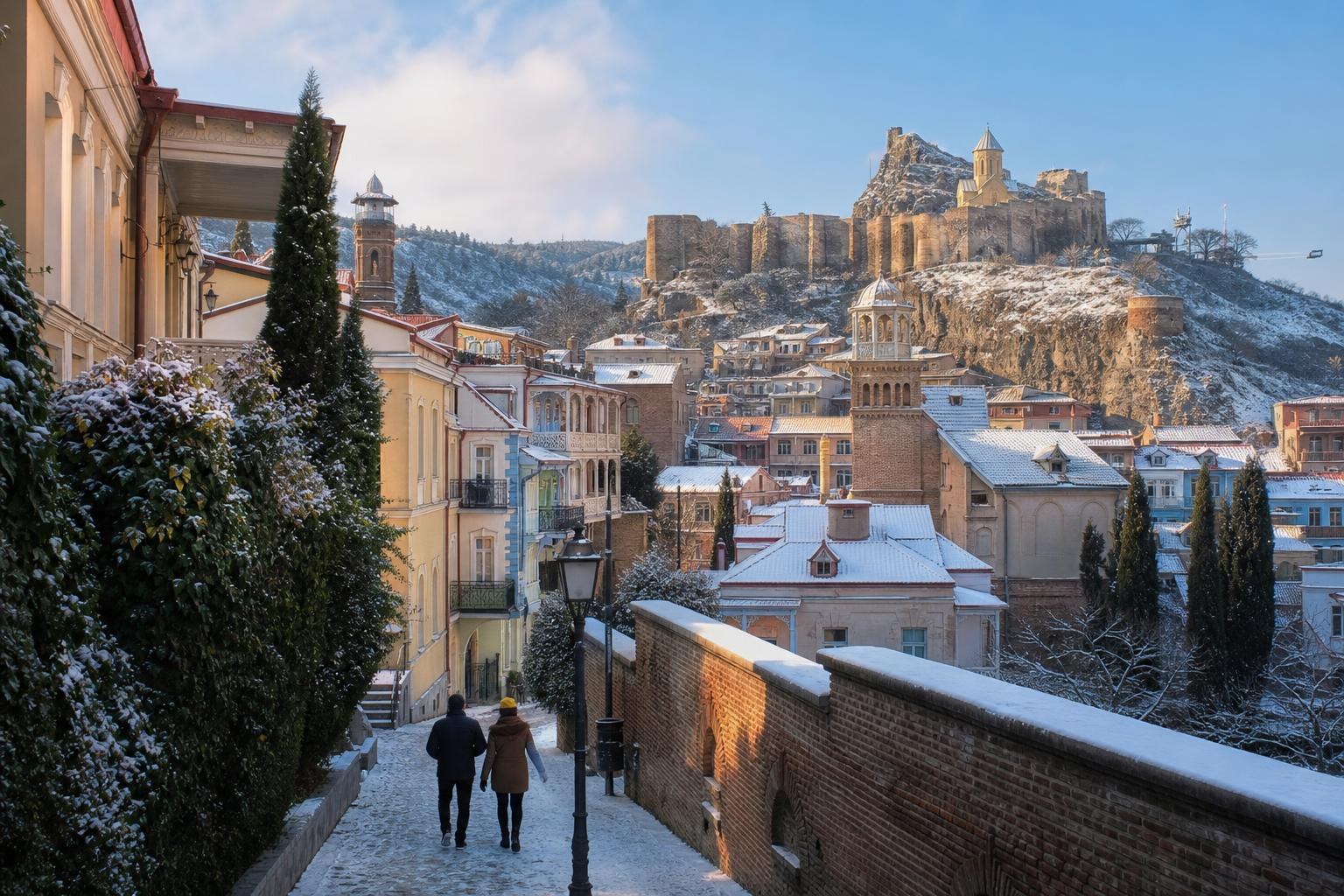
Tbilisi in January is a city wrapped in wood smoke and cold mountain air, its cobblestone streets quieter than usual but far from empty. The holiday season here doesn’t end on January 1 – it’s just getting started. Orthodox Christmas falls on January 7, and the celebrations stretch well into mid-month, filling the Old Town with candlelight processions, impromptu feasts, and a warmth that has nothing to do with the temperature outside. If you’re wondering what to do in Tbilisi during the coldest month of the year, the honest answer is: more than you’d expect. Georgia’s tourism revenues in January 2026 were up 13.4% compared to the previous year, a sign that winter travelers are catching on to what locals have always known. The city is cheaper, less crowded, and deeply atmospheric when frost settles over the Mtkvari River. This winter guide covers everything from sulfur baths to ski day trips, holiday traditions to wine bars, so you can make the most of a January visit.
Weather and What to Expect in January
January is Tbilisi’s coldest month, but it’s not the Siberian deep freeze some travelers imagine. Daytime temperatures hover around 2 to 6°C (36 to 43°F), and nights regularly dip below freezing. Snow does fall, though it rarely accumulates heavily in the city center. The surrounding mountains, however, get blanketed, which makes for stunning views from elevated spots like Mtatsminda or Narikala Fortress.
Expect about 4 to 5 hours of daylight sunshine, with overcast skies common throughout the month. Rain is possible but not frequent – January actually sees less precipitation than spring months. The real challenge is the damp cold that seeps into your bones, especially in the narrow streets of the Old Town where wind funnels between buildings. Dress in layers and you’ll be fine.
January Weather Statistics Table
| Metric | January Average |
|---|---|
| High Temperature | 4-6°C (39-43°F) |
| Low Temperature | -2 to 0°C (28-32°F) |
| Rainfall | 20-25 mm |
| Snow Days | 4-6 days |
| Sunshine Hours | 4-5 per day |
| Humidity | 70-75% |
| Daylight Hours | ~9.5 hours |
Packing Essentials for Georgian Winter
Skip the heavy ski jacket unless you’re heading to the mountains. A layering system works best for Tbilisi’s fluctuating temperatures, where you might walk through freezing streets and then step into an overheated café within minutes.
- A warm mid-layer fleece or wool sweater
- A windproof and water-resistant outer jacket
- Thermal base layers for colder days and evening walks
- Waterproof boots with good grip (cobblestones get icy)
- A warm hat, scarf, and gloves
- An umbrella for occasional rain or wet snow
Bring comfortable walking shoes too. You’ll spend a lot of time on foot, and Tbilisi’s terrain is hilly. The Old Town’s uneven surfaces demand footwear with decent traction.
Orthodox Christmas and New Year Traditions
Georgia follows the Julian calendar for religious holidays, which means Christmas – or Shoba, as Georgians call it – falls on January 7. The celebration is deeply spiritual, centered on church services rather than commercial gift-giving. Families attend midnight liturgy on Christmas Eve, and the entire country seems to slow down for several days around the holiday. The Tbilisi streets take on a reverent, candlelit quality that feels worlds apart from the transactional holiday rush you might be used to in Western cities.
New Year’s (January 1) is actually the bigger party in Georgia. That’s when families gather for enormous supras – traditional feasts presided over by a tamada (toastmaster) who guides the table through a series of heartfelt, often poetic toasts. If you’re lucky enough to be invited to a Georgian New Year’s table, expect to eat and drink for hours. The phrase “stumari ghvtisaa” – the guest is a gift from God – isn’t just a saying here. It’s a lived practice.
The Alilo Parade and Holiday Markets
On January 7, the Alilo procession winds through Tbilisi’s streets. This centuries-old Christmas tradition features children and adults dressed in white robes, carrying banners and singing hymns as they walk from church to church. Participants collect donations of food and gifts, which are distributed to orphanages, hospitals, and families in need. It’s one of the most moving public events you’ll witness anywhere, and spectators are welcome to watch or join.
Holiday markets pop up around Tbilisi in late December and continue into early January. The area around Rustaveli Avenue and Freedom Square typically hosts stalls selling churchkhela (walnut-and-grape candy), handmade ornaments, wool socks, and hot drinks. These markets are smaller than their Central European counterparts but feel more authentic – vendors are often the producers themselves.
Feasting on Traditional Winter Cuisine
Georgian winter food is built for cold weather: hearty, rich, and deeply satisfying. January is prime season for khinkali (soup dumplings filled with spiced meat), lobiani (bean-stuffed bread), and kharcho, a thick walnut-and-beef soup that warms you from the inside out. Restaurants across the city serve these staples, and a full meal with wine costs significantly less than comparable dining in European capitals. Expect to pay around 30 to 50 GEL ($11 to $18 USD) per person for a generous spread at a mid-range restaurant.
Satsivi – cold turkey or chicken in a creamy walnut sauce – is the quintessential Christmas dish. You’ll find it on nearly every restaurant menu in early January. Pair it with fresh tonis puri (clay-oven bread) and a glass of amber wine, and you’ve got one of the best winter meals on the planet.
Cozy Indoor Activities and Cultural Escapes
When the temperature drops and the sky turns grey, Tbilisi’s indoor offerings become the main attraction. The city has an incredible density of cultural spaces packed into a small area, and January’s quieter tourist season means you’ll often have galleries and bath houses largely to yourself. This is the month to slow down, soak, sip, and absorb.
Soaking in the Abanotubani Sulfur Baths
The sulfur baths in the Abanotubani district are Tbilisi’s signature experience, and there’s no better time to visit than January. Stepping from the cold street into a steaming, mineral-rich pool feels almost medicinal. The baths have been operating since the 13th century, and the domed brick buildings themselves are architectural landmarks.
You have two options: public pools (starting around 5 to 10 GEL) or private rooms (50 to 150 GEL depending on the bathhouse and room size). For a first visit, I’d recommend a private room at Orbeliani Baths or Royal Bath House. Book a kisi – a traditional scrub with a rough wool mitt – for the full experience. It costs about 20 to 30 GEL and leaves your skin feeling brand new. January weekday mornings are the least crowded times.
Exploring Museums and Art Galleries
The Georgian National Museum on Rustaveli Avenue houses treasures spanning millennia, from Dmanisi hominid skulls (the oldest human remains found outside Africa) to medieval gold jewelry and Soviet-era artifacts. The Treasury Room alone justifies the 15 GEL entrance fee.
For contemporary art, head to the Zurab Tsereteli Museum of Modern Art or the smaller independent galleries scattered through Sololaki and Vera neighborhoods. Gallery Artbeat and Window Project consistently show interesting work by Georgian and international artists. Most galleries are free to enter and tend to be quiet on January afternoons, giving you space to linger.
The Museum of Soviet Occupation, located inside the National Museum building, offers a sobering but essential look at Georgia’s 20th-century history. It’s small – you can see it in under an hour – but the personal testimonies and photographs stay with you.
Natural Wine Tastings in Sololaki
Georgia has been making wine in qvevri (clay vessels buried underground) for over 8,000 years, and the natural wine movement here isn’t a trend – it’s a continuation of ancient tradition. January is a perfect time to explore Tbilisi’s wine bars, which are cozy, candlelit, and full of knowledgeable staff eager to guide you through amber and red varieties.
Vino Underground on Tabidze Street is the original natural wine bar and still one of the best. Ghvinis Ubani and Wine Map are excellent alternatives. A glass of quality qvevri wine runs 8 to 15 GEL ($3 to $5.50 USD), and most bars offer tasting flights. Ask for Rkatsiteli or Mtsvane if you want to try classic amber wines, or Saperavi for a bold, tannic red that pairs perfectly with grilled meat.
Scenic Winter Walks and Photography Spots
Tbilisi is photogenic year-round, but January adds a moody, atmospheric quality that summer photos can’t match. Mist rising from the sulfur baths, frost on wooden balconies, snow dusting church domes – the city looks like a painting when winter settles in. Bring a camera with good low-light capability, because the best light comes in the golden hour, which arrives early.
Mtatsminda Park and the Funicular View
The funicular railway climbs from Chonkadze Street to the top of Mtatsminda, where a park and television tower sit at 770 meters above sea level. The panoramic view of Tbilisi from here is extraordinary in winter: the city spreads out below in a patchwork of terracotta roofs and church spires, with the Caucasus Mountains visible on clear days. The funicular ride costs 2 GEL each way.
The park itself is largely closed in January (most rides shut down for winter), but the viewing platform and the Funicular Restaurant remain open. Come around 4 PM to catch sunset, then stay for the city lights switching on. It’s one of those moments that makes winter travel worth the cold fingers.
Narikala Fortress and the Peace Bridge
Narikala Fortress, perched on a ridge above the Old Town, is a short but steep hike from the Abanotubani district. The 4th-century walls frame some of the best views in the city, and in January you’ll likely share the space with only a handful of other visitors. The cable car from Rike Park to the fortress costs 2.50 GEL and saves you the uphill climb.
The Peace Bridge, a modern glass-and-steel pedestrian bridge designed by Italian architect Michele De Lucchi, connects Old Tbilisi to Rike Park. It’s especially striking at night when LED lights illuminate its curved form. Walking across it in January, with cold air off the river and the fortress lit up above, is one of those quintessential winter moments in Tbilisi that photographs beautifully.
Day Trips from Tbilisi in January
January opens up some excellent day trip options that aren’t available in warmer months, particularly skiing. Tbilisi’s location makes it a surprisingly good base for mountain and historical excursions, with most destinations reachable in under two hours by car.
Skiing and Snowboarding in Gudauri
Gudauri, Georgia’s premier ski resort, sits about two hours north of Tbilisi along the Georgian Military Highway. January typically brings excellent snow conditions, with the resort sitting between 2,196 and 3,307 meters elevation. A full-day lift pass costs around 70 to 90 GEL ($25 to $33 USD) – a fraction of what you’d pay at Alpine resorts for comparable terrain.
The resort has expanded significantly in recent years, with new infrastructure and increased international visitor numbers reflecting Georgia’s growing reputation as a winter sports destination. Rental equipment is available on-site for about 50 to 80 GEL per day. You can arrange a shared minibus from Tbilisi’s Didube station for around 20 GEL, or book a private transfer for roughly 150 to 200 GEL round trip.
For non-skiers, the drive itself is spectacular. The highway passes through Jvari Pass at 2,379 meters, with views of snow-covered peaks and the Aragvi River valley that rival anything in the Alps.
The Ancient Capital of Mtskheta
Mtskheta sits just 20 kilometers north of Tbilisi and is reachable by marshrutka (minibus) in about 30 minutes for 1 GEL. This UNESCO World Heritage site was Georgia’s capital for nearly a thousand years and remains the spiritual heart of the Georgian Orthodox Church.
Svetitskhoveli Cathedral, built in the 11th century, is the main draw. The interior features remarkable frescoes and a quiet grandeur that feels especially powerful in winter, when the tourist crowds thin out. Jvari Monastery, perched on a hilltop overlooking the confluence of the Mtkvari and Aragvi rivers, offers a short drive or taxi ride from town. On a clear January day, the snow-capped mountains behind the monastery create an unforgettable backdrop.
Practical Tips for Navigating the City
Tbilisi is a walkable city, but January conditions make a few practical details worth knowing. The metro system is clean, efficient, and costs just 1 GEL per ride using a rechargeable Metromoney card, which also works on buses. For taxis, download the Bolt app – it’s the most reliable option and eliminates haggling. A typical ride across the city center costs 5 to 10 GEL.
ATMs are plentiful, and most restaurants and shops accept card payments. The Georgian lari (GEL) trades at roughly 2.7 to the US dollar in early 2026. Exchanging money at bank-operated exchange offices gives better rates than airport kiosks.
Georgia is a remarkably safe travel destination, including for solo travelers. Tbilisi’s streets feel secure even late at night, and petty crime rates are low by European standards. English is spoken widely in tourist areas and by younger Georgians, though learning a few phrases in Georgian – “gamarjoba” (hello) and “madloba” (thank you) – goes a long way. Download Google Translate’s offline Georgian language pack before you arrive, as it’s useful for menus and signs in less touristy neighborhoods.
One cultural note: avoid discussing the conflicts with Russia over Abkhazia and South Ossetia unless a Georgian brings it up first. These are sensitive topics, and opinions run deep.
Your January in Tbilisi
A winter trip to Tbilisi rewards you with experiences that summer visitors simply don’t get: the Alilo procession through snowy streets, sulfur baths steaming against freezing air, ski runs at Gudauri for the price of a lift ticket at a minor American resort. The city is affordable, welcoming, and genuinely beautiful in its winter coat. January here isn’t about escaping the cold – it’s about embracing a season that Georgians celebrate with feasting, faith, and extraordinary hospitality. Pack your layers, bring your appetite, and let the city surprise you.