
Table of Contents
- Overview of Tbilisi’s Nightlife Districts
- Vera: The Hub for Sophisticated Bars and Wine Culture
- Didube and Chugureti: Staying Near the Underground Techno Scene
- Old Tbilisi: Centralized Access to Shardeni Street and Clubbing
- Vake: Upscale Nightlife and Cocktail Lounges
- Practical Tips for Navigating Tbilisi After Dark
- Choosing Your Tbilisi Nightlife Base
Tbilisi’s nightlife has a reputation that punches far above the city’s size. A capital of roughly 1.2 million people has somehow become one of Europe’s most talked-about destinations for after-dark culture, drawing techno pilgrims, wine enthusiasts, and cocktail lovers in equal measure. Georgia’s tourism numbers have been climbing steadily, with the country welcoming over 3.6 million international visitors in just the first quarter of 2025, and a significant slice of those travelers list Tbilisi’s club scene as a primary draw. But figuring out where to stay in Tbilisi for nightlife requires more than just booking the cheapest Airbnb. Each district offers a genuinely different experience after midnight, and picking the wrong neighborhood means either expensive taxi rides home at 5 a.m. or missing the vibe you actually came for. I’ve spent enough late nights in this city to know that your accommodation choice shapes your entire experience. Here’s what I wish someone had broken down for me before my first trip.
Overview of Tbilisi’s Nightlife Districts
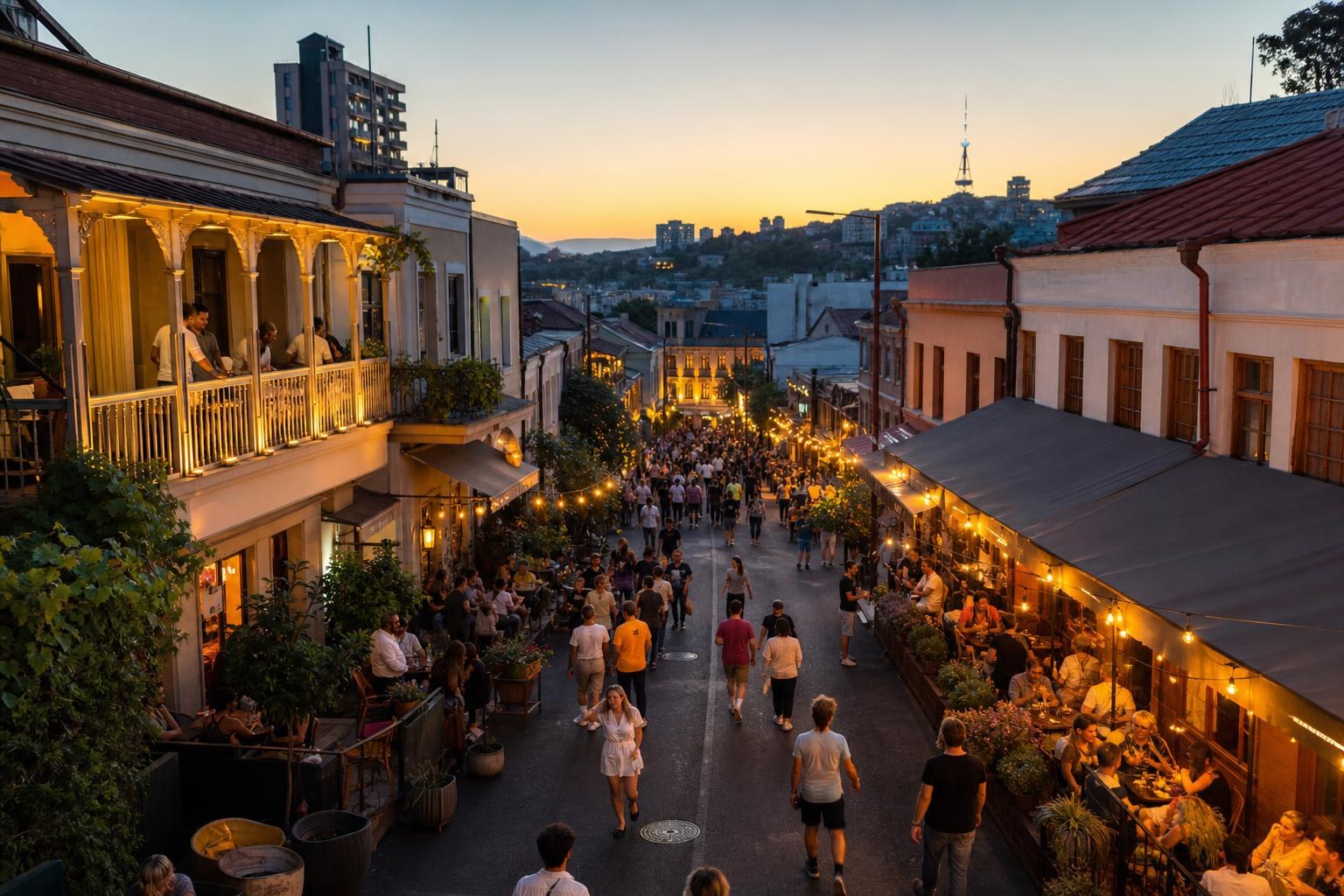
Tbilisi isn’t like Berlin or Barcelona, where nightlife clusters neatly in one or two zones. The city’s going-out culture is scattered across several distinct neighborhoods, each with its own personality and crowd. Understanding the geography matters because Tbilisi is built along the Mtkvari River with steep hills on both sides, and walking between districts after midnight isn’t always practical.
The main nightlife districts break down into four zones. Old Tbilisi (the historic center around Shardeni and Erekle streets) is the most tourist-accessible, packed with bars, restaurants, and a few proper clubs. Vera sits just north of Rustaveli Avenue and has become the city’s wine bar and cocktail epicenter over the past few years. The Chugureti and Didube areas, slightly further out, house the industrial venues that put Tbilisi on the global electronic music map. And Vake, the upscale residential district to the west, caters to a wealthier local crowd with polished lounges and cocktail spots.
Your choice depends entirely on what kind of night you’re after. If you want to stumble home from a natural wine bar at 1 a.m., Vera is your spot. If you’re planning to dance until noon the next day, you need to be near the techno venues. If you want variety and easy access to everything, Old Tbilisi is the safe bet. Vake works best for travelers who prefer a more curated, less chaotic experience.
Comparison Table: District Vibes and Best Venue Types
| District | Primary Vibe | Best Venue Types | Peak Hours | Average Drink Price (GEL) | Walk to Center |
|---|---|---|---|---|---|
| Old Tbilisi | Tourist-friendly, diverse | Bars, clubs, rooftop lounges | 10 PM – 3 AM | 12-20 | 0-5 min |
| Vera | Artsy, wine-focused | Wine bars, cocktail spots, live music | 9 PM – 2 AM | 15-25 | 10-15 min |
| Chugureti/Didube | Underground, industrial | Techno clubs, warehouse parties | 1 AM – 12 PM | 8-15 | 15-25 min |
| Vake | Upscale, local crowd | Cocktail lounges, restaurants with DJs | 11 PM – 4 AM | 20-35 | 20-30 min |
Prices reflect 2026 averages. A beer in Old Tbilisi runs about 8-12 GEL (roughly $3-4 USD), while a craft cocktail in Vake can hit 35 GEL ($12-13 USD). The metro costs 1 GEL and runs until midnight, after which Bolt rides between districts typically cost 5-12 GEL.
Vera: The Hub for Sophisticated Bars and Wine Culture
Vera has quietly become the most interesting neighborhood in Tbilisi for anyone who prefers their nightlife with a bit of substance. This isn’t where you go for thumping bass and strobe lights. It’s where you sit in a courtyard at midnight, drinking a glass of Rkatsiteli from a clay qvevri, debating Georgian cinema with someone you just met.
The district’s transformation over the past five years has been remarkable. Old Soviet-era apartment buildings now house ground-floor wine bars, and former garages have been converted into intimate live music venues. The crowd here skews slightly older than the techno districts: late twenties to forties, a mix of expats, creative locals, and travelers who’ve done their research. Vera’s streets are walkable, relatively quiet, and lined with enough late-night options that you never feel stuck.
What makes Vera special is the wine culture. Georgia is the birthplace of winemaking, with 8,000 years of viniculture history, and Vera is where that tradition meets contemporary bar culture. You’ll find places pouring obscure amber wines from small Kakhetian producers alongside Georgian craft beers. The atmosphere is conversational rather than performative. Most bars here close around 2 a.m., which makes Vera ideal for travelers who want a great evening out without necessarily committing to an all-night marathon.
Top Boutique Stays Near Wine Factory N1
Wine Factory N1, a converted wine production facility on Uznadze Street (technically just south of Vera proper but closely linked to the district’s scene), anchors a cluster of bars, restaurants, and creative spaces. Staying within walking distance of this complex gives you access to both Vera’s wine bars and the Old Town’s louder options.
Boutique hotels in the 150-350 GEL per night range ($55-130 USD) are scattered throughout Vera’s residential streets. Look for guesthouses on Barnovi or Kipshidze streets, which put you within a ten-minute walk of both Wine Factory N1 and Rustaveli Avenue. Several small hotels have opened in renovated Vera courtyards since 2024, offering that distinctly Georgian mix of Soviet-era architecture and modern interiors. Airbnb options are plentiful here too, with one-bedroom apartments averaging 100-200 GEL per night.
The key advantage of staying in Vera is flexibility. You’re close enough to the center to walk to Old Tbilisi in 15 minutes, but you’re also in the thick of the neighborhood’s own scene. If the wine bars close and you’re still going, a Bolt to Bassiani takes under ten minutes.
Didube and Chugureti: Staying Near the Underground Techno Scene
This is what most international visitors are really asking about when they research Tbilisi’s best nightlife districts. The city’s reputation as a techno capital rests almost entirely on a handful of venues in the Chugureti and Didube areas, industrial spaces that have become pilgrimage sites for electronic music fans worldwide.
The scene here emerged from political resistance. After police raids on clubs in 2018, Tbilisi’s techno community became a symbol of Georgia’s fight for social liberalism. That energy hasn’t faded. The clubs in this zone operate on a different schedule than anything else in the city: doors typically open at midnight on Friday or Saturday, and the music doesn’t stop until Sunday afternoon. This isn’t an exaggeration. I’ve walked out of venues at 11 a.m. into bright sunlight, disoriented and happy.
Accommodation options near Didube and Chugureti are less polished than in Vera or Old Tbilisi. You’re looking at budget guesthouses, hostels, and Airbnb apartments in residential blocks. Prices are lower: 60-120 GEL per night for a decent private room. The trade-off is that the neighborhoods themselves don’t offer much during the day. This is where you stay if nightlife is your primary reason for visiting and you want to minimize transit time at 4 a.m.
Bassiani and Fabrika: The Industrial Heart of Nightlife
Bassiani, built beneath Dinamo Arena, is the venue that put Tbilisi on the global electronic music map. Its sound system is exceptional, the programming features both local and international DJs, and the atmosphere carries a political charge you won’t find in most European clubs. The venue has weathered closures, police raids, and political pressure but remains central to Tbilisi’s identity as a nightlife destination.
Fabrika, a former Soviet sewing factory in Chugureti, operates differently. It’s part hostel, part coworking space, part courtyard bar complex, and part event venue. Staying at Fabrika itself is one of the smartest moves for nightlife-focused travelers: you’re literally sleeping above the party. Dorm beds run about 35-50 GEL, and private rooms go for 120-180 GEL. The courtyard hosts events most weekends, and even on quiet nights, you’ll find people drinking and socializing until late.
Other venues worth knowing include Khidi, set under a bridge along the river, and Left Bank, which draws a slightly different crowd. Tbilisi’s club scene is recognized globally for its intensity and cultural significance, and these venues are the reason why.
Old Tbilisi: Centralized Access to Shardeni Street and Clubbing
If you’re visiting Tbilisi for the first time and want the most versatile base for nightlife, Old Tbilisi is the obvious choice. The historic center puts you within walking distance of the highest concentration of bars, restaurants, and late-night spots in the city. Shardeni Street and the surrounding lanes form the core of this zone: a dense network of venues ranging from tourist-oriented cocktail bars to genuinely excellent local spots.
The Old Town’s nightlife is the most accessible in Tbilisi. You don’t need to know anyone, pass any door selection, or commit to a specific genre. On a typical Friday night, you can start with dinner on Erekle Street, move to a wine bar on Shardeni, catch live jazz in a basement venue, and end up at a club near the river, all without calling a taxi. The area offers everything from traditional Georgian restaurants with live folk music to modern DJ bars, which makes it ideal for groups with mixed preferences.
Hotels and guesthouses in Old Tbilisi range from budget (80-150 GEL) to upscale (400+ GEL). The sweet spot for nightlife access is staying near Bambis Rigi or the streets between Shardeni and the Mtkvari River. Noise can be an issue: if you’re a light sleeper, request a room facing a courtyard rather than the street.
Rooftop Bars and Late-Night Lounges
Old Tbilisi’s rooftop scene has expanded significantly since 2024. Several buildings in the historic center now host bars with views over the Narikala Fortress and the river. These spots tend to open around sunset and stay busy until 2-3 a.m. Prices are higher than street-level bars (cocktails averaging 18-25 GEL), but the settings justify the markup.
The late-night lounges clustered around Aghmashenebeli Avenue, just across the river from Old Tbilisi proper, deserve mention too. This strip has developed its own character: slightly less touristy, slightly more local, with hookah bars and live music venues mixed in among the restaurants. It’s a 10-minute walk from Shardeni across the Peace Bridge, making it an easy extension of an Old Town evening.
Vake: Upscale Nightlife and Cocktail Lounges
Vake is where Tbilisi’s wealthier residents go out, and the nightlife reflects that demographic. The cocktail bars here are genuinely excellent: proper bartenders making proper drinks with quality spirits. Expect to pay 25-35 GEL for a cocktail, which is still remarkably cheap by Western European standards but noticeably more than the rest of Tbilisi.
The district runs along Chavchavadze Avenue and the surrounding streets, with most venues concentrated in the lower part of Vake near the university area. The crowd is predominantly Georgian, well-dressed, and less interested in tourists. This isn’t unfriendly: it just means you’re experiencing Tbilisi’s nightlife as locals actually live it, without the filter of tourism. Restaurant-bars with DJ sets are the dominant format here, places where dinner transitions into dancing around midnight.
Staying in Vake makes sense if you prefer a quieter neighborhood during the day with upscale options at night. Hotels here tend to be modern and comfortable, ranging from 200-500 GEL per night. The downside is distance: getting to Old Tbilisi or the techno clubs requires a 15-25 minute Bolt ride. If you’re planning to split your nights between Vake’s lounges and other districts, budget for daily transport costs of 15-30 GEL.
Practical Tips for Navigating Tbilisi After Dark
Tbilisi is a remarkably safe city for nightlife, but a few practical realities will shape your experience. The city’s going-out culture operates on a later schedule than most of Western Europe. Restaurants fill up around 9-10 p.m., bars peak between midnight and 2 a.m., and clubs don’t truly get going until 1-2 a.m. Planning your evening around this timeline saves frustration.
Cash is still useful. While most bars accept card payments, some smaller venues, street food windows, and taxis prefer cash. ATMs are everywhere, and the Georgian lari (GEL) trades at roughly 2.7-2.8 to the US dollar in 2026. Keep some small bills for late-night khachapuri runs: the post-club food scene is half the experience.
Language is rarely a barrier in nightlife zones. Younger Georgians in Tbilisi generally speak conversational English, and bar staff in tourist-facing venues are fluent. Download Google Translate’s Georgian offline pack anyway for taxi interactions and menus in local spots.
Transport and Safety: Getting Home from the Club
The Tbilisi metro shuts down at midnight, which means you’ll rely on ride-hailing apps for late-night transport. Bolt is the dominant platform and works reliably throughout the city. Rides between nightlife districts rarely exceed 12 GEL, even with surge pricing. Yandex Go is an alternative if Bolt surge prices spike. Avoid unmarked taxis, which occasionally overcharge tourists near popular venues.
Tbilisi is genuinely safe at night by any reasonable standard. Violent crime targeting tourists is extremely rare, and the police presence around nightlife areas is visible without being oppressive. Solo female travelers consistently report feeling safe in Tbilisi’s bars and clubs, though standard precautions apply everywhere. Stick to well-lit streets, keep your phone charged for ride-hailing, and trust your instincts about unfamiliar situations.
Face Control and Dress Codes at Major Venues
The major techno clubs practice face control, a door selection process familiar to anyone who’s been to Berghain. Bassiani and Khidi both have selective doors, and getting turned away is a real possibility. The criteria aren’t purely about appearance: door staff assess whether you seem genuinely interested in the music versus treating the club as a tourist attraction.
Practical advice for getting past face control: go in small groups (two to four people), don’t be visibly intoxicated, dress in dark or understated clothing, and don’t take photos of the queue. Speaking a few words of Georgian (even just “gamarjoba,” hello) signals respect. Arrive after 1 a.m. when the crowd thins and door staff relax slightly. If you’re turned away, don’t argue. Head to Fabrika’s courtyard or a bar in Old Tbilisi instead: there’s always somewhere good to end up.
For wine bars in Vera and cocktail lounges in Vake, there’s no formal door policy. Smart casual works everywhere. Georgians tend to dress well for evenings out, so you won’t feel out of place in a nice shirt or a good pair of shoes.
Choosing Your Tbilisi Nightlife Base
The best district for your Tbilisi nightlife experience depends on one honest question: what kind of night do you actually want? If you’re chasing the techno scene that made this city famous, stay near Chugureti and accept the trade-offs in daytime convenience. If you want variety and walkability, Old Tbilisi delivers the most options per square meter. Vera suits travelers who value conversation and wine over volume and bass. Vake rewards those willing to spend more for a polished, local-feeling experience.
Whatever you choose, Tbilisi rewards spontaneity. Some of my best nights here started with a plan to visit one bar and ended somewhere completely unexpected at sunrise. Book your accommodation in the district that matches your primary interest, download Bolt, and let the city surprise you. At 2026 prices, you can eat, drink, and dance your way through an entire weekend for what a single night out costs in London or New York. That’s the real magic of this place.