
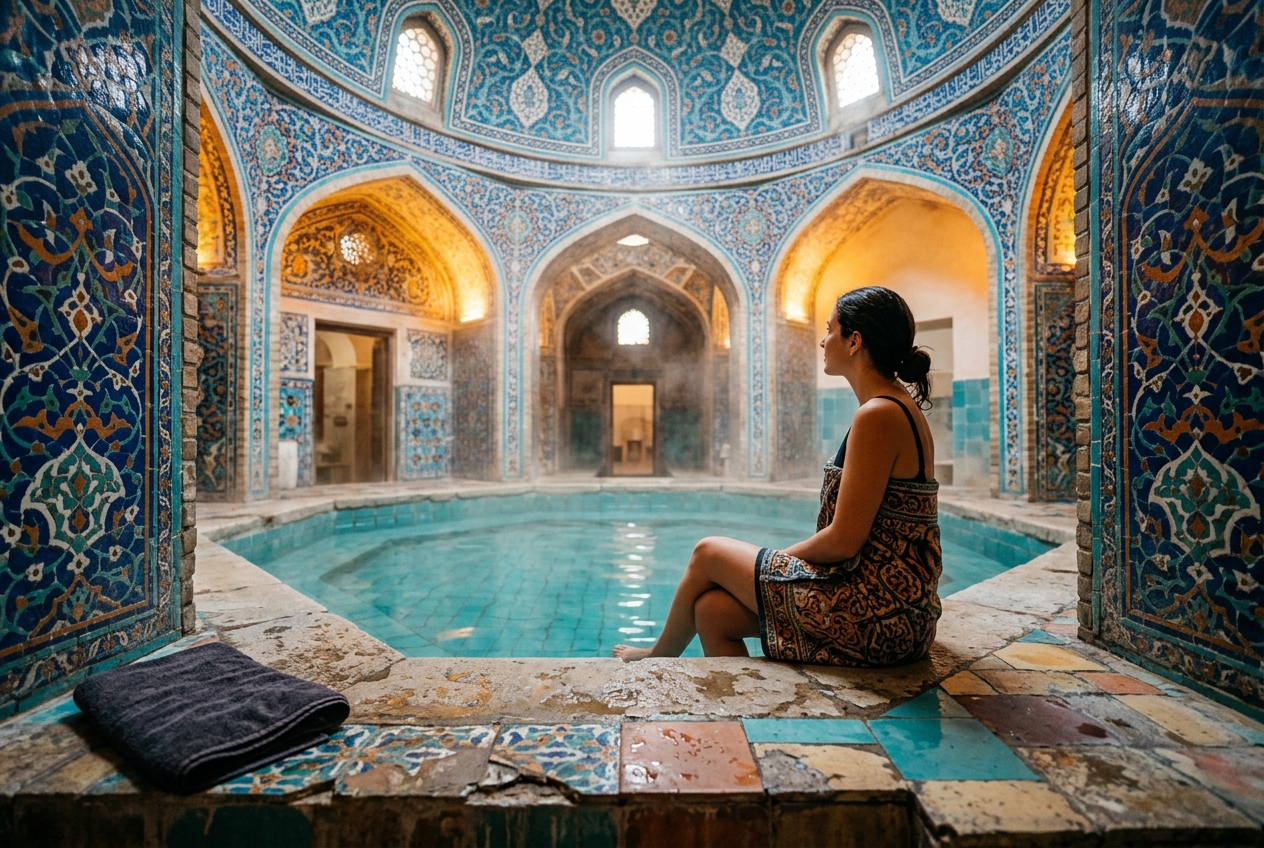
The first time I stepped into a sulfur bathhouse in Tbilisi, the smell hit me before the steam did. Sharp, eggy, unmistakable. Within minutes, though, my body adjusted, and what followed was one of the most deeply relaxing experiences I’ve had anywhere in the world. The Russian poet Alexander Pushkin once wrote, “I have never encountered anything more luxurious than the Tbilisi baths” – and honestly, after soaking in those warm mineral waters beneath a brick dome that’s stood for centuries, I understood exactly what he meant. Tbilisi’s sulfur baths aren’t a spa trend or a wellness fad. They’re the reason the city exists. The very name “Tbilisi” comes from the Georgian word “tbili,” meaning “warm,” a direct reference to the natural hot springs that bubble up from the earth in the Abanotubani district. Visiting these baths is less about pampering yourself and more about participating in a ritual that stretches back over 1,500 years. If you’re planning a trip to Georgia’s capital, this is the one experience you absolutely cannot skip.
The Legend and History of Abanotubani
King Vakhtang Gorgasali and the Founding of Tbilisi
The founding myth of Tbilisi is one of those stories that feels almost too perfect to be true, yet Georgians tell it with complete conviction. In the 5th century, King Vakhtang I Gorgasali was hunting in the forests along the Mtkvari River when his falcon (or hawk, depending on who’s telling the story) struck a pheasant. The wounded bird fell into a hot spring and was either cooked by the water or miraculously healed – again, versions differ. Either way, Vakhtang was so struck by the natural thermal waters that he decided to move his capital from Mtskheta to this very spot.
What’s not mythical is the result. Tbilisi grew up around these sulfur springs, and the Abanotubani district became the social and commercial heart of the city. For centuries, the bathhouses served not just as places to wash but as gathering spots where business deals were struck, marriages were arranged, and political alliances were formed. Think of them as Georgia’s version of the Roman forum, except with more steam and fewer togas.
A massive statue of Vakhtang Gorgasali on horseback now overlooks the old town from the Metekhi cliff, and you can see the Abanotubani district spread below him. The connection between king, springs, and city is literally built into the geography.
Architectural Influence of Persian and Ottoman Styles
Walking through Abanotubani today, you’ll notice the bathhouses don’t look particularly Georgian. The low, domed brick structures with their rounded rooftops sit partially underground, a design borrowed directly from Persian and Ottoman bathing traditions. Georgia spent centuries as a contested territory between these two empires, and the bathhouse architecture reflects that layered history.
The domes, often covered in blue and green tiles, serve a practical purpose: they trap steam and regulate temperature inside the vaulted chambers below. Some of the older bathhouses feature intricate tilework and arched niches that would look at home in Isfahan or Istanbul. The Orbeliani Bathhouse, with its striking blue-tiled facade and twin minarets, is the most photographed example – it looks more like a small mosque than a place to take a bath.
This blending of influences is one of the things that makes the district so visually interesting. You’re standing in a Christian country, looking at Islamic-influenced architecture, built over geothermal springs that predate all of it. The stones themselves tell the story of a city that has absorbed and survived every empire that passed through.
Choosing the Right Bathhouse Experience
Public vs. Private Bathing Rooms
This is the first decision you’ll face, and it matters more than you might think. Public bathing rooms are communal, gender-segregated spaces where locals and tourists share the same pool. They’re cheap (usually around 5-10 GEL), atmospheric, and about as authentic as it gets. The downside? They can be crowded, the facilities are basic, and if you’re not comfortable being naked around strangers, it’s not going to be your thing.
Private rooms are the more popular choice for visitors. You get your own room with a sulfur pool, a shower, and usually a stone slab for your scrub. Prices range from 50 to 600 GEL per hour, depending on the size of the room and the level of luxury. The cheapest private rooms are simple but clean; the most expensive ones come with multiple pools, cold plunge baths, and ornate tile interiors.
| Room Type | Price Range (GEL) | Best For |
|---|---|---|
| Public communal | 5-10 | Budget travelers, cultural immersion |
| Basic private | 50-100 | Couples, solo travelers wanting privacy |
| Mid-range private | 100-250 | Small groups, a comfortable experience |
| Premium private | 250-600 | Special occasions, larger groups |
My recommendation: if it’s your first time, book a mid-range private room. You’ll get the full experience without feeling rushed or overwhelmed.
Iconic Establishments: Orbeliani, Gulo’s, and No. 5
Three bathhouses dominate most conversations about Tbilisi’s thermal baths, and each offers something different.
The Orbeliani Bathhouse (also called the Blue or Chreli Abano) is the postcard-famous one with the tiled facade. It’s been renovated, the private rooms are well-maintained, and it’s the easiest to book online. The downside is that it’s the most tourist-oriented, and prices reflect that.
Gulo’s Bathhouse is a local favorite. It’s less polished than Orbeliani but has more character. The staff tend to be older women who’ve been doing this for decades, and the scrubs here feel more traditional. If you want the experience that Pushkin was probably writing about, Gulo’s is your best bet.
Bathhouse No. 5 (also known as the Royal Bath or King Erekle’s Bath) reopened in September 2023 after extensive renovations and now features a modern, spa-like interior while preserving its historic shell. It’s a good middle ground between old-world atmosphere and contemporary comfort. If you’re traveling with someone who’s hesitant about the whole sulfur bath concept, No. 5 might win them over.
The Traditional Ritual: What to Expect
The Role of the Mekise and the Kisi Scrub
Here’s where the experience goes from “nice hot bath” to something you’ll remember for years. The mekise is the bath attendant, and their job is to scrub you within an inch of your life using a kisi – a coarse, mitt-like cloth made from natural fibers. You lie on a warm stone slab, and the mekise works over every inch of your body with firm, rhythmic strokes.
It’s not gentle. The first few minutes feel intense, almost abrasive. But then something shifts. Dead skin rolls off in visible strips (yes, it’s gross, and yes, it’s deeply satisfying), and your skin underneath feels impossibly smooth. A traditional kisi scrub typically costs between 10 and 30 GEL, and it’s worth every tetri.
After the scrub, many mekise will follow up with a soap massage – they fill a cloth bag with soapy water, inflate it like a balloon, and squeeze clouds of warm foam over your body. It’s theatrical, a little absurd, and genuinely wonderful. The whole process takes about 20-30 minutes, and when it’s done, you feel like you’ve shed an entire layer of travel fatigue along with the dead skin.
Therapeutic Benefits of Sulfur-Rich Waters
The sulfur springs in Tbilisi emerge from the ground at temperatures between 35°C and 40°C, naturally heated by geothermal activity deep below the city. The water is rich in hydrogen sulfide, along with trace minerals like calcium, magnesium, and sodium. Locals have attributed healing properties to these waters for centuries, and while I’m not a doctor, the science does support some of the claims.
Sulfur-rich thermal waters have been shown to reduce inflammation and improve circulation, making them particularly helpful for people with joint pain, arthritis, or skin conditions like eczema and psoriasis. The heat itself helps relax muscles and lower cortisol levels. Many Georgians visit the baths regularly as a form of preventive health care, not just an occasional treat.
One thing I noticed: after a good soak and scrub, I slept better that night than I had in weeks. Whether that’s the minerals, the heat, or just the deep relaxation of the ritual, the effect was real. Don’t rush it. Book at least 90 minutes for your session, and let the water do its work.
Practical Tips for First-Time Visitors
Booking Procedures and Pricing
Booking ahead is smart, especially during peak tourist season (May through October). Orbeliani and No. 5 accept online reservations through their websites or via apps like Bolt (which Georgians use for everything from taxis to food delivery). Gulo’s is more old-school – you can call ahead or just show up, though weekends get busy after 6 PM.
Most bathhouses charge by the hour for private rooms. An hour is usually enough for a soak and scrub, but if you want to truly relax, book two hours. The scrub service is paid separately, directly to the mekise, and tipping is customary – 10-20 GEL on top of the scrub fee is appreciated.
Payment is increasingly card-friendly at the larger establishments, but carry cash for the scrub tip and for smaller bathhouses that still operate on a cash-only basis. Georgian lari (GEL) is the only accepted currency; don’t expect anyone to take euros or dollars.
Essential Items to Pack and Etiquette
Here’s what to bring and what to know before you go:
- Flip-flops or waterproof sandals: The floors are wet stone. You’ll want grip.
- A change of underwear: You’ll be given a towel, but having fresh clothes for after makes a difference.
- A water bottle: The heat dehydrates you faster than you’d expect. Drink before, during, and after.
- Leave valuables in your hotel: Most rooms have hooks, not lockers. Don’t bring anything you’d worry about.
- Swimwear is optional in private rooms: Most people go without. In public rooms, nudity is the norm for the gender-segregated sections.
Etiquette-wise, the main thing is to be respectful of the mekise. They’re skilled workers doing physically demanding labor. Don’t haggle over the scrub price, tip fairly, and follow their instructions during the treatment. A simple “gmadlobt” (thank you in Georgian) goes a long way.
Exploring the Surrounding Abanotubani District
Leghvtakhevi Waterfall and the Botanical Garden
One of the best things about Tbilisi’s sulfur bath district is what surrounds it. Step outside any bathhouse and you’re in the heart of old Tbilisi, with cobblestone streets, leaning wooden balconies, and some of the city’s most surprising natural features.
The Leghvtakhevi Waterfall is a five-minute walk from the main bathhouse strip. It’s a genuine waterfall, maybe 20 meters high, hidden in a gorge right in the middle of the city. The path along the gorge follows a small stream, and you can smell the sulfur in the air as natural springs seep through the rock walls. It’s a perfect post-bath walk, especially in the golden light of late afternoon.
From the waterfall trail, a path leads uphill to the Tbilisi Botanical Garden, which sprawls across 161 hectares on the slopes behind Narikala Fortress. The garden is surprisingly uncrowded even during peak season, and it offers shaded walking paths, a second waterfall, and views over the city that rival anything you’d get from the cable car. Entrance is just 4 GEL.
Nearby Dining and Georgian Tea Culture
After your bath, you’ll be hungry. The Abanotubani area has no shortage of restaurants, though quality varies. For something authentic, walk five minutes uphill to the Shardeni or Erekle II streets, where you’ll find small restaurants serving proper Georgian food: khinkali (soup dumplings), khachapuri (cheese bread), and pkhali (walnut-herb spreads).
Georgian tea culture is less famous than its wine tradition, but it’s worth seeking out. Several cafes near the baths serve locally grown tea from the Guria and Samegrelo regions, often paired with churchkhela (walnut candy) or fresh pastries. Tea houses in this part of town tend to be quiet, low-key spots where you can decompress after the intensity of a scrub.
For something stronger, look for a wine bar pouring natural Georgian wines made in qvevri (clay vessels buried underground). The Abanotubani area has a few excellent options, and a glass of amber-colored Rkatsiteli after a sulfur bath is one of those combinations that just works.
A City Built on Warm Water
Tbilisi welcomed 3.0 million visitors in 2025, and a significant number of them made their way to Abanotubani. The sulfur baths aren’t just a tourist attraction; they’re the founding story of the city made tangible. You’re soaking in the same springs that convinced a 5th-century king to build his capital here, in rooms shaped by Persian architects and Ottoman tile-makers, scrubbed by the descendants of people who’ve been doing this for generations.
If you visit Tbilisi and skip the baths, you’ve missed the point. Book a room, get the scrub, let the warm sulfur water loosen every knot in your shoulders, and then walk out into the old town with skin that feels brand new. Follow the gorge to the waterfall, eat khinkali until you can’t move, and drink a glass of something local. That’s the ritual, and it’s been working for 1,500 years. Trust me – it still does.