
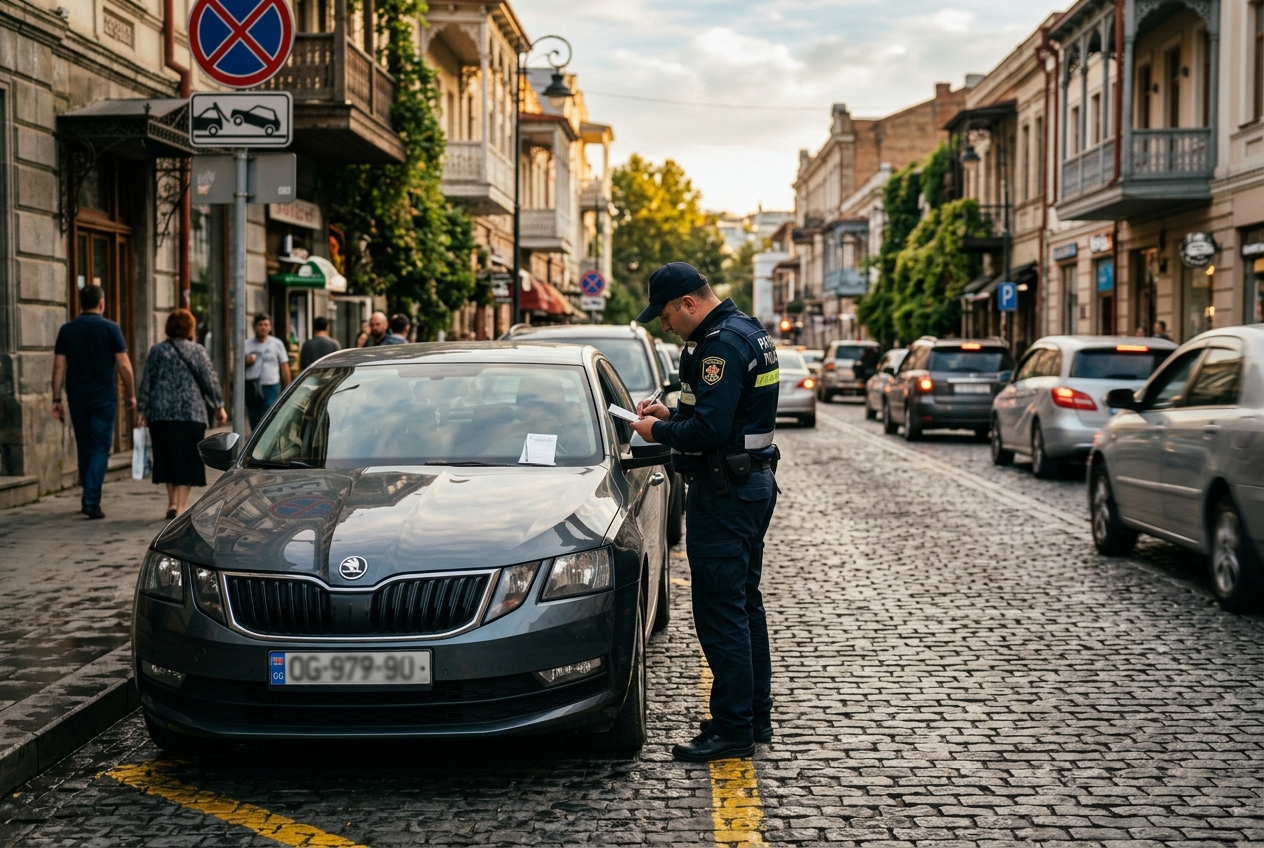
Georgia’s roads tell a story of rapid modernization. A decade ago, traffic enforcement was inconsistent, bribery was common, and parking in Tbilisi felt like a contact sport. Since the Rose Revolution reforms and the overhaul of the patrol police, things have changed dramatically. The country now relies on automated cameras, a digital point system, and increasingly strict penalties to keep drivers in line. But for anyone new to the country, whether you’re a tourist renting a car or an expat settling in, the rules around traffic fines and parking in Georgia can feel opaque. Fines are issued in Georgian lari, notifications sometimes arrive only via SMS, and the appeals process isn’t exactly intuitive. I’ve seen plenty of travelers get blindsided by a speeding ticket they didn’t know existed until they tried to leave the country. This guide breaks down everything you need to know: how the enforcement system works, what violations cost, how parking operates in major cities, and what happens if you ignore a fine. Consider it your practical roadmap to staying out of trouble on Georgian roads.
Overview of Georgia’s Road Regulations and Enforcement
Georgia’s traffic laws are governed by the Law on Road Traffic Safety, and enforcement has become increasingly technology-driven over the past decade. The country’s approach blends on-the-ground policing with automated systems that catch violations in real time. If you’re used to driving in Western Europe, you’ll find the rules familiar on paper: speed limits, seatbelt requirements, no phone use while driving, mandatory headlights in tunnels. The difference is in how strictly and consistently these rules are now enforced, and how quickly fines can pile up if you’re not paying attention.
The Role of the Patrol Police and Video Surveillance
The Patrol Police (საპატრულო პოლიცია) are the primary enforcers on Georgian roads. They were rebuilt from scratch in 2004, replacing the notoriously corrupt traffic police, and today they’re considered one of the most trusted institutions in the country. Officers patrol highways and city streets, and they can issue fines on the spot for violations they witness.
But the bigger shift has been toward automated enforcement. Speed cameras and red-light cameras are installed throughout Tbilisi, along major highways like the E60, and increasingly in other cities. These cameras capture your license plate, and the fine is automatically linked to the vehicle owner. You won’t get pulled over; you’ll just get a notification later. For rental car users, this means the fine typically gets charged to the rental company and then passed to your credit card, sometimes with an administrative fee on top.
Understanding the Driver’s License Point System
Georgia uses a cumulative point system to track driving behavior. Every driver starts with a clean slate, and points are added for each violation. The system is designed to escalate consequences for repeat offenders.
Drivers who accumulate 15 points within a 24-month period face license suspension. Points are assigned based on severity: minor infractions like improper lane changes might add a few points, while speeding or reckless driving can add significantly more. Recent legislative changes have made the system tougher, with maneuvering violations and speeding now carrying 20-point deductions alongside increased monetary fines. That means a single serious offense can put you more than halfway to suspension. For foreign drivers, points don’t transfer to your home license, but unpaid fines can prevent you from leaving the country or renting a car again.
Common Traffic Violations and Fine Structures
Georgian traffic fines are denominated in Georgian lari (GEL), and they range from modest penalties for minor infractions to severe financial and criminal consequences for dangerous behavior. Here’s a breakdown of the most common violations and what they’ll cost you.
Speeding and Reckless Driving Penalties
Speed limits in Georgia are generally 60 km/h in urban areas, 80 km/h on rural roads, and 110 km/h on highways. Camera tolerance is minimal, so don’t count on a buffer.
| Violation | Fine (GEL) | Points |
|---|---|---|
| Exceeding limit by up to 15 km/h | 50 GEL | 0 |
| Exceeding limit by 15-40 km/h | 100 GEL | 20 |
| Exceeding limit by 40+ km/h | 150 GEL | 20 |
| Reckless driving / dangerous maneuvers | 100 GEL | 20 |
| Running a red light | 100 GEL | 20 |
| Seatbelt violation | 50 GEL | 0 |
The recent amendments pushed many of these fines upward, with the baseline for speeding and maneuvering violations rising to 100 GEL. That’s roughly $37 USD at current exchange rates, which doesn’t sound catastrophic, but the point deductions are what really sting for residents. Two speeding tickets in a year and you’re already over the 15-point suspension threshold.
Reckless driving, aggressive overtaking on mountain roads (a common problem on the Tbilisi-Batumi highway), and illegal U-turns all carry similar penalties. I’ve personally witnessed some hair-raising overtaking on blind curves in Svaneti, and the cameras are slowly making their way into these areas too.
DUI Laws and Severe Infractions
Georgia takes drunk driving seriously, and the penalties reflect it. The legal blood alcohol limit is 0.03%, which is effectively zero tolerance. Even one glass of wine at a supra could put you over the line.
A first DUI offense carries a fine of 500 GEL and a one-year license suspension. A second offense within a year escalates to 1,500 GEL and a three-year suspension. Third offenses can result in criminal charges and imprisonment. Police conduct random breathalyzer checkpoints, particularly on weekend nights in Tbilisi and along resort-area roads in summer.
Other severe infractions include driving without a license (200 GEL), fleeing the scene of an accident (criminal charges), and phone use while driving (50 GEL). One newer law worth knowing: unlawfully passing a school bus now carries a minimum fine of $1,000 and up to 12 months in jail, reflecting a broader push toward pedestrian and child safety.
Navigating Parking Systems in Major Cities
Parking in Georgian cities has evolved from total chaos to a structured, zone-based system. It’s still not perfect, and enforcement varies by city, but understanding the basics will save you a lot of headaches and unexpected fines.
Tbilisi Parking (Tbilisi Transport Company) Rules
Tbilisi’s parking system is managed by the Tbilisi Transport Company (TTC), and it covers most of the central districts. The city is divided into color-coded parking zones, each with different hourly rates. Red zones (the city center around Rustaveli Avenue, Freedom Square, and Old Town) are the most expensive, while blue and green zones on the periphery cost less.
Hourly rates in the red zone are typically 1-2 GEL per hour, which is very affordable by European standards. But here’s the catch: if you park without registering or overstay your time, the fine is 50 GEL. Enforcement officers walk the streets and check registrations, and they’re more diligent than you might expect.
You register your parking by sending an SMS with your license plate number and zone code to a designated number, or by using the TTC mobile app. The app is in Georgian, but it’s navigable with a bit of patience or Google Translate. I’d recommend downloading it before you arrive.
Parking Regulations in Batumi and Kutaisi
Batumi has implemented its own zone-based parking system, particularly along the boulevard and in the city center. The system works similarly to Tbilisi’s: SMS registration, zone codes, and fines for non-compliance. Rates are slightly lower than Tbilisi, usually around 0.5-1 GEL per hour, reflecting the smaller city’s lower demand.
Kutaisi’s parking system is less formalized. While the central streets around the Bagrati Cathedral area and the main market have designated paid zones, enforcement is spottier. That said, illegal parking, especially blocking sidewalks or parking in restricted areas, will still get you a ticket. The patrol police in Kutaisi are active and won’t hesitate to fine you or tow your vehicle if you’re blocking traffic.
Zones, Permits, and Mobile App Payments
The zone system across Georgian cities generally follows a tiered structure. Atlanta’s approach of removing parking minimums near transit stations offers an interesting contrast to how Georgian cities are still building out their transit-integrated parking policies, though Tbilisi is moving in a similar direction near metro stations.
Residents in Tbilisi can apply for monthly or annual parking permits for their home zone, which significantly reduces costs compared to hourly rates. The permit application is handled through the TTC office or their website. For tourists and short-term visitors, the SMS and app payment methods are the most practical options. The Bolt app, which most visitors already have for ride-hailing, doesn’t handle parking payments, so you’ll need the dedicated TTC app or a local SIM card for SMS payments.
One practical tip: Georgian parking meters are rare. Almost everything is handled digitally. If you don’t have a Georgian phone number, get a Magti or Geocell SIM card at the airport for a few lari. It’ll be useful for parking registration, fine notifications, and general connectivity.
How to Check and Pay Traffic Fines
One of the most common frustrations for drivers in Georgia is discovering a fine they didn’t know about. Since most violations are caught by camera, there’s no immediate interaction with police. You find out later, sometimes much later.
Using Official Government Portals and SMS Alerts
The primary portal for checking traffic fines is the Ministry of Internal Affairs website (police.ge). You can search by your personal ID number (for residents) or by your vehicle license plate number. The system shows all outstanding fines, their amounts, dates, and the specific violations.
If you have a Georgian phone number registered to your name or your vehicle, you’ll receive SMS notifications when a fine is issued. This usually happens within a few days of the violation. For rental cars, the rental company typically receives the notification and forwards it to you, though this process can be slow.
I’d recommend checking the portal proactively before you leave the country. Unpaid fines can cause problems at the border, and some rental companies will charge your card weeks after you’ve returned home, with added fees for their trouble.
Payment Methods: Pay Boxes, Banks, and Online
Georgia offers several ways to pay traffic fines:
- Online through the police.ge portal using a Georgian bank card or international Visa/Mastercard
- At TBC Bank or Bank of Georgia branches, where you can pay at the counter with cash
- Through pay boxes (self-service terminals found in supermarkets, metro stations, and pharmacies) by entering the fine number
- Via mobile banking apps if you have a Georgian bank account
Pay boxes are the most convenient option for visitors without Georgian bank accounts. They accept cash in lari and are available 24/7. The interface is usually available in Georgian and sometimes Russian, but rarely English. Look for the “fines” or “police” category in the menu.
Consequences of Non-Payment and Appeals
Ignoring a traffic fine in Georgia is a bad idea. The system is designed to escalate, and the consequences compound quickly.
Late Fees and License Suspension Risks
If you don’t pay a fine within 30 days, a late fee is added, typically doubling the original amount. A 100 GEL speeding fine becomes 200 GEL. After continued non-payment, the case can be referred to the National Bureau of Enforcement, which has the authority to freeze bank accounts, garnish wages, and restrict property transactions.
For Georgian residents, accumulated unpaid fines combined with point deductions can lead to license suspension. For foreign nationals, unpaid fines are flagged in the border control system. I’ve heard firsthand accounts of travelers being stopped at Tbilisi International Airport and required to pay outstanding fines before being allowed to board their flight. It’s not a common occurrence, but it happens, and it’s not a situation you want to deal with at 4 AM before an early departure.
The Process for Contesting a Fine
If you believe a fine was issued in error, you have 10 days from the notification date to file an appeal. The process involves submitting a written complaint to the Patrol Police department, either in person or through their website. You’ll need to provide your reasoning and any supporting evidence, such as photos showing the camera was wrong or proof that your vehicle wasn’t at the location.
Appeals are reviewed within 30 days. If the appeal is denied, you can escalate to the administrative court, though this is rarely practical for tourists. The reality is that camera-based fines are difficult to contest because the photographic evidence is usually clear. Your best bet for a successful appeal is if the license plate was misread or if you can prove the vehicle was being driven by someone else at the time.
Essential Tips for Foreign Drivers and Rental Users
Driving in Georgia as a foreigner is manageable, but a few practical considerations will make the experience much smoother.
First, your home country’s driver’s license is valid in Georgia for up to one year, provided it’s accompanied by an International Driving Permit (IDP) or an official translation. EU and US licenses are generally accepted without issues, but having an IDP eliminates any ambiguity during a police stop.
Second, rental car companies in Georgia vary widely in quality. Stick with established companies or well-reviewed local operators. Always photograph the car thoroughly before driving off the lot, and confirm in writing how traffic fines will be handled. Some companies add a 30-50 GEL administrative fee per fine on top of the actual penalty.
Third, be aware of road conditions outside major cities. Georgian mountain roads, particularly in Tusheti, Svaneti, and parts of Kakheti, can be unpaved, narrow, and lack guardrails. Speed limits drop significantly, and your rental insurance may not cover damage on unpaved roads. Always check your policy.
A few more quick tips:
- Keep cash in lari for pay box fine payments and parking
- Download the TTC parking app and get a local SIM card on arrival
- Check police.ge for fines before departing the country
- Don’t drink and drive, even after a single glass of wine at a supra
- Carry your license, IDP, and rental agreement at all times
Understanding traffic fines and parking rules in Georgia isn’t complicated once you know the system. The infrastructure is modernizing fast, fines are increasingly automated, and the days of talking your way out of a ticket are long gone. Pay attention to speed limits, register your parking, and check for fines before you leave. Do that, and you’ll spend your time in Georgia enjoying the food, the mountains, and the hospitality rather than sorting out paperwork at a police station.