
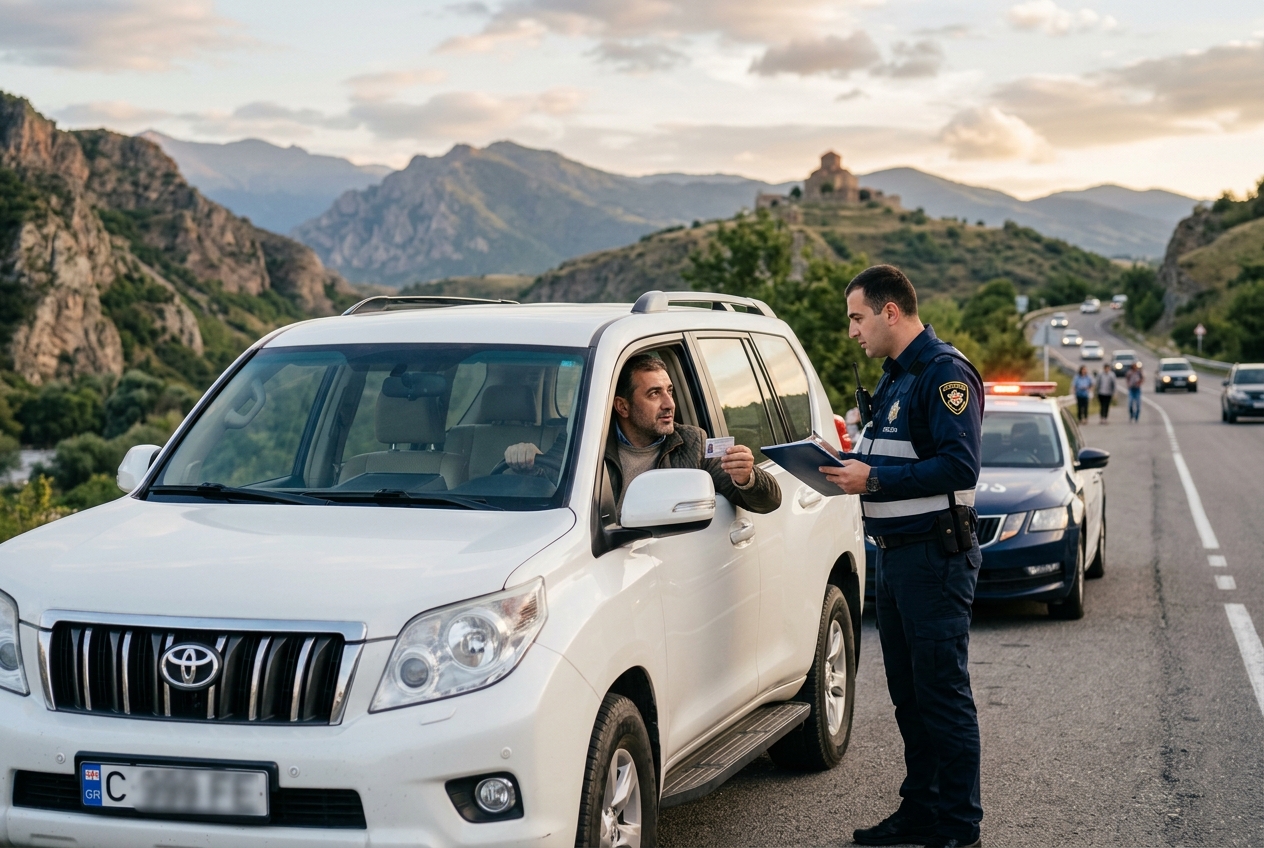
Getting pulled over in a foreign country can rattle even seasoned travelers. Your palms sweat, your mind races through worst-case scenarios, and you suddenly can’t remember a single word in the local language. Georgia – the country nestled between the Caucasus Mountains and the Black Sea, not the U.S. state – has earned a reputation as one of the safest and most tourist-friendly destinations in the region. But its roads tell a different story. Georgian drivers are famously bold, mountain highways can be treacherous, and speed cameras are everywhere. Knowing how to handle encounters with Georgian traffic police can save you money, stress, and potentially a day stuck at a police station. Whether you’re a tourist renting a car in Tbilisi or an expat commuting daily, this guide covers what you actually need to know: the procedures, the fines, the rights, and the cultural nuances that make Georgia’s system distinct.
Understanding the Role of the Georgian Patrol Police
Georgia’s traffic enforcement is handled by the Patrol Police, a division that was completely rebuilt from the ground up after the Rose Revolution in 2003. If you’ve heard stories about the old Georgian traffic cops demanding bribes at every checkpoint, forget them. That era is genuinely over. The post-revolution government under Mikheil Saakashvili fired the entire traffic police force and replaced it with a new, Western-trained patrol service. The transformation was so dramatic that international organizations have studied it as a model for police reform.
Today’s Georgian Patrol Police operate under the Ministry of Internal Affairs and handle everything from traffic violations to emergency response. They’re generally professional, and their reputation among both locals and tourists is surprisingly positive. You’ll see them most often on major highways, at city intersections, and near speed camera zones. Their primary role on the roads is enforcement of traffic laws, accident response, and ensuring public safety – not revenue generation through petty stops.
How to Identify Official Vehicles and Officers
Patrol Police vehicles in Georgia are hard to miss. They drive white sedans and SUVs marked with distinctive blue and red stripes and the word “პატრული” (Patruli) on the side. Most vehicles are relatively modern and equipped with roof-mounted light bars. Unmarked cars do exist but are far less common for routine traffic stops.
Officers wear dark blue or black uniforms with clearly visible badges and identification numbers. Every officer carries an ID card, and you have the right to ask to see it. If someone in plain clothes or an unmarked vehicle tries to stop you and something feels off, you can call 112 (Georgia’s emergency number) to verify the stop is legitimate. This is rare, but it’s worth knowing.
The Zero-Tolerance Policy on Corruption and Bribery
Here’s the single most important thing to understand: do not, under any circumstances, attempt to bribe a Georgian police officer. The country’s anti-corruption reforms have been remarkably successful, and offering money to an officer will almost certainly make your situation dramatically worse. You could face criminal charges on top of whatever traffic violation prompted the stop.
I’ve spoken with travelers who tried the “can we work something out?” approach that might fly in some neighboring countries. In Georgia, it doesn’t work. Officers are monitored, many patrol cars have dashcams, and the institutional culture genuinely discourages corruption. If you’re fined, pay through official channels. Period.
Standard Procedures During a Traffic Stop
A traffic stop in Georgia follows a fairly predictable pattern, and understanding it beforehand removes most of the anxiety. The officer will signal you to pull over using lights, a hand gesture, or occasionally a loudspeaker. Pull to the right side of the road safely and turn off your engine. Stay in the car unless asked to step out.
Immediate Actions and Communication Etiquette
Keep your hands visible, preferably on the steering wheel. The officer will approach your window and greet you, usually in Georgian. A simple “gamarjoba” (hello) goes a long way. Even if you butcher the pronunciation, Georgians appreciate the effort.
The officer will explain why you’ve been stopped. If you don’t understand Georgian, say “inglisuri?” (English?) or simply “English, please.” Many younger officers speak at least basic English, especially in Tbilisi and Batumi. As one legal resource notes, drivers who keep a clear head and focus on their rights stand a better chance of moving on with their day. Stay calm, be polite, and don’t argue on the roadside. If you disagree with the violation, the time to contest it is later, not during the stop.
Required Documentation for Locals and Foreigners
You’ll need to present three documents:
- Your driver’s license: An international driving permit (IDP) is recommended if your license isn’t in Latin script, though many officers accept EU and U.S. licenses
- Vehicle registration: If you’re renting, this should be in the glove compartment
- Passport or ID: Foreigners should always carry their passport while driving
Georgian residents must also carry their national ID and insurance documents. If you’re driving a rental car, keep the rental agreement accessible. Officers occasionally want to verify that the driver matches the rental contract, especially if the car has Tbilisi plates but you’re stopped in a rural area.
Common Traffic Violations and Fine Structures
Georgia’s traffic fines are relatively affordable compared to Western Europe, but they add up quickly if you’re not paying attention. Here’s a breakdown of the most common violations and their costs:
| Violation | Fine (GEL) | Approximate USD |
|---|---|---|
| Running a red light | 150 GEL | ~$55 |
| Speeding (up to 40 km/h over limit) | 50-150 GEL | ~$18-55 |
| Speeding (40+ km/h over limit) | 300 GEL | ~$110 |
| Seatbelt violation | 40 GEL | ~$15 |
| Using phone while driving | 50 GEL | ~$18 |
| Driving under the influence | 2,500 GEL+ | ~$920+ |
| Parking violations | 10-50 GEL | ~$4-18 |
Speeding and Video Surveillance Systems
Georgia has invested heavily in automated speed enforcement. Fixed cameras line major highways, particularly the E60 connecting Tbilisi to the western coast. These cameras are accurate and unforgiving – there’s no “grace zone” of a few km/h over the limit like you might find elsewhere.
Mobile speed cameras also pop up in unexpected places, especially on the road to Kazbegi and along the Black Sea coastal highway. Fines from automated cameras are mailed to the vehicle’s registered owner, which means rental companies will charge your credit card and add an administrative fee. Some rental agencies charge 20-30 GEL on top of the fine itself.
Georgia also enforces a hands-free law that bans drivers from holding their phones while driving. Texting, scrolling, or even holding your phone to your ear will earn you a fine. Mount your phone on the dashboard if you need it for navigation – Google Maps and Waze both work well in Georgia, and the Bolt app is essential for those times you’d rather skip driving altogether.
Strict Regulations on Driving Under the Influence
Georgia takes drunk driving extremely seriously. The legal blood alcohol limit is 0.0% for drivers under 21 and professional drivers, and 0.03% for everyone else. That 0.03% threshold is essentially zero tolerance – even one glass of wine can put you over.
A first DUI offense carries a minimum fine of 2,500 GEL (roughly $920), license suspension, and possible vehicle impoundment. Repeat offenders face criminal prosecution and jail time. Georgia’s famous wine culture makes this a genuine trap for tourists. After a day of tasting in Kakheti, do not drive. Use a taxi, hire a local driver, or book a tour that includes transportation. Yandex Go and Bolt both operate in wine country, and rides are cheap.
Roadside breathalyzer tests are common, especially on weekend nights in Tbilisi and during holiday periods like New Year’s. Officers have the right to administer the test, and refusing it carries the same penalties as failing it.
How to Pay or Contest a Traffic Fine
If you’ve been fined, you have options. The system is straightforward once you know where to look.
Methods of Payment: Online and Pay Boxes
The easiest way to pay a traffic fine is through the Bank of Georgia or TBC Bank mobile apps, which most visitors set up anyway for daily transactions. You can also pay at yellow pay boxes (self-service terminals) found in metro stations, shopping centers, and on street corners throughout Tbilisi and other cities. These terminals accept cash and are available in Georgian, English, and Russian.
For online payment, visit the Ministry of Internal Affairs website (police.ge) and enter your vehicle plate number or fine reference code. The system will show any outstanding violations. Credit cards issued outside Georgia sometimes have issues with the payment portal, so the pay box method is often more reliable for tourists.
Citizens can also report traffic violations to their local traffic unit by providing the license plate number and a description of the incident, which means other drivers may report you for dangerous behavior even if no police officer witnessed it.
Deadlines and Penalties for Late Payment
You typically have 30 days to pay a traffic fine. After that, the amount doubles. If you still don’t pay, the case gets referred to the National Bureau of Enforcement, which can freeze bank accounts and restrict your ability to leave the country.
For tourists, unpaid fines are linked to the vehicle’s registration. Rental companies will charge your card on file, often weeks after you’ve left. If you were driving your own car (common for overland travelers entering from Turkey or Armenia), the fine will be linked to your license plate and could cause problems at the border on your next visit.
If you believe a fine was issued in error, you have 10 days to file an appeal through the Patrol Police department or the relevant court. Appeals can be filed in person or through a lawyer. For camera-generated fines, you can request photographic evidence showing the violation.
Navigating Language Barriers and Legal Rights
Language is the biggest practical challenge when dealing with traffic police in Georgia, especially outside major cities. In Tbilisi, Batumi, and Kutaisi, you’ll often encounter officers who speak conversational English. In rural Svaneti, Tusheti, or along mountain passes, Georgian and Russian are your only options.
Using Translation Apps and English-Speaking Officers
Download Google Translate’s offline Georgian language pack before your trip. It’s not perfect, but it handles basic phrases well enough to communicate during a traffic stop. The camera translation feature can also help you read documents or signs the officer shows you.
A generational split exists in Georgia’s language abilities. Officers over 40 often speak Russian fluently, a holdover from the Soviet era. Younger officers, especially those trained after 2003, are more likely to know English. Georgia ranks modestly on the EF English Proficiency Index, but the trend among the under-30 generation is clearly toward English.
You have the right to request an interpreter if you’re being formally charged or detained, though this right is more practical in Tbilisi than in a village in Racha. For routine stops and minor fines, pointing at your documents, using translation apps, and maintaining a friendly demeanor will get you through. Georgian culture places enormous value on hospitality – the concept of “stumari ghvtisaa” (a guest is from God) – and most officers extend extra patience to foreign visitors who are clearly trying to cooperate.
If you’re detained or facing serious charges, contact your embassy immediately. You also have the right to a lawyer, and several English-speaking law firms in Tbilisi specialize in helping foreigners with legal matters.
Safety Tips for Driving on Georgian Roads
Georgian roads demand respect. The main highways between Tbilisi, Batumi, and Kutaisi are generally well-maintained, but secondary roads can deteriorate quickly. Mountain routes like the Abastumani pass or the road to Ushguli are unpaved, narrow, and sometimes terrifying. Livestock on the road is not a joke – cows, horses, and sheep treat highways as their personal territory, especially in Kakheti and Tusheti.
Georgia’s move-over law requires drivers to change lanes or slow down when approaching stopped emergency vehicles with flashing lights. This rule is actively enforced and carries real fines.
A few practical tips that will keep you out of trouble:
- Avoid driving at night on mountain roads; guardrails are rare and lighting is nonexistent
- Use your horn liberally on blind curves, especially on single-lane mountain passes
- Keep your headlights on during the day on highways; it’s legally required
- Don’t follow the speed of local drivers; they know the roads, you don’t
- Carry cash for tolls and fuel in rural areas where card readers may be offline
- Always wear your seatbelt; front and rear passengers alike
Winter driving requires chains or winter tires on mountain passes, and the Jvari Pass (on the way to Kazbegi) closes periodically due to avalanche risk. Check road conditions through the Patrol Police’s social media channels, which post updates in Georgian and occasionally in English.
The honest truth about driving in Georgia is that the police are the least of your worries. It’s the other drivers, the road conditions, and the occasional cow standing in your lane at 2 AM that will test you. Stay alert, stay sober, drive defensively, and treat every interaction with the Patrol Police as a routine procedure rather than a confrontation. Georgia is a country that genuinely welcomes visitors, and its police force reflects that. Know your rights, carry your documents, pay your fines on time, and you’ll have nothing but good stories to bring home.