
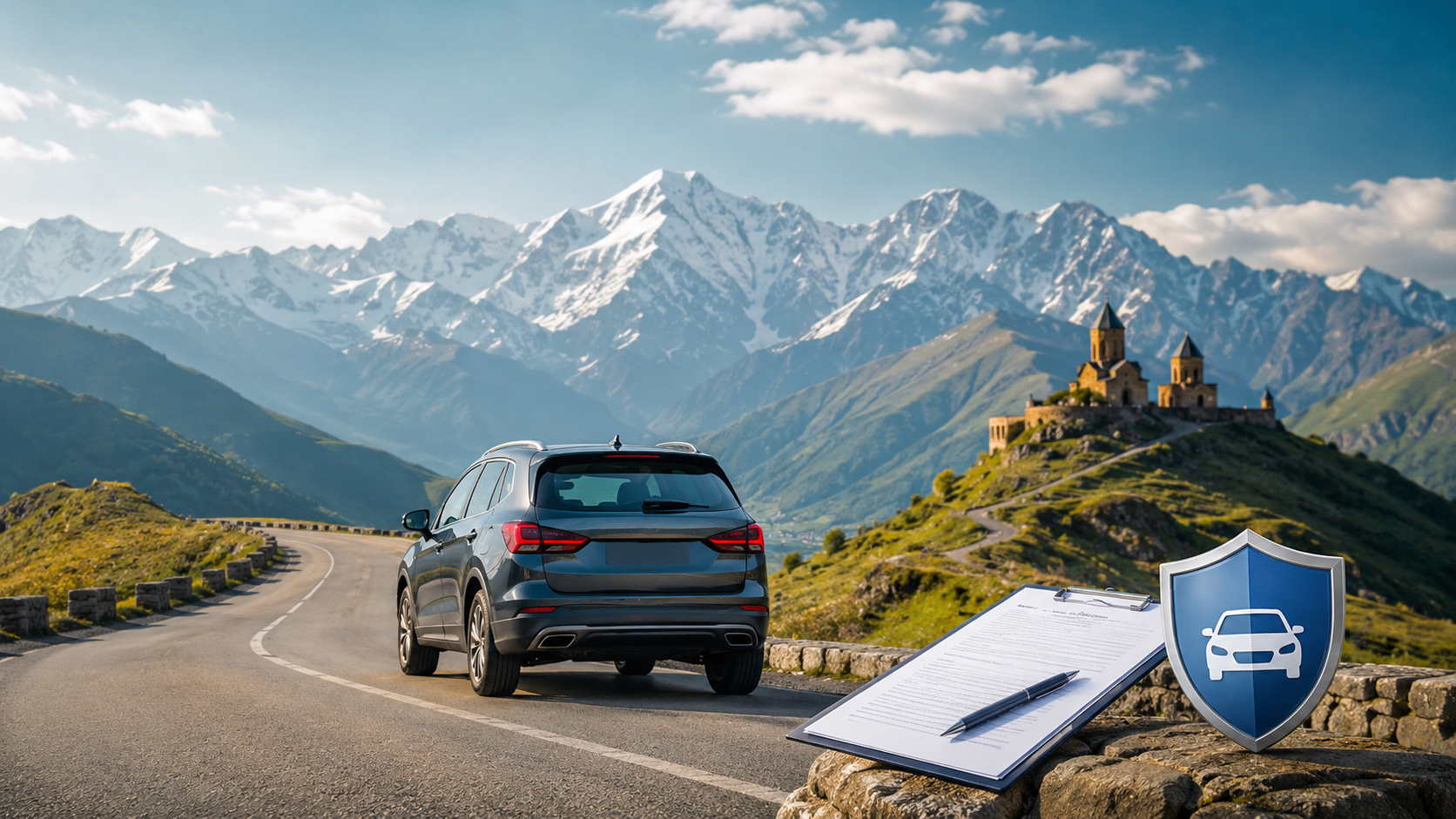
Georgia, the small Caucasus nation wedged between Europe and Asia, has become one of the most exciting road-trip destinations on the planet. From the winding mountain passes of Svaneti to the semi-desert canyons near Davit Gareja, driving yourself is often the only way to reach the country’s most breathtaking spots. But here’s the thing most travel blogs gloss over: car insurance in Georgia works differently than what you’re used to back home, and the rules are changing fast. Whether you’re crossing the border in your own vehicle or picking up a rental in Tbilisi, understanding your insurance obligations can save you from fines, legal headaches, and potentially devastating out-of-pocket costs. A surprising number of travelers arrive without adequate coverage, only to discover the gap when it’s too late. This guide breaks down exactly what tourists need to know about driving insurance in this country, from legal minimums and border policies to rental car fine print and what happens if you’re involved in a collision on a poorly marked mountain road.

Legal Requirements for Foreign Drivers in Georgia
Georgia has been steadily tightening its regulations around foreign drivers over the past few years. The country’s roads, while dramatically beautiful, can be unpredictable: livestock wandering across highways, unmarked construction zones, and aggressive local driving habits are all part of the experience. Understanding the legal framework before you arrive is not optional; it’s essential.
The Georgian government has also announced that starting January 1, 2026, all tourists entering the country will be required to carry health and accident insurance with a minimum coverage of 30,000 GEL (roughly $11,000 USD). This is separate from vehicle insurance and signals a broader push toward protecting both visitors and the local healthcare system.
Compulsory Third-Party Liability (TPL) Insurance
Every vehicle operating on Georgian roads must carry third-party liability insurance. This is the absolute baseline: it covers damage you cause to other people and their property, but not your own vehicle or injuries to yourself. If you’re entering Georgia with a foreign-registered car, you’ll need to purchase a TPL policy at the border or online before arrival.
The minimum liability thresholds in Georgia are structured similarly to international norms. For context, comparable requirements in other countries mandate at least $25,000 for bodily injury per person, $50,000 per accident, and $25,000 for property damage. Georgian TPL policies are relatively affordable, typically ranging from 50 to 150 GEL depending on the vehicle type and duration of stay.
Don’t assume your home country’s insurance extends to Georgia. Most European green card systems do not cover the Caucasus, and North American policies almost never apply internationally. Check with your insurer before your trip.
Valid Driving Licenses and Permits
Georgia recognizes most foreign driving licenses for stays of up to one year. If your license is in Latin script, you’re generally fine. If it’s in Cyrillic, Arabic, or another non-Latin script, you’ll need an International Driving Permit (IDP) alongside your original license.
Carry both documents at all times. Georgian patrol police conduct roadside checks, especially on major routes between Tbilisi and popular tourist areas like Kazbegi or Batumi. Officers from the older, Soviet-educated generation may speak Russian but limited English, while younger officers increasingly speak English. Having your paperwork in order avoids unnecessary delays. An IDP costs around $20 from your home country’s automobile association and takes minutes to obtain: do it before you leave.
Mandatory Insurance for Foreign-Registered Vehicles
If you’re driving your own car or a vehicle registered outside Georgia into the country, the insurance situation requires specific attention. This applies to overland travelers entering from Turkey, Armenia, or Azerbaijan, as well as anyone shipping a vehicle.
Where and How to Purchase Border Insurance
Border insurance is available at every major land crossing into Georgia. At the Sarpi border (Turkey-Georgia), the Sadakhlo crossing (Armenia-Georgia), and the Red Bridge (Azerbaijan-Georgia), you’ll find small insurance kiosks right at the checkpoint. The process takes about 10 to 15 minutes and requires your passport, vehicle registration, and payment in GEL or sometimes USD.
Here’s a breakdown of typical costs and options:
| Coverage Duration | Approximate Cost (GEL) | Coverage Type |
|---|---|---|
| 15 days | 50-80 GEL | Basic TPL |
| 1 month | 80-120 GEL | Basic TPL |
| 3 months | 120-200 GEL | Basic TPL |
| 6 months | 200-350 GEL | Extended TPL |
You can also purchase policies online through Georgian insurance providers like Aldagi or TBC Insurance before you arrive. I’d recommend this approach if you want to avoid the sometimes chaotic border experience, especially during peak summer months when lines at Sarpi can stretch for hours.
Fines and Penalties for Non-Compliance
Driving without insurance in Georgia carries real consequences. Fines can range significantly, and in comparable jurisdictions, penalties for uninsured driving span from $25 to $1,000 plus additional fees, with potential jail time of up to one year for repeat offenders. Georgian authorities have become increasingly strict about enforcement, particularly along the main E60 highway corridor.
An estimated 19% of drivers in some comparable markets operate without insurance, which means you’re statistically more likely to be hit by an uninsured driver than in Western Europe. This makes your own coverage even more critical. If an uninsured Georgian driver hits you and you lack proper coverage, recovering costs through the local court system can take months or years.
Insurance Considerations for Rental Car Users
Renting a car is the most common way tourists explore Georgia, and the rental insurance situation here is a minefield of confusing terms and hidden costs. Tbilisi has dozens of rental agencies ranging from international chains like Hertz to small local operators on Rustaveli Avenue.
Collision Damage Waiver (CDW) vs. Full Coverage
Most rental companies include basic CDW in their quoted price, but “basic” is doing a lot of heavy lifting in that sentence. Standard CDW in Georgia typically comes with an excess (deductible) of 500 to 1,500 GEL, meaning you’re on the hook for that amount before the insurance kicks in. Full coverage, sometimes called “super CDW” or “zero excess,” eliminates or drastically reduces that deductible but adds 15 to 30 GEL per day to your rental cost.
Your personal auto insurance policy from home may provide some protection. As insurance professionals note, personal auto policies may extend coverage to rental vehicles depending on the policy’s specifics, including liability, collision, and comprehensive. However, this typically applies to domestic rentals. International coverage varies wildly by provider, so call your insurer and get written confirmation before relying on this.
Credit card rental insurance is another option, but read the fine print carefully. Many cards exclude countries outside the EU and North America, and almost none cover SUVs or 4×4 vehicles, which are exactly what you need for Georgia’s mountain roads.
Off-Road Driving Restrictions and Exclusions
This is where most tourists get burned. Georgia’s best destinations, including Tusheti, Juta Valley, and the road to Ushguli, require driving on unpaved mountain tracks. Nearly every standard rental insurance policy in Georgia excludes coverage for damage sustained on unpaved roads. Read that again.
If you flip a rental Mitsubishi Pajero on the Abano Pass (the notoriously dangerous road to Tusheti, which climbs to nearly 3,000 meters), your CDW almost certainly won’t cover the damage. Some local rental agencies offer specific off-road packages, but they’re expensive: expect to pay an additional 40 to 80 GEL per day. Companies like Hertz Georgia and local operator Geotrip explicitly list road exclusions in their contracts. Ask to see these exclusions in writing before signing anything.
Choosing the Right Coverage Level for Your Trip
The right insurance setup depends entirely on your itinerary. A week in Tbilisi and Batumi sticking to paved highways is a completely different risk profile than a two-week overland adventure through Svaneti and Kakheti’s back roads.
Theft and Vandalism Protection
Vehicle theft rates in Georgia are relatively low compared to Western European tourist hotspots, but break-ins do happen, particularly in Tbilisi’s older neighborhoods and at remote trailhead parking areas. Standard CDW does not cover theft of personal belongings from the vehicle, only theft of the vehicle itself.
If you’re carrying expensive camera equipment, hiking gear, or laptops, consider a separate travel insurance policy that covers personal property. Policies from providers like World Nomads or SafetyWing include baggage and personal effects coverage that fills this gap. For the vehicle itself, comprehensive coverage (which includes theft and vandalism) is worth the upgrade if you’re parking overnight in rural areas or leaving your car at guesthouses in small villages.
Personal Accident Insurance for Passengers
Georgian rental car insurance rarely includes personal accident coverage for the driver or passengers. This is a significant gap, especially given the country’s road conditions. Georgia’s traffic fatality rate is substantially higher than the EU average, and mountain roads with steep drop-offs and no guardrails are common.
Personal accident insurance covers medical expenses, disability, and death benefits for vehicle occupants regardless of fault. You can purchase this as a standalone policy or as part of a comprehensive travel insurance package. Given that a serious injury requiring medical evacuation from a remote area like Upper Svaneti could cost $20,000 or more, the $30 to $50 for a two-week personal accident policy is money well spent. The upcoming 2026 mandatory tourist health insurance requirement will partially address this, but until then, you’re responsible for arranging your own coverage.
What to Do in Case of an Accident
Even careful drivers can end up in accidents in Georgia. The combination of narrow roads, aggressive overtaking by local drivers, and occasional livestock encounters makes incidents more common than you might expect.
Contacting the Patrol Police and Insurance Providers
If you’re involved in an accident, do not move the vehicles until police arrive. This is both a legal requirement and critical for your insurance claim. Call 112 (Georgia’s universal emergency number) to reach the patrol police. Response times in Tbilisi are usually under 15 minutes; in rural areas, expect 30 minutes to over an hour.
Georgian patrol police are generally reliable and professional, especially with foreign tourists. Officers will create an official accident protocol document, which you absolutely need for any insurance claim. Without this police report, most insurers will deny your claim outright. If the other driver tries to settle informally with cash on the spot, resist the temptation unless the damage is truly trivial. Informal settlements leave you with no recourse if hidden damage appears later.
Contact your insurance provider’s emergency line as soon as possible. Most Georgian insurers (Aldagi, TBC Insurance, ARDI) have 24/7 hotlines with English-speaking operators. If you’re using rental car insurance, call the rental company first: they’ll coordinate with their insurer.
Documenting the Scene for Claims
Your smartphone is your best friend here. Before anything gets moved, take photos and videos of everything: both vehicles from multiple angles, the road conditions, any skid marks, traffic signs, and the surrounding area. Capture the other driver’s license plate, their insurance certificate, and their ID.
Get contact information from any witnesses. Georgian bystanders are often willing to help, and a witness statement can be decisive in disputed claims. Write down the exact time, location (drop a pin on Google Maps), and weather conditions. If you have a dashcam, do not turn it off or delete footage. Many rental agencies now offer dashcam-equipped vehicles for a small surcharge, and I’d strongly recommend paying for one, especially on mountain routes.
Keep all receipts for related expenses: towing, temporary accommodation, medical treatment. Georgian insurers reimburse documented costs but are strict about requiring original receipts.
Practical Tips for Navigating Georgian Roads Safely
The best insurance policy is not needing to use one. Georgian roads demand a different kind of attention than most Western drivers are accustomed to. Download offline maps through Google Maps or Maps.me before heading into mountainous regions where cell service drops entirely. The Bolt app works well for estimating distances and times in urban areas, even if you’re driving yourself.
Avoid driving at night outside major cities. Unlit roads, wandering cattle, and drivers without functioning headlights make nighttime driving genuinely dangerous. If you’re heading to Tusheti, Omalo, or Upper Svaneti, start early in the morning and give yourself plenty of daylight hours.
Fill up your tank whenever you see a gas station in rural areas. The gap between fuel stops in mountainous regions can be 80 to 100 kilometers, and running out of gas on a mountain pass is a situation no insurance policy will make comfortable. Socar and Wissol are the most reliable fuel chains, with stations scattered along major routes.
Keep a printed copy of your insurance documents, rental agreement, and passport in the glove compartment. Digital copies on your phone are great until your battery dies at the worst possible moment. And finally, drive defensively. Georgian drivers are skilled but aggressive, and the local approach to lane markings and speed limits is best described as “advisory.” Give yourself extra following distance, honk before blind curves on mountain roads (locals do this constantly), and never assume the other driver will yield.
Georgia rewards those who explore it by car like few other countries can. The freedom to pull over at a random vineyard in Kakheti, chase a sunset over the Caucasus peaks, or stumble onto a centuries-old monastery down an unmarked track is worth every bit of preparation. Get your insurance sorted before you arrive, understand what your policy actually covers, and you’ll spend your trip focused on the incredible scenery rather than worrying about what happens if something goes wrong.