
Georgia’s relationship with tobacco is complex. The country that gave the world some of its finest wines and a legendary culture of feasting also has a significant smoking population, and the rules around where you can and can’t light up have evolved considerably over the past decade. If you’re visiting Tbilisi, heading to Batumi for the summer, or just trying to understand your rights as a resident, knowing Georgia’s smoking regulations will save you from awkward encounters, fines, or accidentally breaking the law. The country enacted its most significant anti-tobacco legislation in 2017 and has continued tightening restrictions since. Whether you’re a smoker trying to find a legal spot or a non-smoker wondering about your protections, this guide covers the full picture of where smoking is allowed, where it’s banned, and what happens if someone breaks the rules. The stakes are real: smoking-related health care costs in the country amount to roughly $3.69 billion per year, and approximately 11,700 adults die annually from smoking-related causes, making tobacco regulation a genuine public health priority rather than a bureaucratic exercise.
Overview of the Georgia Smokefree Air Act
Georgia’s anti-tobacco framework didn’t appear overnight. For years, the country had relatively lax attitudes toward smoking, and it was common to see people lighting up in restaurants, cafes, and even some public offices. The shift began in earnest with the adoption of the Tobacco Control Act, which the Georgian Parliament passed in stages starting in 2017 and strengthened through amendments in 2018 and 2020. The legislation was modeled in part on World Health Organization Framework Convention on Tobacco Control (WHO FCTC) guidelines, which Georgia ratified in 2006.
Core Provisions and Intent
The primary goal of Georgia’s smokefree legislation is straightforward: protect non-smokers from secondhand smoke exposure and reduce overall tobacco consumption. The law prohibits smoking in enclosed public spaces, restricts tobacco advertising, mandates graphic health warnings on cigarette packaging, and establishes penalties for violations. One of the more notable provisions banned smoking in restaurants and cafes entirely as of May 2018, a move that was controversial at the time but has since become widely accepted. The intent behind the law also extends to denormalizing smoking, particularly among younger generations. Georgia has seen a gradual decline in smoking rates, though the numbers remain significant: as of 2022, 12.5% of adults in Georgia smoked, a figure that reflects both progress and ongoing challenges.
Defining Public Places and Workplaces
The law defines “public places” broadly. Any enclosed or substantially enclosed space that the public has access to, or where people work, qualifies. This includes shopping malls, office buildings, educational institutions, government facilities, and transportation hubs. “Enclosed” generally means a space with a roof and walls (or partial walls) that prevent adequate natural ventilation. Open-air spaces are treated differently, though some local municipalities have added their own outdoor restrictions. Workplaces fall under the same umbrella: if your employer operates in an enclosed space, smoking inside is prohibited. There’s no provision for “smoking rooms” within standard workplaces, unlike some European countries that allow designated indoor areas with special ventilation. Georgia took the cleaner approach of simply banning indoor smoking in professional environments.
Where Smoking is Prohibited
The list of places where you cannot smoke in Georgia is extensive, and it has grown with each legislative amendment. If you’re a visitor used to more permissive countries, the restrictions might surprise you.
Government Buildings and Public Transport
All government buildings, including municipal offices, courthouses, and administrative centers, are smoke-free zones. This applies to both indoor spaces and the immediately adjacent outdoor areas near entrances. Public transport is entirely off-limits for smoking. That means no smoking on buses, minibuses (marshrutkas), metro trains, or in metro stations. Taxi drivers technically shouldn’t smoke while carrying passengers either, though enforcement here can be inconsistent, especially with informal drivers. If you’re taking a Bolt ride in Tbilisi, you’re well within your rights to ask the driver not to smoke.
Healthcare Facilities and Schools
Hospitals, clinics, pharmacies, and any healthcare-related facility are strictly smoke-free, both indoors and on their grounds. This extends to rehabilitation centers and nursing homes. The restrictions around educational institutions are similarly comprehensive. Schools, universities, vocational training centers, and their surrounding territories are all no-smoking zones. The buffer zone around schools is particularly enforced, and selling tobacco products near educational institutions is also prohibited. This is one area where enforcement tends to be consistent, as the protection of minors from tobacco exposure is a priority in the legislation.
Restaurants and Enclosed Work Environments
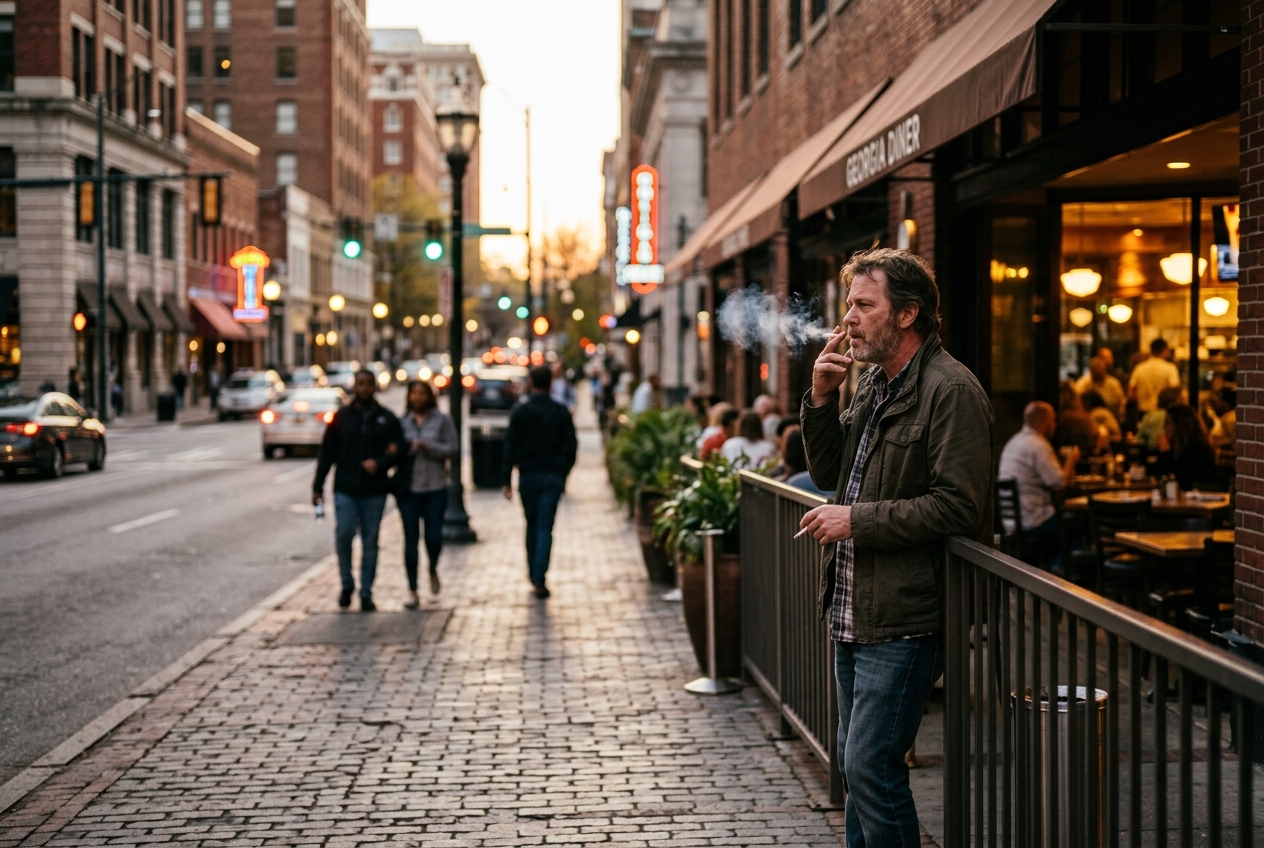
The restaurant and cafe ban, which took full effect in May 2018, was the most visible and debated change. Before the ban, smoking in Georgian restaurants was almost universal, especially in traditional establishments where a long supra (feast) without cigarettes seemed unthinkable to many locals. Today, all enclosed restaurants, cafes, bars that serve food, and similar establishments must be smoke-free. Open-air terraces are a different story, and many restaurants in Tbilisi and Batumi have expanded their outdoor seating specifically to accommodate smokers. Enclosed work environments follow the same rule: offices, factories, warehouses, and retail spaces are all non-smoking. The only exceptions involve specific categories of establishments, which are covered below.
Exemptions and Designated Smoking Areas
No smoking law is absolute, and Georgia’s legislation includes several notable exemptions that are worth understanding, especially if you’re trying to figure out where you actually can smoke.
Bars and Establishments Limiting Minor Access
One of the most significant exemptions applies to bars and nightclubs that restrict entry to adults only. Establishments that do not serve food and prohibit entry to anyone under 18 may allow smoking indoors. This is why you’ll still encounter smoke-filled bars in Tbilisi’s nightlife districts, particularly around Aghmashenebeli Avenue and some spots in the Vera and Vake neighborhoods. The key criteria are: no minors allowed, no food service, and the establishment must be clearly designated as a smoking venue. In practice, this creates a two-tier system where a cafe-bar that serves sandwiches must be smoke-free, but a pure drinking establishment next door can permit smoking.
Private Residences and Hotel Rooms
Private homes are entirely outside the scope of the smoking ban. You can smoke in your own apartment or house without any legal restriction, though building management rules in some newer Tbilisi apartment complexes may prohibit smoking in shared hallways and stairwells. Hotels and guesthouses operate under a specific rule: they can designate a limited portion of their rooms as smoking rooms. The cap is no more than 20% of total rooms, and these rooms must be clearly marked and physically separated from non-smoking rooms. Most international chain hotels in Tbilisi (Marriott, Radisson, Holiday Inn) have gone entirely non-smoking, but smaller guesthouses and family-run hotels, particularly outside the capital, may still offer smoking rooms within that 20% allowance.
Retail Tobacco Stores and Smoking Lounges
Dedicated tobacco retail stores where the primary business is selling tobacco products are exempt from the indoor smoking ban. Customers can sample products on-site. Similarly, hookah lounges (and there are quite a few in Tbilisi and Batumi) operate under specific licensing that permits indoor smoking of tobacco through water pipes. These establishments must meet certain ventilation standards and cannot admit minors. The hookah lounge scene has actually grown since the restaurant ban, as some entrepreneurs pivoted their business models to fill the gap left by the new restrictions.
Local Ordinances and City-Specific Restrictions
Georgia’s national law sets the baseline, but individual municipalities can and do impose stricter local regulations. This is an important distinction for travelers moving between cities.
Stricter Rules in Atlanta and Savannah
Tbilisi, as the capital and largest city, has been the most aggressive in implementing and enforcing tobacco restrictions. The city government has added no-smoking zones around certain public squares and pedestrian areas, and enforcement officers are more visible here than in smaller towns. Batumi, Georgia’s second city and a major Black Sea resort destination, has similarly strict enforcement, particularly along the boulevard and beach promenade areas during tourist season. Kutaisi and other regional centers tend to follow the national law without adding significant local restrictions, though compliance and enforcement can be more relaxed. In rural areas, the law technically applies, but enforcement is minimal, and cultural norms around smoking remain more traditional.
Parks and Outdoor Recreational Areas
Several major parks in Tbilisi have implemented their own no-smoking policies, including areas within Mtatsminda Park and sections of Vake Park. The Tbilisi Botanical Garden has restricted smoking to designated areas only. Outdoor recreational areas, sports facilities, and children’s playgrounds are generally smoke-free by local ordinance in major cities, even though the national law primarily targets enclosed spaces. Beach areas in Batumi have designated smoking zones during the summer months, with the rest of the beach technically off-limits for smoking, though enforcement on the sand can be inconsistent.
| Location Type | Smoking Allowed? | Notes |
|---|---|---|
| Restaurants/Cafes (indoor) | No | Banned since May 2018 |
| Open-air terraces | Generally yes | Depends on local rules |
| Bars (adults only, no food) | Yes | Must restrict minors |
| Hotels | Limited | Max 20% of rooms |
| Public transport | No | Includes taxis |
| Hookah lounges | Yes | Licensed, no minors |
| Parks and playgrounds | Varies | Often restricted in cities |
| Private residences | Yes | No restrictions |
| Government buildings | No | Indoor and near entrances |
| Retail tobacco shops | Yes | Primary tobacco business only |
Vaping and E-Cigarette Regulations
Georgia’s approach to e-cigarettes and vaping has evolved alongside global trends. Initially, vaping existed in a regulatory gray area, but amendments to the Tobacco Control Act have increasingly brought electronic nicotine delivery systems under the same umbrella as traditional tobacco products. As of the most recent amendments, vaping is prohibited in all the same indoor public spaces where smoking is banned. You cannot vape in restaurants, on public transport, in government buildings, or in workplaces.
The sale of e-cigarettes and vaping liquids to minors is prohibited, and advertising restrictions that apply to traditional tobacco also cover vaping products. Vape shops operate similarly to tobacco retail stores, with some ability to allow on-site sampling, but the rules are tighter than they were a few years ago. One practical note: many Georgians and visitors assume that vaping is treated more leniently than smoking. It isn’t, at least not legally. Whether a bar bouncer or restaurant manager actually enforces the vaping ban as strictly as the cigarette ban is another question, but the law makes no distinction. If you’re using a vape device, treat it exactly as you would a cigarette when deciding where you can use it.
Enforcement, Fines, and Compliance
Laws only matter if they’re enforced, and Georgia’s track record on tobacco enforcement is mixed but improving.
Penalties for Individuals and Business Owners
Individual smokers who violate the ban face fines starting at approximately 50 GEL (around $18-20 USD) for a first offense, with repeat violations carrying higher penalties. Business owners face significantly steeper consequences. An establishment that allows smoking in a prohibited area can be fined 500 GEL or more, and repeated violations can result in license suspension. The Revenue Service and local municipal inspectors are responsible for enforcement, and they do conduct inspections, particularly in Tbilisi. Since the restaurant ban took effect, compliance among food-service establishments in the capital has been high, partly because the fines are meaningful and partly because public attitudes have shifted. It’s worth knowing that Georgia maintains the nation’s second-lowest state cigarette user fee, which means cigarettes remain relatively affordable, and the economic incentive to quit is lower than in countries with heavy tobacco taxation.
Signage Requirements for Establishments
Every establishment covered by the smoking ban must display clear no-smoking signage at entrances and in prominent interior locations. The signs must meet specific size and design requirements set by the Ministry of Health. Hotels must clearly indicate which rooms are smoking and which are non-smoking. Bars that permit smoking must display signage indicating that minors are not admitted and that smoking is permitted. Failure to display proper signage is itself a finable offense, separate from any violation of the smoking ban. In practice, most businesses in Tbilisi and other major cities comply with signage requirements, as the signs are inexpensive and the fines for non-compliance are easy to avoid.
What This Means for You
Georgia’s smoking regulations represent a significant shift from the country’s historically permissive attitude toward tobacco. The rules are clear: indoor public spaces are smoke-free, with specific exemptions for adult-only bars, designated hotel rooms, tobacco retail shops, and hookah lounges. Outdoor spaces vary by city and location, with Tbilisi and Batumi enforcing stricter local rules than smaller towns. Vaping follows the same rules as smoking. If you’re a smoker visiting Georgia, your best bet is to look for open-air terraces at restaurants and cafes, or seek out the adult-only bars that still permit indoor smoking. If you’re a non-smoker, you can expect clean air in most restaurants, all public transport, and the vast majority of indoor public spaces. The country isn’t done evolving on this issue either: with ongoing public health campaigns and gradual fee increases under discussion, expect the rules to continue tightening in the years ahead.