
Table of Contents
- The Essential Guide to Buying Georgian Sauces and Condiments
- Tkemali: The Sour Plum Staple
- Adjika, Satsebeli, and Bazhe: Heat and Heart
- Dry Essentials: Svanetian Salt and Khmeli-Suneli
- Comparison Table: Taste, Pairings, and Portability
- Where to Buy and Packing for Flights
- Frequently Asked Questions
Want one souvenir from Georgia that you’ll actually use? Buy sauces. Tkemali, adjika and satsebeli travel well, cost little, and bring back the flavour of a Georgian supper table more convincingly than any fridge magnet.
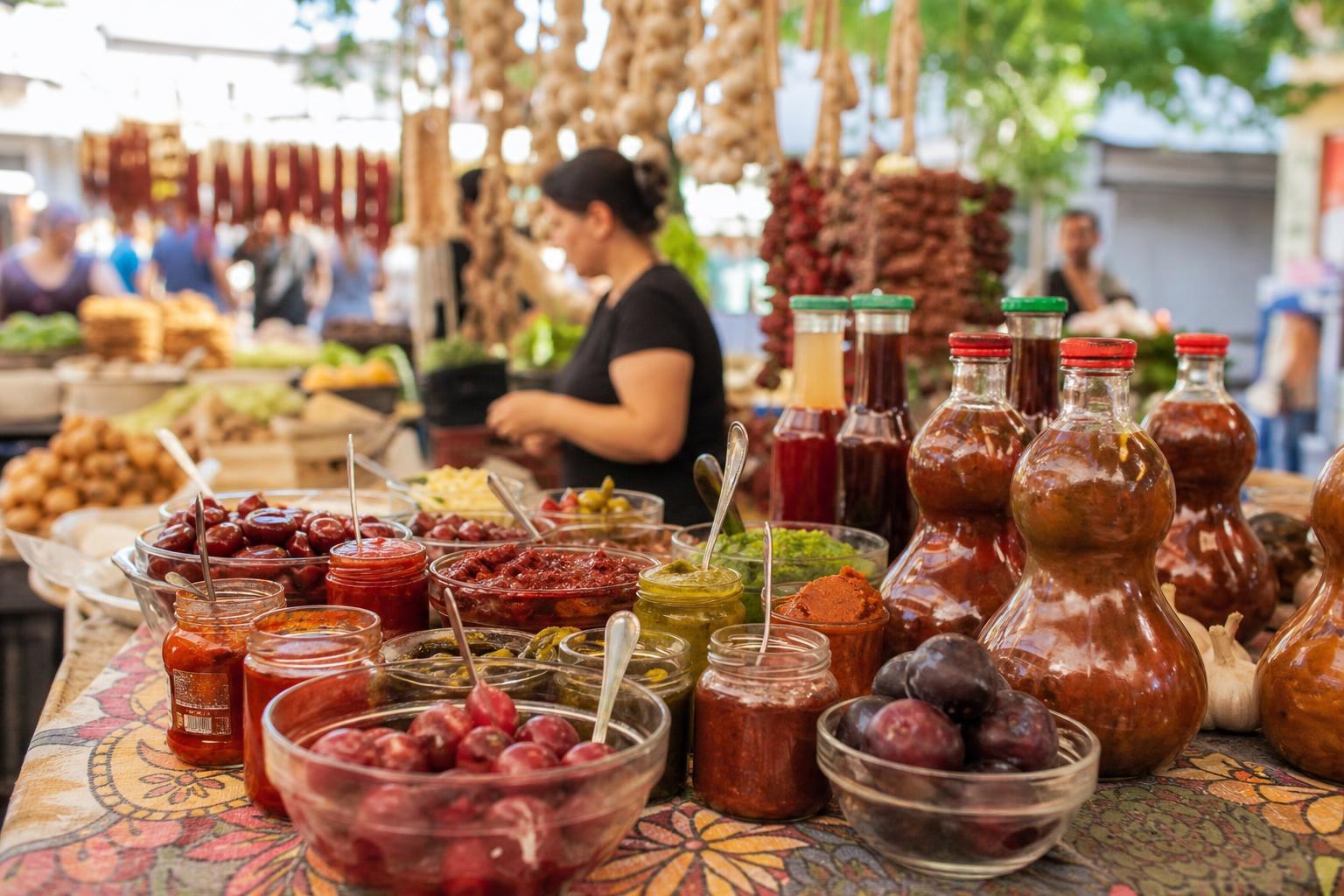
They are also everywhere: bazaar stalls, supermarket shelves and village roadsides. Below is what each one tastes like, what to eat it with, where to find the good stuff, and how to get jars home without a sticky disaster in your suitcase.
The Essential Guide to Buying Georgian Sauces and Condiments
If you only have room for three jars, take these:
- Green tkemali: sour plum sauce for grilled meat and potatoes
- Red adjika (Megrelian style): a fiery chili-garlic paste, used by the spoonful
- Satsebeli: a tomato-based sauce, closest to ketchup but far brighter
Georgian sauces are not optional extras. A plate of mtsvadi (grilled pork or lamb) arrives almost bare because the sauce does the heavy lifting. Georgians treat tkemali as the default condiment, and satsebeli is currently the highest-rated Georgian sauce among TasteAtlas voters, ahead of satsivi and tkemali.
Add a bag of Svanetian salt and a pack of khmeli-suneli and you can cook a convincing Georgian dinner at home. If you are still planning your meals on the road, pair this guide with our articles on must-try Georgian foods and on what to bring home from Georgia.
Tkemali: The Sour Plum Staple
Tkemali is made from cherry plums, cooked down with garlic, chili and herbs. It comes in two main colours:
- Green tkemali uses unripe plums picked in late spring and early summer. It is sharp, sour and grassy.
- Red tkemali uses ripe red or yellow plums later in the season. It is rounder and slightly sweeter, though still tart.
The taste is sour first, then garlicky, with a herbal finish. That acidity is the point: it cuts through fatty pork shashlik, fried potatoes, roast chicken and even khinkali if you are feeling unorthodox. One Georgian food site sums up the attitude: try green tkemali with grilled meat and “you’ll understand immediately why Georgians think ketchup is a waste of time.”
Tip: Check the label or ask the seller for ombalo (pennyroyal), the wild mint that gives proper tkemali its distinctive taste. Cheaper versions swap it for ordinary mint or skip it altogether, and you can taste the difference.
Bottles of tkemali often look like wine or lemonade bottles, so read the label before you pack one.
Adjika, Satsebeli, and Bazhe: Heat and Heart
Megrelian Red and Green Adjika
Adjika comes from Samegrelo in western Georgia, the region around Zugdidi, with close relatives across the Black Sea coast. Megrelian food is famously the spiciest in Georgia, and this paste shows why.
Red adjika is a thick, dry-ish paste of dried red chilies, garlic, salt, coriander and blue fenugreek. It is hot, salty and concentrated, so use a quarter teaspoon, not a tablespoon. Green adjika swaps the dried chilies for fresh green ones plus coriander leaf, dill and other herbs, giving a fresher, sharper heat.
Stir it into stews, rub it on chicken before roasting, mix it into butter for corn, or smear a little on bread with cheese. A jar lasts months in the fridge because you need so little.
Satsebeli: The Tomato Sauce
Satsebeli is found across the country. It is built on tomatoes, sometimes with plums or grape juice, plus garlic, chili, coriander and herbs. It tastes fresh, gently spicy and tangy, and it goes with grilled meat, kebabs, roast chicken and fried potatoes. It is the easiest sauce to win over non-Georgian friends and family.
Bazhe: The Walnut Sauce
Bazhe belongs to western Georgia, especially Imereti and Samegrelo. It is ground walnuts, garlic, vinegar or pomegranate, and spices like khmeli-suneli, giving a rich, creamy, nutty sauce. Serve it with boiled or roast chicken, fried fish, aubergine or cold vegetables. Shop-bought bazhe exists, but homemade versions spoil quickly, so buy sealed jars if you want to take it home.
Dry Essentials: Svanetian Salt and Khmeli-Suneli
These are the easiest flavours to fly home with, and arguably the most useful.
Svanetian salt (svanuri marili) comes from Svaneti, the high mountain region around Mestia. Families there grind coarse salt with garlic, blue fenugreek (utskho suneli), coriander seed, dill, caraway, marigold and chili. The result is salty, earthy and fragrant, and it works on almost anything: eggs, tomatoes, cucumbers, grilled meat, roast potatoes and buttered bread. Svaneti was historically cut off for much of the winter, and the salt was a way to preserve flavour through long months with little fresh produce. Look for mixes sold in small cloth or plastic bags from Svan sellers.
Khmeli-suneli is Georgia’s all-purpose spice blend. Recipes vary, but most include blue fenugreek, coriander, dried marigold petals (sometimes called Imeretian saffron), dill, savory, bay and mint. It smells warm, slightly sweet and herbal rather than hot.
Use khmeli-suneli in:
- Kharcho (beef and walnut soup)
- Chakapuli or chashushuli stews
- Bean dishes like lobio
- Walnut sauces and stuffed aubergine rolls
Both are light, cheap and hard to break in luggage.
Comparison Table: Taste, Pairings, and Portability
| Sauce / Condiment | Taste Profile | Best Pairings | Travel-Friendly? |
|---|---|---|---|
| Green tkemali | Very sour, garlicky, herbal | Mtsvadi, fried potatoes, roast chicken | Liquid: checked bag only |
| Red tkemali | Tart, fruity, slightly sweet | Pork, poultry, grilled vegetables | Liquid: checked bag only |
| Red adjika | Very hot, salty, garlicky | Stews, roast chicken, bread and cheese | Paste: small jars, checked bag |
| Green adjika | Fresh, herby, sharp heat | Fish, eggs, grilled meat | Paste: checked bag, keep cool |
| Satsebeli | Tomato-sweet, tangy, mild heat | Kebabs, chicken, potatoes | Liquid: checked bag only |
| Bazhe | Creamy, nutty, garlicky | Chicken, fried fish, aubergine | Sealed jars only; short shelf life |
| Svanetian salt | Salty, earthy, aromatic | Eggs, salads, meat, potatoes | Dry: carry-on friendly |
| Khmeli-suneli | Warm, herbal, mildly sweet | Kharcho, lobio, stews | Dry: carry-on friendly |
Where to Buy and Packing for Flights
Dezerter Bazaar for Authenticity
Tbilisi’s Dezerter Bazaar, near the central railway station, is the best place for homemade sauces and spice mixes. Sellers will let you taste from a spoon, which is the only reliable way to judge heat and sourness. The catch: homemade tkemali often comes in reused plastic bottles with loose caps. Fine for your rental apartment fridge, risky in a suitcase.
Supermarkets for Sealed Jars
For flying home, supermarkets such as Carrefour, Spar and Goodwill are the safer bet. You get factory-sealed glass jars and bottles with clear ingredient lists. Brands from Marneuli Food Factory and Gori-based Kula are widely stocked and consistent. Prices change often, so check on the shelf rather than relying on a figure from a guide.
Roadside Sellers for Local Flavour
If you are renting a car, roadside stalls are where the fun is. On the road toward Samegrelo or up into Svaneti you’ll see plastic bottles of tkemali, jars of adjika and bags of Svanetian salt sold by families. Buying salt directly from a Svan grandmother in Mestia beats any airport shop. Stop where locals stop, and don’t be shy about asking to taste.
Packing Rules for Flights
Important: The standard 100 ml (3.4 oz) container restriction remains universally enforced across the United States, Canada, and the European Union, and sauces and pastes count as liquids. Pack all jars and bottles in checked luggage. Rules can vary by airline and airport, so confirm with your carrier before you fly.
For checked bags:
- Wrap each jar in a zip-lock bag, then in clothing
- Tape lids shut, especially on reused plastic bottles
- Pack jars in the centre of the case, away from the edges
- Choose small jars over one big one, so a single breakage doesn’t ruin everything
Note: If you’re flying to the EU, UK, US or Australia, check import rules for meat and dairy before buying anything else at the bazaar. Plain plant-based sauces and spice mixes are usually less of a problem, but declare them if asked.
Frequently Asked Questions
Which Georgian sauce is best for someone who doesn’t like spicy food?
Red tkemali or satsebeli. Both have mild heat, and the sourness or tomato sweetness carries the flavour.
How long does homemade tkemali last?
Unopened, well-sealed bottles keep for months in a cool place. Once opened, refrigerate and use within a few weeks. Bazaar bottles without proper seals should be treated as short-life.
Can I take Svanetian salt in hand luggage?
Yes. It is a dry spice mix, so it isn’t affected by liquid limits. Keep it sealed so it doesn’t scent everything in your bag.
Is adjika the same as Abkhaz or Russian adjika?
Related, but not identical. The Megrelian paste is drier and saltier, while versions sold abroad are often tomato-based and closer to a salsa.
Pick up one sour, one hot and one dry: green tkemali, red adjika and Svanetian salt. That small trio, carefully packed in checked luggage, will have you cooking Georgian food long after the trip ends.