
Table of Contents
- The Unified Payment System for Tbilisi Transport
- Fare Structure and Subscription Options
- Navigating Tbilisi Bus Routes and Schedules
- Identifying Bus Types and Boarding Procedures
- Essential Tips for a Smooth Journey
- Getting Around Tbilisi With Confidence
Tbilisi’s public transit system has quietly become one of the most affordable and functional in the Caucasus region. A single bus ride costs less than a quarter, the metro connects major hubs, and a single card works across every mode of transport. But if you’re arriving for the first time, the system can feel opaque: signage is often in Georgian script, bus stops don’t always have route maps, and nobody hands you a brochure at the airport. I’ve watched confused tourists fumble at validators while a line of commuters builds behind them, and honestly, a five-minute primer would have saved everyone the awkwardness. This guide covers how to pay for buses in Tbilisi, which routes matter most, and practical tips that locals take for granted but visitors rarely hear about. Whether you’re here for a week or relocating, understanding the transit system will save you money and frustration from day one. The fare structure rewards frequent riders, the transfer rules are surprisingly generous, and the whole network runs on a unified system that’s simple once you understand it. Stick with me through these sections and you’ll board your first bus like you’ve lived here for years.
The Unified Payment System for Tbilisi Transport
Tbilisi runs all its public transport on a single integrated payment platform managed by the Tbilisi Transport Company (TTC). Buses, the metro, cable cars, and even some minibuses (marshrutkas) operate under one umbrella, meaning you don’t need separate tickets or tokens for different modes. This wasn’t always the case: before the system was unified, riders dealt with cash payments, paper tickets, and metro-specific tokens. The current system revolves around electronic cards and, increasingly, contactless payments.
The key thing to understand is that there’s no cash option on standard city buses. You can’t drop coins into a box or hand money to the driver. Everything runs through electronic validators mounted near the doors. If you don’t have a valid payment method when you board, you’re riding illegally, and inspectors do check. I’ve seen fines handed out on the number 37 bus heading toward Gldani more than once.
Metromoney Card vs. Tbilisi Card
Two cards dominate the system, and the distinction matters.
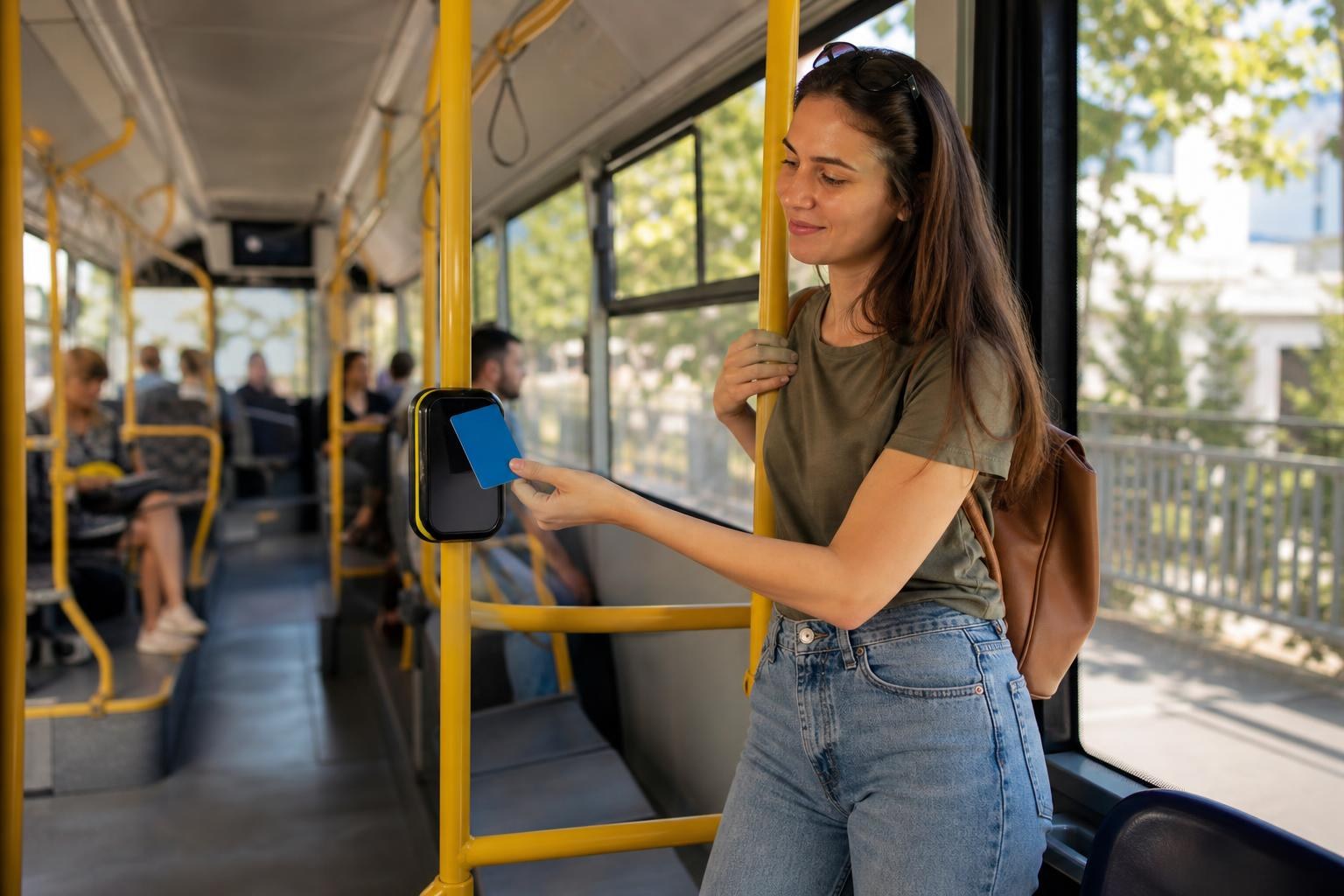
The Metromoney card is the workhorse. It’s a reloadable plastic card you can buy at any metro station kiosk or from vending machines scattered around the city. The card itself costs about 2 GEL (roughly $0.75), and you load credit onto it in whatever amount you want. You tap it on the validator when boarding a bus or entering a metro station, and the fare deducts automatically. Metromoney cards are one of the most common ways locals pay for transit, and they work across all TTC-operated services.
The Tbilisi Card is a newer option aimed partly at tourists and partly at residents who want subscription-based travel. It functions similarly to the Metromoney card but supports daily, weekly, and monthly passes. If you’re staying for more than a few days and plan to use transit heavily, the Tbilisi Card with a subscription pass can cut your costs significantly. You can pick one up at metro stations or certain retail points around the city.
Both cards are reloadable at metro station terminals, Bank of Georgia ATMs, TBC Bank payment kiosks, and through certain mobile apps. The reload process takes about 30 seconds and the machines have an English language option.
Contactless Bank Cards and Mobile Payments
Here’s what changed the game for short-term visitors: most Tbilisi buses now accept contactless bank cards directly. If your Visa or Mastercard has the contactless symbol, you can tap it on the validator just like a Metromoney card. Apple Pay and Google Pay work too, provided your phone’s NFC is active.
This is a huge convenience if you’re only in town for a few days and don’t want to bother buying a local transit card. The fare charges to your bank account in GEL, and your bank handles the currency conversion. One caveat: the contactless system occasionally glitches on older validators, particularly on some of the green bus fleet. If your tap doesn’t register, try holding your card flat against the reader for a full second rather than a quick swipe.
The one downside of using a bank card is that you won’t benefit from the transfer discount system the same way a registered Metromoney or Tbilisi Card user does. More on that below.
Fare Structure and Subscription Options
Tbilisi transit is absurdly cheap by European standards. A single bus or metro ride costs 1 GEL, which is about $0.37 in 2026. That price has held steady for several years, making it one of the lowest urban transit fares in the region.
Table: Current Ticket Prices and Pass Durations
| Payment Type | Cost (GEL) | Approximate USD | Validity |
|---|---|---|---|
| Single ride (bus or metro) | 1 GEL | $0.37 | One trip |
| Metromoney card purchase | 2 GEL | $0.75 | Reusable, no expiry |
| Daily pass (Tbilisi Card) | 3 GEL | $1.12 | 24 hours, unlimited rides |
| Weekly pass | 15 GEL | $5.60 | 7 days, unlimited rides |
| Monthly pass | 40 GEL | $14.90 | 30 days, unlimited rides |
| Contactless bank card | 1 GEL per ride | $0.37 | Per trip, no pass option |
The monthly pass at 40 GEL is the best deal if you’re commuting daily. Even riding twice a day, you break even after 20 trips, which is just 10 round-trip days. Students and pensioners get further discounts with registered cards.
Free Transfer Rules Within 90 Minutes
This is the detail most visitors miss entirely, and it’s one of the best features of the system. When you tap your Metromoney or Tbilisi Card on a bus, you get a 90-minute transfer window. Any subsequent bus or metro ride within that window is free. That means you can take a bus to the metro, ride the metro across town, and hop on another bus at your destination, all for 1 GEL total.
The catch: this only works with registered Metromoney or Tbilisi Cards. Contactless bank card taps charge 1 GEL every time, with no transfer credit. If you’re planning to use transit regularly, even for a week, the 2 GEL investment in a Metromoney card pays for itself after your second transfer.
The 90-minute clock starts from your first tap. There’s no limit on how many transfers you make within that window, so a multi-stop errand run across the city can cost you a single lari.
Navigating Tbilisi Bus Routes and Schedules
Tbilisi’s bus network covers the city thoroughly, with over 100 routes connecting neighborhoods from Gldani and Varketili in the outskirts to central hubs like Liberty Square, Station Square, and Rustaveli Avenue. Buses typically run from about 6:00 AM to midnight, though some routes have reduced frequency after 10:00 PM.
Route numbers are displayed on the front and side of each bus in both Georgian and Arabic numerals, so you can identify them regardless of language. The destination is usually shown in Georgian script, which is where things get tricky for visitors who can’t read mkhedruli. Your best bet is to know your route number in advance rather than relying on destination text.
Using the Tbilisi Transport Company (TTC) Website
The TTC maintains an official website with route maps, schedules, and service announcements. It’s functional but not exactly intuitive. The route planner lets you input a start and end point, and it’ll suggest bus and metro combinations. The site has an English version, though some pages default to Georgian and require manual language switching.
For route planning, I honestly find Google Maps more reliable than the TTC website for point-to-point directions. Google Maps has had Tbilisi bus data integrated for years now, and it shows real-time arrival estimates for most routes. Type in your destination, select the transit option, and it’ll tell you which bus to catch, where to walk, and when the next one arrives.
Top Mobile Apps for Real-Time Tracking
The official TTC app, available on Google Play, shows live bus positions on a map, estimated arrival times at each stop, and route details. It’s the most accurate source for real-time tracking since it pulls data directly from the TTC’s GPS system. The interface is basic but gets the job done.
Google Maps remains the easiest option for visitors because it combines walking directions with transit options and doesn’t require learning a new app. Moovit is another solid alternative that works well in Tbilisi, offering step-by-step transit navigation with alerts for when to get off.
A practical tip: download offline maps for Tbilisi before you arrive. Cell data can be spotty in some neighborhoods, and having offline access to your route means you won’t be stranded if your signal drops while you’re on a bus heading toward Turtle Lake.
Identifying Bus Types and Boarding Procedures
Not all Tbilisi buses are created equal. The city operates a mixed fleet that ranges from modern low-floor vehicles to older models that have clearly seen better decades. Knowing what to expect helps you board efficiently and find the right validator.
All buses have electronic validators near the entry doors. On newer buses, you’ll find validators at every door. On older models, the validator is typically only at the front door, which means you should board at the front if you’re unsure. Tap your card firmly on the reader and wait for the green light and beep. A red light means your card didn’t register or has insufficient balance.
Exit through the rear doors on newer buses. On older buses, the driver controls the doors manually, and you may need to shout “gaacheret!” (stop, please) if your stop is approaching and the bus seems like it might skip it. Pressing the stop-request button, when one exists, is the less dramatic option.
Color-Coded Buses: Blue, Green, and Yellow
Tbilisi’s bus fleet has a rough color-coding system that tells you something about the vehicle type.
- Blue buses are the newest additions to the fleet, typically MAN or Mercedes-Benz models with air conditioning, low floors for wheelchair access, USB charging ports, and digital route displays. These run on major routes and are by far the most comfortable option.
- Yellow buses are mid-generation vehicles. They’re functional, usually have working AC, and cover a wide range of routes. Most of the fleet falls into this category.
- Green buses are the oldest still in service. Some lack air conditioning, the interiors are worn, and the ride quality reflects their age. They’re being phased out gradually, but you’ll still encounter them on certain routes, especially in outer neighborhoods.
The color distinction isn’t official policy you’ll find on the TTC website, but it’s a reliable visual shorthand that local transit guides reference frequently. If you see a blue bus and a green bus serving the same route, wait for the blue one if comfort matters to you.
Essential Tips for a Smooth Journey
Riding Tbilisi buses becomes second nature quickly, but a few practical details can save you headaches during your first few days.
Keep small denominations of GEL on hand for reloading your Metromoney card. The vending machines at metro stations accept bills up to 20 GEL but don’t always give change reliably. Loading 5 or 10 GEL at a time is the safest approach.
Tbilisi drivers have a reputation for assertive driving. Buses accelerate and brake hard, especially on hilly routes through Sololaki or Vera. Hold onto the handrails, and don’t try to walk to the exit while the bus is still moving. I learned this the hard way on a route climbing toward Mtatsminda.
Avoiding Fines and Ticket Inspections
Ticket inspectors board buses randomly and check every passenger’s card or payment confirmation. They carry handheld devices that can verify whether your card was tapped for the current trip. The fine for riding without a valid fare is 5 GEL, which isn’t devastating but is embarrassing and entirely avoidable.
If you paid with a contactless bank card, the inspector can ask to see your card and verify the transaction. Keep your phone unlocked if you paid via Apple Pay or Google Pay, so you can show the payment notification quickly. Some travelers report that inspectors are understanding with confused tourists, but don’t count on leniency as a strategy.
One common mistake: forgetting to tap when transferring between buses during the free 90-minute window. You still need to tap your card on the validator of the second bus, even though no fare is deducted. If you don’t tap, the system has no record of you being on that bus, and an inspector will treat it as an unpaid ride.
Peak Hours and Accessibility Features
Rush hour in Tbilisi hits hardest between 8:00 and 10:00 AM and again from 5:00 to 7:30 PM. Routes serving Saburtalo, Gldani, and Varketili get extremely crowded during these windows. If your schedule is flexible, traveling outside peak hours makes a noticeable difference in comfort.
The blue buses are fully accessible, with ramps or low-floor boarding for wheelchair users and dedicated priority seating. Older yellow and green buses are less reliable for accessibility. If you need step-free access, checking the TTC app for which vehicle is serving your route can help you plan accordingly.
Buses also have designated seating for elderly passengers and pregnant women near the front. Georgian social norms around giving up seats for older people are strong. If you’re sitting in a front seat and an elderly person boards, standing up isn’t just polite: it’s expected, and other passengers will notice if you don’t.
Getting Around Tbilisi With Confidence
The whole system clicks into place once you’ve made your first few trips. Buy a Metromoney card at any metro station, load 10 GEL onto it, and you’re set for roughly a week of moderate transit use. Tap on every bus you board, take advantage of the 90-minute free transfers, and use Google Maps or the TTC app to find your route. If you’re staying longer than a week, the monthly pass at 40 GEL is hard to beat for value.
Tbilisi’s bus network isn’t perfect: older vehicles can be uncomfortable, schedules shift without much warning, and the Georgian-language signage takes getting used to. But at less than $0.40 per ride with free transfers, it’s one of the most cost-effective ways to experience a city that sprawls across river valleys and hillsides in ways that punish anyone trying to walk everywhere. Get on a bus, tap your card, and let the city unfold outside the window.