
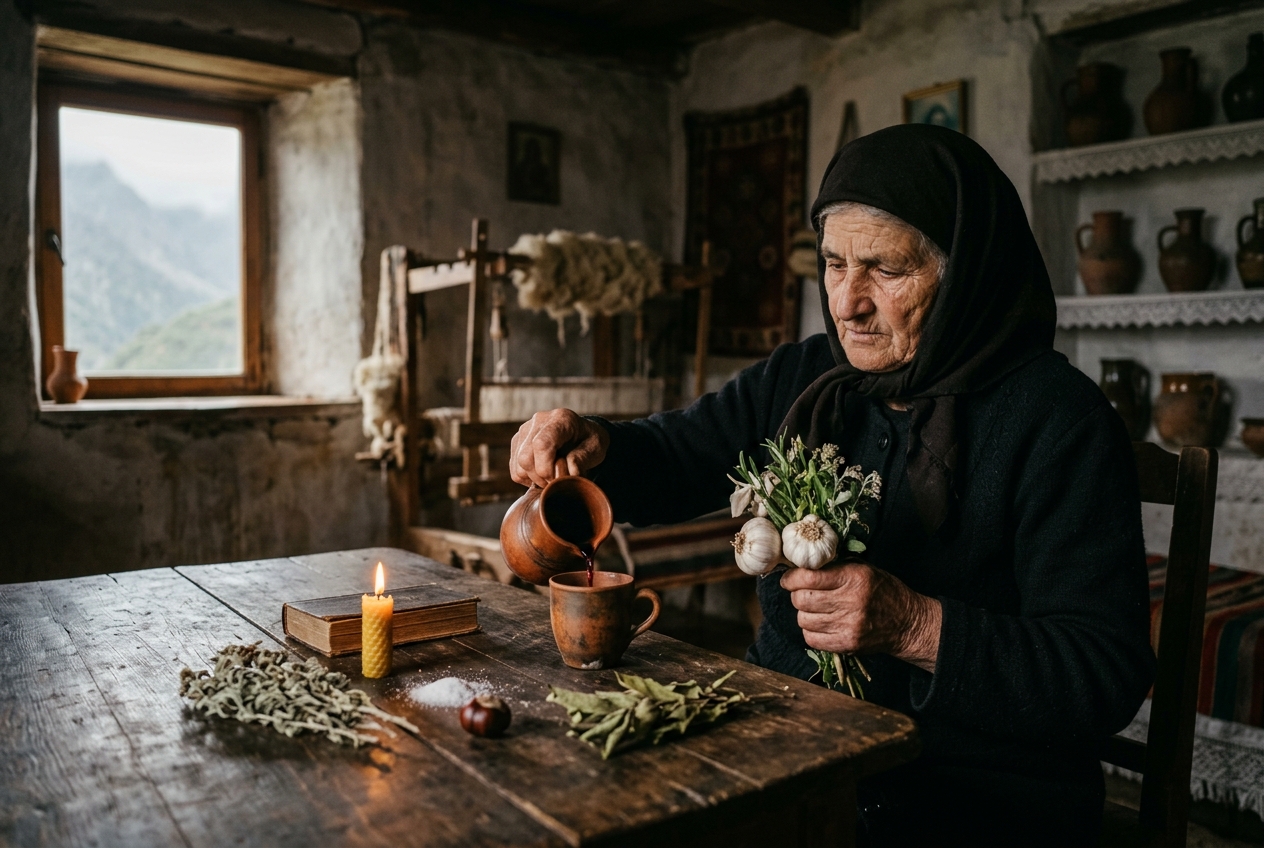
Georgia is a country where the past doesn’t stay buried. Walk through a village in Kakheti or sit down for a family dinner in Tbilisi, and you’ll quickly notice that old beliefs still pulse through everyday life. A grandmother will shush you for whistling indoors. A host will snatch an empty bottle off the table before you can blink. These aren’t quirks or performances for tourists: they’re genuine expressions of a worldview that blends ancient paganism, Orthodox Christianity, and centuries of folk wisdom into something uniquely Kartvelian. Superstitions and bad omens in Georgian culture aren’t relics of the past. They’re alive, practiced daily, and taken seriously by a surprising number of people. In fact, a staggering 91% of Georgians believe in at least one form of the supernatural, whether that’s the evil eye, faith healing, or the power of certain rituals to shape fortune. That statistic alone tells you this isn’t a fringe phenomenon. It’s woven into the national identity. What follows is a close look at where these beliefs come from, how they show up in daily life, and why they persist even among younger, urban Georgians.
The Historical and Pagan Roots of Georgian Beliefs
Georgia’s spiritual identity is layered like an archaeological dig. The surface is Orthodox Christian, one of the oldest Christian nations on earth, having adopted the faith in 337 AD. But scratch beneath that surface and you’ll find something much older: a pre-Christian animistic worldview that never fully disappeared. Instead, it merged with the new religion, creating a belief system that is distinctly Georgian and stubbornly resistant to modernization.
Syncretism of Orthodox Christianity and Ancient Folklore
The Georgian Orthodox Church is central to national identity, especially in a country that has spent centuries defending itself against Persian, Ottoman, and Russian empires. But the church never fully stamped out older folk practices. Instead, a fascinating syncretism developed. Sacred groves, once sites of pagan worship, became associated with Christian saints. Rituals meant to appease nature spirits were reframed as prayers to patron saints. In mountainous Svaneti and Tusheti, this blending is especially visible: villagers still perform animal sacrifices at shrines dedicated to local deities, but they’ll cross themselves before and after.
This isn’t hypocrisy. It’s cultural memory operating on a deep level. Many Georgians see no contradiction between attending Sunday liturgy and also believing that a neighbor’s envious glance can cause illness. The church itself has historically tolerated (and sometimes quietly adopted) folk practices, which is one reason these beliefs have survived so tenaciously.
The Role of the ‘Kartvelian’ Mythology in Modern Superstition
The Kartvelian mythological tradition, predating Christianity by millennia, gave Georgians a rich cast of supernatural beings. Devi (demons), Ali (malevolent spirits dwelling near water), and Kudiani (witches) populate folk tales that grandparents still tell children. The concept of “deda-mitsa” (Mother Earth) reflects an animistic reverence for natural forces that directly feeds into agricultural superstitions still observed today.
These mythological figures aren’t just stories. They inform real behavior. A farmer in Adjara might time his planting according to signs he learned from his grandfather, signs rooted in beliefs about appeasing earth spirits. A mother in Kutaisi might tie a red thread around her baby’s wrist to ward off the Ali. The mythology provides the logic behind the superstition, even when the person practicing it couldn’t name the original deity involved.
Bad Omens and Taboos in Daily Domestic Life
Georgian homes are governed by an invisible rulebook of things you should and shouldn’t do. Some of these taboos have practical origins (spilled salt was once expensive), but most have taken on a life of their own, enforced by social pressure and genuine belief.
Thresholds and Doorways: Why You Never Shake Hands Across Them
If you visit a Georgian home and extend your hand for a greeting while standing in the doorway, expect to be gently pulled inside first. Shaking hands or passing objects across a threshold is considered deeply unlucky. The doorway is a liminal space, a boundary between the safety of the home and the unpredictability of the outside world. In Kartvelian folk belief, thresholds were places where spirits could interfere with human interactions.
This taboo is so ingrained that even young Georgians who laugh about superstitions will instinctively step inside or outside before completing a handshake. I’ve seen it happen in Tbilisi apartments where the residents are tech workers in their twenties. Old habits die hard when they’re absorbed in childhood.
The Dangers of Whistling Indoors and Spilled Salt
Whistle inside a Georgian home and you’ll likely hear “don’t whistle, you’ll whistle away the money.” This belief connects whistling to financial loss, and it’s taken seriously enough that even children are corrected for it. The origins likely trace back to folk associations between whistling and summoning wind spirits, but the modern interpretation is purely economic.
Spilled salt is another classic bad omen, though this one has parallels across many cultures. In Georgia, spilling salt is said to bring conflict into the household. The remedy is to throw a pinch over your left shoulder, which is believed to blind the devil lurking there. Spilling wine, interestingly, is considered good luck: a reflection of wine’s sacred status in Georgian culture, where it’s been produced for over 8,000 years.
Nighttime Taboos: Cutting Nails and Taking Out Trash
Certain activities are strictly off-limits after dark. Cutting your nails at night is believed to invite misfortune or even death into the family. Taking out the trash after sunset is thought to remove your household’s luck along with the garbage. These nighttime taboos reflect an older belief that darkness empowers malevolent forces, making the household more vulnerable to spiritual interference.
The trash taboo is particularly interesting because it creates a real logistical challenge in modern apartment living. Yet many Georgians still observe it, stacking bags by the door until morning rather than risk a trip to the dumpster after dark.
Social Etiquette and the Superstitions of Hospitality
Georgian hospitality, or “stumari ghvtisaa” (the guest is from God), is legendary. But the elaborate rituals of hosting are shot through with superstitions that guests should know about, especially at the supra, Georgia’s traditional feast.
The Supra Table: Rules for Toasts and Empty Bottles
The supra is more than a meal. It’s a structured ceremony led by a tamada (toastmaster), and it comes with strict rules. Empty bottles must never remain on the table: they’re believed to bring poverty or even death to the household. You’ll see Georgians whisking bottles to the floor the moment they’re drained.
Sitting at the corner of the table is another major taboo. The belief holds that sitting at a corner seat will prevent you from marrying for seven years, a punishment that carries real weight in a culture where family and marriage are central social values. If you’re single and a Georgian host sees you drifting toward a corner seat, expect to be redirected immediately.
| Supra Superstition | Belief | Practical Response |
|---|---|---|
| Empty bottle on table | Brings poverty or death | Remove to the floor immediately |
| Sitting at the corner | Prevents marriage for 7 years | Move the guest to a different seat |
| Toasting with water | Disrespects the dead; brings bad luck | Always toast with wine or spirits |
| Clinking glasses during memorial toasts | Disrespects the deceased | Glasses are raised but not clinked |
Toasting with water is also forbidden. It’s associated with toasting the dead, so doing it casually is seen as inviting death to the table. If you don’t drink alcohol, a polite Georgian host will usually offer you juice or lemonade as an alternative.
Gift Giving: Avoiding Knives and Even Numbers of Flowers
Gift-giving in Georgia follows rules that can trip up uninformed visitors. Never give knives as a gift: they’re believed to sever the relationship between giver and receiver. If you must give a knife (say, a decorative one), the recipient should “pay” you a symbolic coin to transform it into a transaction rather than a gift.
Flowers carry their own code. Even numbers are strictly for funerals. Bring someone a bouquet of six roses and you’ve essentially delivered a death wish. Always give odd numbers: three, five, seven. This rule applies across the former Soviet sphere, but Georgians take it especially seriously.
Superstitions Regarding Luck, Health, and Protection
Beyond domestic taboos, Georgian folk belief includes a robust system for attracting good fortune and deflecting harm. Some of these practices are daily habits; others are tied to specific calendar dates.
Warding Off the ‘Evil Eye’ (Tvalis Atsema)
The evil eye, known as “tvalis atsema” (literally “striking with the eye”), is one of the most deeply held beliefs in the country. The idea is that envious or admiring glances can cause illness, bad luck, or harm, especially to children and newborns. This is why Georgian grandmothers often avoid excessive complimenting of babies. If someone does praise a child, they might immediately say “ar shegeshindesh” (don’t be afraid) or perform a small protective gesture.
Protection against the evil eye takes many forms. Blue beads, similar to the Turkish nazar, are common. Some families use a ritual involving burning dried herbs or passing an egg over the afflicted person’s body to absorb the negative energy. 57% of Georgians believe in faith healers, and many of these healers specialize in diagnosing and treating evil eye afflictions.
Spitting Over the Shoulder and Wood-Knocking Rituals
When a Georgian says something positive about the future, like “my son got into university” or “business is going well,” they’ll often follow it by spitting three times over their left shoulder or knocking on wood. Sometimes both. The spitting is meant to ward off evil spirits attracted by good fortune, while the wood-knocking appeals to protective forces residing in trees, a holdover from pre-Christian tree worship.
These gestures are so automatic that people perform them mid-conversation without breaking stride. Even 37% of Georgians believe in horoscopes, suggesting a broader comfort with the idea that unseen forces shape daily life.
Animal Omens and Nature-Based Signs
The natural world has always served as a text that Georgians read for clues about the future. Certain animals and weather patterns carry specific meanings that influence decisions about everything from travel plans to planting schedules.
The Black Cat and the Cawing Crow: Harbingers of Misfortune
A black cat crossing your path is bad luck across much of Europe, but in Georgia, the response is particularly dramatic. Some people will stop walking entirely and wait for someone else to cross the cat’s path first, effectively “absorbing” the bad luck. Others will turn around and take a different route.
Crows cawing near your home are considered a warning of death or serious illness. Owls carry similar associations. On the other hand, seeing a stork is considered extremely lucky, and stork nests on rooftops are protected and celebrated. Killing a stork is thought to bring catastrophic misfortune to the entire village, not just the individual.
Weather Omens and Agricultural Success
In rural Georgia, weather signs still guide agricultural decisions. A red sky at sunset predicts good weather; a ring around the moon signals rain. These aren’t unique to Georgia, but the intensity of belief is notable. Farmers in Kakheti’s wine country and Imereti’s corn-growing regions still cross-reference folk signs with modern forecasts, and when the two conflict, the folk wisdom sometimes wins.
The holiday of Bedoba, observed on January 2nd, crystallizes the Georgian relationship between dates and destiny. What one does on this day is said to determine your luck for the entire year. Families make a point of eating well, being generous, and avoiding arguments, because whatever tone you set on Bedoba supposedly echoes through the next twelve months.
The Endurance of Tradition in Modern Georgian Society
What makes Georgian superstitions remarkable isn’t their content: many cultures share similar beliefs about the evil eye, black cats, and spilled salt. What’s remarkable is their persistence. Georgia has undergone massive upheaval in the past three decades: the collapse of the Soviet Union, civil war, the Rose Revolution of 2003, rapid urbanization, and a tech-savvy younger generation that’s deeply connected to global culture. Yet these beliefs endure.
Part of the explanation is generational transmission. Georgian families are close-knit and multigenerational, with grandparents often living in the same household and playing a central role in raising children. Superstitions pass from grandmother to grandchild not as formal instruction but as daily habit: the corrected whistle, the redirected seat, the reflexive spit over the shoulder.
Another factor is national identity. After centuries of foreign domination, Georgians fiercely protect their cultural distinctiveness. Folk beliefs, even ones that might seem irrational, are markers of being Georgian. Abandoning them can feel like abandoning heritage itself. This is true even in Tbilisi’s hipster cafes, where a barista might mock superstitions in conversation but still avoid sitting at the corner of a table.
For visitors, understanding Georgian superstitions and the bad omens embedded in the culture isn’t just academic curiosity. It’s a practical tool for showing respect. Follow the flower rules. Step inside before shaking hands. Don’t whistle in someone’s home. These small gestures signal that you see Georgia not as a tourist destination but as a living culture with depth, history, and its own logic. And in a country where the guest truly is considered a gift from God, that kind of respect will be returned tenfold.