
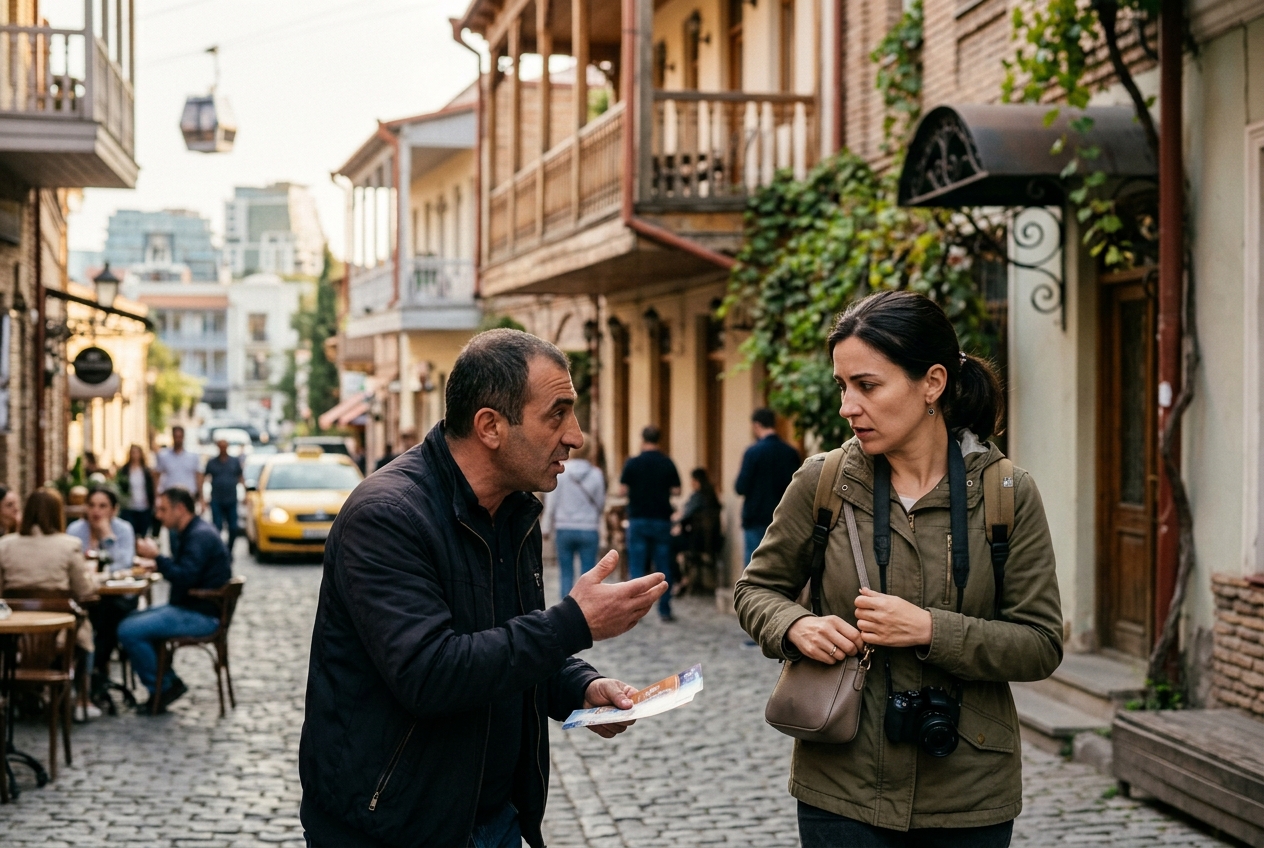
Georgia has earned a reputation as one of the most welcoming countries in the Caucasus, and for good reason. The culture is steeped in a tradition called “stumari ghvtisaa” – the belief that a guest is a gift from God. That said, rapid tourism growth in Tbilisi and Batumi has attracted a small but persistent ecosystem of hustlers who specifically target visitors unfamiliar with local norms and pricing. Most of these schemes aren’t dangerous, but they can drain your budget and sour an otherwise incredible trip. Knowing which tourist scams to watch for in Tbilisi and Batumi is the difference between a frustrating first day and a smooth landing in one of Europe’s most underrated destinations.
I’ve spent enough time in Georgia to have fallen for a couple of these myself, and I’ve watched friends and fellow travelers get caught off guard by the rest. What follows is a practical, honest breakdown of the most common tricks, how they work, and what you can do to sidestep them entirely.
Common Transportation Scams in Urban Centers
Getting around is where most tourists first encounter inflated pricing. Georgia’s public transit is cheap and functional, but the gap between local fares and what an uninformed visitor might pay is enormous. This is especially true at arrival points like airports and bus stations, where you’re tired, disoriented, and just want to get to your hotel.
The Unmetered Taxi Trap at Airports and Stations
The moment you step out of Tbilisi International Airport, you’ll be approached by drivers offering rides into the city. They’re friendly, they speak some English, and they’ll quote you a price that sounds reasonable if you don’t know any better. The problem? Unlicensed drivers at Tbilisi and Kutaisi airports routinely overcharge tourists, with some reporting fares 10x the normal rate. A trip to central Tbilisi that should cost 15-30 GEL via Bolt can suddenly become 80-150 GEL with an unofficial driver.
The fix is simple: download Bolt or Yandex Go before you land. Both apps work reliably in Tbilisi and Batumi, show you the fare upfront, and route through licensed drivers. If you’re really on a budget, the airport bus runs to the city center for just 0.50 GEL during daytime hours. That’s roughly $0.19 USD. There’s genuinely no reason to haggle with an airport tout.
In Batumi, the same pattern plays out at the bus station and along the Batumi Boulevard waterfront. Drivers park near tourist clusters and quote inflated prices for short rides. Again, use an app. It takes 30 seconds and saves you 5-10x the cost.
Inflated Fares for Intercity Marshrutkas
Marshrutkas – those white minibuses that connect Georgian cities – are a staple of budget travel here. The fare from Tbilisi to Batumi is typically around 30-35 GEL at official stations like Didube or Ortachala. But some informal drivers operating near these stations will quote 50-70 GEL to foreigners, especially if you look confused or are carrying a lot of luggage.
The trick is knowing the standard fare before you arrive. Ask your hotel or guesthouse host what the current marshrutka price is for your route. Buy your ticket at the official window inside the station, not from someone approaching you in the parking lot. If someone tells you the “official” marshrutkas are full and offers a “private” alternative at double the price, they’re almost certainly lying.
| Route | Normal Fare (GEL) | Scam Fare (GEL) | Best Booking Method |
|---|---|---|---|
| Tbilisi Airport to Center | 15-30 (Bolt) / 0.50 (bus) | 80-150 | Bolt, Yandex Go, or airport bus |
| Tbilisi to Batumi | 30-35 | 50-70 | Official station ticket window |
| Batumi local rides | 3-8 (Bolt) | 15-30 | Bolt or Yandex Go |
| Tbilisi to Kazbegi | 15-20 | 30-50 | Station ticket window |
Hospitality and Nightlife Deceptions
Georgian hospitality is famously generous, and the vast majority of restaurant and bar owners are honest people proud of their food. But a few establishments in heavy tourist zones have adopted tricks imported from other scam hotspots around Europe.
The Infamous ‘Menu Without Prices’ Bar Scam
This one has been around for years in cities like Istanbul and Prague, and it’s made its way to certain bars in Tbilisi’s Old Town and along Batumi’s waterfront. Here’s how it works: someone friendly strikes up a conversation, suggests a “great local bar,” and walks you there. You sit down, order drinks, and the menu either has no prices or lists them in tiny print with suspiciously vague descriptions. When the bill arrives, it’s 200-500 GEL for a few rounds of drinks.
The defense is straightforward. Never enter a bar recommended by a stranger you just met on the street, especially if they seem overly eager. Always check for prices on the menu before ordering. If a venue doesn’t display prices, leave. Legitimate Georgian restaurants and bars are proud of their pricing and will happily show you a full menu. Stick to places with reviews on Google Maps or TripAdvisor, and you’ll be fine.
Aggressive Street Touts and Fake Invitations
In Tbilisi’s tourist center around Shardeni Street and the sulfur baths district, you’ll encounter touts promoting restaurants, wine tastings, and tours. Most are legitimate, but some use high-pressure tactics or bait-and-switch pricing. A “free wine tasting” might end with aggressive upselling, or a “special local dinner” might turn out to be a mediocre meal at triple the going rate.
The younger generation of Georgians – those born after the Rose Revolution of 2003 – generally speak solid English and are genuinely trying to share their culture. The older Soviet-educated generation may speak Russian but less English. In both cases, authentic invitations tend to be casual and low-pressure. If someone is working too hard to get you through a specific door, that’s your signal to politely decline. Trust the invitations that feel organic, not transactional.
Street-Level Fraud and Tourist Traps
These scams are lower-stakes individually but can add up across a trip. They prey on politeness and the desire to have a “local” experience.
Overpriced Photo Ops with Animals or Costumed Actors
Along Batumi Boulevard and near Tbilisi’s Bridge of Peace, you’ll occasionally see people with exotic birds, puppies, or dressed in traditional Caucasian costumes offering photos. The interaction starts as seemingly free, but the moment you snap a picture, they demand 20-50 GEL. Refusing can lead to an uncomfortable confrontation.
The simplest approach: don’t engage. If you want authentic photos with Georgian culture, visit the Open Air Museum of Ethnography in Tbilisi or attend a local festival. Those experiences are real, and nobody will shake you down for a tip afterward. Georgia’s road fatalities rose approximately 20% in 2025, so keep your attention on your surroundings rather than street performers when walking near busy roads, especially in Batumi where traffic can be chaotic near the boulevard.
The Counterfeit Souvenir and Antique Market
Tbilisi’s Dry Bridge Market is a genuine treasure for vintage Soviet memorabilia, handmade jewelry, and enamelwork. But mixed in with authentic goods are mass-produced fakes marketed as “antiques” or “handmade.” That “vintage” Georgian dagger? Probably manufactured last month. The “antique” icon painting? Printed on artificially aged wood.
If you’re serious about buying authentic Georgian crafts, seek out named artisans and family-run workshops. Brands like Ethnographica and producers in the Tusheti region sell verified handmade goods. At Dry Bridge, assume everything is decorative rather than genuinely antique unless you really know what you’re looking at. Bargaining is expected here, and starting at 40-50% of the asking price is normal.
Real Estate and Accommodation Red Flags
Batumi’s building boom has created a wild short-term rental market, and Tbilisi’s popularity on Airbnb means competition for good listings is fierce. Both conditions breed scams.
Bait-and-Switch Apartment Rentals in Batumi
Batumi is full of new high-rise apartments, many of which are listed on Booking.com, Airbnb, and local Georgian platforms. The scam works like this: you book a gorgeous sea-view apartment at a great price, arrive, and find yourself in a different unit – smaller, on a lower floor, or in a completely different building. The host claims the original unit “had a problem” and offers this “equivalent” alternative.
Protect yourself by booking only through platforms with strong cancellation policies. Screenshot the listing photos and address before arrival. When you show up, compare what you see with what was advertised. If it doesn’t match, contact the platform immediately rather than accepting the substitute. In Batumi specifically, check whether the building is actually completed – some listings show renders of unfinished construction projects.
Hidden Fees in Short-Term Guest Houses
Smaller guesthouses in both cities sometimes add charges that weren’t mentioned during booking: cleaning fees, key deposits, “tourist taxes,” or charges for using the kitchen or washing machine. These fees are rarely more than 20-30 GEL each, but they add up and feel dishonest.
Before confirming any guesthouse booking, message the host directly and ask for a complete breakdown of all costs. Get it in writing through the platform’s messaging system so you have documentation if there’s a dispute. Reputable guesthouses – and Georgia has many wonderful ones, especially family-run places outside the city centers – will be transparent about pricing from the start.
Currency and Financial Safety Precautions
Georgia’s currency is the lari (GEL), and while the country is increasingly card-friendly in urban areas, cash is still king for markets, marshrutkas, and smaller establishments. This creates opportunities for currency-related scams.
Predatory Exchange Rates at Unofficial Booths
Both Tbilisi and Batumi have official exchange offices (look for “Currency Exchange” signs with digital rate displays) alongside shadier operations tucked into side streets or inside certain shops. The unofficial spots advertise attractive rates on their signs but apply different rates at the counter, sometimes adding “commission” fees they didn’t mention.
Use bank ATMs from reputable Georgian banks like TBC Bank or Bank of Georgia. Their ATM fees are minimal, and you’ll get the interbank exchange rate. If you must exchange cash, use the official exchange offices on Tbilisi’s Rustaveli Avenue or near Batumi’s Piazza Square. Always count your money before leaving the counter. A separate scam worth noting: a Facebook page recently offered public transport passes at impossibly low prices like 7 GEL per year, which was identified as outright fraud. If a deal on anything financial seems too good to be true in Georgia, it is.
Short-Changing and Small Bill Manipulation
This is a classic worldwide scam that surfaces in busy tourist areas. You pay with a 50 GEL note, and the cashier or taxi driver claims you gave them a 5 GEL note. Georgian banknotes look quite different across denominations, but in dim lighting or during a rushed transaction, it’s easy to second-guess yourself.
The countermeasure is simple: announce the denomination out loud as you hand it over. “Here’s fifty lari.” Make eye contact. Count your change before pocketing it. This isn’t paranoia – it’s just good practice anywhere you travel. Most Georgians are scrupulously honest, but the few who aren’t rely on your distraction and politeness.
Essential Tips for a Secure Visit to Georgia
Georgia remains one of the safest countries in Europe for tourists, and the scams listed above are the exception rather than the rule. The best general advice is to exercise basic common sense and stay aware of your surroundings, which honestly applies everywhere.
A few final practical notes: download offline maps and a Google Translate Georgian language pack before you arrive. Solo female travelers generally report feeling very safe in both Tbilisi and Batumi, and police in Georgia are widely considered reliable and non-corrupt following major reforms. Avoid discussing the political situations in Abkhazia and South Ossetia with strangers, as these are sensitive topics.
The scams you might encounter as a tourist in Georgia’s two biggest cities are, frankly, mild compared to what you’d face in many other popular destinations. Stay informed, use ride-hailing apps, verify prices before committing, and book accommodations through reputable platforms. Do those four things, and you’ll spend your time enjoying what Georgia does best: extraordinary food, stunning mountain scenery, and the kind of genuine hospitality that makes you want to come back.