
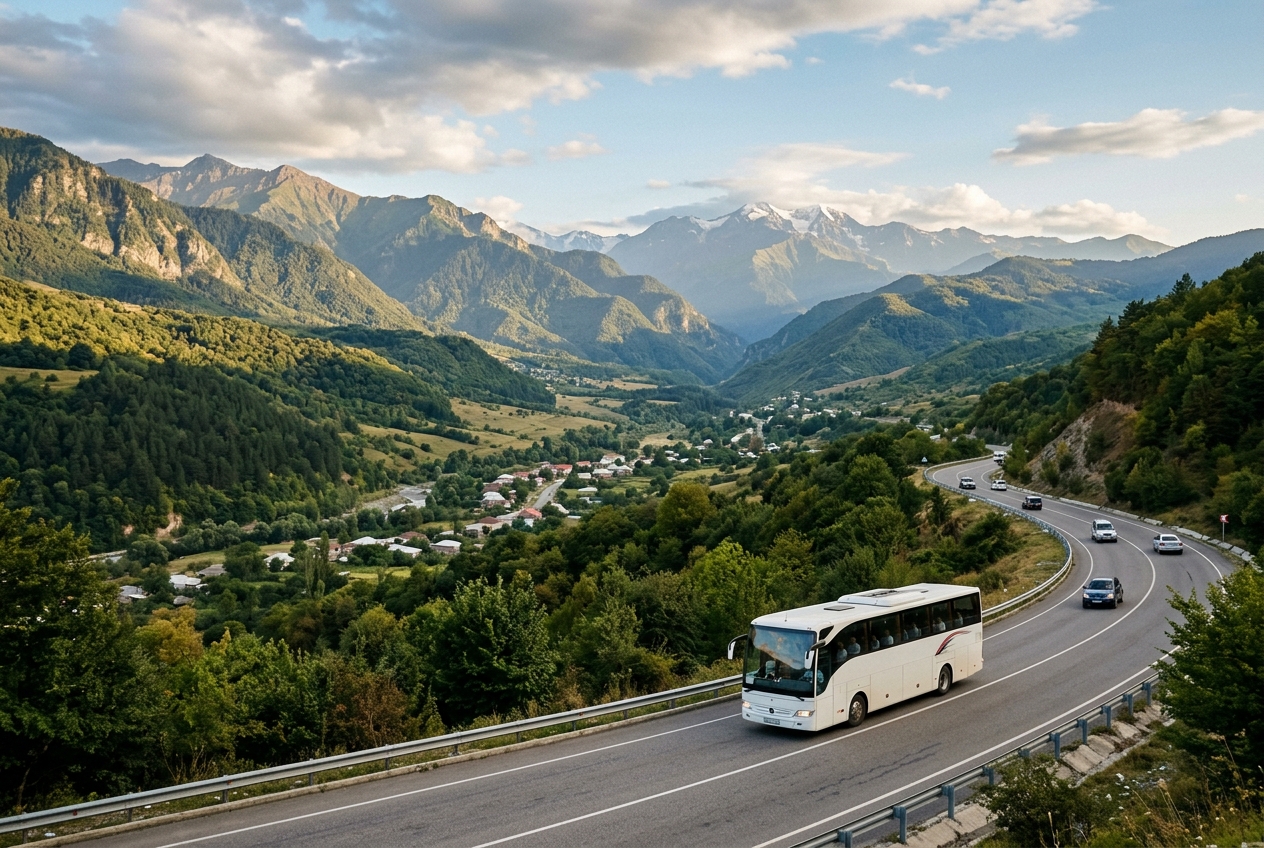
The 230-kilometer stretch between Georgia’s second and first cities is one of the most common journeys travelers make in the country, yet it trips people up more often than you’d expect. Flights land in Kutaisi at odd hours, bus schedules are inconsistent online, and the train station isn’t where most people assume it is. I’ve made this trip multiple times in different ways, and each option has trade-offs worth understanding before you commit. Whether you’ve just touched down at Kutaisi International Airport on a budget Wizz Air flight or you’re wrapping up a few days exploring Kutaisi’s old town, getting from Kutaisi to Tbilisi requires a bit of planning. The good news: you have more options than you think, and none of them are particularly complicated once you know what to expect. This guide breaks down every realistic way to make the journey, with honest assessments of cost, comfort, and convenience for each.
Overview of Transport Options from Kutaisi to Tbilisi
The route between these two cities is well-traveled, so you’re not short on choices. The main options include marshrutkas (shared minibuses), trains, direct airport buses, private transfers, taxis, and rental cars. Each one differs significantly in price, speed, and comfort, so the right choice depends on your priorities.
If you’re budget-conscious and flexible with time, the marshrutka or train will serve you well. If you landed at the airport late at night or value door-to-door convenience, a private transfer or ride-hailing app makes more sense. And if you’re planning to explore Georgia beyond Tbilisi, renting a car gives you the most freedom, though the drive itself demands attention.
| Transport Option | Approx. Cost | Travel Time | Best For |
|---|---|---|---|
| Marshrutka | 20 GEL (~$7.50) | 4-5 hours | Budget travelers |
| Train (2nd class) | 14 GEL (~$5.25) | 5-5.5 hours | Comfort and scenery |
| Train (1st class) | 26 GEL (~$9.75) | 5-5.5 hours | Extra comfort |
| Georgian Bus (airport) | 25-30 GEL | 3.5-4 hours | Airport arrivals |
| Private taxi | ~400 GEL (~$150) | 3-3.5 hours | Groups, late arrivals |
| Rental car | Varies | 3-4 hours | Flexible itineraries |
Distance and Estimated Travel Times
The distance between Kutaisi and Tbilisi is approximately 230 km by road, though the exact figure shifts depending on which route you take. The main highway, the E60, connects the two cities through the Rikoti Pass, a mountainous section that adds time and complexity to the drive.
In a private car with no stops, you can cover the distance in about three to three and a half hours. Marshrutkas and buses take longer because of stops and slower speeds, usually clocking in around four to five hours. Trains are the slowest option at roughly five to five and a half hours, but they compensate with comfort and scenery that the highway simply can’t match.
Choosing Between Kutaisi Airport and the City Center
This distinction matters more than most guides acknowledge. Kutaisi International Airport (known locally as Kopitnari) sits about 14 kilometers west of the city center. If you’re flying in, your starting point is the airport, not the city. Some transport options, like the Georgian Bus, depart directly from the airport, while others, like the marshrutka and train, require you to first get into Kutaisi proper.
A local bus or taxi from the airport to central Kutaisi takes 20-30 minutes and costs between 5 and 15 GEL depending on your method. If your flight arrives at a reasonable hour and you don’t mind the extra step, heading into the city first opens up cheaper options. But if you land after dark or just want to get to Tbilisi as fast as possible, an airport-based transfer saves hassle.
Traveling by Marshrutka (Minibus)
The marshrutka is Georgia’s workhorse public transport, and it’s the option most budget travelers default to. These white or yellow minibuses are cramped, rarely air-conditioned, and driven with a confidence that borders on recklessness. But they’re cheap, frequent enough, and they get the job done. Don’t expect Wi-Fi, legroom, or assigned seats. Do expect a genuinely local experience.
Marshrutkas operate on a fill-and-go basis for shorter routes, though the Kutaisi-Tbilisi run has somewhat more structured departure times. You pay the driver directly, usually in cash, and the ride takes four to five hours depending on traffic and how many stops the driver makes along the way.
Finding the Kutaisi Main Bus Station
The central bus station in Kutaisi is located near the McDonald’s on Chavchavadze Avenue, which has become the unofficial landmark locals use when giving directions. It’s not a gleaming terminal with digital departure boards. It’s a parking area with minibuses lined up, drivers calling out destinations, and a small ticket window.
If you’re coming from the airport, grab a taxi or the number 1 city bus to reach the station. Ask for “avtosadguri” (the Georgian word for bus station) and any driver will know where to go. The station is busiest in the morning, so arriving by 9 or 10 AM gives you the best chance of catching a marshrutka without a long wait.
Ticket Prices and Departure Schedules
A marshrutka from Kutaisi to Tbilisi costs around 20 GEL, which is roughly $7.50 USD. That makes it one of the cheapest intercity transport options in the country. Buses from Kutaisi to Tbilisi run approximately four times per day, with most departures clustered in the morning and early afternoon.
Exact schedules shift seasonally and aren’t always reliably posted online. Your best bet is to show up at the station and ask, or check the Kutaisi.eu website for approximate times. Marshrutkas typically depart once full, so a listed 10:00 AM departure might actually leave at 10:20 or 10:40. Build buffer time into your plans, especially if you have a connection in Tbilisi.
Taking the Train for Comfort and Views
If the marshrutka is the practical choice, the train is the romantic one. The rail journey between Kutaisi and Tbilisi winds through the Imereti and Kartli regions, passing through tunnels, crossing rivers, and offering mountain views you simply won’t see from the highway. It’s slower, yes, but it’s the kind of slow that feels intentional rather than frustrating.
The train is often preferred for its affordability, comfort, scenic views, and safety, and I’d agree with that assessment. You get a proper seat, space to stretch your legs, and the ability to walk around. For solo travelers or anyone who gets motion-sick on winding mountain roads, the train is the clear winner.
High-Speed vs. Regional Train Services
Georgia doesn’t have true high-speed rail in the European sense, but there’s a meaningful difference between the express and regional services. The express train covers the route faster and with fewer stops, while regional trains pause at smaller stations along the way.
Both options are comfortable by Georgian standards, with padded seats and working toilets. The express service, when available, shaves about 30-45 minutes off the journey. Check the Georgian Railway website for the current timetable, as service frequency changes between summer and winter seasons. Trains typically depart from Kutaisi’s Rioni Station (not to be confused with Kutaisi I station, which serves different routes).
How to Book Tickets Online via Georgian Railway
Second-class train tickets from Rioni Station to Tbilisi cost 14 GEL, while first-class tickets cost 26 GEL. First class gets you a wider seat and slightly more space, but second class is perfectly fine for the journey length.
You can book tickets through the Georgian Railway website (railway.ge) or their mobile app. The interface is available in English, though it can be a bit clunky. You’ll need to create an account and pay by card. Alternatively, buy tickets at the station window on the day of travel. For peak summer months (July and August), booking a day or two ahead is wise, as the route gets busy with both tourists and locals.
Direct Airport Transfers with Georgian Bus
Georgian Bus operates a dedicated service from Kutaisi Airport directly to Tbilisi, timed to coincide with flight arrivals. This is the most convenient option if you’re flying in and want to skip the detour into Kutaisi city. The buses are modern, air-conditioned coaches with luggage storage, a significant upgrade from the marshrutka experience.
Tickets cost between 25 and 30 GEL and can be purchased online through the Georgian Bus website or app. The ride takes approximately three and a half to four hours, dropping you at Tbilisi’s Station Square or another central location. The key advantage here is timing: buses wait for delayed flights, so you won’t be stranded if your Wizz Air arrival is 45 minutes late. Book in advance during peak season, as seats do sell out on popular flight connections.
Private Transfers and Taxi Services
Sometimes you just want someone waiting with your name on a sign. Private transfers cost considerably more than public transport, but they offer door-to-door service, flexibility with stops, and the peace of mind that comes with a fixed price agreed upon in advance.
A taxi from Kutaisi Airport to Tbilisi costs approximately 400 GEL (around €139), which is steep for a solo traveler but reasonable when split among three or four people. Many drivers will negotiate, especially during off-peak months. If you’re traveling with family or heavy luggage, this option makes practical sense.
Using Ride-Hailing Apps like Bolt
Bolt is widely used across Georgia and works well for booking intercity rides. Open the app, enter your Tbilisi destination, and you’ll see available drivers along with upfront pricing. Fares through Bolt tend to be lower than pre-arranged airport taxis because you’re cutting out the middleman.
Expect to pay somewhere between 250 and 350 GEL through Bolt for the Kutaisi-to-Tbilisi run, depending on demand and time of day. One practical tip: download the Bolt app and set it up before you land, including adding a payment method. Cell data at Kutaisi Airport can be spotty, so having everything configured in advance saves frustration. Also download Google Translate with the Georgian offline pack; not every driver speaks English, and a quick translated message goes a long way.
GoTrip: Customizable Sightseeing Transfers
GoTrip is a Georgian platform that connects travelers with local drivers for intercity transfers, with the added option of building in sightseeing stops along the way. Instead of a straight shot to Tbilisi, you could stop at the Ubisa Monastery, the Stalin Museum in Gori, or the ancient cave city of Uplistsikhe.
Pricing depends on the vehicle type and number of stops, but a basic transfer runs around 200-300 GEL, with sightseeing additions increasing the cost. The platform lets you browse driver profiles, read reviews, and communicate your preferences before booking. It’s a solid middle ground between a bare-bones marshrutka ride and a full-day guided tour, and it works especially well for small groups who want to see more of Georgia without renting a car.
Driving a Rental Car: Route and Safety Tips
Renting a car in Georgia is straightforward and relatively affordable, with daily rates starting around 80-120 GEL for a basic sedan from companies like Hertz, MyGPS, or local agencies at the airport. The drive from Kutaisi to Tbilisi follows the E60 highway, Georgia’s main east-west artery, and takes about three to four hours under normal conditions.
That said, driving in Georgia is not for the faint of heart. Overtaking on blind curves is common, speed limits are treated as suggestions, and livestock occasionally wander onto the road. If you’re comfortable with assertive driving conditions (think Southern Italy or Turkey), you’ll be fine. If highway driving outside Western Europe makes you nervous, consider one of the other options.
Navigating the Rikoti Pass Construction
The Rikoti Pass is the major mountain crossing between Kutaisi and Tbilisi, and it has been undergoing significant construction for several years as Georgia builds a modern highway tunnel system. This construction creates delays, lane closures, and detours that can add 30 to 60 minutes to your drive.
Check local road condition updates before departing. The Facebook group “Tbilisi Expats” and Google Maps’ real-time traffic feature are both useful for getting current information. Drive this section during daylight if possible: the combination of construction zones, heavy truck traffic, and mountain curves makes it considerably more stressful after dark. Keep your headlights on, maintain a safe following distance, and resist the urge to match the speed of local drivers who know every curve by memory.
Arrival in Tbilisi: Logistics and Next Steps
Most transport options drop you at or near Station Square (Sadguris Moedani), which is Tbilisi’s main transit hub. From here, the city’s metro system connects you to key neighborhoods. The metro costs 1 GEL per ride using a reusable Metromoney card, which you can buy and load at any station. If you’re heading to the Old Town, Avlabari, or Vake, you’re one or two stops away.
Trains arrive at Tbilisi Central Station, which is directly connected to the metro. Marshrutkas and Georgian Bus services drop you nearby. If you arrive by private transfer, your driver can take you directly to your hotel, which is worth the premium if you’re arriving late and tired.
For those arriving in the evening, Tbilisi comes alive after dark. Grab a taxi via Bolt to your accommodation, drop your bags, and head to one of the sulfur bath houses in Abanotubani for a perfect reset after a long travel day. The Orbeliani Baths are the most photographed, but the less touristy Royal Bath House next door offers the same experience at lower prices.
The journey from Kutaisi to Tbilisi is one you’ll likely make at least once during any Georgia trip, and the method you choose shapes the experience. Budget travelers will love the 14 GEL train ride through the mountains. Groups splitting a taxi get door-to-door comfort at a reasonable per-person cost. And anyone flying into Kutaisi Airport on a budget airline should bookmark the Georgian Bus schedule before they land. Whichever way you travel, you’re covering a stretch of road that has connected Georgia’s western and eastern halves for centuries, and the country you’ll see through the window, with its green valleys, Soviet-era towns, and distant Caucasus peaks, is worth every minute of the ride.