
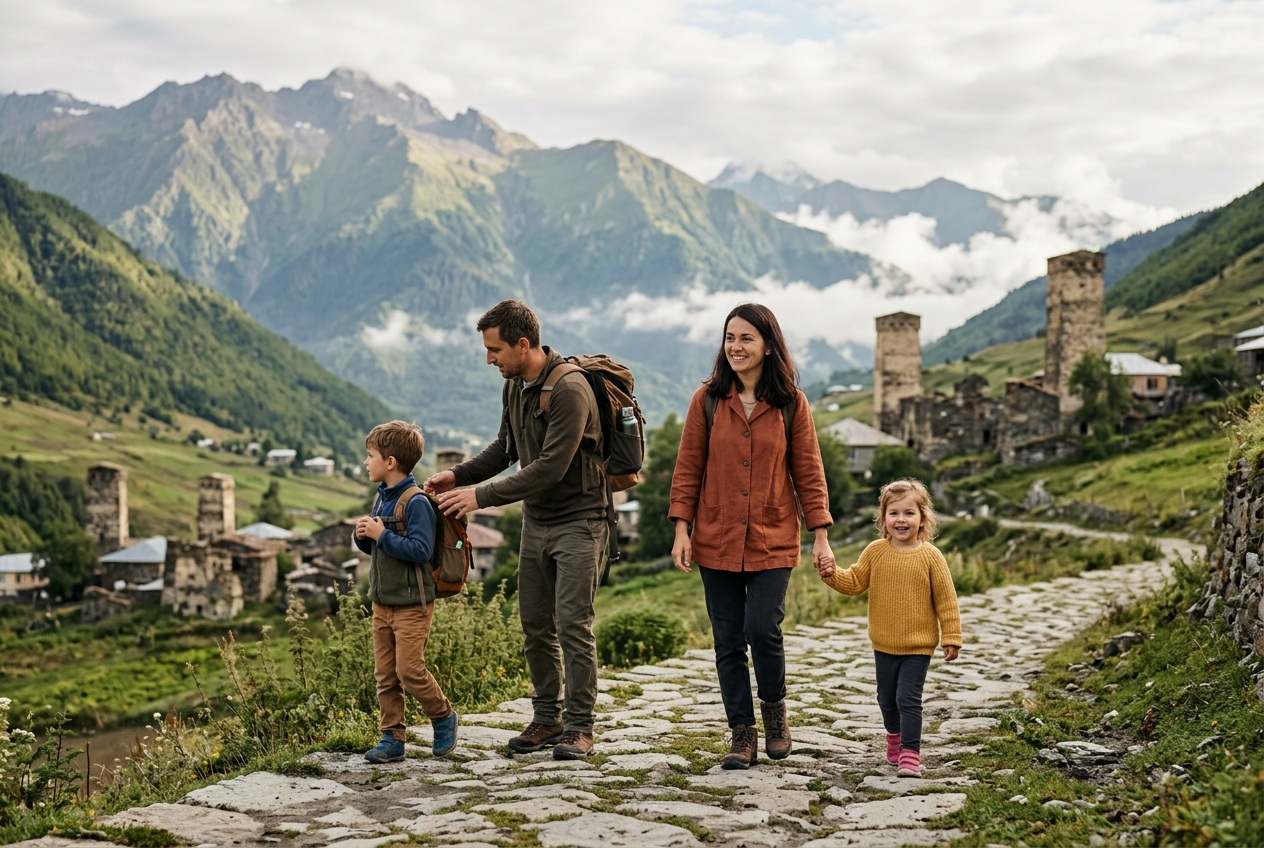
Georgia, known locally as Sakartvelo, is one of those rare destinations where families can stretch a modest budget across ancient fortresses, mountain trails, and Black Sea beaches without ever feeling like they’re cutting corners. The country sits at the crossroads of Europe and Asia, and its culture reflects that duality: cosmopolitan cafés in Tbilisi exist alongside villages in the Caucasus where grandmothers still bake bread in tone ovens dug into the earth. For families with young kids, the appeal is practical too. Distances between major attractions are short, the food is hearty and familiar enough for most palates, and Georgians treat children not as an afterthought but as honored guests. The phrase “stumari ghvtisaa” – a guest is a gift from God – extends doubly to little ones. I’ve watched restaurant owners in Tbilisi abandon their posts to entertain a fussy toddler, and taxi drivers in Batumi refuse payment after learning a family was visiting for the first time. If you’re planning a trip to Georgia with kids, the essential tips below will help you avoid common mistakes and make the most of a country that genuinely welcomes families.

Planning Your Family Adventure in Georgia
Best Times to Visit with Kids
The sweet spot for families is May through June or September through mid-October. Summer months (July and August) bring heat that can be punishing in Tbilisi, where temperatures regularly hit 35°C or higher. That’s miserable if you’re pushing a stroller through the Old Town. Spring and early autumn offer mild days in the low 20s, fewer crowds at popular sites, and wildflowers blanketing the mountain valleys.
Winter has its own charm if your kids are old enough for skiing. Gudauri, about two hours north of Tbilisi, offers surprisingly affordable ski passes and family-friendly slopes. But road conditions in the mountains can be unpredictable from December through February, and some highland destinations like Kazbegi become difficult to reach after heavy snowfall.
One thing to keep in mind: Georgian school holidays in June mean domestic tourism picks up, especially at coastal resorts in Batumi. Book accommodations early if you’re traveling during that window.
| Season | Temperature Range | Best For | Watch Out For |
|---|---|---|---|
| Spring (Apr-Jun) | 15-25°C | Sightseeing, hiking, wildflowers | Rain in April |
| Summer (Jul-Aug) | 28-38°C | Beach time in Batumi | Extreme heat in Tbilisi |
| Autumn (Sep-Oct) | 15-25°C | Wine harvest, mild weather | Shorter days |
| Winter (Dec-Feb) | -5 to 5°C | Skiing in Gudauri | Mountain road closures |
Visa Requirements and Travel Documents
Citizens of over 90 countries can enter Georgia visa-free for up to one year. That includes the US, EU nations, Canada, Australia, and most of South America. You’ll need a passport valid for at least six months beyond your entry date, and this applies to every family member, including infants.
There’s no special documentation required for children traveling with both parents, but if one parent is traveling solo with kids, carry a notarized consent letter from the absent parent. Georgian border officials don’t always ask for it, but airlines sometimes do, and having it prevents headaches.
Health insurance isn’t mandatory for entry, but I’d strongly recommend purchasing a family travel policy that covers medical evacuation. Georgia’s healthcare in cities is decent, but mountain areas have limited facilities, and a helicopter evacuation from Kazbegi to Tbilisi can cost thousands without coverage.
Top Child-Friendly Destinations and Activities
Tbilisi: Parks, Puppet Shows, and Cable Cars
Tbilisi is the kind of capital city where kids can run free without parents constantly gripping their hands in anxiety. The Old Town is largely pedestrianized, and the narrow streets wind past colorful balconied houses that look like something from a picture book.
Start with the Tbilisi Cable Car from Rike Park to Narikala Fortress. The ride takes about two minutes, costs roughly 2.50 GEL (under $1), and gives kids a bird’s-eye view of the city. Rike Park itself has a playground, and the nearby Bridge of Peace – a glass-and-steel pedestrian walkway – is a hit with older children who enjoy architecture.
The Gabriadze Puppet Theater is a Tbilisi institution. Shows run in Georgian, but the physical comedy and visual storytelling transcend language barriers. Tickets sell out fast, so book a few days ahead. Nearby, the Open Air Museum of Ethnography on Turtle Lake showcases traditional Georgian homes from different regions, and the surrounding forest trails are perfect for burning off energy.
For a daily sightseeing and activities budget, families can expect to spend approximately $14 per person, which makes Tbilisi one of the most affordable European capitals for families.
Nature and Adventure in Borjomi and Kazbegi
Borjomi is a two-hour drive from Tbilisi and feels like stepping into a European spa town from a century ago. The central park has a sulfur spring where kids can taste the famously mineral-rich water (most make a face and spit it out, which is half the fun). The park also has carnival rides, a Ferris wheel, and a cable car up to a forested plateau with picnic areas.
The real draw for active families is the Borjomi-Kharagauli National Park, one of the largest protected areas in Europe. Trails range from easy two-hour loops to multi-day treks. For families with younger children, the short trail from the park entrance to the sulfur pools is manageable and rewarding.
Kazbegi (officially Stepantsminda) sits at the foot of Mount Kazbek and offers a completely different experience. The drive north from Tbilisi along the Georgian Military Highway is spectacular, passing through the Jvari Pass at 2,379 meters. As one travel expert put it, families should “head up to the Caucasus mountains where there are any number of activities families could enjoy from simple hiking and picnicking to rafting, mountain biking, and horse riding.” The hike to Gergeti Trinity Church takes about 90 minutes each way and is doable for kids aged seven and up with decent shoes.
Coastal Fun in Batumi
Batumi is Georgia’s Black Sea resort city, and it has invested heavily in family infrastructure over the past decade. The Batumi Boulevard stretches seven kilometers along the waterfront with cycling paths, playgrounds, fountains, and a Ferris wheel. Bike rentals are cheap (around 5 GEL per hour), and family-sized quadricycles are available.
The Batumi Dolphinarium puts on daily shows, and the Botanical Garden just north of the city is one of the best in the Caucasus region, with themed zones representing different climate areas. Kids particularly enjoy the Japanese garden section and the trails that wind down to a secluded beach.
One practical note: Batumi’s pebble beaches aren’t ideal for toddlers. The stones can be uncomfortable, so bring water shoes. If your kids prefer sand, take a short marshrutka (minibus) ride south toward Sarpi, where the beaches have finer gravel and are less crowded.
Navigating Georgian Logistics with a Family
Transportation: Trains, Private Drivers, and Car Seats
Georgia’s train system connects Tbilisi to Batumi and Borjomi, and the overnight sleeper to Batumi is genuinely fun for kids. Four-berth compartments give families privacy, and tickets cost around 35-50 GEL per person depending on class. The daytime express takes about five hours and runs through beautiful countryside.
For mountain destinations like Kazbegi or Svaneti, trains aren’t an option. Private drivers are the standard solution, and they’re affordable: a full-day hire with a driver typically runs 150-200 GEL ($55-75). Apps like Bolt work well in Tbilisi and Batumi for shorter trips, with rides across town costing 5-10 GEL.
Here’s the honest truth about car seats: Georgia doesn’t enforce car seat laws the way Western Europe does, and most taxis won’t have them. If your children are under four, bring your own lightweight travel car seat. Rental car companies in Tbilisi can usually provide car seats with advance notice, but the quality varies. I’ve seen some that looked like they’d been through a war.
Choosing Family-Oriented Accommodations
Hotels in Georgia offer genuine value for families. Mid-range options range from $60-$120 per night, and many include breakfast. Budget-conscious families can find clean, comfortable rooms for $30-$60 per night, particularly outside Tbilisi’s tourist center.
Apartment rentals through Booking.com or local platforms are often the smartest choice for families. A two-bedroom apartment in central Tbilisi runs 120-200 GEL per night and gives you a kitchen for preparing snacks and breakfast. In Batumi during summer, similar apartments near the boulevard cost slightly more but save money on restaurant meals.
Guesthouses in rural areas deserve special mention. In places like Kazbegi, Mestia, or Sighnaghi, family-run guesthouses include home-cooked meals (often three per day) for 80-120 GEL per person. The hosts frequently become the highlight of the trip, teaching kids to make khinkali or taking them to see farm animals.
Dining Out: Kid-Friendly Georgian Cuisine
Must-Try Dishes for Picky Eaters
Georgian food is one of the least intimidating cuisines for children. Khachapuri, the cheese-filled bread that’s essentially Georgia’s national dish, is universally loved by kids. The Imeretian version is a simple cheese-stuffed flatbread, while the Adjarian version from Batumi comes boat-shaped with an egg and butter melted into the center.
Khinkali, the oversized soup dumplings, are another winner. Stick with the cheese or potato fillings for younger kids. The meat version requires a specific eating technique (bite, slurp the broth, then eat) that older children find entertaining once they get the hang of it.
Other safe bets include:
- Lobiani: bean-filled bread, mild and filling
- Shkmeruli: chicken in garlic cream sauce, served in a clay pot
- Churchkhela: the candle-shaped walnut and grape candy sold at every market, sometimes called “Georgian Snickers”
- Fresh fruit: Georgia’s peaches, watermelons, and figs are extraordinary in summer, often costing just 2-3 GEL per kilo
Georgian Hospitality and Children in Restaurants
Georgian restaurants don’t just tolerate children: they celebrate them. There’s no concept of an “adults-only” dining experience here. Servers will bring extra bread for kids to snack on before the meal arrives, and it’s common for staff to pick up a crying baby so parents can eat in peace. This isn’t performative; it’s genuine cultural behavior rooted in the belief that children are a blessing.
Meals in Georgia are communal affairs, and portions are enormous. Two or three dishes plus bread will easily feed a family of four, keeping costs low. A full family dinner at a mid-range restaurant in Tbilisi rarely exceeds 60-80 GEL ($22-30). Budget-friendly travelers can expect to spend between $14-$50 daily in Georgia, and food represents exceptional value within that range.
One cultural note: the tamada, or toastmaster, is central to Georgian feasting. If you’re invited to a supra (feast) by locals, children are welcome, but the wine toasts can go on for hours. Feel free to excuse yourselves early without any offense taken.
Health, Safety, and Practical Essentials
Medical Facilities and Pharmacies
Tbilisi has several modern private hospitals, including Evex Medical Corporation and the National Center of Surgery, where English-speaking doctors are available. Outside the capital, medical facilities become basic quickly. Rural clinics can handle minor issues, but anything serious means a trip back to Tbilisi or Batumi.
Pharmacies (called “aptiaki”) are everywhere and well-stocked. Common children’s medications like ibuprofen, antihistamines, and oral rehydration salts are available over the counter without prescriptions. Brands may differ from what you’re used to, but pharmacists are generally knowledgeable and helpful.
Tap water in Tbilisi is safe to drink, though the taste varies by neighborhood. In rural areas, stick to bottled water for young children. Stomach bugs from unfamiliar bacteria are the most common health issue for visiting families, so pack probiotics and be cautious with unwashed produce from markets.
Packing List: What to Bring and What to Buy Locally
Pack light and buy what you need in Georgia. Diapers, wipes, formula, and baby food are available in Tbilisi supermarkets like Goodwill and Carrefour at reasonable prices. Sunscreen is harder to find in good quality outside major cities, so bring your own.
Essential items to pack from home:
- A lightweight travel car seat if your child is under four
- Sunscreen (SPF 50 for mountain UV exposure)
- Comfortable hiking shoes for kids (even for casual sightseeing on cobblestones)
- A baby carrier rather than a stroller for Old Town exploration
- Google Translate offline pack for Georgian (download before you go)
- A universal power adapter (Georgia uses European Type C and F plugs)
Items you can easily buy locally include children’s clothing, snacks, over-the-counter medicine, and SIM cards. A prepaid SIM from Magti or Geocell costs about 10-15 GEL and gives you data for maps and translation apps, which are essential outside Tbilisi where English proficiency drops significantly.
Making Georgia Your Family’s Next Destination
A family vacation in Georgia for 3 nights averages around $244 for two travelers, making it one of the most accessible international destinations for families on a budget. But the real value isn’t financial. It’s the experience of watching your children be welcomed into a culture that genuinely treasures them, of hiking to medieval churches with mountain views that no screen can replicate, and of sharing enormous plates of khachapuri while a restaurant owner teaches your six-year-old to count in Georgian.
Georgia rewards families who show up with open schedules and flexible attitudes. Leave room for the unplanned: the roadside watermelon vendor, the impromptu village supra, the cable car ride you didn’t know existed. These tips for traveling to Georgia with children should give you the practical foundation, but the best moments will be the ones you didn’t plan for. Start booking, pack those hiking shoes, and let Sakartvelo surprise you.