
Table of Contents
- Car Rental in Batumi: Direct Guide to Booking and Driving
- Picking up at Batumi Airport or in the city
- Documents/deposit basics for renting in Georgia
- Driving and parking in Batumi
- Top Destinations for Day Trips from Batumi
- Driving to Goderdzi in winter
- Planning Long Distance: Driving to Tbilisi
- Getting there by car: Distance and Road Conditions Table
- Turkey border with a rental car
- Essential Driving Tips for Adjara
- FAQ: Rent a Car Batumi
A car rental in Batumi is easy to arrange and worth it if you want to see more than the seafront boulevard. Most travellers either collect a car at Batumi airport or have one delivered to their hotel. With a car, the Roman fort at Gonio, the waterfalls of upper Adjara and the ski slopes at Goderdzi are all within a day’s drive.
This guide covers practical questions: where to pick up, what documents you need, how parking works, and which routes need extra care in winter. It also explains the one cross-border rule that catches people out.
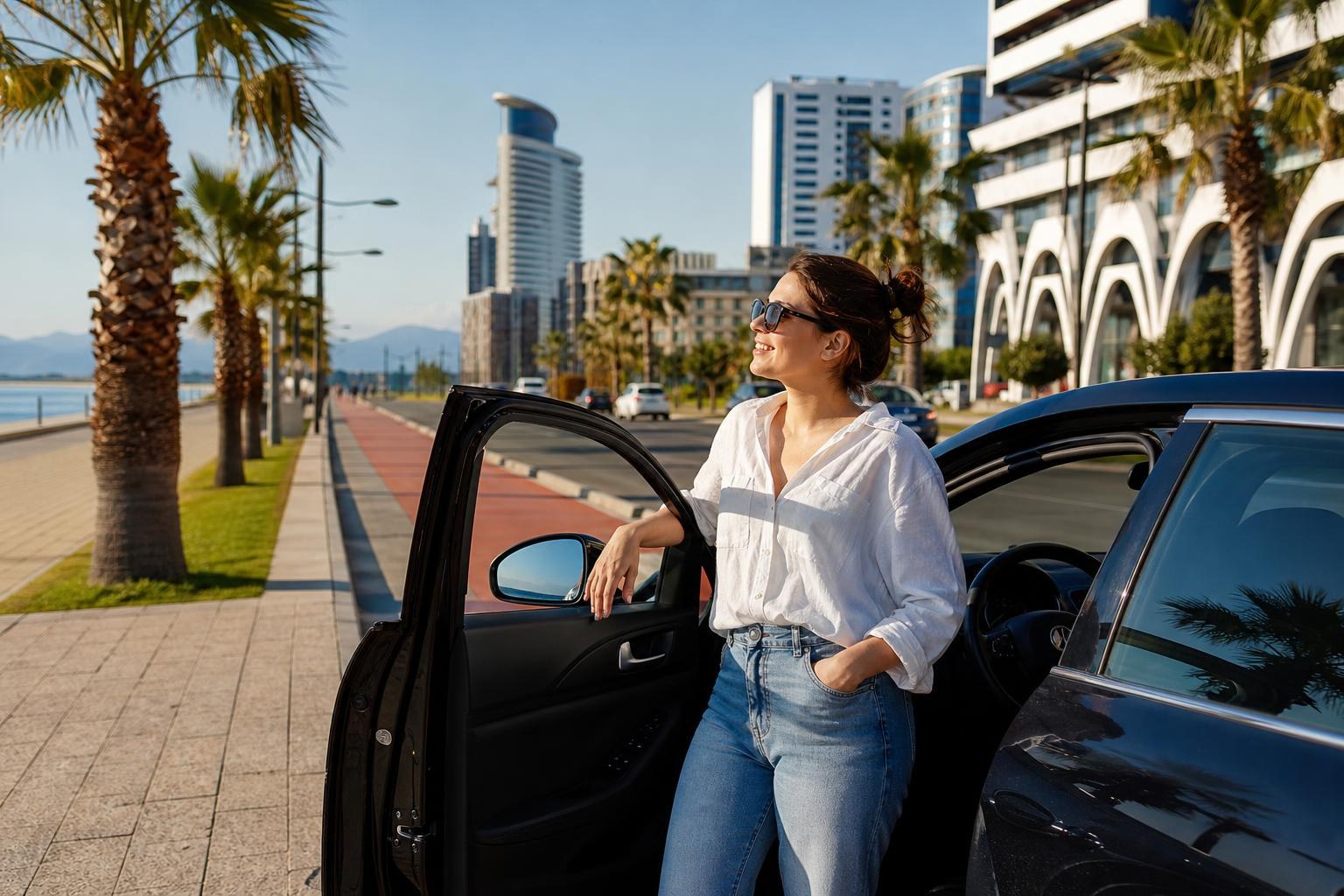
Batumi feels like two places. The city has high-rises, casinos, a promenade full of cyclists and drivers who change lanes with confidence. A short drive inland, the roads narrow, cows wander across the asphalt, and villages run at a much slower pace. A rental car lets you see both in the same afternoon.
Car Rental in Batumi: Direct Guide to Booking and Driving
You don’t need a long planning process to rent a car in Batumi, but you do need to plan ahead in summer. July and August bring the heaviest demand, when the Black Sea coast fills with visitors from across Georgia, Turkey, Armenia and further afield. Cars, especially automatics and 4x4s, sell out quickly.
Some market data from 2026 shows that the lowest daily prices found for Batumi were around $82. The best rates usually came from booking roughly three weeks in advance. Treat that figure as a snapshot rather than a fixed price. Rates move with the season, the car class and how many days you rent.
These are the main decisions to make before you book:
- Car type: A compact sedan is fine for Batumi, Gonio, Sarpi and Kobuleti. A 4×4 is the sensible choice for mountain roads in upper Adjara, and essential for Goderdzi in winter.
- Transmission: Manual cars are still common in Georgia. If you need an automatic, filter for it early, because those cars run out first.
- Insurance: Read what the basic cover excludes. Tyres, windscreens and the underside of the car are often excluded. Those are exactly the parts that suffer on rural Georgian roads.
- Pickup point: Airport, city office or hotel delivery. The next section covers these.
- Mileage and border rules: Check for daily kilometre caps. Also check whether the contract restricts where you can drive, including the Turkish border.
Booking through a local agency or an international aggregator both work well in Batumi. Local firms tend to be more flexible about delivery and deposits. Aggregators make it easier to compare prices side by side. Whichever you choose, photograph the car from every angle at pickup, including the fuel gauge and odometer.
Tip: Ask whether the car has a dashcam or whether you can fit your own. Many Georgian drivers use them, and footage helps settle any dispute after a minor bump.
Picking up at Batumi Airport or in the city
Batumi airport is unusually close to the centre. It’s about a 15-minute drive into town and is also reachable by public bus. That short distance shapes how rentals work here.
Airport delivery is very common. Many local providers don’t run a staffed desk in the terminal. Instead, they use a meet-and-greet system: a representative waits with a sign showing your name, directly after you exit the luggage area. You sign the paperwork, inspect the car in the car park, and drive off. When it works, this is the fastest option. You’re on the road within about 20 minutes of landing.
City office pickups suit a different kind of trip. If you plan to spend your first two or three days walking around Old Batumi, the boulevard and the botanical garden, you don’t need a car yet. Paying for it to sit in a paid parking zone makes little sense.
Here’s how the two options compare:
| Factor | Airport arrivals pickup | City office or hotel pickup |
|---|---|---|
| Convenience on arrival | Best: drive straight to your hotel | Need a taxi or bus first |
| Late-night flights | Usually possible, but confirm the meeting time | Office may be closed |
| Delivery fee | Sometimes free, sometimes extra | Hotel delivery often extra |
| Parking costs early in the trip | You pay from day one | You avoid them until you need the car |
| Inspection conditions | Car park, sometimes rushed | Calmer, more time to check |
A few practical points for airport handovers:
- Send your flight number to the provider so they can track delays.
- Have a local SIM or eSIM working before you land, because the representative may call you.
- Agree in writing where you’ll return the car, and whether an early-morning drop-off costs extra.
Important: If no one is waiting when you come through arrivals, call the provider before you accept an offer from a freelance driver in the hall. Mix-ups usually come from a delayed flight, not a scam, but confirm first.
If you’re flying out of Batumi at the end of the trip, a one-way return at the airport is usually the smartest arrangement. It saves a taxi ride with luggage on your last morning.
Documents/deposit basics for renting in Georgia
The paperwork for renting a car in Georgia is simpler than many visitors expect. You’ll need three things:
- A valid driving licence from your home country
- Your passport, which the agency will photograph or copy
- A payment method for the deposit, usually a credit card, though some local firms accept cash
Foreign licences are valid in Georgia for one year from your most recent entry. An International Driving Permit isn’t required if your licence uses Latin or Cyrillic characters. That covers most European, North American, Russian and Ukrainian licences. If your licence uses another script, carry an IDP. Some rental companies also ask for one regardless of the legal rule, so check your contract terms.
Most agencies set a minimum driver age and require a minimum number of years holding a licence. These rules differ between providers, so confirm them before you pay anything. Younger drivers may face a surcharge or be limited to smaller cars.
How the deposit works
The security deposit is where local and international providers differ most. International brands typically place a hold on a credit card in the main driver’s name. The amount is blocked for the rental period and released after you return the car, which can take several working days to appear back in your account.
Many local Batumi agencies are more relaxed. Some take a cash deposit in GEL or USD and return it on the spot when you drop off the car. Others offer a “no deposit” option in exchange for a higher daily rate or a full insurance package. Neither is wrong. Just make sure you get a written receipt for any cash you hand over.
Note: Deposit amounts, accepted cards and insurance excess vary widely and change often. Confirm the exact 2026 figures with your provider in writing before you book, rather than relying on what a booking site shows.
Driving and parking in Batumi
Driving in Batumi has two moods. Out of season, the city is fairly relaxed. From June to September, traffic on the main roads slows to a crawl in the evenings. That includes the roads along the seafront and the approaches from the airport and the Kobuleti highway. Expect aggressive overtaking, sudden lane changes and taxis stopping wherever they see a passenger.
The new town’s grid is reasonably logical. Old Batumi has narrower one-way streets that navigation apps sometimes get wrong. Roundabouts follow the usual rule that traffic already on the roundabout has priority, but local drivers don’t always respect it. Pedestrians cross wherever they like near the boulevard. Drive the seafront slowly, especially at night.
Paid parking zones
The biggest risk for visitors isn’t a crash. It’s a parking fine. Batumi uses paid parking zones across much of the centre, and enforcement is active. The city has been reorganising its parking zones as part of a wider strategy, so the rules on a given street may differ from what you read online last year.
To avoid paying a fine:
- Read the signs on the street. Paid zones are marked, and the sign shows the payment methods and operating hours.
- Pay through the official method shown, usually a municipal app, SMS or a payment terminal. Don’t rely on a stranger “watching” your car.
- Note your exact plate number, because you’ll enter it when paying.
- Ask the rental agency how they handle fines. Most charge them to your card or deduct them from the deposit, sometimes with an admin fee.
- Use your hotel’s parking where possible. Many apartment buildings in the new town have underground spaces.
Parking prices, zone boundaries and payment apps can change from one season to the next, so check them locally. This guide doesn’t list fixed rates for that reason. If in doubt, a hotel receptionist or your rental agent can tell you which local app or method currently works.
Tip: Don’t park on yellow lines, in front of driveways or close to pedestrian crossings. Tow trucks operate in central Batumi in high season, and getting a car back costs time and money.
Top Destinations for Day Trips from Batumi
This is the payoff for renting a car. Within an hour of the city you’ll find Roman ruins, a rainforest national park, mountain waterfalls and quieter beaches. The contrast between cosmopolitan Batumi and rural Adjara is sharp. In the villages, Russian and English become less common, the hospitality is more personal, and someone may well offer you fruit from their garden for no reason at all.
Georgians often say “stumari ghvtisaa,” meaning the guest is a gift from God. You feel that more in a mountain village than in a seaside hotel lobby. A few words of Georgian help. Try “gamarjoba” (hello) and “madloba” (thank you). Download a Google Translate offline pack for Georgian before you leave Wi-Fi, because mobile coverage drops in the gorges.
South to Gonio and Sarpi
The drive south toward the Turkish border is short and easy, which makes it a good first outing if you’re still getting used to local traffic.
Gonio Fortress is the main stop. Its walls are among the best preserved Roman fortifications in Georgia. The site was a Roman, then Byzantine, then Ottoman stronghold. Local tradition holds that the apostle Matthias is buried here, which gives the place religious significance for Georgian Christians. Walk the full circuit of the walls. It takes less than an hour, and the scale of the site only becomes clear from the top.
Just beyond lies Sarpi, the last village before Turkey. The water here is clearer than in Batumi, with pebbles instead of the city’s busier beaches, and swimmers come for the visibility in summer. Kvariati, between Gonio and Sarpi, is another popular spot for clear water. Parking near the beaches fills up on hot weekend afternoons, so arrive before 11:00.
Infrastructure along this stretch is changing. A Batumi – Sarpi bypass road project has been under development to divert heavy traffic from the coast. Expect roadworks in places, and check your navigation app for current routing.
Nature Escapes: Mtirala and Makhuntseti
Mtirala National Park sits in the hills behind Batumi and is one of the wettest places in Georgia. The name roughly means “crying mountain,” a nod to the constant rain. The park protects Colchic rainforest: moss-covered trees, ferns and small streams. That makes for a striking change from the city in under an hour. Marked trails lead to a small lake and waterfall. Go after a dry day if you can, because the paths turn very muddy.
The last stretch of road to Mtirala is narrower and rougher than the coastal routes. A standard car usually manages it in good weather. After heavy rain, a higher-clearance vehicle is more comfortable. Check conditions with the park visitor centre.
Makhuntseti lies on the main road into upper Adjara, along the Adjaristsqali River. Two sights are close together:
- Makhuntseti Waterfall: a tall, easy-to-reach fall right next to the road, busy with day-trippers in summer.
- Queen Tamar’s Bridge: a medieval arched stone bridge over the river, a short drive away.
Roadside stalls nearby sell churchkhela, honey and Adjarian cheese. Prices are generally lower than in the city, though they vary, so ask before you buy. You can combine Makhuntseti with a stop at a small family wine cellar or trout restaurant further up the valley. That makes a relaxed half-day.
Coastal Drive to Kobuleti
Heading north, the drive to Kobuleti is straightforward. The main coastal highway is wide and well signed, and the trip takes well under an hour without traffic. On summer weekends, leave early. The return run into Batumi on a Sunday evening can be painfully slow.
Kobuleti is Batumi’s quieter neighbour. Its long pebble beach runs for kilometres, backed by a pine-lined promenade, guesthouses and seasonal cafés. It’s mainly popular with Georgian families rather than international tourists, and it moves at a slower pace. Expect fewer English menus and more home cooking.
On the way, consider stopping at the Batumi Botanical Garden at Mtsvane Kontskhi, just north of the city. Petra Fortress near Tsikhisdziri is another option. Both are easy detours from the same road.
Driving to Goderdzi in winter
Goderdzi is a ski resort high in the mountains of upper Adjara, and the winter drive there is the most demanding route in this guide. From roughly December to March, a 4×4 with winter tyres and snow chains is essential. A small city car won’t do. The road climbs through Keda and Khulo before rising sharply to the pass. Above Khulo, snow and ice can cover the surface for days after a storm.
Before you go, do these four things:
- Book a 4×4 and say why. Tell the rental agency you’re driving to Goderdzi. Some restrict mountain driving in winter, and a few may refuse it for certain car classes.
- Confirm snow chains are in the car, and practise fitting them in daylight in Batumi. Doing it for the first time on a dark, frozen slope is miserable.
- Check the road status on the morning you leave. The pass can close temporarily during heavy snow. Ask your hotel in Goderdzi or local police; conditions change daily.
- Fill up in Batumi or Khulo. Fuel stations get sparse higher up.
Outside winter, the route through upper Adjara is beautiful. The pass beyond Goderdzi continues toward Adigeni and Akhaltsikhe in Samtskhe-Javakheti, and in summer some sections are unpaved or rough. In winter, treat Goderdzi as the end of the line unless locals confirm the pass beyond is open.
Important: Many rental contracts void insurance if you drive on roads the company considers unsuitable for the vehicle. If you take a 2WD car up to Goderdzi in snow and slide off the road, you may pay for the damage yourself.
Drive slowly on the hairpins and leave plenty of distance. Minibuses and trucks descending toward Batumi may cut corners. Plan to arrive before dark, because the final climb is much harder at night.
Planning Long Distance: Driving to Tbilisi
Plenty of travellers pick up a car in Batumi and drop it off in Tbilisi, or drive the full loop. The main route runs north along the coast and then joins the east-west highway through Kutaisi. The road has improved substantially in recent years. Large sections are now dual carriageway, and tunnels and bridges have replaced the slowest mountain stretches around the Rikoti pass.
Allow a full day. The distance is roughly 370 km. With a lunch stop, most people take 6 to 7 hours, sometimes longer when sections are under construction. Kutaisi is the natural halfway point. Gelati Monastery and the Prometheus Cave are short detours from there. You can also split the trip and spend a night in Imereti.
A few things to know before you set off:
- One-way fees: Dropping a Batumi car in Tbilisi usually costs extra. Ask before booking, because the fee varies considerably between providers.
- Fuel: Stations are frequent along the main highway, so you don’t need to plan stops carefully.
- Speed cameras: These are common on the highway. Fines usually reach you through the rental company, sometimes weeks later.
- Trucks: Heavy goods vehicles use this route between the Black Sea ports and the east, so overtaking needs patience.
Road safety is a serious concern on long-distance routes. Georgia recorded 469 road deaths in 2025, a six-year high, with a fatality rate nearly three times the EU average. Much of the risk comes from speeding and dangerous overtaking on two-lane sections. Don’t feel pressured by drivers flashing their lights behind you. Pull over and let them pass.
For a detailed breakdown of the highway, rest stops and where to break the journey, see our dedicated Batumi to Tbilisi driving guide on Triproadwayplanner.
Getting there by car: Distance and Road Conditions Table
The table below gathers the main routes from Batumi. Distances and times are approximate, measured from the city centre in normal traffic. Summer congestion, roadworks and winter weather can add a lot, so always check a navigation app on the day.
| Destination | Approx. km from Batumi | Approx. drive time | Road condition | 4×4 needed? | Parking | Winter notes |
|---|---|---|---|---|---|---|
| Gonio Fortress | ~12 km | 20-30 min | Paved coastal road | No | Small lot near fortress | Open year-round; quiet in winter |
| Sarpi | ~17 km | 25-35 min | Paved; busy near border | No | Limited near beach | Beach season ends; border traffic continues |
| Mtirala National Park | ~30 km | 50-60 min | Last section narrow and rougher | Helpful after rain | At visitor centre | Muddy, trails may be unsuitable |
| Makhuntseti | ~30 km | 40-50 min | Paved valley road | No | Roadside near waterfall | Usually accessible; check for rockfalls |
| Kobuleti | ~25 km | 30-45 min | Main coastal highway | No | Street and guesthouse parking | Many cafés closed out of season |
| Goderdzi | ~115 km | 2.5-3.5 hrs | Paved to Khulo, steep mountain road above | Yes, Dec – Mar | Resort parking | 4×4 and snow chains essential; temporary closures possible |
| Tbilisi | ~370 km | 6-7 hrs | Mostly highway, some construction | No | Paid zones in centre | Rikoti section can get snow; check forecasts |
All figures are rounded estimates for 2026 conditions and aren’t official measurements. Road works, new bypasses and seasonal closures change quickly in Georgia. Confirm locally before setting off, especially for Goderdzi and Mtirala.
Turkey border with a rental car
This is the question that causes the most confusion. Sarpi sits right on the Turkish border, and Trabzon is only a few hours further along the coast. It looks like an easy day trip.
Taking a rental car across the Sarpi border into Turkey is usually not allowed by rental agreements. Most Georgian rental contracts limit the car to Georgia. Even if the border guards would let the car through, insurance usually won’t cover you on the Turkish side. If anything happens, you’d be liable for the whole car.
A small number of providers do permit cross-border travel. When they do, they generally need advance notice and specific documents, often including a notarised power of attorney, because the car isn’t registered in your name. Expect an extra fee as well. You can’t arrange any of this at the counter on the morning you want to leave.
If you want to visit Turkey from Batumi, you have three options:
- Ask before you book, not after. Get any permission in writing.
- Park on the Georgian side and cross on foot. Sarpi is a well-used pedestrian crossing, and transport is available on the Turkish side. Check where you can legally leave the car, since parking near the border is limited.
- Take public transport or an organised tour from Batumi to Hopa or Trabzon.
Note: Driving a rental car into Turkey without authorisation can breach your contract, void your insurance and lead to your deposit being withheld. Always check with the provider first.
Essential Driving Tips for Adjara
Batumi’s driving culture takes a day or two to get used to. These tips come up again and again in traveller experiences across the region:
- Expect livestock. Cows, and sometimes pigs, wander onto roads in rural Adjara, even on main routes. They don’t move quickly. Slow down when you see them near the road.
- Overtaking is aggressive. Locals overtake on blind corners and solid lines. Don’t copy them, and give way when they’re coming toward you in your lane.
- Headlights aren’t optional in tunnels. Some older mountain tunnels are poorly lit and have uneven surfaces.
- Rain changes everything. Adjara is one of the wettest regions of Georgia. Mountain roads can see landslides or rockfalls after storms, so drive carefully and check conditions before going inland.
- Keep cash in GEL. Rural cafés, roadside stalls and some fuel stations in the mountains may not take cards.
- Download offline maps. Google Maps and Maps.me both work well here. Coverage disappears in the deeper gorges.
- Police stops are routine. Georgian police are generally professional. Keep your licence, passport and rental papers in the car, and don’t offer cash.
Seasons matter too. From late spring to early autumn, every route in this guide is open. July and August bring traffic and full car parks. Shoulder months, especially May, June and late September, often offer the best balance of good weather, open roads and lower rental demand. Mountain roads above Khulo need a fresh assessment each winter.
The real difference between Batumi and rural Adjara is pace. In the city, everyone is in a hurry. In the villages, people stop the car to chat with a neighbour in the middle of the road. Allow extra time for every inland trip, and you’ll enjoy it more.
Tip: If you’re travelling on a budget, compare a rental against using Bolt or local taxis for city trips. Use the car for day trips, and switch to taxis in central Batumi, where parking is the main cost.
FAQ: Rent a Car Batumi
Can I rent a car in Batumi without a credit card?
Often, yes. Many local agencies accept a cash deposit, and some offer a no-deposit option with a higher daily rate or full insurance. International brands generally require a credit card in the main driver’s name.
Is it better to book a car before arriving or after?
In summer, book ahead. Three weeks in advance has typically secured the best prices, and automatics and 4x4s sell out first. In winter you have more flexibility, though you should still reserve a 4×4 ahead of time if you’re heading to Goderdzi.
Do I need an International Driving Permit in Georgia?
Not if your licence is in Latin or Cyrillic script and you’ve been in the country for less than a year since your last entry. Some providers still ask for one, so check your rental terms.
Can I drop off a rental car somewhere other than Batumi?
Usually, yes. Tbilisi and Kutaisi are the most common drop-off points. Expect a one-way fee, and confirm it in writing before you book.
A car changes what you can see in Batumi. Without one, you get the boulevard and the beaches. With one, you also get Gonio’s Roman walls, the clear water at Sarpi, Mtirala’s rainforest, the waterfall at Makhuntseti and, in winter, the snowfields at Goderdzi. The basics are simple: carry your licence and passport, understand how the deposit works, pay for parking properly, book a 4×4 for winter mountain roads and don’t drive into Turkey without written permission.
Book early in summer, drive slowly in the hills, and leave plenty of time for village stops. In Adjara, the unplanned stops are often the best part of the trip.