
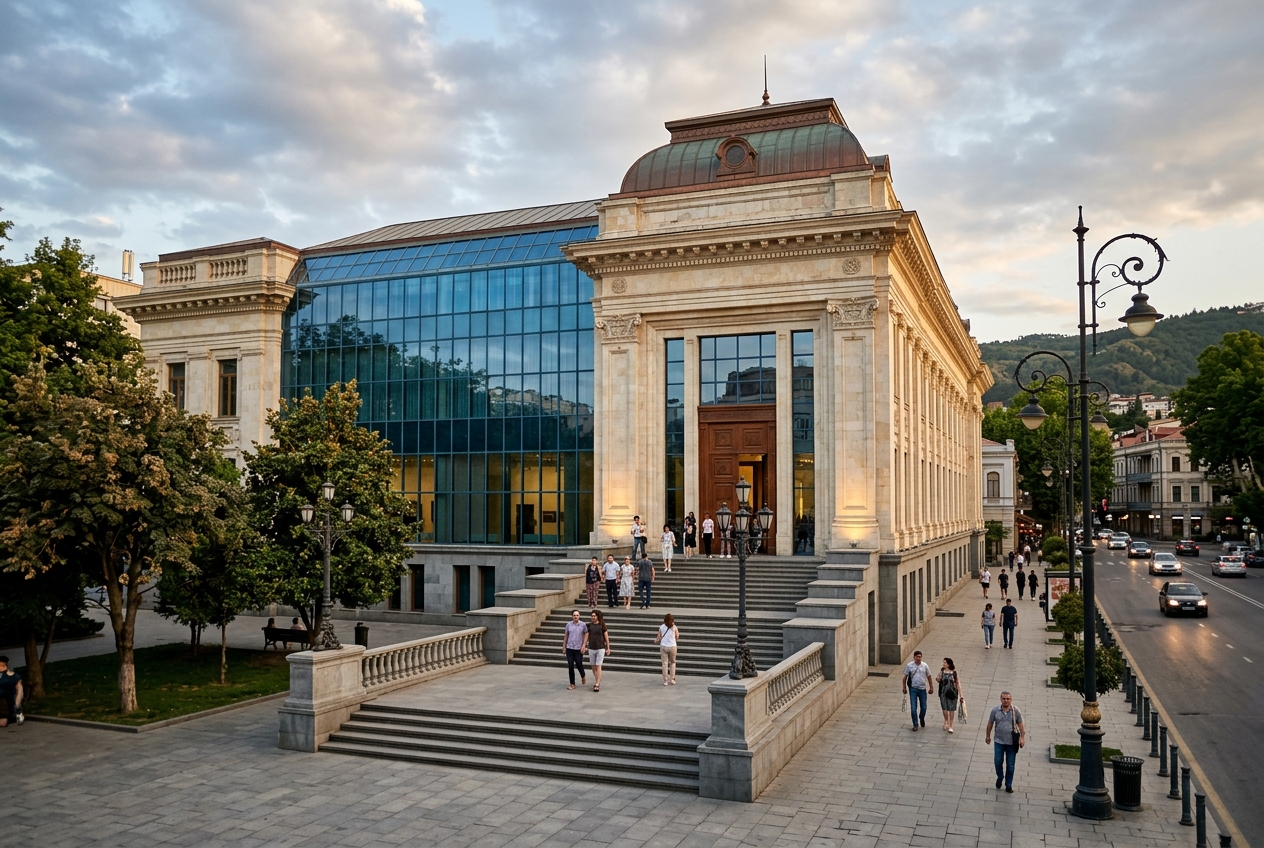
Tbilisi has always been a city where art lives in unexpected places: on crumbling Soviet-era walls, in wine cellars doubling as galleries, and along the grand stretch of Rustaveli Avenue where theaters and museums sit shoulder to shoulder. But one institution has quietly reshaped how Georgians and visitors alike encounter the country’s modern artistic identity. The Georgian Museum of Fine Arts, sometimes called the Shalva Amiranashvili Museum by locals confusing it with its older neighbor, is actually a distinct and relatively young institution that focuses specifically on Georgian art from the 20th and 21st centuries. Housed inside the Art House complex on Rustaveli, it holds over 3,500 artworks by approximately 80-100 Georgian artists, making it one of the most concentrated collections of Georgian modernism anywhere in the world. If you’re planning a trip to Tbilisi, or simply curious about the cultural heartbeat of the South Caucasus, this museum deserves serious attention. Here’s everything worth knowing before you go.
Origins and Architectural Significance
The story of this museum doesn’t start with a government decree or a national committee. It starts with a family, a private passion for collecting, and a belief that Georgian art deserved a permanent, world-class home. That personal origin story sets the institution apart from most state-run museums in the region, and it shows in everything from the curation to the building itself.
The Vision of George Tsereteli and Maya Tsereteli
George Tsereteli and his wife Maya Tsereteli are the driving force behind the museum’s creation. George, a Georgian businessman and art collector, spent decades acquiring works by Georgian painters, sculptors, and graphic artists, many of whom had been overlooked or undervalued during the Soviet period and the turbulent 1990s. His motivation wasn’t purely commercial. Conversations with Georgian artists and their families revealed a recurring fear: that important works would be sold abroad, damaged, or simply forgotten as the country lurched through independence, civil war, and economic crisis.
Maya Tsereteli played an equally critical role in shaping the museum’s curatorial philosophy. She pushed for a presentation style that would feel accessible to younger Georgians, not just art historians. The couple’s vision was specific: create a space where Georgian modernism could be experienced chronologically, with enough context to help visitors understand why a particular painting mattered in its historical moment. That vision translated directly into the museum’s layout and programming.
Modernist Design on Rustaveli Avenue
The museum occupies a prominent position on Rustaveli Avenue, Tbilisi’s main cultural artery. The building itself is part of the larger Art House complex, a multi-use cultural space that combines exhibition halls, a cinema, retail areas, and event venues under one roof. The architecture leans modernist, with clean lines, generous natural light, and an interior flow designed to guide visitors through the collection without the cramped, corridor-heavy feel of older Georgian museums.
The exhibition space is substantial. The museum’s galleries cover 7,000 square meters, which is roughly the size of a mid-tier European art museum. That’s a lot of room for a private institution in a city where real estate on Rustaveli doesn’t come cheap. The scale of the space allows for breathing room between works, something that older Tbilisi museums often lack, and it makes the experience feel genuinely international in quality.
The Private Collection and Artistic Legacy
What separates this museum from Tbilisi’s other cultural institutions isn’t just the building. It’s the collection itself, which tells a very specific story about Georgian identity through art.
Preserving Post-Soviet Georgian Art
Georgia’s art market went through a painful period after the Soviet Union collapsed in 1991. State funding for artists evaporated. Galleries closed. Many painters and sculptors emigrated or stopped working entirely. Works that had been stored in Soviet-era institutions were sometimes sold off informally, lost in bureaucratic transitions, or damaged by neglect. The Tsereteli collection was built partly as a response to this crisis: a deliberate effort to keep significant Georgian artworks inside Georgia.
This preservation mission gives the museum a sense of urgency that you don’t always feel in more established institutions. Several pieces in the collection were acquired directly from artists’ families who had no other way to preserve them. Others were purchased from international auctions where Georgian works had ended up after being sold abroad during the 1990s. The result is a collection that functions almost as a rescue archive, documenting a period of Georgian art that might otherwise have been scattered across continents.
Represented Artists and Masterpieces
The collection spans roughly a century of Georgian artistic production, from early 20th-century modernists through contemporary figures. Some of the most significant names include Niko Pirosmani (though his works are held more extensively at the National Gallery), Elene Akhvlediani, David Kakabadze, Lado Gudiashvili, and Shalva Kikodze. The museum also holds works by lesser-known but critically important mid-century artists who experimented with abstraction and expressionism under Soviet constraints.
| Artist | Period | Style/Movement | Notable Contribution |
|---|---|---|---|
| Elene Akhvlediani | 1920s-1970s | Post-Impressionism, Stage Design | Theatrical set designs, Tbilisi cityscapes |
| David Kakabadze | 1920s-1950s | Cubism, Constructivism | Imereti landscapes, experimental collages |
| Lado Gudiashvili | 1920s-1970s | Symbolism, Art Nouveau | Mythological and erotic Georgian themes |
| Shalva Kikodze | 1910s-1920s | Post-Impressionism | Paris-period works, Georgian folk subjects |
| Ketevan Magalashvili | 1920s-1960s | Realism, Portraiture | Portraits of Georgian intellectuals |
What strikes you walking through the galleries is how distinctly Georgian these works feel, even when the artists were trained in Paris or Moscow. There’s a recurring visual vocabulary: the dry, golden light of Kakheti, the layered rooftops of old Tbilisi, religious iconography filtered through modernist sensibilities. The museum does an excellent job of letting visitors see these connections without over-explaining them.
Permanent and Temporary Exhibitions
The museum operates on a dual-track model: a permanent collection that tells the story of Georgian modernism, and a rotating program of temporary exhibitions that keeps the space feeling alive and current.
Chronological Journey Through Georgian Modernism
The permanent exhibition is organized chronologically, starting with early 20th-century works and moving through the Soviet period into post-independence art. This structure is intentional. It lets visitors see how Georgian artists responded to massive political upheavals: the brief independence of 1918-1921, Sovietization, World War II, the Thaw, and finally the chaotic freedom of the 1990s.
Each room focuses on a specific era or movement, with wall texts in both Georgian and English. I found the Soviet-era rooms particularly compelling. You can see artists walking a tightrope between official Socialist Realist expectations and their own creative instincts, smuggling abstraction and personal expression into landscapes and portraits that technically met state requirements. It’s a story of quiet resistance, and the museum tells it well.
Rotating Contemporary Showcases
The temporary exhibition program has been increasingly ambitious. The museum made international headlines when it hosted the “Banksy: Birth of an Icon” exhibition from October 2023 through February 2024, a show that drew significant crowds and put the institution on the radar of art tourists who might not have otherwise visited Tbilisi. That exhibition featured original prints, sculptures, and installations tracing Banksy’s evolution from Bristol street artist to global phenomenon.
The Banksy show was a strategic move. It demonstrated that Tbilisi’s fine arts museum could mount exhibitions of genuinely international caliber, competing with venues in Berlin, London, or Istanbul. Temporary shows typically run for two to four months, and the museum rotates between international guest exhibitions and shows featuring emerging Georgian contemporary artists. Check their website or social media before visiting, as the temporary program changes regularly and some shows sell out on weekends.
Educational Programs and Public Engagement
One area where this institution genuinely outperforms many Georgian museums is education. The Tseretelis built public programming into the museum’s DNA from the beginning, and it shows in the variety of offerings available.
The museum runs regular workshops for children and teenagers, covering everything from painting techniques to art history discussions. These aren’t token programs: they’re structured, recurring, and taught by practicing artists. For a country where public arts education in schools has been uneven since independence, this kind of programming fills a real gap. I’ve spoken with Georgian parents who bring their kids specifically for the Saturday workshops, treating them as a supplement to what schools don’t offer.
Adult programming includes artist talks, curator-led walkthroughs, and occasional film screenings related to current exhibitions. The museum has also partnered with Georgian universities to host lectures and panel discussions on topics like art preservation, the economics of the Georgian art market, and the relationship between Georgian and European modernism. These events are typically free or very inexpensively priced, which matters in a country where average salaries still hover around 1,500-2,000 GEL per month.
The museum’s engagement strategy also extends to digital platforms. Their social media presence is active and visually polished, which helps attract the younger, Instagram-fluent generation of Georgians who might not think of themselves as “museum people.” This generational outreach mirrors a broader shift in Tbilisi’s cultural scene, where institutions increasingly recognize that the post-2003 generation, raised on English and digital media, expects a different kind of cultural experience than their Soviet-educated parents.
Visitor Experience and On-Site Amenities
Getting the most out of your visit requires a bit of planning, especially if you’re combining the museum with other stops along Rustaveli Avenue.
The Art House Complex
The museum sits within the Art House complex, which means your visit can easily expand beyond the galleries. The complex includes a cinema, a bookshop with a solid selection of Georgian art publications, and several cafes. The ground-floor spaces host occasional pop-up events and product launches, giving the building a buzzy, cultural-hub atmosphere that feels very different from the hushed solemnity of traditional museums.
I’d recommend budgeting at least two hours for the museum itself, plus another 30-45 minutes if you want to browse the bookshop and grab a coffee. The bookshop deserves special mention: it carries exhibition catalogs, monographs on Georgian artists, and a curated selection of postcards and prints that make genuinely good souvenirs. Prices are reasonable by European standards.
For practical logistics, the museum is easily reachable via Tbilisi’s metro: Rustaveli station is a five-minute walk away. If you’re coming from the Old Town, ride-hailing apps like Bolt or Yandex Go will get you there for 3-5 GEL. Parking on Rustaveli itself is limited and stressful, so public transport or a taxi is the better call.
Accessibility and Guided Tours
The museum offers guided tours in Georgian and English, though it’s wise to book English-language tours in advance, especially during peak tourist season from May through October. Georgia saw 960,000 international tourist visits in just the first quarter of 2025, and Tbilisi absorbs the majority of that traffic. The museum gets busier during these months, and tour availability can be limited.
Physical accessibility is generally good by Tbilisi standards, which is worth noting because many of the city’s older cultural institutions have significant accessibility challenges. The Art House building has elevators, accessible restrooms, and relatively smooth floor transitions between galleries. If you have specific mobility needs, calling ahead to confirm current conditions is still a good idea, as temporary exhibitions sometimes alter the usual layout.
For visitors who don’t speak Georgian, the museum’s English-language wall texts and signage are adequate, though not as detailed as what you’d find in a major Western European museum. Downloading a Georgian-English translation app like Google Translate with the offline Georgian pack is a smart backup for any signage that’s only in Georgian script.
Cultural Impact on Tbilisi’s Art Scene
The museum’s influence extends well beyond its own walls. Since opening, it has helped shift how both Georgians and international visitors think about Georgian art as a category. For decades, Georgian visual art lived in the shadow of the country’s more internationally recognized cultural exports: polyphonic singing, wine, cinema. The fine arts museum in Tbilisi has given Georgian painting and sculpture a permanent, high-profile platform that didn’t exist before.
The ripple effects are visible across the city. Smaller galleries in neighborhoods like Vera, Sololaki, and Fabrika have benefited from increased interest in Georgian art, partly driven by visitors who first encountered it at the museum. Georgian museums collectively welcomed 1.9 million guests in 2024, a figure that reflects growing cultural tourism across the country. The fine arts museum’s Banksy exhibition and other high-profile shows have contributed to positioning Tbilisi as a credible art destination, not just a food-and-wine stopover.
There’s also a preservation dimension to the museum’s cultural impact. By demonstrating that Georgian art has real institutional value, the Tseretelis’ collection has encouraged other private collectors and families to think more carefully about preserving works rather than selling them abroad. Several younger Georgian artists I’ve spoken with cite the museum as proof that there’s a viable future for art in Georgia, that it’s possible to build a career here rather than emigrating to Berlin or New York.
The museum isn’t perfect. Its permanent collection, while impressive, still has gaps in representing women artists and minority voices within Georgian art. The English-language programming could be deeper. And like all cultural institutions in Georgia, it operates in an environment where public funding for the arts remains limited and unpredictable. But these are growing pains, not fundamental flaws.
If you’re visiting Tbilisi and want to understand the country beyond its famous hospitality, wine, and mountain scenery, spend an afternoon here. The art on these walls tells a story of resilience, creativity, and identity that no guidebook summary can fully capture. Block out two hours, start on the top floor, work your way down, and let the chronology do its work. You’ll leave with a richer understanding of what it means to be Georgian, and probably a few postcards from the bookshop.