
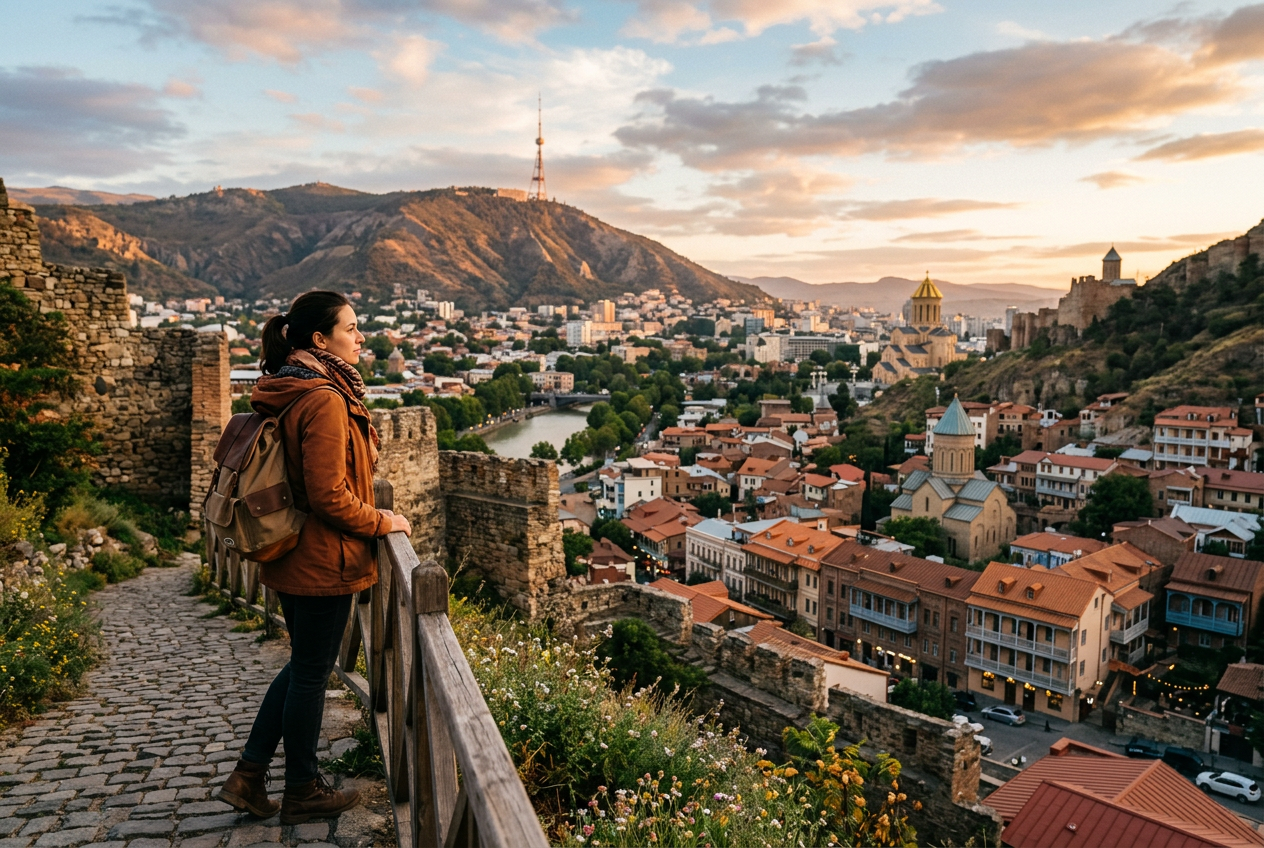
Georgia sits at the crossroads of Europe and Asia, a country where 8,000-year-old winemaking traditions exist alongside Soviet-era architecture and a rapidly evolving cafe culture. Before you pack your bags for Tbilisi's cobblestone streets or the snow-capped peaks of Svaneti, understanding a few key details will transform your trip from good to unforgettable.
This small Caucasus nation punches well above its weight in hospitality. The Georgian concept of "stumari ghvtisaa" translates to "a guest is a gift from God," and you'll feel this philosophy everywhere, from taxi drivers insisting you try their homemade chacha to village grandmothers pressing fresh churchkhela into your hands. With 13.92 million overnight visitors in 2024, including over 5 million international tourists, Georgia has become a destination that rewards curious travelers willing to venture beyond typical European itineraries.
What should you know before traveling to Georgia? The answer spans everything from visa policies that are remarkably generous to cultural customs that might catch you off guard. The country operates on a different rhythm than Western Europe, where spontaneity often trumps rigid schedules and a simple coffee invitation can stretch into a three-hour feast. Understanding these nuances before arrival means you'll spend less time confused and more time savoring one of the world's most underrated destinations.
Essential Entry Requirements and Logistics
Visa Policies and Stay Duration
Georgia offers one of the most welcoming visa policies in the world. Citizens from the USA, EU member states, Canada, and Australia can enter without a visa for up to 365 days, making it an ideal base for digital nomads or extended travelers. This generous policy extends to over 90 countries, reflecting Georgia's strategic push to position itself as an accessible destination.
Starting January 2026, health and accident insurance became a legal requirement for entry, with minimum coverage of 30,000 GEL (approximately $11,000 USD). Purchase your policy before arrival and keep documentation accessible. Border officials may request proof, particularly at land crossings from Armenia or Azerbaijan.
| Requirement | Details |
|---|---|
| Visa-free duration | Up to 365 days for most Western nationalities |
| Insurance minimum | 30,000 GEL coverage required |
| Passport validity | Must be valid for duration of stay |
| Land borders | Open with Armenia, Azerbaijan, and Turkey |
Best Time to Visit by Region
Georgia's geography creates dramatically different microclimates. Tbilisi bakes in summer heat reaching 38°C, while the Black Sea coast stays humid but cooler. Spring (April to June) and autumn (September to November) offer the most comfortable conditions for exploring multiple regions.
Winter transforms the mountain regions into skiing destinations. Gudauri and Bakuriani draw crowds from December through March, though Tbilisi remains mild enough for comfortable walking. The Kakheti wine region peaks during the rtveli harvest in September and October, when villages buzz with grape-crushing and celebration.
Currency and Payment Methods
The Georgian Lari (GEL) fluctuates around 2.7 to the US dollar. Tbilisi operates increasingly on card payments, with most restaurants, cafes, and shops accepting Visa and Mastercard. Apple Pay and Google Pay work in major establishments.
Rural areas remain cash-dependent. ATMs exist in regional centers but disappear in mountain villages. Withdraw enough Lari before heading to Svaneti, Tusheti, or remote monasteries. Currency exchange offices in Tbilisi offer competitive rates without commission, particularly along Rustaveli Avenue.
Navigating Georgian Culture and Etiquette
The Tradition of the Supra and Tamada
The supra represents Georgia's most sacred social institution. This traditional feast goes far beyond dinner, functioning as a ritualized celebration where food, wine, and elaborate toasts interweave into hours of communion. The tamada, or toastmaster, guides the evening through a sequence of toasts honoring everything from ancestors to friendship to the motherland.
Refusing wine during a supra can cause genuine offense. If you don't drink alcohol, explain this clearly at the beginning, and your hosts will typically offer alternatives. Each toast requires draining your glass, though you can request smaller pours. The phrase "gaumarjos" (to victory) accompanies every toast, and you'll hear it dozens of times in a single evening.
Religious Customs and Dress Codes
Georgia embraced Christianity in 337 AD, making it one of the world's oldest Christian nations. The Georgian Orthodox Church remains deeply influential, and religious sites demand respectful attire. Women should cover their heads and shoulders when entering churches, with scarves typically available at entrances. Men should remove hats and avoid shorts.
Monasteries and churches aren't tourist attractions to Georgians, they're active places of worship. Photography restrictions vary, so ask before shooting. During services, stand quietly along the walls. The faithful kiss icons and light candles, rituals you're welcome to observe but shouldn't interrupt.
Language Basics and the Mkhedruli Alphabet
Georgian uses its own unique alphabet, Mkhedruli, which looks nothing like Latin, Cyrillic, or Arabic scripts. The 33 curved letters can feel impenetrable at first, but learning to recognize a few common words helps enormously. "Gamarjoba" (hello) and "madloba" (thank you) will earn you genuine smiles.
English proficiency varies dramatically. Tbilisi's younger generation often speaks excellent English, ranking moderately on the EF English Proficiency Index. Rural areas and older generations typically speak only Georgian and Russian. Download Google Translate's offline Georgian pack before arrival, as it handles basic communication and can photograph and translate Mkhedruli text.
Transportation and Getting Around
Using Marshrutkas and Public Transit
Marshrutkas, the yellow minivans that crisscross Georgia, remain the backbone of intercity travel. These shared vans depart when full rather than on fixed schedules, creating a system that feels chaotic but works remarkably well. Fares stay cheap, typically 10-20 GEL for journeys of several hours.
Tbilisi's metro system covers two lines and costs just 1 GEL per ride using a rechargeable metro card. Buses and marshrutkas supplement the metro throughout the city. The Bolt app functions as the primary ride-hailing service, offering prices far below Western equivalents. A cross-city Bolt ride rarely exceeds 15 GEL.
Finding marshrutka stations requires local knowledge or asking around. Tbilisi's main stations include Didube (northern destinations), Ortachala (southern routes), and Samgori (eastern regions including Kakheti). Drivers announce destinations loudly, and fellow passengers will help you find the right vehicle if you show them your destination written in Georgian.
Driving Conditions and Car Rentals
Renting a car opens access to Georgia's most spectacular landscapes, but prepare for challenging conditions. Mountain roads to Svaneti and Tusheti involve hairpin turns, unpaved sections, and occasional livestock blocking the route. Local drivers take aggressive approaches to passing and speed limits.
International rental companies operate at Tbilisi airport, though local agencies often offer better rates. An international driving permit isn't legally required but can smooth interactions with traffic police. Fuel costs approximately 3 GEL per liter, and stations appear regularly on main routes.
Winter driving demands serious caution. The Georgian Military Highway to Kazbegi closes during heavy snow, and chains become mandatory for mountain passes. Summer brings its own challenges, with dust on unpaved roads and overheating risks during long climbs.
Health, Safety, and Connectivity
Solo Travel and General Safety Tips
Georgia consistently ranks as one of the safest destinations in the region. Tbilisi placed 44th out of 380 cities on the 2025 Safety Index, and violent crime against tourists remains exceptionally rare. Solo female travelers report feeling comfortable walking at night in central areas, though standard precautions apply in any unfamiliar city.
Georgia is generally a safe country for tourists, with police maintaining a visible presence in tourist areas. Officers typically speak basic English and respond helpfully to foreigners. Petty theft exists but occurs far less frequently than in Western European capitals.
Avoid discussing the Russia-Georgia conflict or the status of Abkhazia and South Ossetia with strangers. These topics carry deep emotional weight, and even well-intentioned questions can create uncomfortable situations. The occupied territories remain off-limits to tourists entering from Georgia.
Buying a Local SIM Card
Georgian mobile data costs almost nothing by Western standards. Magti, Geocell, and Beeline operate shops throughout Tbilisi, offering tourist SIM packages with generous data allowances for under 20 GEL. Bring your passport for registration.
Coverage extends throughout populated areas but disappears in remote mountain regions. Svaneti and Tusheti have spotty connectivity at best, with some villages relying on single cell towers. Download offline maps and entertainment before heading into the highlands.
A Culinary Guide to Georgia
Must-Try Dishes Beyond Khinkali
Khinkali, the famous soup dumplings, deserve their reputation, but Georgian cuisine extends far beyond this single dish. Khachapuri comes in regional varieties, from Adjarian boats filled with egg and butter to Imeretian circles stuffed with sulguni cheese. Each version reflects local traditions and ingredients.
Explore these essential dishes during your visit:
- Mtsvadi: Grilled pork skewers marinated in pomegranate juice, served with raw onions and tkemali plum sauce
- Badrijani nigvzit: Fried eggplant rolls filled with spiced walnut paste
- Lobio: Slow-cooked kidney beans served in a clay pot with herbs and cornbread
- Pkhali: Vegetable spreads made from spinach, beets, or cabbage ground with walnuts and garlic
- Churchkhela: Grape juice and walnut "candles" that serve as traditional snacks
Street food culture thrives in Tbilisi's markets. The Deserter's Bazaar near Station Square offers the most authentic experience, with vendors selling everything from fresh herbs to homemade cheese. Prices here run significantly lower than tourist-oriented restaurants.
The World's Oldest Wine Culture
Archaeological evidence places Georgian winemaking at approximately 6000 BC, making it the world's oldest wine culture. The qvevri method, fermenting wine in large clay vessels buried underground, earned UNESCO recognition and produces orange wines unlike anything you've tasted elsewhere.
Kakheti produces 70% of Georgia's wine, with the Alazani Valley offering endless cellar door experiences. Family-run operations welcome visitors without appointments, pouring generous tastes while explaining their methods. The Saperavi grape creates robust reds, while Rkatsiteli produces the distinctive amber wines that define Georgian viticulture.
Wine flows freely at supras and casual gatherings alike. Georgians drink wine in toasts rather than sipping throughout meals, a distinction that catches many visitors off guard. Pace yourself, as the generous pours accumulate quickly.
Top Regions and Hidden Gems to Explore
Tbilisi rewards several days of exploration. The sulfur baths in Abanotubani, the cable car to Narikala Fortress, and the winding streets of the old town offer endless wandering. The Dry Bridge Market sells Soviet memorabilia, antiques, and artwork every morning.
Kazbegi (Stepantsminda) sits three hours north along the Georgian Military Highway, with Gergeti Trinity Church perched impossibly on a ridge above town. This single-day trip from Tbilisi remains the most popular excursion, though staying overnight allows for hiking and sunrise photography.
Svaneti requires more commitment but delivers Georgia's most dramatic landscapes. Medieval defensive towers dot villages where Svan families have lived for centuries. The journey takes 8-10 hours by marshrutka from Tbilisi, or you can fly to Mestia's small airport when weather permits.
The Black Sea coast around Batumi offers a completely different experience: casinos, beach clubs, and subtropical gardens. Adjara's cuisine differs from eastern Georgia, with more Turkish influence and seafood prominence. The contrast between Batumi's modern towers and Tbilisi's historic charm demonstrates Georgia's regional diversity.
Lesser-visited gems include Vardzia's cave monastery complex, Sighnaghi's romantic hilltop setting overlooking Kakheti's vineyards, and Uplistsikhe's ancient rock-hewn city. Each destination reveals different facets of Georgian history and landscape.
Georgia rewards travelers who arrive prepared but remain flexible. The country operates on its own rhythm, where unexpected invitations lead to memorable experiences and rigid itineraries inevitably bend to local hospitality. Pack your sense of adventure alongside your travel insurance, and prepare for a destination that consistently exceeds expectations.