
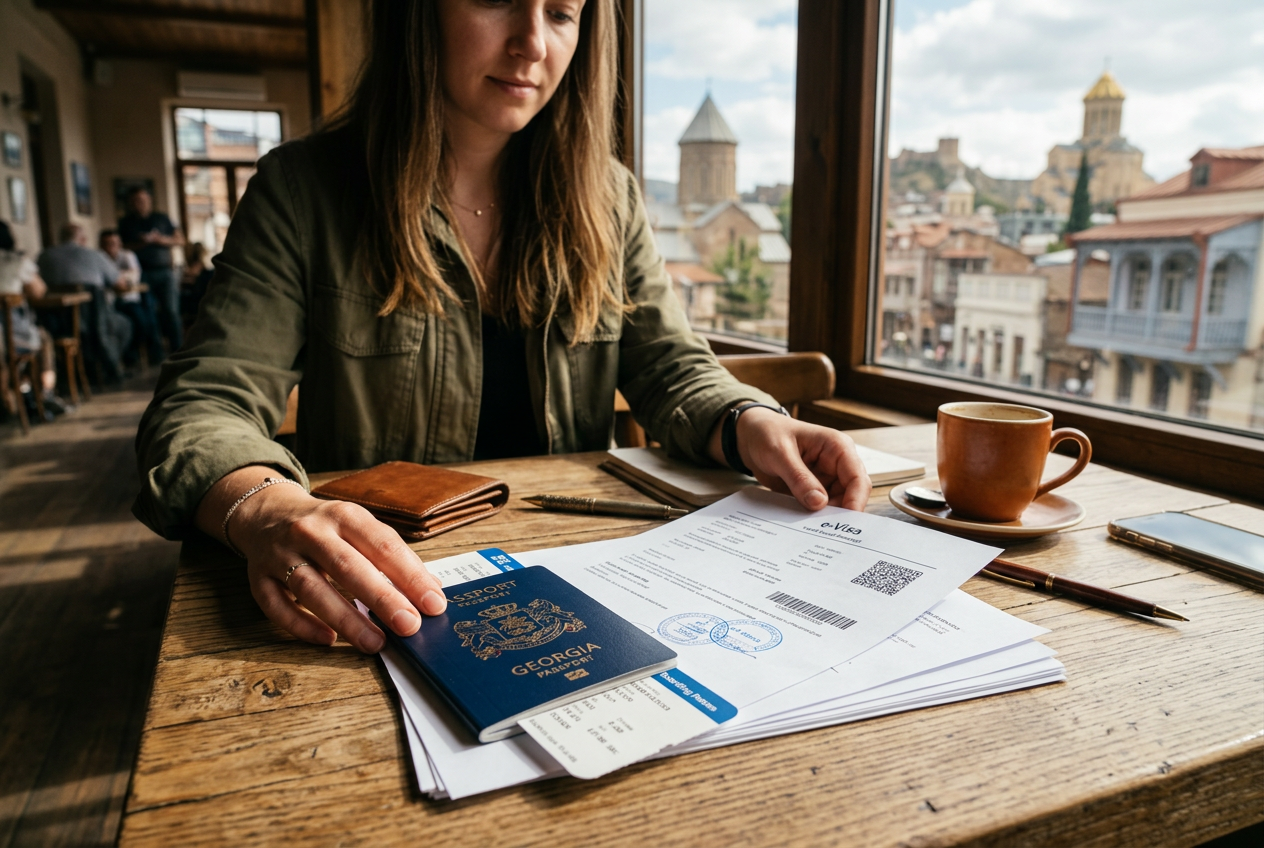
Georgia sits at the crossroads of Europe and Asia, a country where ancient monasteries cling to cliffsides, wine flows from 8,000-year-old qvevri traditions, and the concept of "stumari ghvtisaa" (the guest is a gift from God) shapes every interaction with locals. But before you can experience the legendary hospitality of Sakartvelo, as Georgians call their homeland, you need to sort out your paperwork.
The good news: Georgia maintains one of the world's most welcoming entry policies. The less good news: requirements have evolved recently, particularly around health insurance, and the specifics depend heavily on your nationality and travel circumstances. I've seen travelers breeze through Tbilisi airport in minutes and others held up for hours over documentation oversights that could have been avoided with basic preparation.
So what documents do you need to travel to Georgia? The answer ranges from remarkably simple to moderately complex depending on where you're from, how long you're staying, and what you plan to do once you arrive. This guide covers every document category you might encounter, from the obvious passport requirements to the lesser-known customs declarations that catch people off guard.
Core Passport and Identification Requirements
Your passport is the foundation of international travel, and Georgia's requirements are straightforward but strict. Understanding the specific rules prevents last-minute scrambles at check-in counters or, worse, being turned away at the border.
Passport Validity and Blank Page Rules
A valid passport is required to enter Georgia, and for most countries, it should be valid for at least six months beyond your date of entry. This six-month rule trips up more travelers than you'd expect. If your passport expires in five months and you're planning a two-week trip, you technically meet the minimum stay requirements, but Georgian border officials can still deny entry.
The blank page situation is less formally codified but practically important. You'll need at least one completely blank page for your entry stamp. Georgian border stamps are reasonably sized, but if your passport looks like a well-traveled scrapbook, consider whether you have adequate space. Some travelers have reported issues when their only remaining space was on the amendments page or alongside other stamps in a cramped arrangement.
Machine-readable passports are expected at all official entry points. If you're traveling on an older passport without the machine-readable zone at the bottom of the photo page, contact your embassy before booking flights. Temporary or emergency travel documents may be accepted in some circumstances, but you'll want written confirmation from Georgian authorities before attempting entry.
National ID Cards for EU and Schengen Citizens
Citizens of European Union member states and several other European countries can enter Georgia using just a national ID card. This applies to travelers from all 27 EU nations plus Switzerland, Iceland, Norway, and Liechtenstein. The ID card must be valid for the duration of your stay.
This provision makes Georgia remarkably accessible for European weekend travelers. You can fly from most EU capitals to Tbilisi in three to four hours and clear immigration with the same card you'd use for domestic identification. However, I'd still recommend carrying your passport as a backup. National ID cards occasionally cause confusion at non-primary border crossings, and having your passport eliminates any potential complications.
The ID card option doesn't extend to UK citizens post-Brexit. British travelers must present a valid passport regardless of any national ID cards they might hold.
Visa Policies and Entry Permits
Georgia's visa policy reflects its ambition to become a regional tourism hub. The country has systematically expanded visa-free access over the past decade, creating one of the most permissive entry regimes in the Caucasus region.
Visa-Free Entry for 90+ Countries
Citizens of over 90 countries, including the USA, EU member states, Canada, and Australia, can enter Georgia without a visa for up to 365 days. That's not a typo: one full year of visa-free access. This extraordinary policy makes Georgia one of the most accessible countries globally for long-term travelers, digital nomads, and those exploring extended stays abroad.
| Nationality Category | Visa-Free Duration | Notes |
|---|---|---|
| USA, Canada, Australia | 365 days | Full year access |
| EU/EEA Citizens | 365 days | ID card entry permitted |
| UK Citizens | 365 days | Passport required |
| Japan, South Korea | 365 days | Full year access |
| Most South American | 365 days | Check specific country |
| GCC Countries | 90 days | UAE, Saudi Arabia, etc. |
The 365-day allowance operates on a rolling basis. You don't need to leave and return to reset any clock. However, if you're planning to stay longer than a year, you'll need to explore residency options or temporary departure and re-entry strategies.
Applying for the Georgia e-Visa
Travelers from countries not covered by visa-free agreements can apply for an e-Visa through Georgia's official electronic visa portal. The process is entirely online and typically takes five to ten business days for processing, though I've seen approvals come through in as little as 48 hours during low-demand periods.
The e-Visa costs approximately $20 USD for a single-entry permit valid for 30 days. You'll need a digital passport photo, a scanned copy of your passport's biographical page, and a valid payment method. The system accepts most major credit cards.
Required supporting documents for e-Visa applications include proof of accommodation (hotel bookings or a letter of invitation from a Georgian resident), evidence of sufficient funds, and return or onward travel tickets. The accommodation requirement doesn't need to cover your entire stay; border officials understand that travel plans evolve.
Exemptions for Valid Visa Holders from Other Nations
Georgia offers an interesting provision for travelers holding valid visas or residence permits from certain countries. If you have a valid visa or residency from the United States, any EU/Schengen member state, the UK, Canada, Japan, or several Gulf Cooperation Council countries, you may be eligible for visa-free entry to Georgia regardless of your actual citizenship.
This exemption benefits travelers from visa-required countries who already hold legitimate status elsewhere. A Pakistani citizen with a valid US green card, for example, can enter Georgia without applying for a separate Georgian visa. The exemption typically allows stays of up to 90 days.
Verify your specific eligibility through Georgia's Ministry of Foreign Affairs before travel. The rules have nuances based on visa types, and not all visa categories qualify.
Mandatory Health and Travel Insurance
Recent regulatory changes have transformed health insurance from a recommendation to a requirement for Georgia travel. These rules represent the most significant documentation change in recent years.
New 2024 Health Insurance Regulations
Starting January 1, 2026, all tourists entering Georgia must have valid health and accident insurance with coverage of at least 30,000 GEL, approximately $11,100 USD, for the entire duration of their stay. This requirement applies universally regardless of nationality or visa status.
The regulation emerged from Georgia's experience during the pandemic and subsequent healthcare cost concerns. The country's medical infrastructure, while improving, faced strain from uninsured tourists requiring emergency care. The insurance mandate shifts financial responsibility to travelers and their insurers rather than Georgian public health systems.
Minimum Coverage Requirements
Your insurance policy must meet specific criteria to satisfy Georgian entry requirements. The 30,000 GEL minimum coverage must apply to medical treatment and accident-related expenses. Policies should explicitly cover emergency medical evacuation, hospitalization, and repatriation of remains in worst-case scenarios.
Standard travel insurance policies from major providers typically meet these requirements, but verify the coverage amounts and geographic scope before departure. Some budget policies cap medical coverage below the Georgian threshold. Print your policy documentation or maintain accessible digital copies; border officials may request proof of insurance during entry processing.
The insurance must be valid from your arrival date through your planned departure. If you're staying for an extended period, ensure your policy covers the full duration or that you have arrangements for policy renewal while in-country.
Supporting Documentation for Border Control
Beyond the fundamental passport and visa requirements, Georgian border officials may request additional documentation. Having these materials prepared demonstrates legitimate travel intent and smooths the entry process.
Proof of Accommodation and Itinerary
Border officers occasionally ask travelers to demonstrate where they'll be staying. Acceptable documentation includes hotel booking confirmations, Airbnb reservations, or a letter of invitation from a Georgian host. The letter should include the host's contact information, address, and relationship to you.
For travelers planning to book accommodation upon arrival or those with flexible itineraries, a general itinerary showing your intended travel pattern can suffice. You don't need every night pre-booked, but showing you've thought through your trip helps establish legitimate tourism purposes.
Digital confirmations on your phone are generally accepted, though having printed backups prevents complications if your device dies or connectivity fails at the border.
Evidence of Sufficient Financial Means
Georgia doesn't publish specific minimum daily budget requirements for tourists, but border officials retain discretion to request proof of financial means. This request is more common for travelers on one-way tickets, those staying extended periods, or visitors from countries with higher rates of overstay.
Bank statements showing recent balances, credit card statements, or simply demonstrating access to funds through a mobile banking app can satisfy this requirement. There's no magic number, but showing you can reasonably support yourself during your stated stay duration is the goal.
Cash travelers should note that amounts exceeding 30,000 GEL, approximately $11,100 USD, or its equivalent in foreign currency must be declared upon entry and exit. Undeclared amounts above this threshold can be seized.
Return or Onward Travel Tickets
While Georgia's generous 365-day visa-free access doesn't technically require immediate departure plans, having return or onward tickets strengthens your entry case. This documentation is particularly important for travelers arriving from countries with higher immigration scrutiny or those who might appear to be potential overstays.
One-way ticket travelers aren't automatically denied entry, but expect additional questions about your plans, financial situation, and intended departure method. Having a clear, honest explanation of your travel plans, such as traveling overland to Armenia or Azerbaijan, typically resolves any concerns.
Special Considerations for Driving and Customs
Travelers planning to drive in Georgia or carrying items requiring declaration face additional documentation requirements. These categories catch many visitors off guard.
International Driving Permits and Vehicle Paperwork
Your home country driver's license is valid in Georgia for short-term visits, typically up to six months. However, an International Driving Permit provides useful backup documentation, particularly for police interactions outside Tbilisi where English proficiency varies. The IDP translates your license credentials into multiple languages and is recognized internationally.
Travelers bringing vehicles into Georgia must present vehicle registration documents, proof of ownership, and valid insurance covering Georgian roads. Third-party liability insurance is mandatory and can be purchased at border crossings if your existing policy doesn't extend coverage to Georgia.
Rental car documentation is straightforward: keep your rental agreement accessible, as police checkpoints occasionally verify vehicle legitimacy. The rental company should provide insurance documentation covering Georgian territory.
Customs Declarations for Medication and Currency
Prescription medications require supporting documentation. Carry your prescription or a letter from your doctor explaining your medical need, particularly for controlled substances. Georgia's customs regulations align with international norms, but medications containing codeine, certain sedatives, or other controlled compounds warrant extra documentation.
The currency declaration threshold, as mentioned, sits at 30,000 GEL. If you're entering or leaving with amounts exceeding this threshold in any currency combination, complete a customs declaration form. Failure to declare can result in seizure of undeclared amounts and potential legal complications.
Duty-free allowances cover reasonable personal quantities of alcohol, tobacco, and gifts. Exceeding these limits requires declaration and potential duty payment. The specifics change periodically, so check current allowances before packing that extra case of wine you planned to bring home.
Preparing for a Smooth Georgian Entry
Georgia's entry requirements balance accessibility with reasonable security measures. For most travelers from visa-free countries, the documentation burden is minimal: a valid passport with six months' validity, health insurance meeting the new coverage requirements, and perhaps some supporting materials showing your travel plans and financial capacity.
The key preparation steps are confirming your specific visa status based on nationality, securing compliant health insurance before departure, and organizing digital or printed copies of accommodation bookings and financial documentation. These materials rarely get scrutinized intensively, but having them ready transforms potential complications into non-events.
Georgia rewards prepared travelers with remarkably efficient border processing. I've cleared Tbilisi airport immigration in under ten minutes on multiple occasions. The country genuinely wants visitors, and the documentation requirements exist to ensure those visits proceed safely for everyone involved. Get your paperwork sorted, and you'll be sipping chacha in a Kakheti vineyard before you know it.