
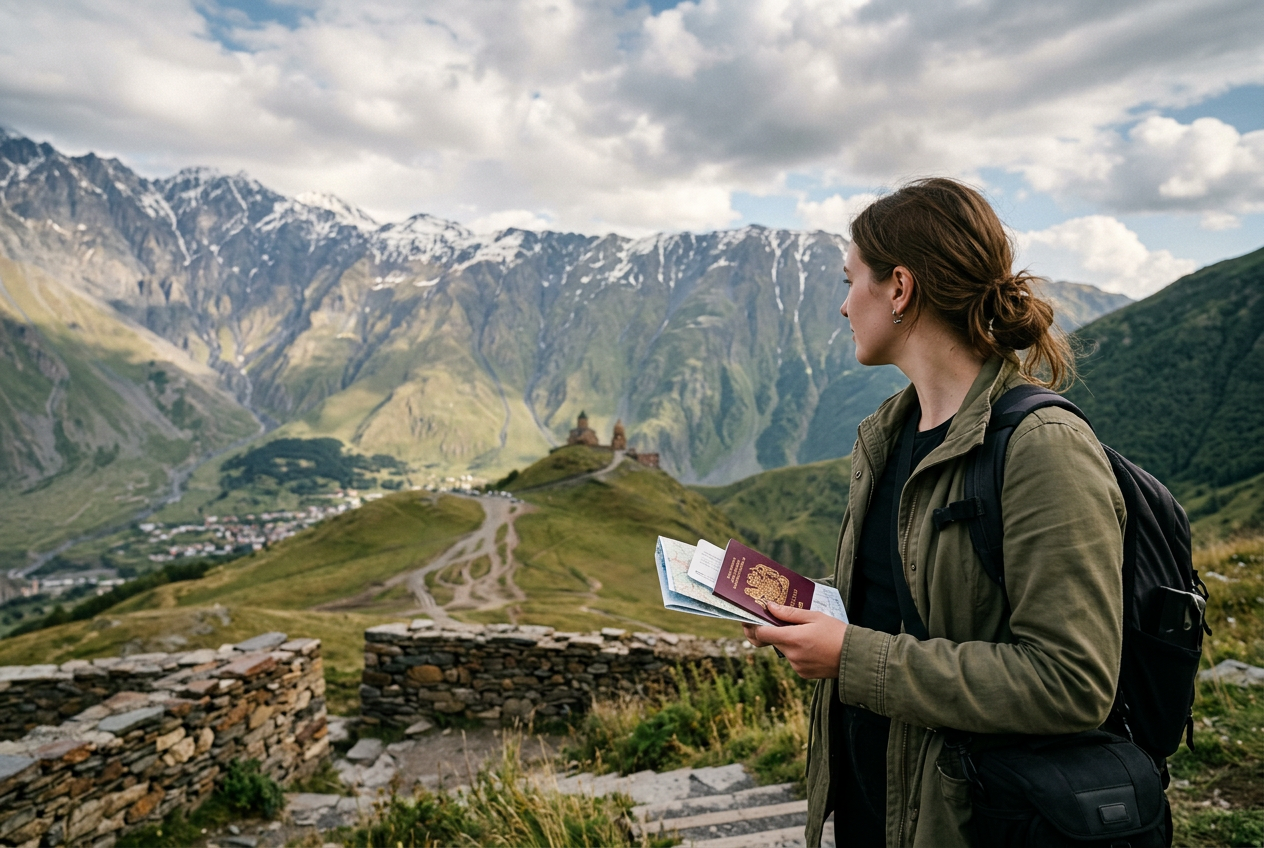
Georgia has become one of Europe's worst-kept secrets. Tucked between the Caucasus Mountains and the Black Sea, this former Soviet republic draws visitors with its ancient winemaking traditions, jaw-dropping landscapes, and a hospitality culture so intense it borders on overwhelming. The country's name in its native tongue, Sakartvelo, translates roughly to "land of the Kartvelians," and these people take the phrase "stumari ghvtisaa" (the guest is a gift from God) seriously.
So can Brits go to Georgia? The short answer is yes, and the entry requirements are remarkably generous. British citizens can visit Georgia without a visa for up to one year for tourism, work, or study. That's not a typo. While most countries offer 90-day visa-free stays, Georgia extends a full 365 days to UK passport holders. This exceptional policy has made the country a magnet for remote workers, long-term travelers, and anyone seeking an affordable base with excellent food, fast internet, and genuinely warm people.
The practical side of visiting Georgia involves understanding flight options, health insurance requirements, local customs, and what to expect on the ground. Whether you're planning a two-week wine tour through Kakheti or considering a longer stint working from a Tbilisi café, the information below covers everything British travelers need to know before booking that flight.
Visa-Free Entry and Stay Duration for British Citizens
The One-Year Visa Waiver Rule
Georgia's visa policy toward British citizens ranks among the most generous anywhere. The one-year visa-free allowance applies regardless of your purpose: tourism, remote work, studying Georgian language, or simply enjoying the country's famously cheap wine and khinkali dumplings. This policy predates the pandemic and remains firmly in place.
The 365-day clock starts ticking from your entry date. Once that year expires, you'll need to leave Georgia, though many long-term visitors simply cross into Armenia or Turkey for a day before returning to reset their allowance. This "visa run" practice is common and perfectly legal, though immigration officers may ask questions if you've spent nearly all of the previous year in the country.
One crucial distinction: this visa-free entry doesn't automatically grant work authorization with Georgian employers. While you can legally stay and work remotely for foreign companies, employment with a Georgian company requires additional documentation. As of March 1, 2026, foreign nationals working in Georgia need a work permit valid for one year, tied to a specific job and employer.
Passport Validity and Document Requirements
Your UK passport must be valid for the duration of your intended stay. Georgian border officials don't require the six-month validity buffer that many countries demand, but traveling with an expiring passport creates unnecessary complications.
Beyond your passport, Georgian authorities require travel health insurance with minimum coverage of 30,000 GEL (approximately £9,000). This requirement applies to all foreign visitors and is occasionally checked at immigration. Keep your insurance documentation accessible, either printed or on your phone.
| Document | Requirement |
|---|---|
| UK Passport | Valid for duration of stay |
| Health Insurance | Minimum 30,000 GEL coverage |
| Return Ticket | Not officially required but recommended |
| Proof of Accommodation | Occasionally requested |
| COVID Documentation | Not required since June 2022 |
The good news regarding pandemic restrictions: proof of vaccination or a negative COVID-19 test is not required for entry to Georgia. The country dropped all COVID-related entry requirements in mid-2022 and hasn't reinstated them.
Travel Logistics from the UK to Georgia
Flight Routes and Direct Connections
Direct flights between London and Tbilisi operate regularly, with Wizz Air providing the most frequent service from Luton. Flight time runs approximately five hours, making Georgia closer than many realize. The time difference is four hours ahead of GMT during British winter, three hours during summer.
For better prices, consider indirect routes through Istanbul, Warsaw, or Riga. Turkish Airlines, LOT Polish, and airBaltic all serve Tbilisi with competitive fares, though connections add several hours to your journey. Budget carriers like Wizz Air also fly to Kutaisi, Georgia's second international airport, often at significantly lower prices than Tbilisi routes.
Peak season runs from May through October, with July and August commanding the highest prices. Shoulder seasons (April-May and September-October) offer ideal conditions: pleasant weather, fewer crowds, and reasonable airfares. Winter travel appeals to skiers heading to Gudauri or Bakuriani, though flight options decrease during colder months.
Arrival Hubs: Tbilisi, Kutaisi, and Batumi
Tbilisi International Airport sits roughly 17 kilometers from the city center. The journey into town costs around 30-40 GEL by taxi (under £15), though the Bolt and Yandex Go apps typically offer better rates than airport taxis. A new metro connection is perpetually "coming soon" but hasn't materialized yet.
Kutaisi Airport, located in western Georgia, primarily serves budget carriers. The airport lies about 20 kilometers from Kutaisi city but roughly 230 kilometers from Tbilisi. Marshrutka minibuses and Georgian Bus services connect the airport to both cities, with Tbilisi transfers taking around four hours.
Batumi International Airport serves Georgia's Black Sea coast and operates seasonally with increased summer flights. The airport sits conveniently close to Batumi city center, making it ideal for beach-focused trips. During summer months, charter flights from various European cities add capacity.
Health, Safety, and Insurance Considerations
FCDO Travel Advice and Restricted Areas
Georgia is generally safe for British visitors, with Tbilisi and major tourist areas presenting no unusual risks. Street crime exists but remains relatively rare compared to many European capitals. Solo female travelers consistently report feeling safe, and police are generally reliable and increasingly English-speaking among younger officers.
The significant exception involves two regions. The UK government advises against all travel to South Ossetia and Abkhazia. These Russian-occupied territories broke away from Georgian control following the 2008 war, and their status remains deeply sensitive. Entering either region from the Russian side is illegal under Georgian law and could result in arrest if you later enter Georgian-controlled territory.
The Administrative Boundary Lines separating these regions from the rest of Georgia are not formal borders but are monitored by Russian forces. Approaching these areas carries genuine risks, and British consular assistance would be extremely limited if problems arose. The rest of Georgia, including popular destinations like Kazbegi (which sits relatively close to the Russian border but not the occupied zones), remains fully accessible.
Healthcare Standards and Medical Insurance
Georgian healthcare presents a mixed picture. Private clinics in Tbilisi and Batumi offer good quality care with English-speaking staff, while rural facilities and some public hospitals lag behind Western standards. For serious medical emergencies, evacuation to Turkey or Western Europe might be necessary.
This reality makes comprehensive travel insurance non-negotiable. Beyond meeting the 30,000 GEL minimum requirement, ensure your policy covers medical evacuation. Adventure activities like skiing, hiking, or paragliding often require additional coverage, so check your policy details before attempting anything beyond standard tourism.
Pharmacies are widespread and well-stocked, with many medications available without prescription that would require one in the UK. Pharmacists often speak some English in urban areas. Tap water in Tbilisi is drinkable, though bottled water remains inexpensive and widely available.
Practical Information for British Visitors
Currency, Banking, and Using UK Cards
Georgia uses the Georgian Lari (GEL), which has fluctuated between 3.0 and 3.5 to the British pound in recent years. ATMs are plentiful in cities and accept major UK debit and credit cards, though some charge withdrawal fees. Wise and Revolut cards work excellently here and avoid the poor exchange rates that traditional banks offer.
Cash remains important in Georgia, particularly outside Tbilisi. Markets, marshrutkas, some restaurants, and rural guesthouses often operate cash-only. Carry smaller denominations: breaking a 100 GEL note at a corner shop or taxi can prove difficult.
| Expense | Typical Cost (GEL) | Approximate GBP |
|---|---|---|
| Budget meal | 15-25 | £5-8 |
| Mid-range restaurant | 40-70 | £13-23 |
| Local beer (500ml) | 5-8 | £1.60-2.60 |
| Tbilisi metro ride | 1 | £0.33 |
| Taxi across Tbilisi | 10-20 | £3-7 |
| Budget hostel bed | 25-40 | £8-13 |
| Mid-range hotel | 150-300 | £50-100 |
Currency exchange offices dot every city and offer competitive rates. Avoid exchanging money at the airport, where rates are notably worse. Banks generally offer fair rates but involve more paperwork.
Local Transport and Driving Regulations
Tbilisi's metro system is cheap, efficient, and covers major central areas. Two lines intersect at Station Square, and a single journey costs just 1 GEL. The same card works on buses and cable cars. Google Maps provides reasonably accurate public transport directions for Tbilisi.
For intercity travel, marshrutkas (minibuses) remain the backbone of Georgian transport. These depart when full from designated stations and reach most towns. They're cheap but can feel cramped, and departure times are approximate at best. Georgian Bus and Georgian Railways offer more comfortable alternatives on major routes.
Driving in Georgia requires adjustment. Roads have improved dramatically in recent years, but driving styles remain aggressive by British standards. The Tbilisi-Batumi highway is excellent, while mountain roads demand caution and sometimes four-wheel drive. UK driving licenses are valid for short-term visitors, though an International Driving Permit provides useful backup.
Working and Living as a Digital Nomad
Remotely from Georgia Program
Georgia actively courts remote workers through its "Remotely from Georgia" initiative. While not a formal visa (British citizens don't need one anyway), the program provides useful resources and community connections for location-independent workers.
Tbilisi has emerged as a genuine digital nomad hub, with coworking spaces, reliable high-speed internet, and a cost of living that stretches British pounds remarkably far. A comfortable lifestyle including a central apartment, regular restaurant meals, and coworking membership runs around £800-1,200 monthly, a fraction of London costs.
The city's café culture supports laptop workers, with most establishments offering free WiFi and tolerating extended stays. Fabrika, a converted Soviet factory, has become the unofficial headquarters of Tbilisi's international remote worker community. Internet speeds generally exceed 50 Mbps even in mid-range apartments, with fiber connections increasingly common.
Tax Implications for Long-Term Residents
Staying beyond a certain threshold triggers tax obligations. If staying longer than 183 days and engaging in paid employment, you are liable for income tax and must inform the Revenue Service of Georgia. This applies even to remote workers employed by foreign companies.
Georgia's tax rates are relatively low: a flat 20% income tax applies to most earnings. The country also offers a "Small Business Status" for freelancers and entrepreneurs that can reduce tax obligations significantly. However, navigating Georgian tax requirements while maintaining UK tax residency status requires careful planning, and professional advice is worth the investment for long-term stays.
British citizens considering extended stays should also understand that spending more than 183 days in Georgia might affect UK tax residency status. The interaction between Georgian and UK tax systems isn't always straightforward, and the stakes are high enough to warrant consulting an accountant familiar with both jurisdictions.
Making the Most of Your Georgian Adventure
Georgia rewards visitors who embrace its pace. The tamada (toastmaster) at a traditional supra feast might keep you at the table for hours, and refusing a grandmother's offer of homemade churchkhela in a village market would be genuinely offensive. This isn't transactional hospitality: Georgians have welcomed strangers for millennia, and the tradition runs deep.
Language presents a manageable barrier. Younger Georgians, particularly those educated after the 2003 Rose Revolution, often speak excellent English. The older generation tends toward Russian, a legacy of Soviet times. Google Translate's offline Georgian pack proves invaluable in rural areas where neither language helps.
British travelers consistently find Georgia exceeds expectations. The combination of generous visa terms, low costs, stunning landscapes, and genuine warmth creates something special. Whether you're planning a fortnight exploring ancient cave cities and mountain villages or considering a longer stint working remotely while perfecting your khachapuri consumption, Georgia opens its doors remarkably wide to UK visitors.