
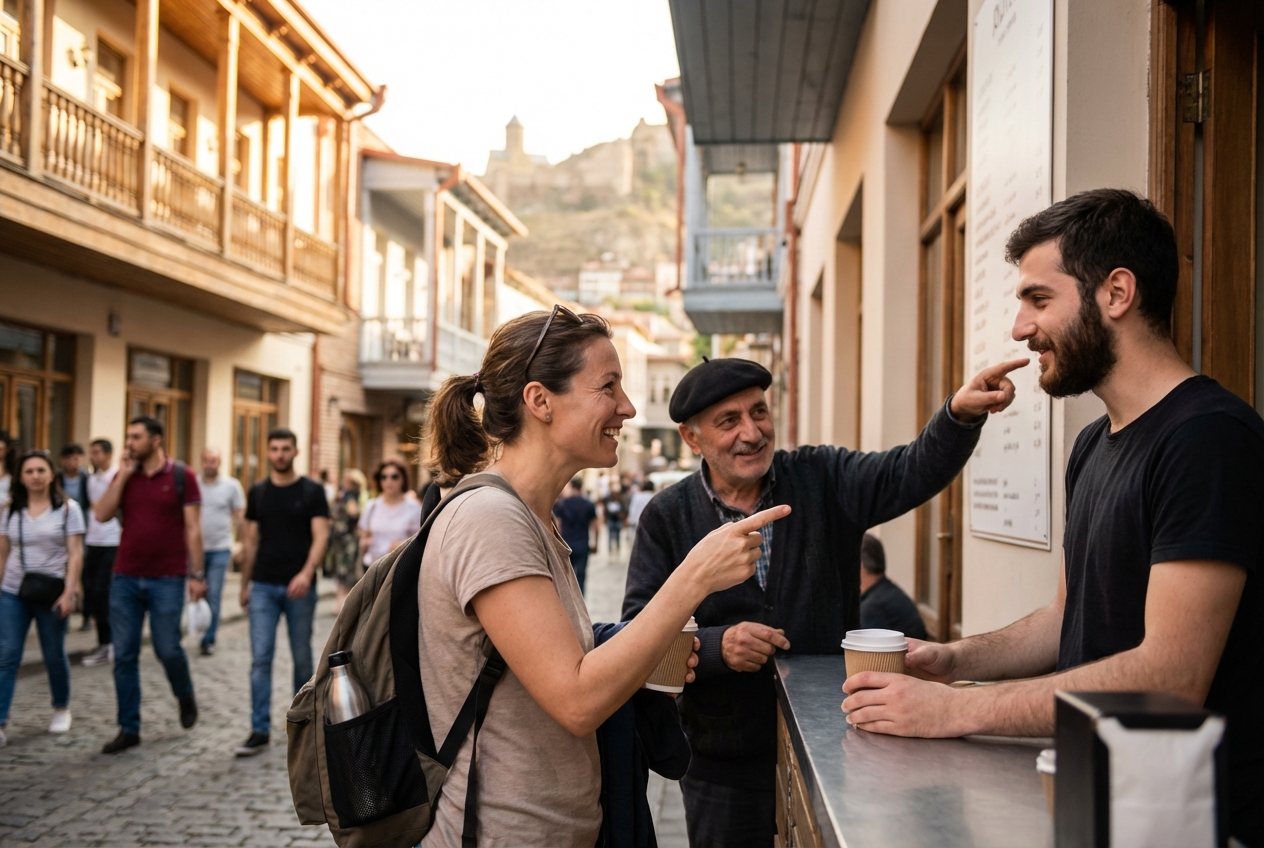
Stepping off a plane in Tbilisi, you might wonder whether your complete lack of Georgian will leave you stranded, gesturing wildly at taxi drivers and pointing hopefully at menu items. The question of whether Tbilisi is English friendly comes up constantly among travelers, digital nomads, and potential expats eyeing Georgia's generous visa policies and affordable cost of living. Here's the honest answer: Tbilisi sits in a fascinating middle ground. You won't find the near-universal English fluency of Scandinavia or the Netherlands, but you also won't face the communication challenges of visiting rural China or remote South America. Georgia scored 493 out of 800 on EF Education First's 2023 English Proficiency Index, ranking 67th globally, which places it in the "moderate proficiency" category. That number tells part of the story, but Tbilisi specifically performs better than the national average. The capital concentrates most of the country's English speakers, international businesses, and tourism infrastructure. Your experience will depend heavily on where you go, who you interact with, and what you're trying to accomplish.
The English Proficiency Landscape in Tbilisi
Understanding who speaks English in Tbilisi requires looking beyond simple statistics. The city's linguistic landscape reflects its complex history, rapid modernization, and the generational shifts that followed Soviet collapse and subsequent Western orientation.
Generational Gaps in Language Skills
The age divide in English proficiency is stark and predictable once you understand the context. Georgians over 45 typically learned Russian as their second language during the Soviet era, with English rarely taught or prioritized. Many older residents speak excellent Russian alongside Georgian but struggle with even basic English phrases.
The transformation happened quickly. After independence, and especially following the Rose Revolution in 2003, Georgia pivoted toward Western integration. English became mandatory in schools, and younger generations grew up with American movies, YouTube, and the understanding that English meant opportunity. Today, most Tbilisi residents under 35 have at least conversational English skills, with many speaking fluently.
This creates a practical pattern for visitors. The young barista at a trendy Vera coffee shop will chat easily about your order, while the older woman running a traditional bakery might communicate entirely through pointing and smiles. Both interactions work fine, but they feel different.
English in the Tourism and Hospitality Sectors
Tourism-facing businesses have adapted impressively. Hotels, hostels, and guesthouses almost universally employ English-speaking staff. Restaurants in central districts print bilingual menus, and servers in popular areas handle English orders without difficulty.
As one experienced expat noted on Quora: "Tbilisi is an easy place for English speaking expats and retirees. Virtually everywhere is English speaking in bars, restaurants and shops, and virtually everything is written in Georgian and English."
That assessment holds true for the central districts where most visitors spend their time. Venture into residential neighborhoods or local establishments that don't cater to tourists, and you'll encounter more language barriers. This isn't a problem, just something to expect.
Navigating Daily Life and Infrastructure
Getting around Tbilisi and handling everyday tasks presents fewer challenges than you might anticipate. The city has invested in making its infrastructure accessible to non-Georgian speakers.
Public Transport and Street Signage
Tbilisi's metro system uses both Georgian and English signage, making navigation straightforward even without language skills. Station names appear in both scripts, announcements come in Georgian and English, and the two-line system is simple enough that getting lost requires genuine effort.
Buses present more challenges. Routes display numbers clearly, but destination signs often appear only in Georgian script. Google Maps has largely solved this problem, showing real-time bus locations and routes in English. The Tbilisi Transport app also works well for planning journeys.
Street signs in central areas typically show both Georgian and Latin script, though this becomes less consistent in outer districts. Major landmarks, tourist sites, and government buildings almost always have English signage.
| Transportation Type | English Availability | Tips |
|---|---|---|
| Metro | Full English signage and announcements | Most reliable option for visitors |
| Buses | Limited English on vehicles | Use Google Maps for routes |
| Taxis/Ride-shares | App-based, no verbal communication needed | Bolt and Yandex Go recommended |
| Marshrutkas | Minimal English | Best avoided without Georgian |
Ride-sharing apps like Bolt and Yandex Go operate throughout Tbilisi, allowing you to input destinations without verbal communication. This has transformed transportation for non-Georgian speakers. You simply enter your destination, confirm the fare, and ride in comfortable silence if needed.
Dining Out and Supermarket Shopping
Restaurants in tourist-frequented areas handle English well. Menus often include pictures, and staff can explain dishes or recommend options. Traditional Georgian restaurants sometimes have Georgian-only menus, but the cuisine follows predictable patterns once you learn the basics: khinkali are dumplings, khachapuri is cheese bread, mtsvadi is grilled meat.
Supermarkets require almost no language skills. Products have pictures, prices display clearly, and self-checkout machines offer English interfaces. Staff might not speak English, but pointing at items or using a translation app solves most issues. Carrefour, Nikora, and Goodwill are the major chains, all functioning identically to Western supermarkets.
Local markets like the Dezerter Bazaar offer a different experience. Vendors rarely speak English, but transactions work through universal commerce language: point, hold up fingers for quantity, and check the calculator display for price. Many visitors find these interactions charming rather than frustrating.
English for Digital Nomads and Expats
Tbilisi has become a major digital nomad hub, and the infrastructure for English-speaking remote workers has developed accordingly. Longer-term stays, however, introduce complexities that tourists never encounter.
Renting Property and Legal Paperwork
Finding an apartment in Tbilisi involves navigating a market that operates partially in English. Facebook groups like "Tbilisi Expats" and "Digital Nomads Tbilisi" list English-friendly rentals, and many landlords targeting foreigners speak enough English for basic communication.
Lease agreements present the first real challenge. Standard Georgian contracts appear entirely in Georgian, and landlords may not provide translations. Getting a Georgian-speaking friend or hiring a translator to review documents before signing protects against misunderstandings about deposits, utilities, or termination terms.
Real estate agents working with foreigners typically handle English communication, though their commission structures and practices differ from Western norms. Expect to pay one month's rent as an agency fee, and understand that the agent usually represents the landlord's interests, not yours.
Banking and Government Services
Opening a bank account in Tbilisi works surprisingly smoothly for foreigners. Bank of Georgia and TBC Bank both have English-speaking staff at major branches, English mobile apps, and straightforward account opening procedures requiring only a passport.
Government services present more friction. The Public Service Hall handles most bureaucratic needs and employs some English speakers, but complex matters may require a translator. Georgia will introduce its first-ever state language examination in 2025, signaling increased emphasis on Georgian language requirements for certain processes.
Immigration matters, business registration, and tax filings often require professional help. Several English-speaking law firms and accounting services cater specifically to expats, charging reasonable fees by Western standards.
Coworking Spaces and Networking Communities
Tbilisi's coworking scene operates almost entirely in English. Spaces like Impact Hub Tbilisi, Terminal, and Lokal attract international crowds where English serves as the common language. Staff speak English, events happen in English, and you'll find it easy to build a professional network without Georgian skills.
The expat and digital nomad community has grown large enough to sustain English-language events, meetups, and social groups. Facebook remains the primary platform for finding these communities, with active groups organizing everything from hiking trips to professional networking.
Emergency Situations and Healthcare Access
Medical emergencies represent one area where language barriers carry real consequences. Tbilisi's healthcare system has improved dramatically, but English availability varies significantly between facilities.
Private hospitals and clinics targeting expats and medical tourists employ English-speaking doctors and administrative staff. Facilities like the American Medical Center, MediClub Georgia, and Caucasus Medical Center handle English-speaking patients routinely. Costs remain low by Western standards, and quality of care is generally good.
Public hospitals and emergency rooms present more challenges. Doctors often speak some English, having studied medical texts in English, but nurses and administrative staff may not. Having a Georgian-speaking contact who can help during emergencies provides valuable peace of mind.
Pharmacies operate somewhere in between. Major chains have staff who can understand basic English requests, and many medications available only by prescription elsewhere sell over the counter in Georgia. Describing symptoms or asking for specific medications usually works with patience and a translation app backup.
The emergency number 112 connects to operators who may or may not speak English. Having your address written in Georgian helps emergency services find you faster.
Practical Tips for Overcoming Language Barriers
Preparation and the right tools make communication challenges manageable. A few simple strategies significantly improve daily interactions.
Essential Georgian Phrases for Visitors
Learning basic Georgian phrases earns goodwill and smooths interactions. The Georgian script looks intimidating but isn't necessary for short visits. Focus on pronunciation:
- Gamarjoba (gah-mar-JO-ba): Hello
- Madloba (mahd-LO-ba): Thank you
- Ara (AH-ra): No
- Ki (kee): Yes
- Bodishi (bo-DEE-shee): Excuse me/Sorry
- Ra ghirs? (rah GHEERS): How much?
- Ar mesmis kartuli (ar mes-MEES kar-TOO-lee): I don't understand Georgian
Georgians appreciate any attempt at their language, even poorly pronounced. Starting with "gamarjoba" before switching to English creates a warmer interaction than launching directly into English.
Must-Have Translation and Navigation Apps
Technology has transformed travel in places with language barriers. These apps prove essential:
Google Translate's camera feature reads Georgian text and provides instant translations. Point your phone at a menu, sign, or document, and readable English appears. Download the Georgian language pack for offline use.
Google Maps works excellently in Tbilisi, with accurate business listings, public transport information, and navigation. Most businesses have their names in both Georgian and English.
Bolt and Yandex Go eliminate taxi communication entirely. Enter your destination, confirm the price, and travel without speaking.
English proficiency drops noticeably outside of Tbilisi, especially in secondary cities and rural areas. Planning trips beyond the capital requires more preparation and greater reliance on translation technology.
Final Verdict: How Easy is Tbilisi for English Speakers?
Tbilisi offers a comfortable experience for English speakers, with some reasonable caveats. Tourists visiting for days or weeks will find the city navigable and welcoming, with enough English in the places that matter. Digital nomads and expats can build entire lives here without fluent Georgian, though some tasks require patience, workarounds, or professional help.
The city rewards those who approach it with flexibility rather than expectation. You might need to try two pharmacies before finding one where staff understand your request. A restaurant might require pointing at what the next table ordered. A landlord might communicate through Google Translate. None of these situations are problems, just part of the experience.
Tbilisi isn't English friendly in the way Amsterdam or Stockholm are, where you could forget you're abroad. It's English friendly in a practical sense: you can accomplish what you need, find help when required, and enjoy your time without serious communication barriers. For many visitors, that imperfect accessibility adds to rather than detracts from the city's appeal.