
Table of Contents
- Essential Georgian Bread: Shoti, Tonis Puri and Mchadi
- How to Spot a Tone Bakery and Eat Like a Local
- Regional Varieties: Meskhuri and Beyond
- Where to Buy It Hot: Best Roadside Bread Stops
- Frequently Asked Questions About Georgian Bread
Shoti bread (shotis puri) is Georgia’s everyday wheat loaf: canoe-shaped, crusty, and slapped onto the wall of a clay tone oven. Tonis puri is the umbrella name for any bread baked this way, and mchadi is the dense corn cake of western Georgia. Your best chance of eating any of them hot is a basement bakery or a roadside oven, and 2026 prices still sit at pocket-change level.
Essential Georgian Bread: Shoti, Tonis Puri and Mchadi
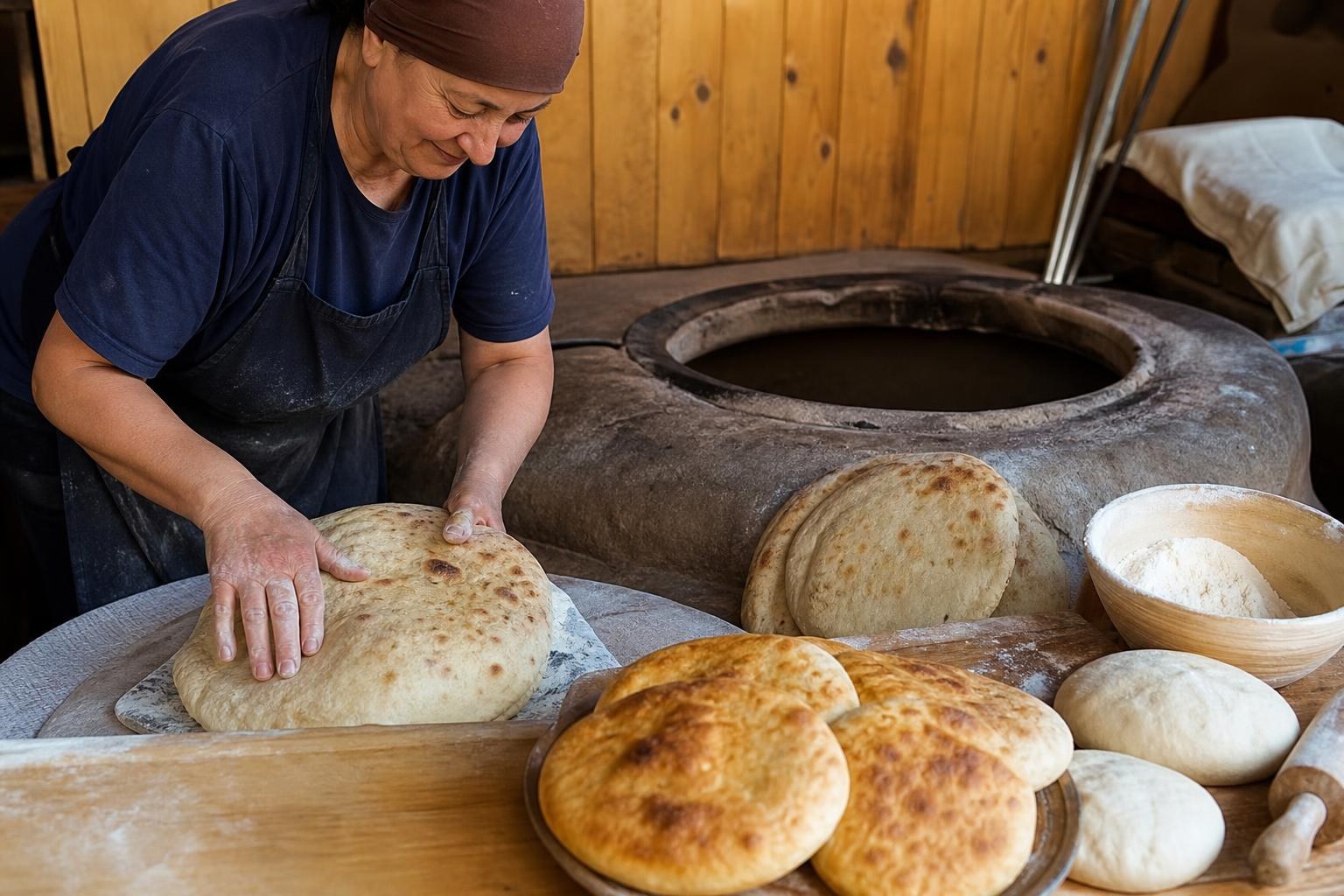
Shoti and tonis puri are both wheat breads baked in a tone, a deep, round clay or brick oven heated from below. Bakers stretch the dough, slap it onto the hot inner wall, and fish it out with a hook minutes later. Shoti is a leavened wheat loaf shaped like a canoe or saber, with a crisp shell and a soft middle. Tonis puri can also mean the rounder flat loaves from the same oven.
Mchadi is the corn staple. It is made from cornmeal, water and salt, shaped into small patties, and fried or baked until golden.
| Bread | Flour | Region | Best with |
|---|---|---|---|
| Shotis puri | Wheat | Nationwide, especially Tbilisi and the east | Sulguni cheese, lobio, mtsvadi |
| Tonis puri (round) | Wheat | Kakheti, Kartli | Soups, cheese, herbs |
| Mchadi | Corn | Imereti, Samegrelo, Guria | Lobio, pkhali, young cheese |
| Meskhuri puri | Wheat | Samtskhe-Javakheti | Butter, cheese, tea |
How to Spot a Tone Bakery and Eat Like a Local
The best bread in Georgia rarely comes from supermarkets. Look for a few steps leading down into a basement shop, a hand-painted “პური” (puri) sign, and a waft of heat at street level. Inside, you should see the tone itself: a round opening in the floor or counter with a baker leaning over it.
How to buy like a regular:
- Point at the loaf you want and hold up fingers for the quantity.
- Pay cash. In 2026 a shoti usually costs 1.50 to 3 GEL, though prices shift, so check locally.
- Ask “tskheli?” (hot?) and wait a few minutes if a fresh batch is coming out.
Tip: Bread is at its best within minutes of leaving the oven. Mornings and late afternoons often bring fresh batches, but rhythms vary by shop.
Locals tear the loaf by hand rather than cutting it, and eat it hot with salty cheese or a clay pot of lobio (bean stew). For the cheese-filled cousin, see our separate Khachapuri article.
Regional Varieties: Meskhuri and Beyond
Standard shoti is only the start. In Samtskhe-Javakheti, around Akhaltsikhe and Vardzia, meskhuri puri is a rounder, thicker wheat loaf with a softer crumb, often baked in village ovens and eaten with butter and strong tea.
West of the Rikoti Pass, corn takes over. Imereti and Samegrelo households fry mchadi daily, and village grandmothers will often press a warm patty on visitors with a slab of fresh cheese. In mountain regions such as Svaneti and Racha, bread leans toward filled loaves, while Kakhetian villages still keep shared tone ovens in courtyards. Breads in Tbilisi tend to be uniform; in the villages each oven has its own shape and salt level.
Where to Buy It Hot: Best Roadside Bread Stops
You don’t need a shop name to find good roadside bread: you need to watch for small stalls with stacked loaves and a smoking chimney. Renting a car makes these stops easy, since you can pull over the moment you see steam.
- Mtskheta/Saguramo area: The road from Mtskheta toward Saguramo and the stretch near the Zedazeni turnoff have roadside ovens selling shoti and round tonis puri. Good for a breakfast stop before Jvari or the Military Highway.
- Kakheti highway: Heading east through Sagarejo toward Gurjaani and Telavi, villages line the road with tone stalls. Expect hot loaves and sometimes churchkhela on the same table.
- Old Kakheti road via Gombori: Slower and twistier, with fewer stalls but village bakeries in the settlements.
Getting there by car: Start from Tbilisi. Mtskheta is a short drive north on paved road, with Kakheti routes paved but busy through towns. No 4×4 is needed for these routes; the Gombori pass can see winter snow, so check conditions. Park on the gravel shoulder only where it’s wide enough.
Important: Never stop on blind bends to buy bread. Drivers here overtake aggressively.
Frequently Asked Questions About Georgian Bread
What’s the difference between shoti and puri?
Puri simply means “bread.” Shoti is a specific canoe-shaped wheat loaf from the tone, so every shoti is puri, but not every puri is shoti.
Is Georgian bread vegan?
Plain shoti, tonis puri and mchadi are normally made from flour, water, salt and (for wheat loaves) yeast, so they’re typically vegan. Filled breads like khachapuri contain cheese and eggs.
How long does shoti stay fresh?
It’s best within hours. By the next day it hardens; locals reheat it in a dry pan or use it for soups.
How much bread do Georgians eat?
Plenty: estimates put it at roughly 500g per person daily, one of the highest rates anywhere.
Note: Hot bread, a block of sulguni and a roadside view make one of the cheapest good meals in Georgia. Plan your route with Triproadwayplanner, keep a few lari in coins, and stop whenever you spot a tone.