
Georgia sits at the crossroads of Europe and Asia, a country roughly the size of West Virginia that somehow manages to pack in snow-capped peaks, subtropical coastlines, ancient forests, and dramatic canyons. The question of which part of Georgia is most beautiful doesn't have a simple answer because the country defies easy categorization. A nation that generated $82 billion in statewide economic impact from tourism clearly has something special going on, and visitors keep returning in record numbers: 174.2 million travelers arrived in 2024 alone, each seeking their own version of Georgian beauty.
Having spent considerable time exploring this remarkable country, I can tell you that asking locals which region is prettiest will spark genuine debate. The mountain dwellers swear by their alpine meadows and medieval towers. Coastal residents point to the Black Sea's shimmering waters. And those from the wine regions insist that rolling vineyards at sunset rival anything in Tuscany. The truth is that Georgia's beauty is remarkably diverse, and the "most beautiful" region depends entirely on what moves you. This guide breaks down the major regions, their distinct characteristics, and what makes each one worth your time.
The Majestic Peaks of North Georgia and the Blue Ridge
The Caucasus Mountains define Georgia's northern border and create some of the most dramatic scenery in all of Europe. These aren't gentle, rolling hills: they're serious peaks that challenge experienced mountaineers while offering accessible beauty to casual hikers. The Greater Caucasus range includes Mount Shkhara at 5,193 meters, the highest point in the country, but you don't need to be an alpinist to appreciate the region's grandeur.
What sets northern Georgia apart is the combination of natural drama and cultural heritage. Medieval stone towers dot the landscape, remnants of centuries-old defensive architecture that seem to grow organically from the mountainsides. The region called Svaneti, in particular, has been described by travel experts as the "jewel in Georgia's crown," known for its glaciers, alpine meadows, and medieval stone defense towers. These aren't reconstructed tourist attractions but living villages where families have maintained traditions for over a thousand years.
Tallulah Gorge and the Toccoa River Valley
The gorge systems of northern Georgia carve through ancient rock to create landscapes that feel prehistoric. Sheer cliff faces drop hundreds of meters, and waterfalls cascade into pools that have been sculpted by millennia of flowing water. The valleys below these gorges support ecosystems found nowhere else in the country, with endemic plant species and wildlife that thrive in the unique microclimates.
Visitors consistently rate these gorge areas among Georgia's top natural attractions. The combination of accessibility and genuine wilderness creates an experience that satisfies both casual day-trippers and serious outdoor enthusiasts. Well-maintained trails allow families with children to experience viewpoints that feel genuinely remote, while more challenging routes reward experienced hikers with solitude and unobstructed panoramas.
Cloudland Canyon's Dramatic Elevations
The canyon country of Georgia offers a different kind of mountain beauty: not the soaring peaks of the high Caucasus but the layered, stratified walls of ancient geological formations. These canyons reveal millions of years of earth history in their exposed rock faces, with colors shifting from deep reds to pale creams depending on the mineral content of each layer.
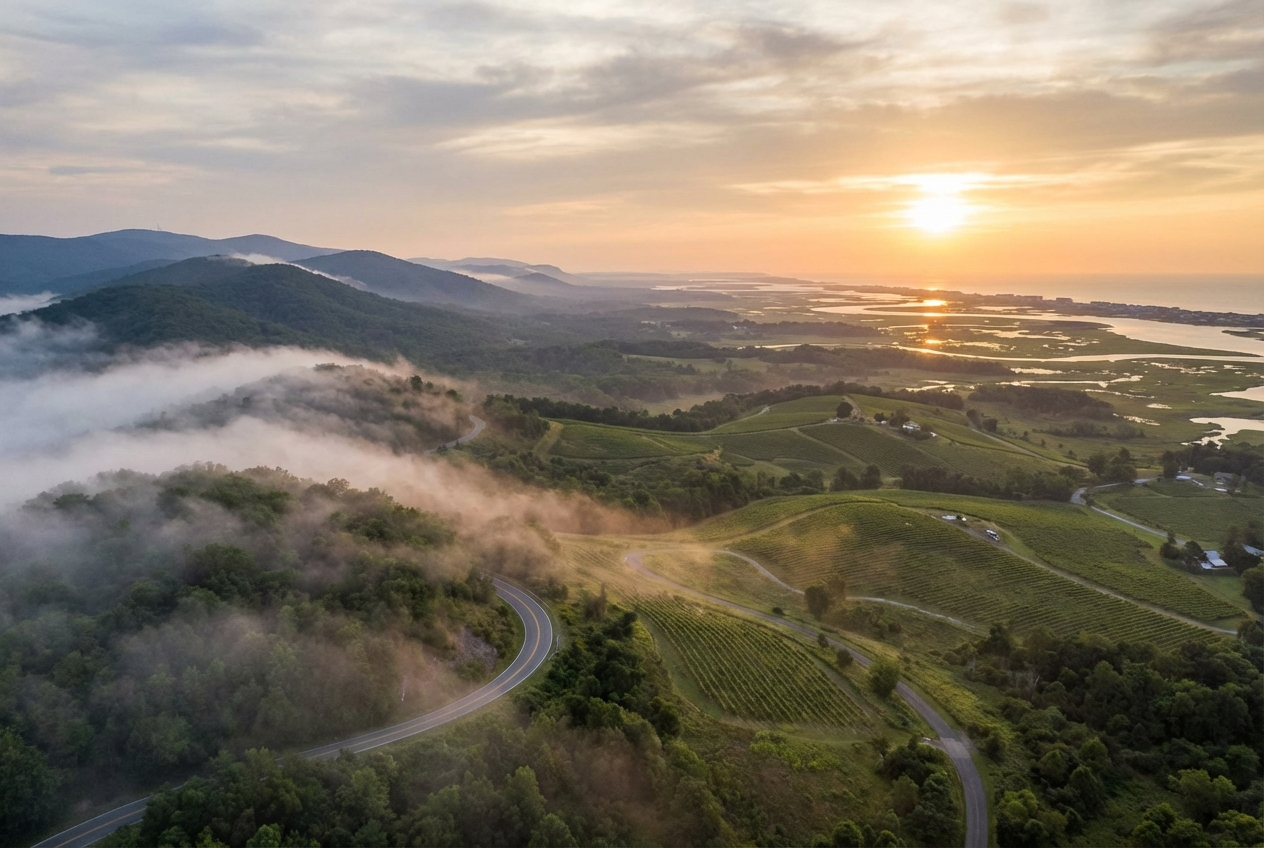
Morning mist fills these canyons and creates an ethereal atmosphere that photographers chase obsessively. The play of light through the fog, combined with the geometric patterns of the canyon walls, produces images that look digitally enhanced but aren't. Sunset transforms the same landscapes entirely, painting the rock faces in warm oranges and deep purples.
Brasstown Bald: The State's Highest Vantage Point
Standing at Georgia's highest accessible viewpoint offers perspective that's impossible to gain elsewhere. On clear days, the view extends across multiple mountain ranges, with peaks fading into blue haze at the horizon. The sensation of standing above the clouds, looking down on weather systems moving through valleys below, fundamentally changes how you understand the landscape.
The journey to high-elevation viewpoints in Georgia passes through distinct ecological zones. Subtropical vegetation at lower elevations gives way to temperate forests, then subalpine meadows, and finally the sparse, wind-sculpted plants that survive at the highest altitudes. This vertical diversity means a single mountain drive can feel like traveling across continents.
Coastal Elegance and the Golden Isles
Georgia's Black Sea coastline offers beauty of an entirely different character. The subtropical climate supports lush vegetation that seems almost tropical, with palm trees and flowering plants creating gardens that bloom year-round. The coast stretches for roughly 310 kilometers, offering everything from developed resort towns to completely wild beaches accessible only by boat.
The coastal region's beauty is gentler than the mountains but no less compelling. Sunrises over the Black Sea paint the water in shades that range from deep purple through pink to brilliant gold. The quality of light here attracted artists and photographers long before tourism became an industry, and the artistic tradition continues in the small galleries and studios scattered along the coast.
The Wild Beauty of Cumberland Island National Seashore
Georgia's protected coastal areas preserve ecosystems that have remained essentially unchanged for centuries. Barrier islands shelter lagoons where migratory birds gather in numbers that darken the sky. Sea turtles nest on beaches that see few human footprints, and dolphins patrol waters that teem with fish.
The wild coastal areas require more effort to reach than developed beaches, but the reward is genuine wilderness. Walking a beach where your footprints are the only human marks, watching wildlife behave naturally without fear of people, creates a connection to the natural world that manicured resorts simply cannot offer.
Spanish Moss and Historic Charm in Savannah
The intersection of natural and human beauty reaches its peak in Georgia's historic coastal cities. Ancient trees draped in moss create natural cathedrals over cobblestone streets. Historic architecture from multiple centuries creates visual layers that reward slow exploration. The effect is romantic without being precious, historic without feeling like a museum.
These cities demonstrate how human settlement can enhance rather than diminish natural beauty. Carefully preserved gardens showcase plants from around the world, while the urban tree canopy provides shade and habitat that supports surprising biodiversity. Bird species that might seem out of place in a city thrive here, their songs providing a soundtrack to morning coffee on wrought-iron balconies.
Mysterious Wetlands and the Okefenokee Swamp
Georgia's wetlands offer beauty that takes time to appreciate. First impressions might register murky water and tangled vegetation, but patience reveals a complex ecosystem of extraordinary delicacy. Cypress trees rise from dark water, their buttressed roots creating sculpture that no artist could improve. Spanish moss hangs in curtains that filter sunlight into patterns that shift with every breeze.
The wetlands support wildlife in astonishing density. Alligators glide through channels that wind between islands of vegetation. Wading birds in improbable colors hunt in the shallows. At night, the sounds of the swamp create a symphony that city dwellers find initially unsettling and eventually mesmerizing. This is beauty that requires surrender: you cannot rush through wetlands and expect to see what makes them special.
The play of light on dark water creates photographic opportunities unlike anywhere else in Georgia. Reflections double the visual complexity, and the slow movement of water creates effects that change moment by moment. Kayaking through these waterways at dawn, when mist rises from the water and the first birds begin calling, ranks among Georgia's most memorable experiences.
The Rolling Hills and Orchards of Middle Georgia
Central Georgia's agricultural landscapes offer pastoral beauty that feels timeless. Orchards in bloom transform entire valleys into seas of pink and white. Vineyards march in precise rows up hillsides, their geometry contrasting with the organic shapes of surrounding forests. This is beauty that humans have shaped over generations, and it carries a different emotional weight than pure wilderness.
The rhythm of agricultural life creates seasonal variations that reward repeat visits. Spring brings blossoms that scent the air for kilometers. Summer ripens fruit that hangs heavy on branches. Autumn transforms vineyards into tapestries of red and gold. Even winter has its beauty, with bare branches revealing the underlying structure of the land.
Callaway Gardens and Pine Mountain
The cultivated gardens of middle Georgia represent the intersection of art and horticulture. Landscape designers have worked for generations to create spaces that feel natural while showcasing plants from around the world. The result is beauty that changes with every season and rewards visitors who return throughout the year.
| Season | Primary Attractions | Best Activities |
|---|---|---|
| Spring | Azaleas, dogwoods, wildflowers | Garden walks, photography |
| Summer | Butterfly populations, water gardens | Swimming, cycling |
| Autumn | Foliage colors, harvest festivals | Hiking, wine tasting |
| Winter | Camellia blooms, holiday lights | Indoor gardens, spa visits |
These gardens attract visitors who might not consider themselves nature enthusiasts. The accessibility of cultivated beauty provides an entry point that can spark deeper appreciation for Georgia's wild landscapes.
Providence Canyon: Georgia's Little Grand Canyon
Georgia's canyon country proves that dramatic geology isn't limited to the American Southwest. Erosion has carved formations in soft sedimentary rock that glow in shades of red, orange, pink, and purple. The scale is more intimate than famous western canyons, but the colors are equally vivid, and the relative solitude allows contemplation that crowded destinations cannot provide.
The canyons continue to evolve visibly, with new formations appearing after heavy rains. This active geology creates a landscape that literally changes between visits. Photographers who documented these canyons decades ago would barely recognize some areas today, and the process continues with every storm.
Urban Greenery and Botanical Splendor in Atlanta
Georgia's capital demonstrates that natural beauty can thrive within urban environments. Extensive park systems preserve forests within city limits, creating green corridors where wildlife moves freely. Botanical gardens showcase plant collections that rival any in the world, while neighborhood gardens transform ordinary streets into flowering displays.
The urban approach to green space has evolved significantly in recent decades. Where earlier generations saw parks as isolated islands within development, current planning connects green spaces into networks that function as ecosystems. The result is a city where encounters with nature don't require leaving town.
International visitors increasingly recognize Georgia's appeal: travel revenue reached $826 million in early 2025, a 2.3% increase that reflects growing global awareness of the country's attractions. Urban gardens and parks contribute significantly to this appeal, offering accessible beauty that complements more remote natural areas.
Verdict: Choosing the Best Region Based on Your Aesthetic
The most beautiful part of Georgia depends entirely on what beauty means to you. If dramatic scale and alpine grandeur move you, the northern mountains offer experiences that rival the Alps at a fraction of the cost and crowds. If gentler, more romantic landscapes appeal, the coast and its historic cities deliver beauty that unfolds slowly and rewards lingering.
For those drawn to mystery and atmosphere, the wetlands provide experiences available nowhere else. The agricultural regions satisfy visitors who find beauty in human interaction with landscape, in the careful cultivation that transforms wild land into productive gardens. And urban green spaces prove that beauty doesn't require wilderness.
My personal recommendation: don't choose. Georgia's compact size makes multi-region trips entirely practical. A two-week visit can include mountain hiking, coastal relaxation, wetland exploration, and urban culture without exhausting drives between destinations. The country's 470,570 tourism jobs have created infrastructure that makes travel comfortable without sacrificing authenticity.
The honest answer to which part of Georgia is most beautiful is that the question itself misses the point. Georgia's beauty lies precisely in its diversity, in the way a single country contains landscapes that shouldn't logically coexist. Visit once, and you'll understand why 7.8 million travelers chose Georgia in 2025, and why most of them are already planning their return.