
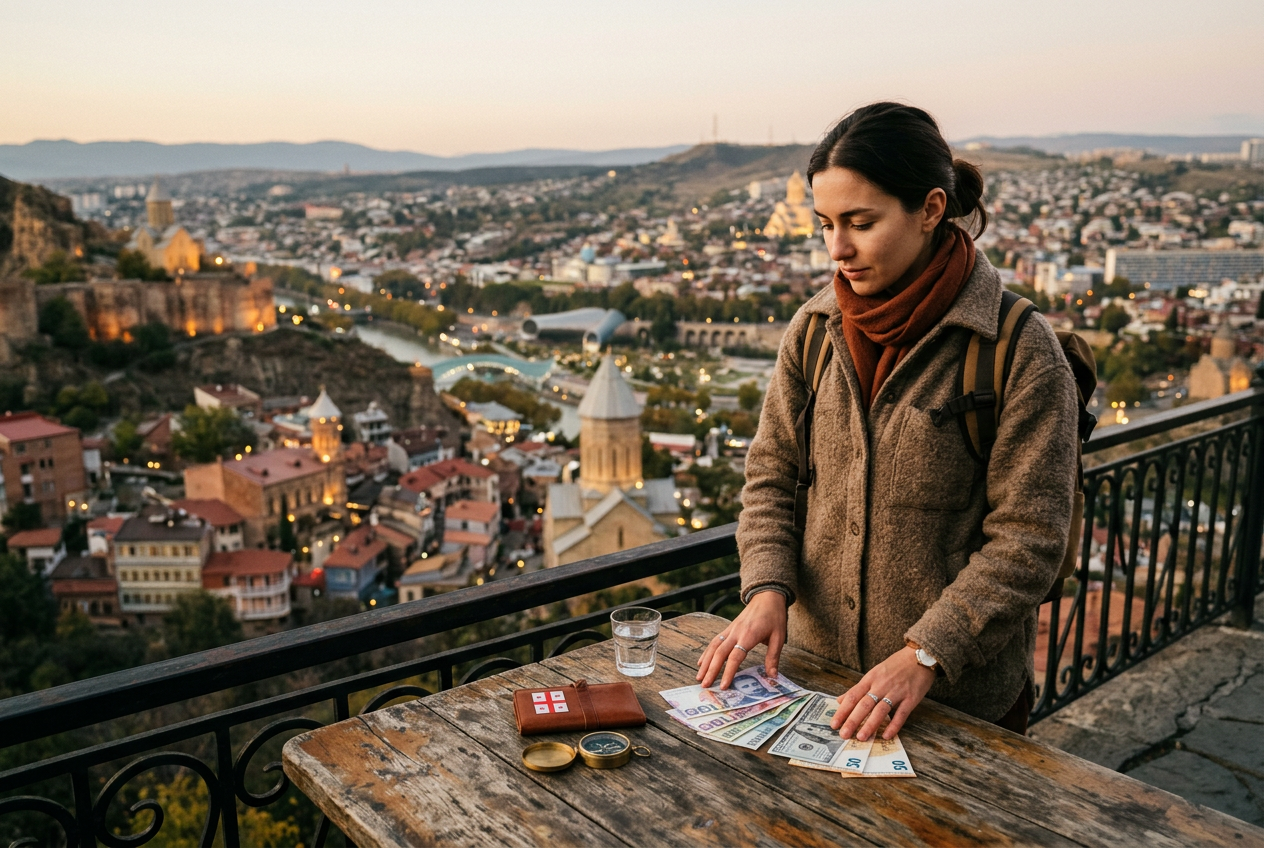
Figuring out which currency is best to take to Georgia ranks among the most practical questions travelers ask before visiting this Caucasus gem. The answer shapes everything from how smoothly you'll navigate Tbilisi's cobblestone streets to whether you'll overpay for that bottle of Saperavi wine in Kakheti. Here's what I've learned after watching countless travelers either nail their currency strategy or learn expensive lessons at airport exchange counters.
Georgia operates entirely on the Georgian Lari, and unlike some tourist-friendly destinations, you cannot pay directly with dollars, euros, or any other foreign currency. Shops, restaurants, and marshrutka drivers all expect Lari. This reality catches some visitors off guard, particularly those accustomed to countries where USD slides across counters without question. The good news? Georgia's exchange infrastructure is excellent, ATMs are plentiful, and with the right approach, you'll minimize fees while maximizing your travel budget. The average daily spend for travelers hovers around 100 GEL, roughly 37 USD, making Georgia remarkably affordable once you've sorted your currency situation.
Understanding the Georgian Lari (GEL)
The Georgian Lari tells a story of national identity. When Georgia gained independence from the Soviet Union, establishing its own currency became a powerful symbol of sovereignty. Today, the Lari stands as the only legal tender throughout the country, from the bustling streets of Batumi to remote Svaneti villages.
Currency Basics and Denominations
The Georgian Lari divides into 100 tetri, functioning similarly to how dollars break into cents. Banknotes circulate in denominations of 5, 10, 20, 50, 100, and 200 Lari, while coins come in 1, 2, 5, 10, 20, and 50 tetri pieces, plus 1 and 2 Lari coins.
Understanding these denominations matters for practical reasons. That 200 Lari note might seem convenient after a large ATM withdrawal, but try buying a 3 Lari khachapuri from a street vendor with it. You'll receive either a polite refusal or an exasperated sigh. The 5, 10, and 20 Lari notes handle most daily transactions smoothly.
Exchange rates fluctuate, but as a reference point, Bank of Georgia recently listed commercial rates for USD at approximately 2.64/2.70 GEL for buying and selling. This spread between buy and sell rates represents the exchange bureau's profit margin, and it varies significantly depending on where you exchange.
Why You Cannot Use Foreign Currency for Direct Payments
Georgia isn't Thailand or Cambodia, where dollars flow freely alongside local currency. Every transaction here requires Lari. The corner bodega selling churchkhela? Lari only. The taxi driver navigating Tbilisi's chaotic traffic? Lari. Even upscale hotels that quote prices in euros or dollars will process your payment in Lari at their chosen exchange rate, which rarely favors you.
This policy exists partly for economic stability and partly from national pride. Georgians take their currency seriously, viewing it as an extension of their hard-won independence. The practical implication for travelers is straightforward: arrive with a currency strategy, not just a wallet full of your home currency and hope.
Some tourists assume they can negotiate dollar payments with taxi drivers or small vendors. This approach creates awkwardness at best and genuine offense at worst. Respect the local system, and you'll find Georgians remarkably warm hosts. The phrase "stumari ghvtisaa," meaning "a guest is a gift from God," reflects genuine Georgian hospitality, but that hospitality flows more freely when visitors respect local customs.
The Best Foreign Currencies for Exchange
Not all foreign currencies receive equal treatment at Georgian exchange bureaus. Your choice of what to bring directly impacts how much Lari ends up in your pocket.
The Dominance of US Dollars and Euros
Currency experts consistently recommend the same approach: bring US Dollars or Euros to exchange upon arrival. These two currencies dominate Georgian exchange markets, meaning you'll find the best rates and widest availability.
| Currency | Exchange Availability | Typical Rate Spread | Recommendation |
|---|---|---|---|
| US Dollar | Excellent | 1-3% | Highly recommended |
| Euro | Excellent | 1-3% | Highly recommended |
| British Pound | Good | 3-5% | Acceptable |
| Turkish Lira | Good | 3-6% | Regional option |
| Russian Ruble | Limited | Varies | Not recommended |
| Other currencies | Poor | 5-10%+ | Avoid if possible |
Dollars edge out euros slightly in terms of ubiquity. Every exchange booth in Georgia handles USD, and rates tend to be marginally better. However, the difference is small enough that Europeans shouldn't bother converting euros to dollars before arriving. The double conversion would cost more than any rate advantage.
Bring clean, recent bills without tears, marks, or excessive wear. Georgian exchange bureaus can be surprisingly picky about bill condition, occasionally refusing notes that would pass without comment elsewhere.
Exchanging British Pounds and Regional Currencies
Travelers from the UK can exchange pounds without major difficulty, though rates won't match dollar or euro exchanges. Larger exchange bureaus in Tbilisi handle GBP routinely, but smaller towns may offer limited options or unfavorable rates.
Turkish Lira exchanges easily given Georgia's proximity to Turkey and significant cross-border trade. Armenian Dram and Azerbaijani Manat also exchange in border regions, though rates deteriorate as you move inland.
Russian Rubles present a complicated situation. Political tensions between Georgia and Russia, stemming from the 2008 war and ongoing occupation of Abkhazia and South Ossetia, create both practical and social considerations. Some bureaus won't touch rubles; others offer poor rates. Beyond logistics, openly exchanging rubles can generate uncomfortable moments. This represents one of those sensitive political topics worth navigating carefully.
Where to Exchange Money for the Best Rates
Location matters enormously when exchanging currency. The difference between the best and worst rates in Tbilisi can exceed 10%, meaning a careless exchange costs you real money.
Bank vs. Independent Exchange Booths
Banks offer security and receipts but rarely the best rates. Their overhead costs translate into wider spreads, and operating hours can prove inconvenient. Georgian banks typically close by 6 PM and remain shuttered on Sundays.
Independent exchange booths, the small kiosks scattered throughout Tbilisi and other cities, consistently offer better rates. Competition keeps them honest, and electronic displays showing current rates let you comparison shop easily. The stretch of Rustaveli Avenue in central Tbilisi contains dozens of these booths within walking distance, making rate comparison trivially easy.
Look for booths displaying rates on electronic boards rather than handwritten signs. Check that the displayed rate matches what you're actually offered. Count your Lari before leaving the window. These basic precautions prevent most exchange problems.
The area around Freedom Square and along Aghmashenebeli Avenue hosts reliable exchange options. Locals use these same booths, which speaks to their legitimacy.
Avoiding High Fees at Tbilisi International Airport
Airport exchanges worldwide prey on tired travelers, and Tbilisi International is no exception. Rates at airport booths can run 5-10% worse than city center options. That convenience premium adds up quickly on larger exchanges.
If you absolutely need Lari immediately upon landing, exchange only enough to cover your taxi or metro fare into the city. Fifty dollars converted at the airport handles initial transportation with minimal damage. Exchange the bulk of your currency once you've reached central Tbilisi and can shop rates.
The airport ATMs offer a reasonable alternative if your bank doesn't charge excessive foreign transaction fees. Withdrawing a small amount for immediate needs, then using city ATMs or exchange booths later, represents a solid compromise.
Using ATMs and Credit Cards in Georgia
Plastic works well in Georgia, though with important caveats depending on where your travels take you.
Card Acceptance in Tbilisi vs. Rural Regions
Tbilisi has embraced card payments enthusiastically. Restaurants, hotels, supermarkets, and most shops accept Visa and Mastercard without hesitation. Apple Pay and Google Pay work at many terminals. The younger, post-2003 generation running many businesses grew up with digital payments and expects them.
Rural Georgia tells a different story. Village guesthouses in Tusheti or Svaneti operate on cash exclusively. Marshrutka drivers throughout the country expect Lari notes. Small family restaurants in regional towns may lack card terminals entirely. The generational divide shows clearly here: Soviet-era proprietors often prefer cash even when terminals exist.
Plan your cash needs before leaving major cities. Running out of Lari in Ushguli, one of Europe's highest continuously inhabited settlements, leaves you dependent on the kindness of strangers. That kindness genuinely exists in Georgian culture, but testing it unnecessarily seems unwise.
Hidden Costs of International ATM Withdrawals
ATMs are widely available throughout Georgia, with withdrawal fees typically running 3-5 GEL per transaction. This local fee is reasonable, but your home bank may add international withdrawal charges and unfavorable conversion rates.
Smart travelers research their bank's foreign ATM policies before departure. Some banks reimburse foreign ATM fees; others charge 3% plus a flat fee on every withdrawal. The difference across a two-week trip can exceed $50.
Basisbank and CartuBank ATMs charge no local fees and offer higher withdrawal limits, up to 2,000 GEL on some machines. Seeking out these specific banks saves money over multiple withdrawals.
Decline the ATM's offer to convert currency for you. This "dynamic currency conversion" sounds convenient but typically includes a 3-7% markup. Always choose to be charged in Lari and let your home bank handle conversion.
Practical Tips for Managing Your Travel Budget
Beyond choosing the right currency and exchange locations, a few practical strategies help stretch your Lari further.
Identifying and Avoiding Common Exchange Scams
Georgian exchange booths are generally honest, but scams exist. The most common involves displaying attractive rates, then claiming those rates apply only to exchanges above a certain threshold, perhaps $500 or $1,000. Smaller exchanges get worse rates.
Always confirm the exact rate and total Lari you'll receive before handing over your foreign currency. Legitimate booths state terms clearly. If anything feels unclear or pressured, walk to the next booth.
Count your money at the window. Shortchanging happens occasionally, whether through genuine error or intent. Catching discrepancies immediately resolves them; discovering them later leaves you with no recourse.
Avoid anyone approaching you on the street offering to exchange currency. These informal exchanges may involve counterfeit notes or outright theft. The official booths are plentiful and safe.
The Importance of Carrying Small Lari Notes
That stack of 100 Lari notes from your ATM withdrawal needs breaking down. Georgian vendors, taxi drivers, and small businesses frequently lack change for large bills. Starting your day with a mix of 5, 10, and 20 Lari notes prevents countless small frustrations.
Supermarkets and larger restaurants break big bills willingly. Make a habit of paying with larger notes at these establishments, then using the change elsewhere. Some travelers buy a small item at a supermarket specifically to break a large note before heading into areas where change is scarce.
Keep small notes accessible and larger denominations secured separately. This organization speeds transactions and reduces the temptation to flash a thick wallet in crowded areas. Georgia is remarkably safe, but basic precautions remain sensible.
Apps like Bolt and Yandex Go handle taxi payments digitally, eliminating change concerns for transportation. Google Translate with offline Georgian language packs helps navigate situations where your Lari supply runs low and you need to explain your predicament.
Making Your Currency Work for You
The best approach combines preparation with flexibility. Arrive with US Dollars or Euros in clean, recent bills. Exchange a small amount at the airport for immediate needs, then find a competitive booth in central Tbilisi for the bulk of your exchange. Use ATMs strategically, favoring Basisbank and CartuBank to minimize fees. Carry a mix of small and large Lari notes, and keep cards as backup for urban purchases.
Georgia rewards travelers who respect its systems while remaining adaptable. The currency question, once solved, fades into the background, leaving you free to focus on what actually matters: the wine, the food, the mountains, and the extraordinary hospitality of a country where guests truly are considered gifts from God.