
Georgia has become one of Europe's most compelling budget destinations, drawing 7.8 million international tourists in 2025 alone, according to Georgia Today. But here's what most travel guides miss: the real savings aren't just in cheap hotels or affordable restaurants. They're in what you bring home. The question of what to buy in Georgia cheaply isn't just about souvenirs. It's about finding authentic products at prices that would be impossible anywhere else in Europe.
I've spent considerable time wandering through Tbilisi's chaotic bazaars, haggling with grandmothers over handmade socks, and learning which wine cellars offer the best value. The difference between tourist-trap pricing and local deals can be staggering, sometimes 70% or more for identical items. With total foreign visitor spending reaching 15 billion GEL in 2025, clearly plenty of travelers are discovering Georgia's shopping potential. The trick is knowing where to look and what's actually worth your luggage space.
What follows is a practical breakdown of Georgia's best affordable purchases, from food items that taste better than anything you'll find at home to handcrafted goods that would cost five times more in Western Europe.
Authentic Georgian Flavors at Local Prices
Georgian cuisine has gained international recognition, but the ingredients that make it special remain remarkably affordable at their source. Food items make ideal purchases because they're consumable, packable, and genuinely difficult to find elsewhere.
Churchkhela and Dried Fruits from Street Vendors
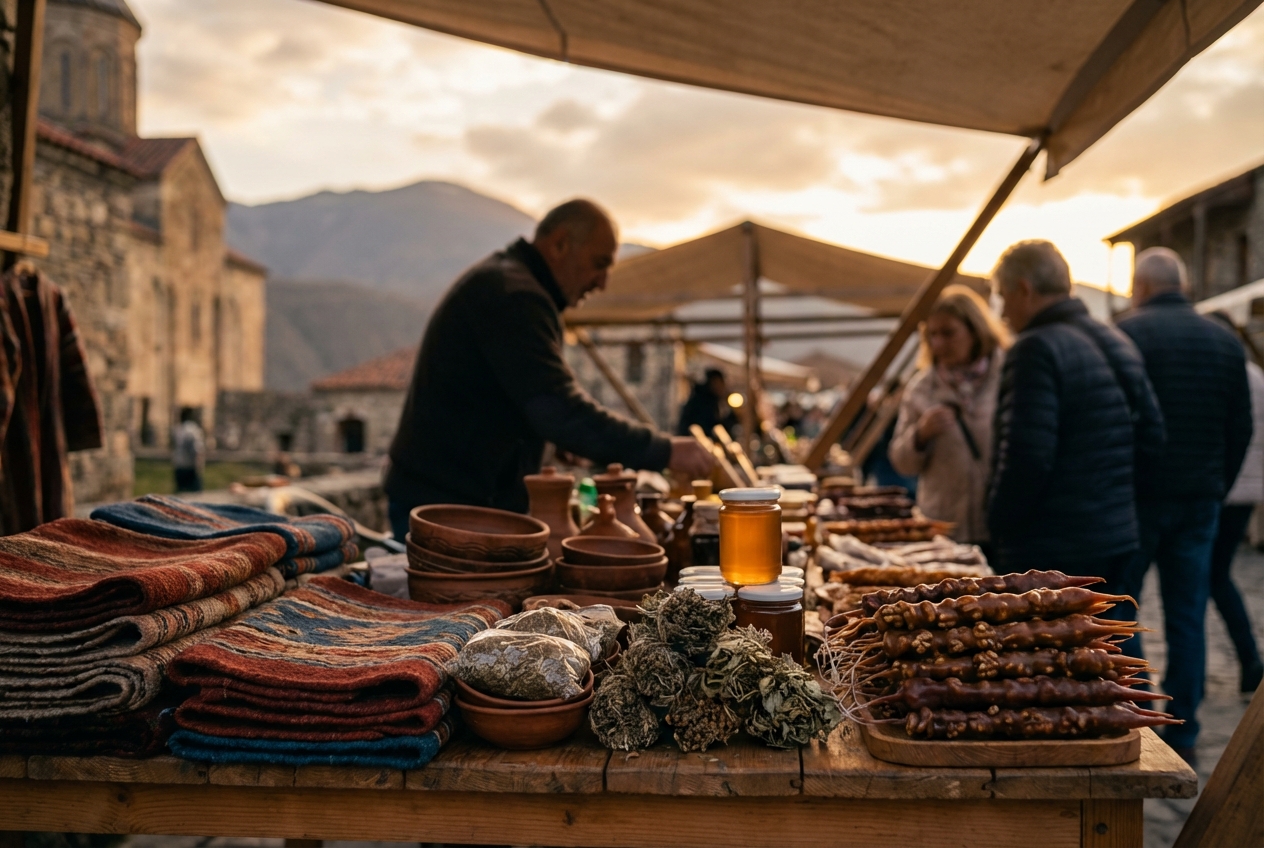
Churchkhela, those candle-shaped strings of walnuts dipped in concentrated grape juice, hang from nearly every market stall in Georgia. They look strange but taste incredible, like a chewy, naturally sweet energy bar. Street vendors in Tbilisi sell them for 2-4 GEL each (roughly $0.75-1.50), while tourist shops charge three times that amount.
The key is buying from vendors who make their own. You can usually tell by the slightly irregular shapes and the fact that they'll cut you a sample without hesitation. The best churchkhela comes from the Kakheti wine region, where the grape must is thicker and more flavorful. Dried fruits, particularly persimmons and figs, cost almost nothing compared to Western prices. A kilogram of dried persimmons runs about 15-20 GEL at local markets.
Bulk Spices and Svanetian Salt
Svanetian salt is Georgia's secret weapon. This aromatic blend combines rock salt with garlic, fenugreek, coriander, and other spices native to the Svaneti mountain region. At the Dezerter Bazaar in Tbilisi, you can buy a generous bag for 5-8 GEL. The same quantity in a European specialty store would cost 15-20 euros.
Other spices worth grabbing include dried marigold petals (used in walnut sauces), blue fenugreek, and adjika paste. Buying in bulk from spice vendors rather than pre-packaged tourist versions saves substantial money and gets you fresher products.
Local Honey and Jams
Georgian honey varieties are exceptional, particularly chestnut and alpine flower honeys from the mountain regions. A half-liter jar of high-quality honey costs 15-25 GEL at local markets. Rose petal jam, walnut preserves, and green fig jam make unusual gifts that pack easily. Prices at source are typically one-third of what you'd pay in specialty food shops abroad.
Wine and Spirits Direct from the Source
Georgia claims to be the birthplace of wine, with 8,000 years of winemaking history. Whether or not you buy that claim, the wine itself is genuinely distinctive and absurdly affordable.
Affordable Qvevri Wines
Qvevri wines are fermented in large clay vessels buried underground, a method that produces amber-colored whites with tannins and reds with unusual depth. These wines have become trendy in natural wine circles worldwide, where they command premium prices. In Georgia, excellent qvevri wines start at 20-30 GEL per bottle.
The best deals come from visiting family wineries in Kakheti rather than buying in Tbilisi. Many small producers sell directly from their cellars at prices that seem almost apologetic. Even in Tbilisi wine shops, prices remain reasonable. Here's a quick comparison:
| Wine Type | Georgia Price (GEL) | Equivalent European Price |
|---|---|---|
| Basic table wine | 8-15 | €8-12 |
| Quality qvevri white | 25-40 | €25-45 |
| Premium aged red | 50-80 | €50-100 |
| Natural/organic wines | 30-60 | €35-70 |
Chacha: The Traditional Georgian Pomace Brandy
Chacha is Georgia's answer to Italian grappa, a grape pomace brandy that ranges from rough homemade versions to smooth aged varieties. Homemade chacha from village producers costs almost nothing, often given as gifts. Commercial bottles of quality chacha run 15-40 GEL.
The aged varieties, particularly those from reputable producers like Askaneli Brothers, offer genuine sophistication at budget prices. A bottle that would cost €40-50 in a European spirits shop sells for 30-35 GEL in Georgia.
Handcrafted Textiles and Traditional Apparel
Georgia's textile traditions remain alive, particularly in mountain communities where women still knit and weave using centuries-old techniques.
Hand-Knit Woolen Socks and Accessories
Georgian woolen socks are legendary among travelers who've experienced them. Thick, warm, and often featuring traditional geometric patterns, they're knitted by women in mountain villages and sold at markets throughout the country. A pair costs 10-20 GEL, depending on complexity.
Beyond socks, look for woolen slippers, hats, and scarves. The quality of hand-spun Georgian wool is noticeably superior to mass-produced alternatives. These items make practical gifts that people actually use, unlike decorative souvenirs that collect dust.
Blue Tablecloths (Lurji Supra)
The traditional blue tablecloth, known as lurji supra, is a symbol of Georgian hospitality. Authentic handwoven versions feature intricate patterns and use natural indigo dyes. Finding genuine handmade tablecloths requires some effort, as many tourist versions are machine-made imports.
The Dry Bridge Market and certain shops in the old town sell authentic pieces, typically ranging from 80-200 GEL depending on size and age. Vintage tablecloths from the Soviet era are particularly prized by collectors.
Artisanal Jewelry and Souvenirs
Georgian artisans produce distinctive jewelry and decorative items using techniques passed down through generations. The craftsmanship rivals European luxury goods at a fraction of the cost.
Minankari: Cloisonné Enamel Work
Minankari is Georgia's traditional cloisonné enamelwork, characterized by vibrant colors and intricate patterns. The technique involves filling tiny metal compartments with colored enamel, creating jewelry, decorative boxes, and religious items.
Authentic minankari pieces start around 50 GEL for small earrings and can reach several hundred GEL for elaborate necklaces. The key is distinguishing handmade pieces from mass-produced imitations. Genuine minankari has slight irregularities and deeper color saturation. Several workshops in Tbilisi offer demonstrations and sell directly, eliminating middleman markups.
Ceramic Pottery and Kantsi Drinking Horns
Georgian pottery follows distinctive regional styles, with Shrosha village particularly known for its black ceramics. Traditional wine pitchers, bowls, and decorative pieces cost 15-50 GEL at markets. The black ceramics, fired using a special smoking technique, make striking decorative items.
Kantsi, the traditional drinking horns, range from simple polished horns at 20-30 GEL to elaborately silver-mounted versions costing several hundred. These make memorable gifts, though they're admittedly impractical for everyday use. Holiday Offerz notes that Georgia offers a blend of local flair and budget-friendly finds, providing value, experience, and uniqueness that beats many other destinations.
Thrifting and Vintage Finds at Dry Bridge Market
Tbilisi's Dry Bridge Market is a sprawling open-air flea market that operates daily along the riverbank. It's chaotic, dusty, and absolutely worth several hours of browsing.
Soviet-Era Memorabilia and Antiques
The market overflows with Soviet-era artifacts: military medals, propaganda posters, old cameras, vintage watches, and communist-era badges. Prices vary wildly based on vendor and your bargaining skills. A Soviet military watch might cost anywhere from 30 to 150 GEL depending on condition and the seller's assessment of your knowledge.
Genuine antiques hide among the reproductions and junk. Georgian silver jewelry, old coins, vintage carpets, and traditional weapons appear regularly. The thrill is in the hunt, and knowledgeable buyers can find remarkable pieces at reasonable prices. Early mornings on weekends offer the best selection before tourist crowds arrive.
Second-Hand Vinyl and Books
Vinyl collectors will find Soviet-era records in surprising variety, from classical performances to propaganda songs to early rock recordings. Prices start at 5-10 GEL for common records, with rare pressings commanding more. The condition varies enormously, so inspect carefully.
Old books, maps, and prints also attract collectors. Georgian-language books hold little interest for most foreign visitors, but Russian-language editions of classic literature and Soviet-era art books can be excellent finds. Vintage maps of the Caucasus region make attractive wall decorations.
Practical Shopping Tips for Finding the Best Deals
Knowing what to buy matters less than knowing where and how to buy it. The price difference between savvy shopping and tourist-trap purchases can fund several additional days of travel.
Navigating Local Bazaars vs. Tourist Shops
The Dezerter Bazaar remains Tbilisi's largest and most authentic market, selling everything from spices to livestock. Prices here are genuinely local, and while the chaos can be overwhelming, the savings justify the effort. Getting there costs roughly $0.30 by public transport, according to Real Talk Travel.
Tourist shops along Rustaveli Avenue and in the old town charge premium prices for convenience. The same churchkhela, spices, or wine will cost 50-100% more than at local markets. These shops serve a purpose for time-pressed visitors, but budget-conscious travelers should venture further.
Regional markets outside Tbilisi offer even better prices. The Saturday market in Telavi, the wine country capital, sells local products at prices that make Tbilisi seem expensive.
The Etiquette of Bargaining in Georgia
Bargaining exists in Georgia but follows different rules than in more aggressive haggling cultures. At established shops and supermarkets, prices are fixed. At markets, particularly for non-food items, polite negotiation is expected.
The approach matters more than the technique. Georgians value warmth and personal connection. Starting with a greeting, showing genuine interest in the product, and making a reasonable initial offer works better than aggressive tactics. A 10-20% discount is typical for market purchases. Pushing harder often backfires, as vendors may simply refuse to sell.
For expensive items like carpets or antiques, taking your time and visiting multiple vendors establishes market prices. Returning to a vendor after comparing prices elsewhere often results in better deals, as sellers appreciate the implied respect.
Making Your Georgian Shopping Count
Georgia's tourism revenues are projected at $4.5 billion in 2025, according to Georgia Today, reflecting growing international interest. Yet the country remains remarkably affordable for visitors willing to shop like locals rather than tourists.
The best Georgian purchases share common traits: they're authentic to the culture, difficult to find elsewhere, and priced at levels that feel almost unfair compared to Western equivalents. A suitcase full of churchkhela, Svanetian salt, qvevri wine, and hand-knit socks represents genuine value that no duty-free shop can match.
Focus on consumables and handmade items rather than mass-produced souvenirs. Visit local markets rather than tourist shops. Take time to connect with vendors and learn about what you're buying. The stories behind your purchases often become as valuable as the items themselves, and those come free with every transaction in Georgia.