
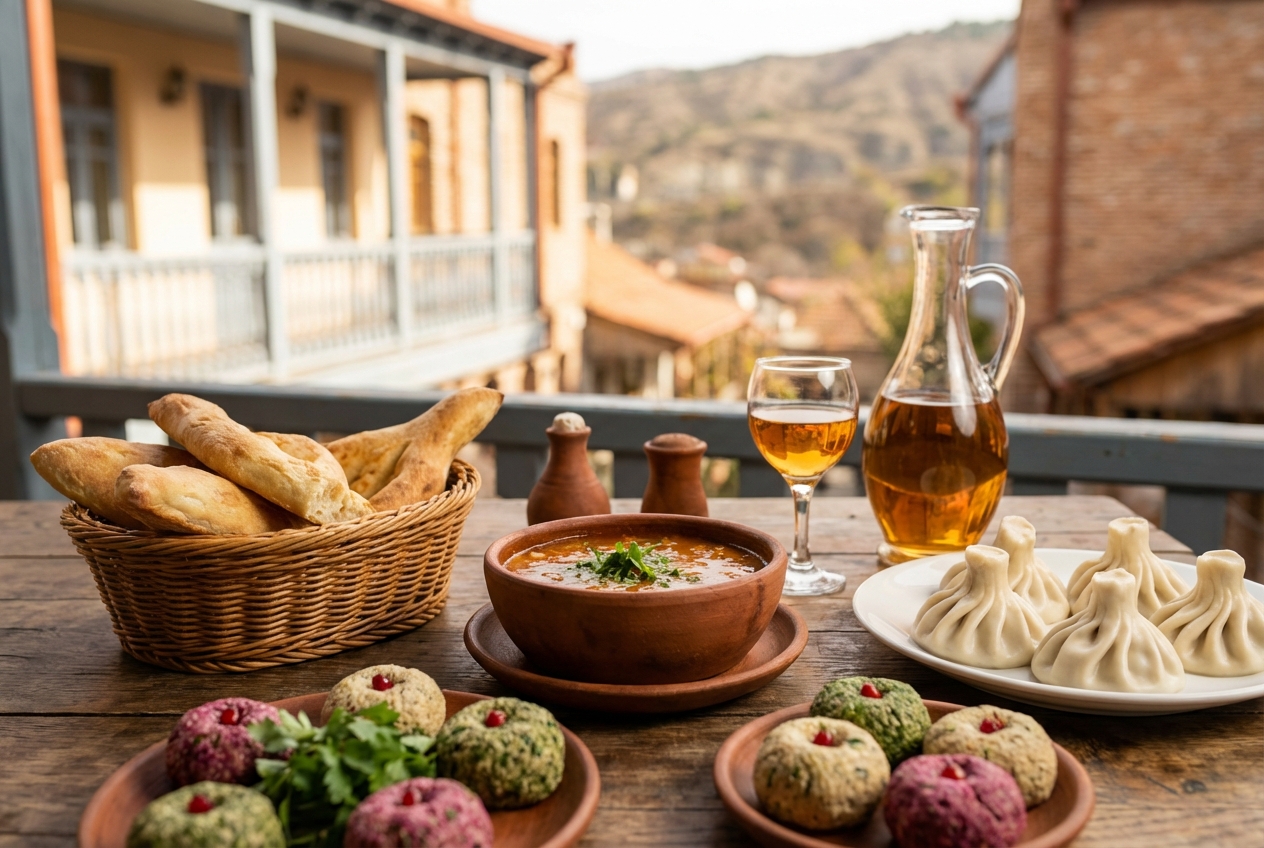
The midday sun hangs over Tbilisi's cobblestone streets, and the air carries the unmistakable aroma of bread fresh from a tone oven. Walk into any local eatery between noon and two o'clock, and you'll witness a ritual that has shaped Georgian identity for centuries: lunch. But what do Georgians eat for lunch? The answer reveals far more than a simple menu. It exposes a culture where food serves as the primary language of hospitality, where recipes carry the weight of family histories, and where a quick bite often transforms into an impromptu celebration.
Georgian lunch differs fundamentally from Western concepts of the midday meal. There's no sad desk salad here, no hurried sandwich eaten over a keyboard. Even a quick lunch involves bread torn by hand, cheese that stretches in golden threads, and conversation that flows as freely as the wine. The country's geographic position at the crossroads of Europe and Asia has produced a cuisine that borrows from neither while remaining entirely its own. From the cheese-filled boats of Adjara to the walnut-studded vegetable pates of Kakheti, Georgian lunch offers a window into one of the world's most underappreciated culinary traditions.
The Cultural Significance of the Midday Meal
The Transition from Supra to Daily Lunch
The supra, Georgia's legendary feast, casts a long shadow over every Georgian meal. These elaborate gatherings, led by a tamada (toastmaster) who guides guests through dozens of toasts, can last for hours and involve twenty or more dishes. But Georgians can't feast every day. The daily lunch represents a scaled-down version of this communal spirit, maintaining the core values while accommodating modern schedules.
Meals in Georgia are meant to be shared, with large dishes placed in the center of the table, even during casual lunches. This communal approach means you'll rarely see individual portions in traditional settings. Instead, friends and colleagues gather around shared plates of khachapuri, tear pieces of bread together, and pass dishes without asking. The act of eating alone feels almost transgressive in Georgian culture, which explains why lunch breaks often extend well beyond the typical hour.
The transition from supra to daily lunch has accelerated in recent decades. Urbanization and demanding work schedules have compressed the midday meal, yet Georgians resist the complete abandonment of tradition. Office workers might grab khachapuri from a street vendor, but they'll still seek out a colleague to share it with. The food may be simpler, but the social fabric remains intact.
Regional Variations in Georgian Lunch Staples
Georgia packs remarkable diversity into a country roughly the size of South Carolina. The mountainous regions of Svaneti and Tusheti favor heartier fare: meat-filled dumplings, thick stews, and preserved foods that sustained shepherds through harsh winters. Coastal Adjara embraces seafood and the famous boat-shaped Adjaruli khachapuri with its runny egg center. The wine regions of Kakheti lean toward dishes that complement their amber-hued qvevri wines.
| Region | Signature Lunch Dishes | Key Ingredients |
|---|---|---|
| Tbilisi | Kubdari, Lobiani, Various Khachapuri | Cheese, beans, spiced meat |
| Kakheti | Mtsvadi, Churchkhela, Pkhali | Walnuts, grapes, grilled meats |
| Adjara | Adjaruli Khachapuri, Fish dishes | Eggs, butter, Black Sea fish |
| Svaneti | Kubdari, Tashmijabi | Spiced meat, cheese, potatoes |
| Imereti | Imeretian Khachapuri, Ghomi | Fresh cheese, cornmeal |
These regional distinctions matter deeply to Georgians. Ask someone from Kutaisi about Tbilisi's khachapuri, and you'll likely hear a passionate defense of Imeretian superiority. This regional pride keeps traditions alive and ensures that lunch in Batumi tastes distinctly different from lunch in Telavi.
Handheld Classics and Quick Bites
Khachapuri: The Iconic Cheese Bread
Khachapuri, a cheese-filled bread, is often considered Georgia's national dish, and for good reason. This deceptively simple creation, essentially bread stuffed with molten cheese, achieves a perfection that has taken centuries to refine. The dough must achieve the right balance of chewiness and crispness. The cheese, typically a blend of fresh Imeretian and brined sulguni, must stretch without becoming rubbery.
The economics of khachapuri reveal broader trends in Georgian society. The average cost of preparing Imeretian khachapuri was 7.03 GEL in December 2024, and the Khachapuri Index, which tracks ingredient costs, rose by 8.4% over the past year. Economists actually use this index to measure inflation, much like The Economist's Big Mac Index. When khachapuri prices rise, Georgian households feel it immediately.
Each region claims its own variation. Imeretian khachapuri forms a round disc with cheese distributed throughout. Megruli adds a cheese topping that browns in the oven. The famous Adjaruli arrives shaped like a boat, with a raw egg and butter melting into the cheese center. Diners tear pieces from the edges and swirl them through the molten middle. For a quick Georgian lunch, grabbing a slice of khachapuri from a bakery remains the most popular option.
Lobiani and Shoti Bread
Lobiani offers a heartier alternative for those seeking something beyond cheese. This bean-filled bread uses mashed kidney beans seasoned with coriander, creating a protein-rich lunch that satisfies for hours. Street vendors sell lobiani throughout the day, and it pairs exceptionally well with pickled vegetables or a glass of tart tkemali plum sauce.
Shoti bread forms the foundation of nearly every Georgian meal. Baked in traditional tone ovens that reach scorching temperatures, this canoe-shaped bread develops a crispy exterior while remaining soft inside. Bakeries produce fresh batches throughout the day, and the sight of a baker reaching into a clay oven with bare hands to retrieve a perfect shoti never fails to impress visitors. Georgians use shoti to scoop up stews, wrap around grilled meats, or simply enjoy with a slab of fresh cheese and herbs.
Hearty Soups and Stews
Chikhirtma: The Traditional Chicken Soup
Chikhirtma holds a special place in Georgian cuisine as both comfort food and hangover cure. This egg-thickened chicken soup differs from Western chicken soups in its tangy, almost silky texture. The preparation requires patience: a rich chicken broth gets enriched with beaten eggs and vinegar or lemon juice, creating a consistency somewhere between soup and sauce.
The technique demands attention. Adding the egg mixture too quickly or to broth that's too hot results in scrambled eggs floating in liquid rather than the smooth, velvety texture that defines proper chikhirtma. Coriander and dill provide freshness, while the acidity cuts through the richness. Many Georgian families serve chikhirtma the morning after celebrations, believing its restorative properties can undo the damage of a night spent toasting.
Kharcho: Spicy Beef and Walnut Stew
Kharcho represents Georgian cuisine at its most complex. This beef soup combines walnuts, rice, tkemali sauce, and a spice blend heavy on coriander and fenugreek. The result is simultaneously spicy, sour, and nutty, with layers of flavor that reveal themselves gradually.
Traditional kharcho requires tklapi, a dried fruit leather made from sour plums that provides the dish's characteristic tang. Finding authentic tklapi outside Georgia proves difficult, which explains why restaurant versions abroad often disappoint those who've tasted the real thing. The soup's thickness comes from ground walnuts, which also contribute a subtle bitterness that balances the meat's richness. A bowl of kharcho with fresh shoti bread constitutes a complete lunch that leaves diners satisfied well into the evening.
The Role of Dumplings and Proteins
Khinkali: The Art of the Georgian Dumpling
Khinkali might be Georgia's most famous export, and eating them correctly requires instruction. These large soup dumplings, twisted into a distinctive topknot, contain spiced meat and broth sealed inside a dough wrapper. The proper technique involves holding the dumpling by its knob, taking a small bite from the side, slurping out the hot broth, then eating the rest. The knob itself is traditionally discarded, serving as a handle and a way to count how many you've consumed.
The filling varies by region. Mountainous areas favor a simple mixture of beef and pork with onions and spices. Coastal versions might include cheese or mushrooms. The dough must be thin enough to cook through quickly while remaining sturdy enough to hold the precious broth inside. A skilled khinkali maker can produce dozens per hour, each with exactly the same number of pleats in the topknot.
Ordering khinkali for lunch follows specific conventions. They're sold by the piece, with five to ten being a typical lunch portion. They must be eaten immediately, while the broth inside remains molten. Reheated khinkali loses everything that makes them special. This explains why khinkali restaurants in Georgia maintain a constant production line, ensuring every order arrives fresh from the pot.
Grilled Meats and Mtsvadi
Mtsvadi, Georgian-style grilled meat skewers, appear at virtually every gathering. The preparation seems simple: chunks of pork, beef, or lamb threaded onto skewers and grilled over grapevine cuttings. But the details matter enormously. The meat must be cut to the right size, marinated in pomegranate juice or wine, and grilled over the specific heat that only dried grapevines provide.
The smoke from grapevine cuttings imparts a subtle sweetness impossible to replicate with charcoal or gas. Restaurants that claim authentic mtsvadi but use standard fuel fool no one who has tasted the real thing. Accompaniments include raw onion slices, fresh herbs, tkemali sauce, and of course, copious amounts of bread. A lunch of mtsvadi naturally extends into afternoon conversation, especially when accompanied by homemade wine.
Vegetable-Forward Sides and Salads
Pkhali: Vegetable Pates with Walnut Paste
Pkhali demonstrates that Georgian cuisine offers far more than meat and cheese. These vegetable pates combine cooked vegetables with a walnut paste seasoned with garlic, coriander, and vinegar. Spinach, beet, and eggplant versions appear most commonly, often served together as a colorful trio.
The walnut paste, called bazhe in its sauce form, serves as the backbone of many Georgian vegetable dishes. Ground walnuts mixed with garlic, coriander, fenugreek, and vinegar create a rich, tangy paste that transforms simple vegetables into something extraordinary. Pkhali portions are typically shaped into balls or patties and topped with pomegranate seeds, adding both visual appeal and bursts of tartness.
Tomato and Cucumber Salad with Kakhetian Oil
Summer lunches in Georgia inevitably include a simple salad of ripe tomatoes and cucumbers dressed with sunflower oil from the Kakheti region. This might sound unremarkable until you taste Georgian tomatoes at their peak, grown in mineral-rich soil and ripened under intense sun. The Kakhetian oil, pressed from sunflower seeds grown in the same region, carries a distinctive nuttiness that transforms the salad.
Fresh herbs play a crucial role. Basil, cilantro, and tarragon get torn and scattered generously. Sliced onions add sharpness. The dressing remains simple: oil, a splash of wine vinegar, and salt. No elaborate preparations are needed when ingredients reach this quality. This salad appears alongside nearly every Georgian lunch as a refreshing counterpoint to richer dishes.
Traditional Beverages to Accompany Lunch
Georgian lunch beverages extend beyond the obvious choice of wine, though wine certainly dominates. Lemonade made from tarragon, called tarkhun, provides a bright green, herbaceous refreshment unlike anything in Western cuisine. Kompot, a lightly sweetened fruit drink made from whatever fruit is in season, appears at family meals throughout the country.
Consumer spending on food away from home continues increasing in Georgia, with limited-service restaurants experiencing significant growth. This shift has introduced more casual beverage options, though traditional choices remain popular. Borjomi mineral water, naturally carbonated and distinctively salty, aids digestion after heavy meals. Matsoni, a tangy yogurt drink similar to kefir, provides probiotics and refreshment.
Wine with lunch remains acceptable in Georgian culture, though the quantities consumed have moderated from previous generations. A small carafe of amber-colored qvevri wine, fermented in clay vessels buried underground, might accompany a weekday lunch without raising eyebrows. The Georgian approach to wine emphasizes integration with food rather than separate appreciation.
Georgian lunch offers a masterclass in how food can carry cultural identity across generations. From the communal sharing of dishes to the regional pride in local specialties, every element reflects values that have sustained this small nation through centuries of challenges. Whether you're grabbing khachapuri from a Tbilisi street vendor or sitting down to a proper meal of khinkali and mtsvadi, you're participating in traditions that predate most Western culinary customs. The question of what Georgians eat for lunch has no single answer, but every answer reveals something essential about a culture that treats every meal as an opportunity for connection.