
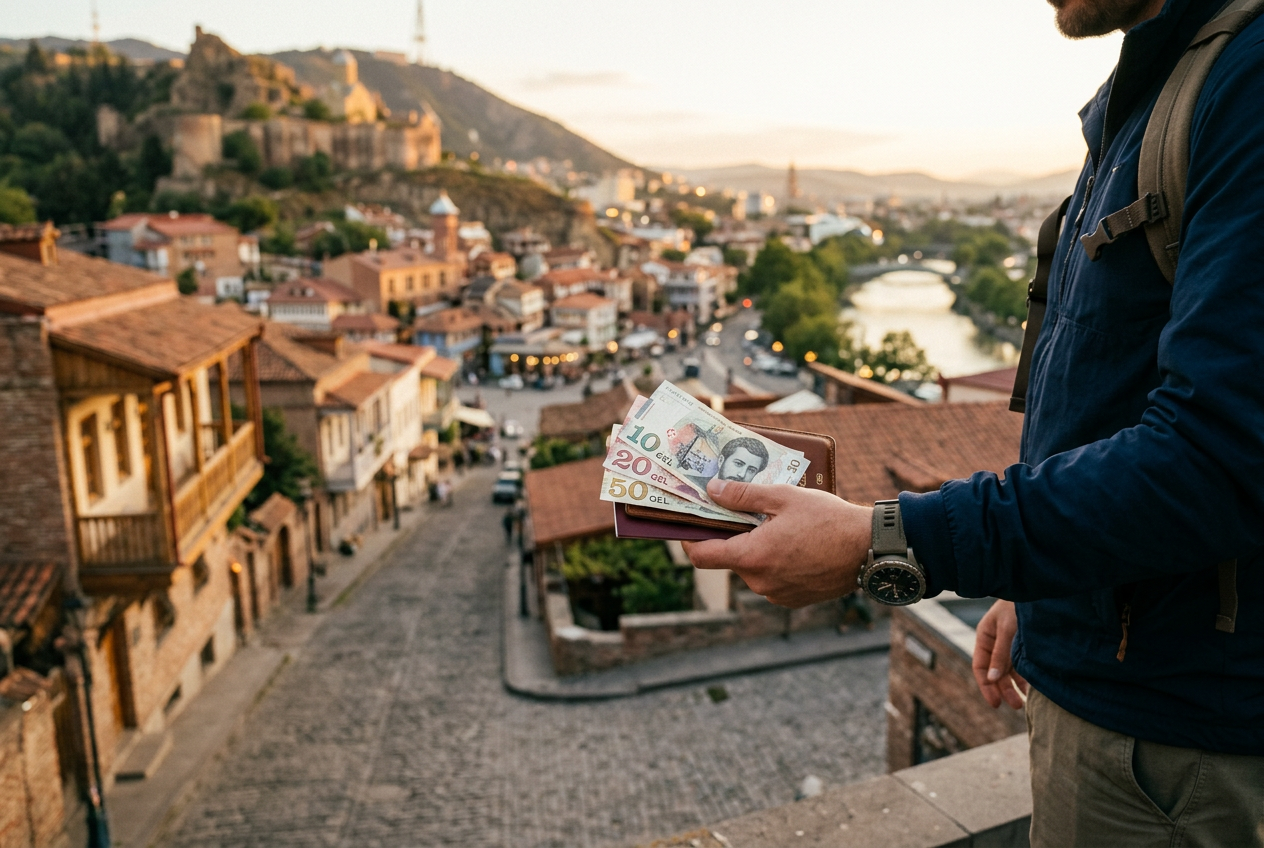
Georgia sits at the crossroads of Europe and Asia, and its payment infrastructure reflects that unique position. One moment you're tapping your phone at a sleek Tbilisi wine bar; the next, you're fumbling for crumpled lari notes to pay a shepherd for homemade cheese in Tusheti. The question of whether you need cash for Georgia doesn't have a simple yes or no answer. It depends entirely on how you travel.
Here's what I've learned after countless trips through this country: Georgia's cities have modernized rapidly, but the soul of the nation lives in its villages, monasteries, and mountain communities where cash remains king. The lari, Georgia's currency since 1995, trades at roughly 2.7 to the US dollar, and understanding when you'll need physical notes versus when you can rely on cards will fundamentally shape your travel experience.
The shift toward digital payments is real. POS terminals reached 130,000 as of May 2025, representing a 6.5% annual increase. Yet this growth concentrates heavily in urban centers. Venture beyond Tbilisi's Ring Road, and you'll quickly discover that Georgia operates on two parallel economies: one digital, one decidedly analog.
The Role of the Georgian Lari in Daily Transactions
The Georgian lari, abbreviated GEL, functions as more than currency. It's your key to unlocking experiences that cards simply cannot access. Street vendors selling churchkhela, the grape-must candy that hangs in colorful strings from market stalls, don't carry card readers. Neither do the grandmothers selling fresh matsoni from their doorsteps or the drivers of ancient Soviet-era vehicles navigating mountain passes.
Understanding the lari's denominations helps. Notes come in 5, 10, 20, 50, 100, and 200 lari, while coins cover smaller amounts. For daily transactions, keeping a stack of 5s and 10s proves far more useful than larger bills. Many small vendors struggle to break a 100-lari note, and asking them to do so can feel inconsiderate.
Card Acceptance in Tbilisi and Major Cities
Tbilisi has embraced cashless payments with surprising enthusiasm. Most restaurants along Rustaveli Avenue accept cards. Wine bars in the Sololaki district offer contactless terminals. Supermarket chains like Carrefour and Nikora process cards without issue. The tourist-heavy areas of Batumi, Kutaisi, and Mtskheta follow similar patterns.
Hotels saw a 40% increase in cashless spending in December 2025 compared to the previous year, with 86% of that spending coming from international travelers. This statistic reveals something important: Georgia's hospitality sector actively caters to card-carrying tourists. Chain hotels, upscale restaurants, and tour operators have adapted their infrastructure accordingly.
| Location Type | Card Acceptance | Cash Recommended |
|---|---|---|
| Tbilisi restaurants | High | Backup only |
| Batumi hotels | High | Backup only |
| Supermarket chains | High | Not essential |
| Local cafes | Medium | Yes |
| Markets | Low | Essential |
| Rural areas | Very low | Essential |
The pattern is clear: the more tourist-oriented and urban the establishment, the more likely you'll find a card reader. But even in Tbilisi, the moment you step into a basement wine cellar run by a third-generation winemaker or a family-owned khinkali joint in Avlabari, cash becomes your friend.
Why Cash is Essential for Rural Regions and Markets
Rural Georgia operates on relationships and trust, not payment terminals. When you visit a village in Kakheti and a family invites you to taste their qvevri wine, you're participating in an ancient tradition of hospitality. They might refuse payment entirely, but if they accept, it will be in lari.
The Dezerter Bazaar in Tbilisi, despite its central location, remains predominantly cash-based. Vendors selling spices, dried fruits, and fresh produce prefer the tangible exchange of notes. The same applies to the fabric sellers at Eliava Market and the antique dealers scattered throughout the city's flea markets.
Mountain regions like Svaneti, Tusheti, and Racha present even starker realities. Guesthouses in Mestia might accept cards, but the moment you trek to Ushguli, cash becomes non-negotiable. These communities exist somewhat outside the formal banking system, and expecting otherwise misses the point of visiting them.
Essential Situations Requiring Physical Cash
Certain scenarios in Georgia simply don't function without physical currency. Knowing these situations in advance prevents the awkward moment of standing at a bus station, bags packed, with nothing but a useless piece of plastic in your wallet.
Transportation: Marshrutkas and Taxis
Marshrutkas, the minibuses connecting virtually every corner of Georgia, operate exclusively on cash. You pay the driver directly, usually at the end of your journey, and exact change is appreciated though not required. Routes from Tbilisi's Didube station to destinations across the country cost between 5 and 30 lari depending on distance.
City taxis present a mixed picture. Bolt and Yandex Go have transformed urban transportation, allowing card payments through their apps. However, hailing a taxi on the street means negotiating a cash fare. Many drivers prefer cash even when accepting app-based rides, and tipping in cash remains standard practice.
The metro in Tbilisi uses rechargeable Metromoney cards, which you purchase and load with cash at station kiosks. While some stations now accept contactless bank cards at turnstiles, the system remains inconsistent. Keeping a loaded metro card saves hassle.
Guesthouses and Small Family-Run Businesses
The distinction between hotels and guesthouses matters enormously for payment planning. A guesthouse in Georgia typically means a family has converted part of their home to host travelers. These aren't businesses with merchant accounts and POS terminals. They're families sharing their space, their food, and their hospitality.
Payment happens in cash, often at the end of your stay. Rates range from 30 to 80 lari per person including meals, representing extraordinary value. The grandmother cooking your breakfast hasn't registered for digital payments, and frankly, the transaction feels more authentic when you press lari notes into her hands while thanking her in broken Georgian.
Even some mid-range hotels in smaller cities operate cash-only or charge significant fees for card payments. Always confirm payment methods when booking accommodation outside major tourist centers.
Entrance Fees for Remote Religious and Historic Sites
Georgia's ancient monasteries and churches dot the landscape, many perched on hilltops or tucked into valleys far from banking infrastructure. While major sites like Svetitskhoveli Cathedral in Mtskheta don't charge entrance fees, many remote locations request small donations or charge nominal entry fees.
The cave monasteries of David Gareja, the fortress churches of Svaneti, and countless roadside chapels operate entirely on cash contributions. Amounts are modest, typically 3 to 10 lari, but having small bills available shows respect for these sacred spaces and the communities maintaining them.
Museum entrance fees outside Tbilisi also frequently require cash. The Svaneti Museum of History and Ethnography in Mestia, despite its excellent collection, operates primarily on cash transactions.
Managing Money: ATMs and Currency Exchange
Transaction data reveals an interesting split: while 90.71% of card transactions were payments in early 2025, cash withdrawals still represented 53.57% of total transaction volume. Georgians and visitors alike still rely heavily on ATMs for physical currency.
Finding Reliable ATMs and Avoiding High Fees
ATMs cluster in urban areas, with Bank of Georgia and TBC Bank operating the largest networks. Both banks have machines in Tbilisi's airport, major shopping centers, and throughout city centers. Smaller towns typically have at least one ATM, often near the central square or main supermarket.
Withdrawal fees vary significantly. Georgian banks generally don't charge fees for foreign card withdrawals, but your home bank likely will. Cards from Revolut, Wise, or Charles Schwab offer fee-free international withdrawals and deserve consideration for extended travel.
Daily withdrawal limits typically cap at 1,000 to 2,000 lari per transaction. Planning larger cash needs requires multiple withdrawals or visiting a bank branch directly. ATMs occasionally run empty in remote areas, particularly after weekends or holidays, so withdrawing before heading to rural regions proves wise.
Exchanging Foreign Currency: USD and EUR vs. Others
Exchange offices, locally called "currency exchange" or displaying rates in their windows, appear throughout Georgian cities. Competition keeps rates reasonable, though airport exchanges predictably offer worse deals than city-center alternatives.
US dollars and euros exchange easily at favorable rates. British pounds, Swiss francs, and Russian rubles also convert without issue. However, lesser-traded currencies face steeper spreads or outright rejection. Australian and Canadian dollars, for instance, require seeking out larger exchange offices.
Bring clean, undamaged bills. Georgian exchange offices scrutinize foreign currency carefully, rejecting notes with tears, excessive wear, or markings. Newer US hundred-dollar bills exchange most efficiently for larger amounts.
| Currency | Exchange Ease | Typical Availability |
|---|---|---|
| USD | Excellent | Everywhere |
| EUR | Excellent | Everywhere |
| GBP | Good | Major cities |
| RUB | Good | Most exchanges |
| CAD/AUD | Limited | Select offices |
Digital Payment Alternatives and Tipping Culture
Georgia's digital payment infrastructure continues expanding, offering alternatives to constant cash management for travelers willing to adapt.
Using Contactless Payments and Mobile Apps
Apple Pay and Google Pay work at most terminals accepting contactless cards. The technology functions identically to Western countries, with the caveat that acceptance depends on the merchant's equipment. Newer terminals in chain stores and restaurants support contactless; older machines in smaller establishments may not.
Bolt dominates ride-hailing in Georgia, functioning seamlessly with international cards. The app also offers food delivery in Tbilisi, providing another cashless option. Glovo operates similarly for restaurant deliveries and grocery orders.
Bank of Georgia's mobile app allows tourists to open accounts remotely, though the process requires patience and documentation. For stays exceeding several weeks, a local account simplifies transactions and eliminates foreign exchange fees on everyday purchases.
Standard Tipping Practices in Restaurants and Bars
Tipping culture in Georgia remains more relaxed than in North America but has evolved with increased tourism. Service charges rarely appear on bills, leaving gratuity decisions to diners.
In restaurants, 10% represents a generous tip; 5% acknowledges satisfactory service. Rounding up the bill works for casual meals. Cash tips go directly to servers, while card tips may or may not reach them depending on the establishment's policies. When service has been exceptional, handing cash to your server ensures they receive it.
Bars follow similar conventions. Tipping isn't expected for simple drink orders but becomes appropriate when bartenders prepare elaborate cocktails or provide attentive service throughout an evening.
Tour guides and drivers appreciate cash tips reflecting the quality and duration of their service. For full-day tours, 20 to 50 lari per person represents appropriate appreciation.
Practical Tips for Your Daily Travel Budget
Planning your daily cash needs prevents both shortages and the security risk of carrying excessive amounts. For budget travelers staying in guesthouses and eating local food, 80 to 120 lari daily covers most expenses beyond accommodation. Mid-range travelers dining at restaurants and taking occasional taxis should budget 150 to 250 lari.
Withdraw cash in Tbilisi before heading to regions with limited ATM access. Carrying three to four days' worth of expenses makes sense when traveling to Svaneti, Tusheti, or other remote areas. Georgia maintains nearly $16.5 billion in reserves, ensuring currency stability, but ATM availability remains the practical concern.
Keep lari in multiple locations: some in your wallet, some in your daypack, some secured in your accommodation. This redundancy protects against loss or theft while ensuring you're never caught completely without funds.
The answer to whether you need cash for Georgia is unambiguously yes. Not exclusively, and not in amounts that burden your travels, but consistently and strategically. The country rewards travelers who understand its dual economy, moving fluidly between card payments in modern establishments and cash transactions in the places where Georgia's true character reveals itself.