
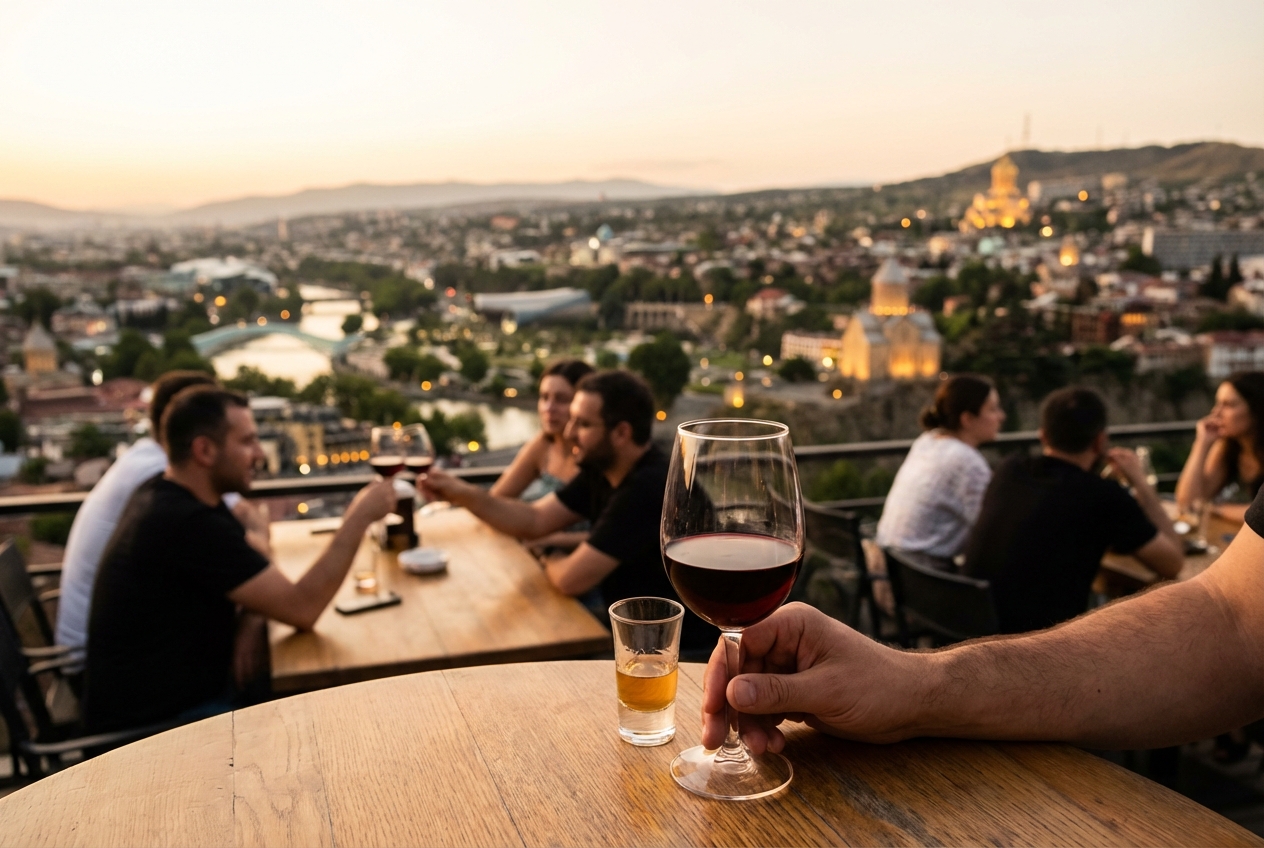
Georgia sits at the crossroads of Europe and Asia, and its capital has been welcoming travelers with open arms and full glasses for millennia. If you're wondering whether you can drink alcohol in Tbilisi, the short answer is an emphatic yes. The longer answer involves one of the world's oldest wine cultures, a nightlife scene that rivals Berlin, and hospitality traditions that practically mandate raising a glass with strangers.
This isn't a country where alcohol exists on the margins. Wine flows through Georgian identity like the Mtkvari River flows through Tbilisi itself. The country claims 8,000 years of continuous winemaking history, and that heritage shapes everything from religious ceremonies to casual Tuesday dinners. You'll find wine bars tucked into ancient cellars, craft beer gardens spilling onto cobblestone streets, and techno clubs that don't close until the sun comes up.
But freedom comes with responsibility, and Georgia takes certain alcohol-related regulations seriously. Understanding the local rules, customs, and unwritten expectations will help you enjoy Tbilisi's drinking culture without stumbling into awkward situations or legal trouble. What follows covers everything from the practical legalities to the cultural context that makes drinking in Tbilisi such a distinctive experience.
Legal Drinking Age and Local Regulations
Minimum Age Requirements for Purchase and Consumption
Georgia sets its legal drinking age at 18, aligning with most European countries. This applies to purchasing alcohol from shops, ordering drinks at bars and restaurants, and consuming alcohol in any public establishment. Enforcement varies depending on the venue. Upscale wine bars and international hotels check identification consistently, while smaller neighborhood shops might be more relaxed.
Carry your passport or a clear photo of it when going out. Georgian establishments that do check ID want to see official documentation, not just a driver's license from another country. The penalties for underage drinking fall primarily on the establishment rather than the individual, which explains why popular tourist spots tend to be stricter about verification.
Open Container Laws and Public Drinking Etiquette
Here's where things get interesting. Georgia does have laws against public drinking, but enforcement is inconsistent and context-dependent. According to Reddit discussions from locals, the fine for drinking alcohol in public ranges from 50 to 150 GEL for the first offense. That's roughly $20 to $60 USD.
The practical reality is more nuanced. You'll see Georgians drinking in parks, on benches, and at outdoor gatherings without police intervention. The key factors are behavior and location. Quiet drinking with friends in a park rarely attracts attention. Stumbling drunk through tourist areas or causing disturbances will. Police generally exercise discretion, focusing on actual problems rather than technical violations. Still, as a visitor, keeping alcohol consumption to designated venues eliminates any potential hassle.
Strict Zero-Tolerance Policy for Drink-Driving
Georgia takes drunk driving extremely seriously, and this is one area where the relaxed attitude toward alcohol disappears completely. The country operates a zero-tolerance policy with a blood alcohol limit of 0.0% for drivers. Not 0.02%, not 0.05%. Zero.
First-time offenders face fines starting at 500 GEL, license suspension, and potential vehicle impoundment. Repeat offenses or accidents involving alcohol carry criminal penalties including imprisonment. Taxis are cheap and widely available through apps like Bolt and Yandex. Use them. The Georgian police conduct random checkpoints, particularly on weekend nights and around holidays. No amount of alcohol is worth the consequences.
The Cultural Significance of Wine in Tbilisi
Understanding the Supra and the Role of the Tamada
A supra is a traditional Georgian feast, and if you spend any meaningful time in Tbilisi, you'll likely experience one. These aren't casual dinner parties. They're structured social rituals with specific roles, customs, and an almost ceremonial approach to drinking.
The tamada serves as toastmaster, guiding the evening through a series of increasingly elaborate toasts. These cover predictable ground like family, friendship, and Georgia itself, but also dive into philosophy, history, and personal stories. Each toast requires drinking, traditionally by draining your glass completely. As In Your Pocket notes, "Wine is very important to Georgian culture and hospitality. It is often associated with cultural and religious traditions."
Refusing to drink at a supra is considered rude, though sipping rather than draining your glass is acceptable for foreigners. The pace can be intense. A proper supra might involve 20 or more toasts over several hours. Pace yourself, eat the abundant food provided, and don't try to match your Georgian hosts drink for drink.
Qvevri Wine: Georgia's Ancient Winemaking Tradition
Georgia doesn't just make wine. It invented it. Archaeological evidence suggests winemaking here dates back 8,000 years, and traditional methods persist today. The qvevri is a large clay vessel buried underground where grapes ferment and age. UNESCO recognized this winemaking method as Intangible Cultural Heritage in 2013.
Qvevri wines taste different from what most Western drinkers expect. Extended skin contact produces amber-colored whites with tannic structure and complex flavors. These "orange wines" have gained international recognition, but they remain most authentic in their homeland. Tbilisi offers countless opportunities to taste qvevri wines, from high-end restaurants to family-run wine cellars where the owner pours directly from vessels his grandfather buried.
The dominant grape varieties include Saperavi for reds and Rkatsiteli for whites, though Georgia cultivates over 500 indigenous grape varieties. Many exist nowhere else on earth.
Where to Experience Tbilisi's Nightlife and Bar Scene
Wine Bars and Tasting Rooms in Old Tbilisi
The historic district around Shardeni Street and the surrounding lanes contains the highest concentration of wine bars. Vino Underground pioneered the natural wine movement here and remains essential. G.Vino offers an extensive selection with knowledgeable staff who can guide newcomers through Georgia's grape varieties. Ghvinis Ubani operates as both wine shop and tasting room, allowing you to buy bottles at retail prices and drink them on-site for a small corkage fee.
For a more immersive experience, visit the Wine Factory on the city's outskirts. This former Soviet facility now houses multiple tasting rooms, restaurants, and a wine museum. It's touristy but genuinely informative, particularly for understanding how Georgian winemaking survived and evolved through the Soviet period.
Prices at wine bars vary dramatically. A glass of house wine might cost 8-15 GEL ($3-6), while premium qvevri wines reach 40-50 GEL per glass. Full bottles start around 30 GEL for quality options.
Craft Beer Gardens and Underground Pubs
Georgia's beer culture has exploded recently. According to Caliber.az, beer consumption in Georgia reached a historic peak in 2024, with 138 million liters consumed. The average Georgian over 15 now drinks 46 liters of beer annually, up from 36 liters in 2020.
| Year | Per Capita Beer Consumption (15+) | Total Consumption |
|---|---|---|
| 2020 | 36 liters | ~105 million liters |
| 2024 | 46 liters | 138 million liters |
Imported beer's share has doubled from 6% to 13% over five years, reflecting growing sophistication in local tastes. Craft breweries have emerged to meet this demand. Black Dog Bar serves excellent IPAs in a basement setting. Lolita offers Georgian craft beers alongside international selections. Dive Bar lives up to its name with cheap drinks and a grungy atmosphere popular with expats and locals alike.
World-Class Techno Clubs and Electronic Music Venues
Tbilisi's electronic music scene has earned international recognition, with clubs that rival anything in Berlin or Amsterdam. Bassiani, located in a swimming pool beneath a Soviet-era sports complex, regularly appears on lists of the world's best techno clubs. The venue operates from Friday night through Sunday morning, with sets from internationally renowned DJs.
Khidi occupies a former Soviet-era building on the riverbank, featuring multiple rooms and an industrial aesthetic. Mtkvarze floats on the river itself, offering a unique setting for electronic music events. These venues take their door policies seriously. Dress casually, arrive after 1 AM, and don't be surprised if you wait in line.
Cover charges range from free to 50 GEL depending on the night and lineup. Drinks inside are reasonably priced compared to Western European clubs.
Essential Spirits: Beyond the Vineyard
Chacha: Navigating the Potent Georgian Grappa
Chacha is Georgia's answer to Italian grappa or French marc. This grape pomace brandy ranges from 40% to 65% alcohol by volume, and homemade versions can climb even higher. The name translates roughly to "grape residue," which sounds unappetizing but produces a spirit central to Georgian drinking culture.
Commercial chacha from brands like Askaneli or Sarajishvili offers consistency and quality control. Homemade chacha, offered by hosts throughout the country, varies wildly. Some is excellent. Some will make you question your life choices the next morning. The polite approach is accepting a small glass, sipping appreciatively, and not feeling obligated to finish if the quality is questionable.
Chacha traditionally appears at the end of meals or during toasts requiring something stronger than wine. It's meant to be sipped, not shot, despite what enthusiastic hosts might demonstrate.
Georgian Brandy and Local Liqueurs
Georgian brandy production dates to the 19th century, with the Sarajishvili distillery founded in 1884. These cognac-style spirits age in oak barrels and offer smoother alternatives to chacha. Sarajishvili VS or VSOP provides accessible entry points, while the XO expressions compete with French cognacs at fraction of the price.
Local liqueurs include tarragon-based drinks and various fruit brandies. These appear less frequently in bars but remain popular for home consumption and gifts. The airport duty-free shops stock extensive selections for travelers wanting to bring Georgian spirits home.
Buying Alcohol: Retailers and Operating Hours
Alcohol is available throughout Tbilisi with minimal restrictions. Supermarket chains like Carrefour, Goodwill, and Smart carry extensive wine, beer, and spirits selections. Small convenience stores stock basics around the clock. Dedicated wine shops offer curated selections with knowledgeable staff.
There are no restrictions on days of sale. Unlike many countries, Georgia doesn't prohibit alcohol sales on Sundays or holidays. Hours vary by establishment, but finding alcohol at any time of day or night presents no challenge.
Prices at retail are remarkably low by Western standards. Decent Georgian wine starts around 10-15 GEL ($4-6) per bottle. Excellent wines rarely exceed 50 GEL. Beer costs 2-4 GEL for domestic brands, with imports slightly higher.
One regulatory note: Just Advisors reports that selling draught wine and grape-based alcoholic beverages without a certificate may result in a fine of 1000 GEL. This affects vendors rather than consumers, but explains why reputable establishments display certification.
Safety Tips and Social Norms for Travelers
Drinking in Tbilisi is generally safe, but common sense applies. Stick to established venues rather than accepting invitations to unfamiliar locations from strangers. Keep your belongings secure in crowded bars and clubs. Arrange transportation before you need it, whether through ride-sharing apps or by noting taxi numbers.
Georgian hospitality can be overwhelming. Hosts genuinely want guests to enjoy themselves, which sometimes means persistent offers of more food and drink. Polite refusal is acceptable. Saying you need to pace yourself or citing an early morning works better than flat rejection.
The local drinking pace tends toward steady consumption over hours rather than rapid intoxication. Following this pattern helps you enjoy the experience without embarrassing yourself or your hosts. Eating throughout any drinking session is expected and wise.
Water quality in Tbilisi is generally good, but staying hydrated between alcoholic drinks remains important, particularly in summer heat. Most restaurants provide complimentary water, and bottled water is cheap everywhere.
Tbilisi welcomes visitors who want to participate in its drinking culture. The city offers everything from ancient wine traditions to cutting-edge nightlife, all accessible and affordable. Respect the customs, know the limits, and you'll find few places on earth more enjoyable for raising a glass.