
Table of Contents
- The Premium Real Estate Landscape in Tbilisi
- Vake: The Prestigious Heart of the Capital
- Comparing Top Districts by Price and Value
- Mtatsminda and Old Tbilisi: Historic Value vs. Modern Luxury
- Emerging High-End Neighborhoods: Vera and Saburtalo
- Factors Driving Real Estate Costs in Tbilisi
- Where Your Money Goes Furthest
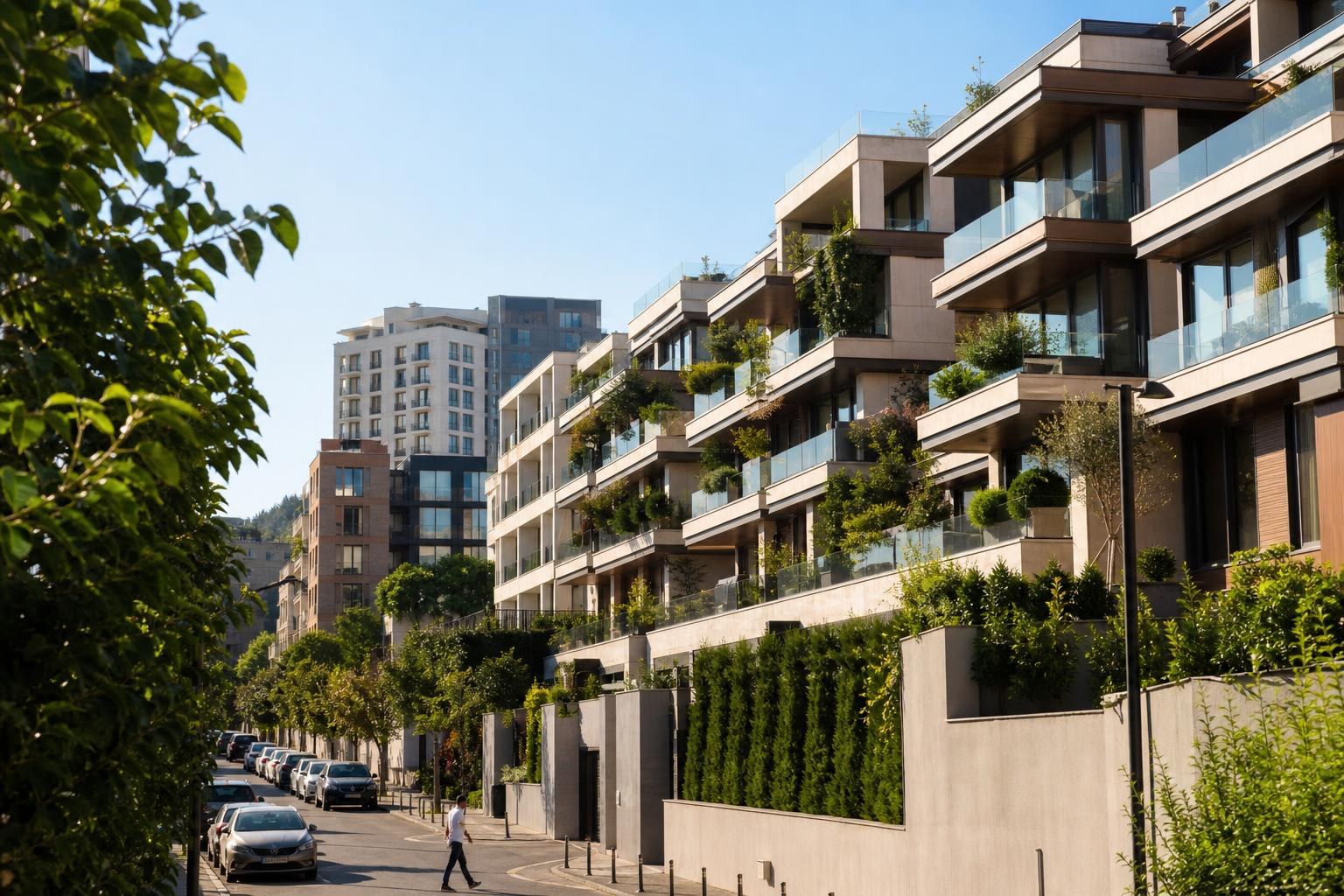
Tbilisi’s real estate market has been on a tear over the past few years, drawing investors from across Europe, the Middle East, and Central Asia. The Georgian capital offers a striking mix of crumbling 19th-century balconied houses, Soviet-era apartment blocks, and sleek new glass towers, sometimes all on the same street. But if you’re wondering what the most expensive area in Tbilisi is, the answer depends on whether you’re chasing prestige, historic charm, or modern convenience. I’ve spent considerable time walking these neighborhoods, talking to agents, and watching construction cranes reshape the skyline, and the pricing differences between districts can be genuinely surprising. Some areas command prices that rival mid-tier European capitals, while others just a few kilometers away remain remarkably affordable. This guide breaks down the premium neighborhoods, what drives their prices, and where the smart money is heading in 2026.
The Premium Real Estate Landscape in Tbilisi
Tbilisi’s property market has undergone a dramatic transformation since 2020. A combination of remote workers relocating from Russia and Belarus, growing tourism infrastructure, and Georgia’s favorable tax regime for foreign buyers has pushed prices upward across the board. But the gains haven’t been evenly distributed.
The city’s geography plays a huge role in price stratification. Tbilisi sits in a valley along the Mtkvari River, and the most desirable neighborhoods tend to occupy the hillsides with panoramic views or the central flatlands with walkable access to restaurants, parks, and cultural venues. Districts like Mtatsminda, Vake, and parts of Old Tbilisi consistently top the price charts, while outer neighborhoods like Gldani and Samgori remain affordable for local buyers.
What makes Tbilisi unusual compared to other capital cities is how compressed the geography is. You can walk from a $3,000-per-square-meter luxury development in Mtatsminda to a $900-per-square-meter apartment in Chugureti in about 20 minutes. That proximity creates interesting dynamics: buyers in the premium districts are paying not just for square footage, but for altitude, views, air quality, and a certain social cachet that has deep roots in Georgian culture.
Foreign investment has been a major catalyst. The Georgian government doesn’t restrict property purchases by non-citizens, and there’s no annual property tax burden comparable to Western Europe. These factors, combined with Tbilisi’s growing reputation as a tech and digital nomad hub, have kept demand strong in the upper segments even as the broader Georgian real estate market adjusts to new economic realities.
Vake: The Prestigious Heart of the Capital
Ask any Tbilisi resident which neighborhood carries the most prestige, and Vake will almost certainly come up first. This leafy, well-planned district on the city’s western side has been the address of choice for Georgia’s political elite, successful business owners, and foreign diplomats for decades. The name itself has become shorthand for a certain lifestyle: tree-lined streets, European-style cafes, international schools, and a sense of order that contrasts with the beautiful chaos of the Old Town.
Vake’s appeal isn’t just about status. The district genuinely offers some of the best urban living conditions in the Caucasus. Vake Park, one of the largest green spaces in Tbilisi, anchors the neighborhood and provides a daily escape from city noise. The infrastructure here is noticeably better than in older parts of the city: roads are wider, buildings are newer, and utilities are more reliable.
Prices in Vake for new construction typically range from $1,800 to $2,800 per square meter, depending on the specific street and building quality. Premium developments near the park or along the main avenues can push higher. A well-appointed two-bedroom apartment in a modern Vake building will run you $150,000 to $250,000, which sounds modest by London or Paris standards but represents the top tier of the Tbilisi market.
Luxury Developments and Infrastructure
Several high-end residential projects have reshaped Vake’s skyline over the past three years. Developments like Vake Residence have earned international recognition for their design and amenities, bringing concierge services, underground parking, and rooftop terraces to a market that previously associated luxury with simple newness.
The district also benefits from strong transport links. The Vake metro station connects residents to the city center in minutes, and marshrutka routes blanket the area. International schools like the British-Georgian Academy and QSI International School are located nearby, which matters enormously for the expat families who make up a growing share of Vake’s residents.
Medical facilities, high-end grocery stores like Goodwill and Carrefour, and a concentration of restaurants serving everything from traditional Georgian cuisine to Japanese omakase all contribute to the neighborhood’s self-sufficiency. You can live in Vake without ever needing to cross into another district, and many residents do exactly that.
The Chavchavadze Avenue Premium
Chavchavadze Avenue is Vake’s main artery, and properties along this boulevard command a noticeable premium over side streets. The avenue is named after Ilia Chavchavadze, one of Georgia’s most revered literary figures, and it functions as both a commercial corridor and a residential address of distinction.
Apartments with balconies facing Chavchavadze regularly sell for 15 to 25 percent more than comparable units on quieter parallel streets. The trade-off is noise and traffic, but for many buyers, the prestige and convenience outweigh those drawbacks. Ground-floor commercial spaces along the avenue are among the most expensive retail rentals in the country.
The avenue also serves as a useful dividing line. Properties on the uphill (southern) side of Chavchavadze tend to be pricier, offering better views and slightly cleaner air. The northern side, closer to the river, is more accessible but sits at a lower elevation. This micro-geography of price differences within a single neighborhood is something that distinguishes Vake from competing elite districts like Saburtalo.
Comparing Top Districts by Price and Value
Raw price per square meter only tells part of the story. Some districts offer better rental yields, others have stronger appreciation potential, and a few combine both. Here’s how the top neighborhoods stack up in 2026.
Average Property Prices by Neighborhood
| District | Avg. New Build ($/m²) | Avg. Resale ($/m²) | Rental Yield (Annual) | Key Buyer Profile |
|---|---|---|---|---|
| Mtatsminda | $3,294 | $2,400 | 6-8% | Investors, boutique hotel operators |
| Vake | $2,200 | $1,700 | 5-7% | Diplomats, families, affluent locals |
| Old Tbilisi | $2,000 | $1,500 | 8-10% | Tourism investors, heritage buyers |
| Vera | $1,800 | $1,400 | 6-8% | Creatives, young professionals |
| Saburtalo | $1,500 | $1,100 | 5-6% | Families, university staff |
| Didube | $1,000 | $750 | 4-5% | Budget buyers, local families |
| Gldani | $800 | $550 | 3-4% | First-time buyers, local market |
The gap between Mtatsminda and outer districts like Gldani is striking: new builds in the most expensive area cost roughly four times what they do on the city’s periphery. But the rental yield story adds nuance. Old Tbilisi’s high tourism demand means short-term rental returns can outperform Vake despite lower purchase prices.
For long-term capital appreciation, Vake and Vera have shown the most consistent growth over the past five years. Mtatsminda’s prices are high but somewhat volatile, driven by a smaller number of luxury transactions that can skew averages. Saburtalo offers arguably the best value proposition for residents who want modern amenities without paying the Vake premium.
Mtatsminda and Old Tbilisi: Historic Value vs. Modern Luxury
Mtatsminda holds the crown as Tbilisi’s priciest district by average square meter cost. Perched on the hillside above the city center, this neighborhood offers the kind of views that make real estate agents use words like “panoramic” and “breathtaking” without exaggeration. The Mtatsminda funicular, Narikala Fortress, and the iconic TV tower all sit within or adjacent to this district, giving it a visual identity that no other Tbilisi neighborhood can match.
New construction in Mtatsminda has pushed average prices to approximately $3,294 per square meter, nearly triple the city-wide average. That figure reflects both the scarcity of buildable land on the hillside and the premium that buyers place on elevation and views. There simply isn’t much flat ground left in Mtatsminda, so every new project competes for limited space.
Old Tbilisi, which overlaps with parts of Mtatsminda and extends into the historic Kala district, presents a different value proposition. Here, the appeal is architectural heritage: carved wooden balconies, sulfur bath houses, narrow cobblestone lanes, and buildings that date back centuries. Prices are lower than Mtatsminda’s hilltop developments but still well above the city average.
Renovated Heritage Sites and Boutique Hotels
The most interesting investment trend in Old Tbilisi involves the conversion of historic buildings into boutique hotels and upscale guesthouses. A crumbling 19th-century house that might sell for $80,000 to $120,000 can, after a $100,000 renovation, generate $3,000 to $5,000 per month in short-term rental income during peak tourist season (May through October).
This math has attracted a wave of foreign investors, particularly from Israel, Turkey, and the Gulf states. The challenge is navigating Georgia’s heritage protection laws, which restrict modifications to historically significant facades. Interior renovations are generally permitted, but adding floors or altering the external appearance requires approvals that can take months.
The cultural district around Shardeni Street and Erekle II Square has become particularly expensive, with renovated commercial spaces renting for $30 to $50 per square meter monthly. These prices rival Chavchavadze Avenue in Vake and reflect the enormous foot traffic from tourists exploring the Old Town. For buyers willing to deal with the complexity of heritage properties, the investment potential in these historic Tbilisi districts remains strong.
Emerging High-End Neighborhoods: Vera and Saburtalo
Not every premium neighborhood in Tbilisi has decades of elite history behind it. Two districts have been climbing the price ladder rapidly, attracting buyers who find Vake too established or Mtatsminda too steep (both in price and in literal topography).
Vera’s Bohemian Luxury Appeal
Vera sits between Vake and the city center, occupying a sweet spot that combines walkability with character. The neighborhood has long been popular with artists, musicians, and writers, and that creative reputation has translated into real estate demand as the “cool factor” drives prices upward.
What makes Vera distinctive is its scale. The streets are narrower than Vake’s, the buildings are lower, and the neighborhood feels more intimate. Small galleries, independent coffee shops, and wine bars have proliferated along streets like Barnovi and Tabukashvili, creating a vibe that reminds some visitors of Lisbon’s Alfama or Berlin’s Prenzlauer Berg before it got expensive. Well, Vera is getting expensive too: new builds now average around $1,800 per square meter, up from $1,200 just three years ago.
The buyer profile here skews younger and more international than Vake. Digital nomads who initially rented in Vera have started purchasing apartments, betting that the neighborhood’s trajectory will continue upward. Rental demand is strong year-round, not just during tourist season, because Vera attracts long-term residents rather than short-stay visitors.
Saburtalo’s Premium Residential Complexes
Saburtalo is the largest district in Tbilisi by population, and calling it uniformly “premium” would be misleading. But specific pockets of Saburtalo, particularly around Vazha-Pshavela Avenue and the area near Tbilisi State University, have seen significant upmarket development.
Large-scale residential complexes with amenities like swimming pools, fitness centers, and 24-hour security have been sprouting along the district’s main corridors. These developments target a specific buyer: Georgian families with dual incomes who want modern living standards but can’t justify Vake’s prices. A three-bedroom apartment in a new Saburtalo complex might cost $120,000 to $180,000, compared to $200,000 or more for a similar unit in Vake.
The district also benefits from its concentration of universities and medical facilities. Tbilisi State University, the Technical University, and several major hospitals are all located here, creating steady rental demand from students, medical professionals, and visiting academics. For investors focused on reliable, year-round rental income rather than capital appreciation, Saburtalo offers one of the most compelling risk-reward profiles in the Tbilisi property market.
Factors Driving Real Estate Costs in Tbilisi
Understanding why certain Tbilisi neighborhoods cost what they do requires looking beyond the usual supply-and-demand explanation. Several factors specific to the Georgian capital shape the pricing map.
Geography and elevation matter enormously. Tbilisi’s valley location means that hillside properties with views command premiums of 30 to 50 percent over comparable flatland units. Air quality improves noticeably with altitude, and summer temperatures can be two to three degrees cooler on the hills, which matters in a city where July averages hit 31°C.
Foreign buyer demand has been a persistent price driver since 2022. Georgia’s open property ownership laws, lack of annual property taxes on residential units, and relatively simple purchase process (transactions can close in a single day at the Public Service Hall) make Tbilisi attractive to international investors. The influx of Russian and Belarusian relocators pushed prices sharply higher in 2022 and 2023, and while that wave has stabilized, many of those buyers became permanent residents who continue to influence the upper end of the market.
Infrastructure investment by the city government also plays a role. Districts that receive new metro stations, road improvements, or park renovations tend to see price bumps within 12 to 18 months. The planned expansion of Tbilisi’s metro system and ongoing improvements to the city’s water and sewage infrastructure are likely to benefit currently underserved districts.
Finally, there’s the cultural premium. Georgians place enormous value on neighborhood identity, and certain districts carry social weight that transcends their physical amenities. Living in Vake or Mtatsminda signals something about your family’s status and aspirations, and that intangible value gets priced into every transaction.
Where Your Money Goes Furthest
The question of Tbilisi’s most expensive area has a clear statistical answer: Mtatsminda, with new builds averaging $3,294 per square meter. But the more useful question is which premium neighborhood offers the best fit for your goals. Vake delivers prestige, infrastructure, and family-friendly living. Mtatsminda and Old Tbilisi offer views, history, and strong short-term rental potential. Vera provides creative energy and rapid appreciation. Saburtalo gives you modern amenities at a relative discount.
If you’re considering a purchase, spend at least a week walking these neighborhoods at different times of day. Talk to residents, not just agents. Eat at the local bakeries, ride the marshrutkas, and pay attention to construction activity: cranes on the skyline are the most honest indicator of where developers think demand is heading. Tbilisi’s real estate market rewards patience and local knowledge more than most, and the best deals still go to buyers who understand the city’s rhythms before they sign anything.