
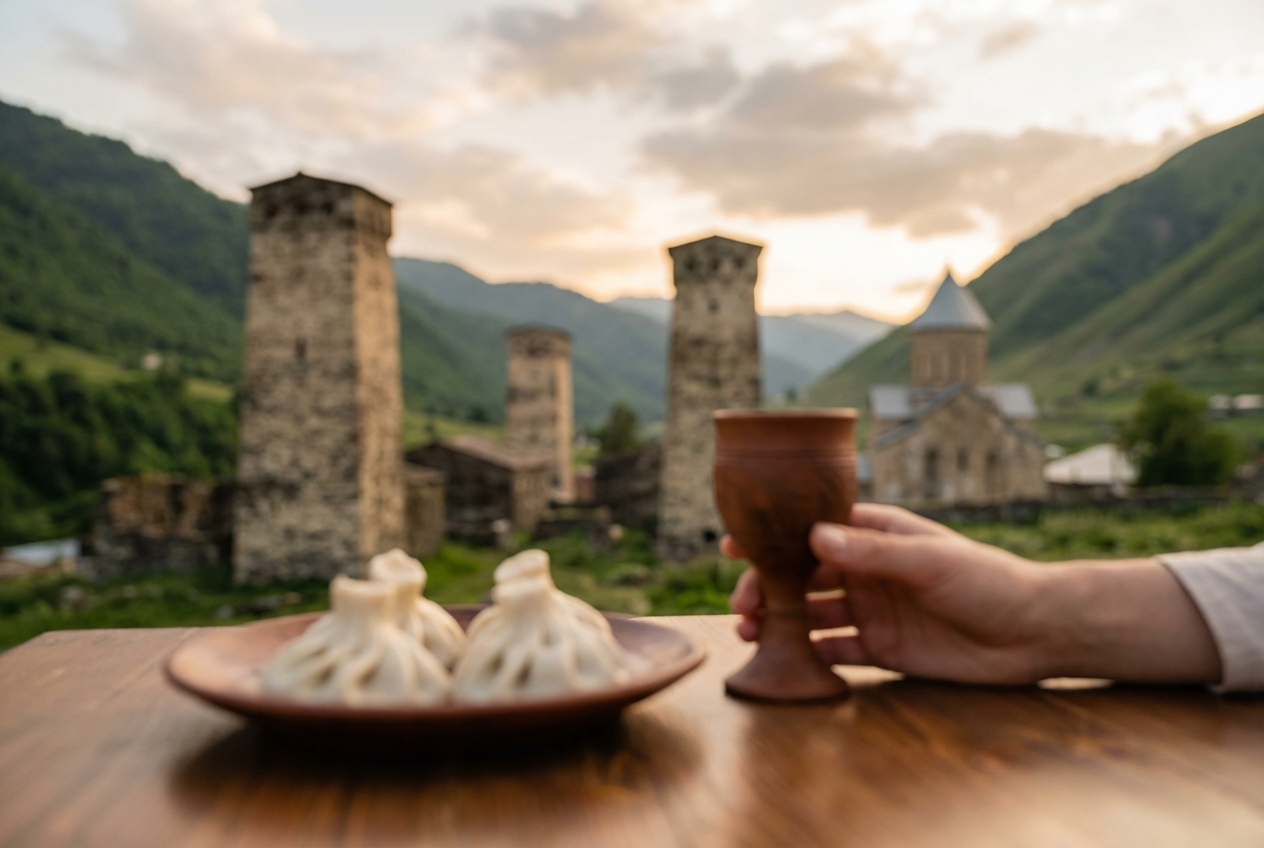
Georgia, the small Caucasus nation wedged between Europe and Asia, operates on unwritten rules that can make or break your travel experience. I've seen tourists unknowingly offend hosts, struggle through meals, and miss out on genuine connections simply because nobody told them how things work here. The country welcomed over 174 million visitors in 2024, generating $45.2 billion in tourism spending according to State.gov, yet most travelers arrive without understanding the cultural codes that govern daily life.
Georgians are fiercely proud of their traditions, many of which date back thousands of years. Their hospitality is legendary, but it comes with expectations. Their wine culture is ancient, but drinking it wrong will raise eyebrows. Their churches are stunning, but entering them incorrectly shows disrespect. Understanding the do's and don'ts in Georgia transforms you from a confused outsider into a welcomed guest. This isn't about rigid rules or walking on eggshells. It's about showing respect for a culture that will reward you with unforgettable experiences when you meet it halfway.
Essential Social Etiquette and the Supra Tradition
The supra, Georgia's traditional feast, represents the heart of Georgian social life. This isn't just dinner; it's a ritual that can last hours, involving dozens of toasts, endless food, and a structured hierarchy that visitors often find bewildering at first. As Wander-Lush.org notes, "Georgians are known for their warmth and generosity, often sharing food, wine, and stories with guests. Accept invitations to a 'supra,' a traditional Georgian feast."
Refusing a supra invitation without a valid reason is considered rude. If you're invited to someone's home, show up. If you're at a restaurant and a nearby table invites you to join their celebration, seriously consider saying yes. These spontaneous connections define the Georgian travel experience.
Mastering the Art of Georgian Toasts
The tamada, or toastmaster, runs the supra with absolute authority. Only the tamada initiates toasts, and these follow a specific order: to God, to Georgia, to the deceased, to family, to love, to friendship, and so on. You don't propose your own toast unless the tamada specifically invites you to do so.
When a toast is made, you're expected to drink. The traditional vessel is a kantsi, a horn that cannot be set down until emptied. However, you can take small sips rather than draining your glass each time, especially if you're drinking wine. The key is participation, not intoxication. If you truly cannot drink alcohol, explain this clearly at the beginning. Georgians will respect medical or religious reasons, though they may initially try to persuade you otherwise.
Never clink glasses during a toast to the deceased. Simply raise your glass, drink, and set it down. This catches many visitors off guard, but it's a sign of respect that Georgians take seriously.
The Unspoken Rules of Guest-Host Dynamics
Georgian hospitality follows a specific script. As a guest, you're expected to bring a small gift: wine, sweets, or flowers work well. Odd numbers of flowers only, as even numbers are reserved for funerals. Remove your shoes when entering a home unless explicitly told otherwise.
Your host will insist you eat more. Then more again. Then more after that. Politely refusing once or twice is expected, but eventually you should accept. Leaving food on your plate signals you've had enough, but cleaning your plate completely suggests you're still hungry, prompting more food. The sweet spot is leaving a small amount.
| Guest Behavior | Georgian Interpretation |
|---|---|
| Arriving empty-handed | Mildly rude |
| Refusing food repeatedly | Insulting to the host |
| Leaving immediately after eating | Suggests you only came for food |
| Praising the home excessively | May obligate host to gift you the item |
| Offering to help clean | Polite, but expect to be refused |
That last point deserves attention. If you admire something in a Georgian home too enthusiastically, your host may feel obligated to give it to you. Compliment sparingly and generally.
Navigating Religious Sites and Sacred Spaces
Georgia adopted Christianity in 337 AD, making it one of the world's oldest Christian nations. The Georgian Orthodox Church isn't just a religious institution; it's intertwined with national identity. Churches and monasteries dot the landscape, from Tbilisi's Holy Trinity Cathedral to remote mountain chapels in Svaneti. Treating these spaces with respect is non-negotiable.
Dress Codes for Orthodox Churches
Women must cover their heads and wear skirts or dresses that reach below the knee. Most churches provide headscarves and wrap-around skirts at the entrance, but bringing your own shows forethought. Shoulders should be covered for both genders. Men should wear long pants, and shorts are generally unacceptable.
Entering a church in revealing clothing isn't just frowned upon; you may be turned away entirely. This applies even to famous tourist sites like Svetitskhoveli Cathedral or Jvari Monastery. The dress code isn't optional, and locals will notice if you're dressed inappropriately.
Some churches maintain stricter standards. In certain monasteries, women cannot enter specific areas at all. Rather than viewing this as discrimination, understand it as centuries-old tradition that visitors are expected to respect, regardless of personal beliefs.
Photography and Silence in Holy Places
Photography rules vary by church. Some allow photos freely, others prohibit them entirely, and many permit photography without flash. When in doubt, ask. Look for signs near the entrance or observe what other visitors are doing.
Never photograph during active services. This should be obvious, but tourists regularly disrupt worship by snapping photos of priests mid-ceremony. If a service is underway, either participate quietly or wait outside until it concludes.
Maintain silence inside churches. Conversations should be whispered if absolutely necessary. Turn off phone ringers before entering. Avoid walking between worshippers and the altar or iconostasis. These aren't suggestions; they're basic expectations that Georgians apply to themselves and expect from visitors.
Dining Decorum and Culinary Traditions
Georgian cuisine ranks among the world's most underrated, featuring dishes like khachapuri, khinkali, mtsvadi, and countless regional specialties. The country claims to be the birthplace of wine, with archaeological evidence supporting winemaking traditions spanning 8,000 years. Eating and drinking here follows specific customs that enhance the experience when you understand them.
The Proper Way to Eat Khinkali
Khinkali, Georgia's famous soup dumplings, trip up nearly every first-time visitor. These twisted dumplings contain meat and broth, and eating them incorrectly wastes the best part while potentially burning or soaking yourself.
Here's the technique: hold the dumpling by its twisted top knob. Bite a small hole in the side, then sip out the hot broth. Only then do you eat the dumpling itself. The knotted top is traditionally left on your plate, serving as a count of how many you've eaten. Using a fork and knife is acceptable but marks you immediately as a tourist.
Never eat khinkali with a spoon or cut them open. The broth will spill everywhere, and Georgians will wince watching you. Practice makes perfect, and locals appreciate when visitors make the effort to eat properly.
Wine Culture: Sipping vs. Gulping
Georgian wine differs from European varieties. Much of it is amber wine, made using the qvevri method where grapes ferment in clay vessels buried underground. The taste is distinctive, often tannic and complex.
At a supra, wine is typically drunk in response to toasts rather than sipped casually throughout the meal. However, this doesn't mean you must drain your glass each time. Small sips are acceptable, especially early in the meal. Pacing yourself is wise; supras can involve 20 or more toasts.
Outside formal settings, wine drinking is more relaxed. Georgians enjoy wine with meals and as a social lubricant. Refusing wine entirely can be awkward, but citing health reasons or simply saying you've had enough usually works after the first few glasses.
Chacha, Georgia's grape brandy, is another matter. This potent spirit appears at celebrations and is often homemade. A small glass is polite; multiple glasses will test your limits. Know when to stop.
Communication and Sensitive Conversation Topics
Georgians are generally warm and eager to connect with foreigners. English proficiency is growing, especially among younger generations in Tbilisi, though Russian remains widely spoken among older Georgians. Certain topics require careful handling, while others provide excellent conversation starters.
Navigating Political Discussions and History
Georgia's relationship with Russia is complicated and painful. The 2008 war resulted in Russia occupying 20% of Georgian territory, including South Ossetia and Abkhazia. These regions remain sore subjects. Avoid suggesting that the occupied territories belong to Russia or that the situation is ambiguous. For Georgians, it isn't.
Recent political developments have also created divisions within Georgian society. If politics comes up, listen more than you speak. Expressing strong opinions about Georgian domestic politics as a foreigner can feel presumptuous, even if your views align with your conversation partner's.
Safe conversation topics include Georgian food, wine, history, and natural beauty. Georgians love discussing their culture and will happily spend hours explaining traditions, recommending restaurants, or debating which region produces the best wine. Family is also a welcome topic; Georgians are proud of their families and interested in yours.
Language Tips and Non-Verbal Cues
Learning a few Georgian phrases goes far. "Gamarjoba" (hello), "madloba" (thank you), and "gaumarjos" (cheers) will earn you smiles. The Georgian alphabet is unique and beautiful, though reading it requires dedicated study.
Georgians stand closer during conversation than many Westerners expect. This isn't aggression; it's normal social distance. Eye contact is valued and shows engagement. Nodding while someone speaks indicates you're listening.
Physical affection between friends is common. Men often hug and kiss cheeks in greeting. Women do the same. This warmth extends to new acquaintances quickly. Don't be surprised if someone you've just met treats you like an old friend.
Practical Safety and Transportation Norms
Georgia is remarkably safe for travelers. Violent crime against tourists is rare, and petty theft is less common than in many European destinations. However, practical knowledge about tipping, bargaining, and transportation will smooth your journey considerably. Note that Atlys.com mentions you must purchase mandatory health and accident insurance with a minimum coverage of 30,000 GEL to enter Georgia.
Tipping Standards and Bargaining in Markets
Tipping isn't traditionally expected in Georgia, but it's increasingly appreciated in tourist areas. A 10% tip at restaurants is generous; rounding up the bill is common and sufficient. Hotel staff and taxi drivers don't expect tips but won't refuse them.
| Service | Typical Tip |
|---|---|
| Restaurant | 10% or round up |
| Hotel porter | 2-5 GEL per bag |
| Taxi driver | Round up fare |
| Tour guide | 20-30 GEL for full day |
| Spa/salon | 10% |
Bargaining is acceptable at markets and with some taxi drivers, but not in shops with fixed prices. The Dry Bridge Market in Tbilisi expects negotiation; starting at 50-60% of the asking price is reasonable. Be friendly rather than aggressive. Smiling and walking away often brings the price down.
Road Safety and Using Marshrutkas
Georgian driving deserves its reputation. Traffic laws exist but are loosely enforced. Pedestrians should exercise extreme caution, even at crosswalks. According to Excursionmania.com, jaywalking in Georgia is a fineable offense, so use designated crossings.
Marshrutkas, the ubiquitous minibuses, are the cheapest way to travel between cities. They leave when full, not on a schedule. Payment goes to the driver upon boarding or exiting, depending on the route. Seats fill quickly, so arrive early for popular routes. Marshrutkas stop upon request; simply say "gacheret" (stop) when approaching your destination.
Taxis should use meters or have agreed-upon fares before departure. Apps like Bolt and Yandex provide transparent pricing and are widely used in Tbilisi. For longer journeys, negotiate a fixed price in advance.
Making the Most of Your Georgian Journey
Understanding Georgian customs transforms your visit from tourism into genuine cultural exchange. The do's and don'ts here aren't arbitrary rules but reflections of values Georgians hold dear: hospitality, respect for tradition, and warmth toward guests.
Accept invitations when offered. Dress appropriately for churches. Learn to eat khinkali properly. Participate in toasts without overdoing it. Show interest in the culture, and Georgians will open doors you didn't know existed.
With tourism revenues reaching $290 million in January 2025 alone, representing a 1.4% increase over the previous year according to State.gov, Georgia is clearly welcoming more visitors than ever. Be one of the good ones: the traveler who leaves a positive impression and carries home not just photos but genuine connections and understanding of this remarkable country.