
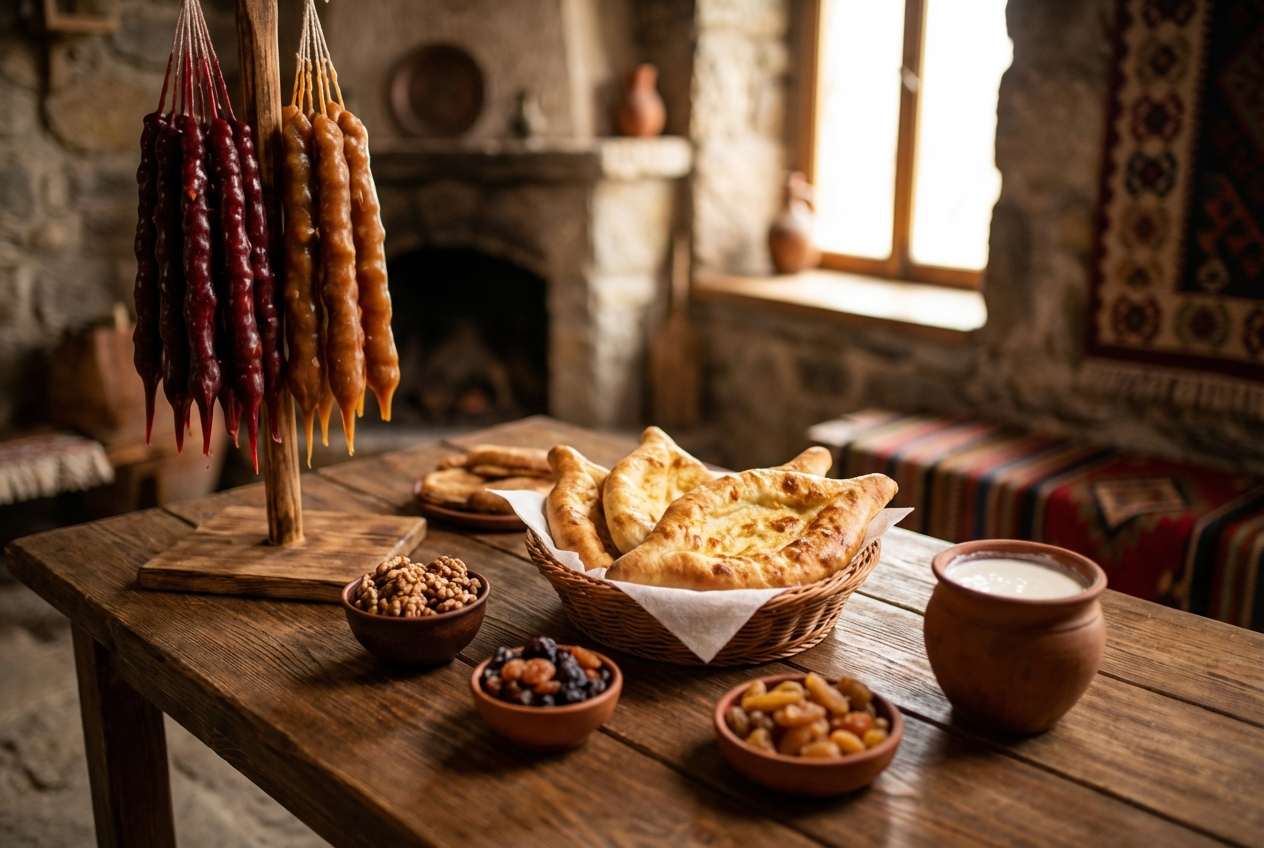
Georgia sits at the crossroads of Europe and Asia, and its snack culture reflects centuries of trade, tradition, and resourcefulness. When travelers ask about the traditional snacks of Georgia, they're often surprised to discover foods that double as cultural artifacts: preserved fruit leathers carried by warriors, honey-nut confections reserved for sacred holidays, and cheese-filled breads that fuel entire communities. These aren't grab-and-go convenience foods. They're edible history.
The country's snacking traditions developed from necessity. Mountain communities needed portable, nutritious foods that could survive long journeys and harsh winters. Grape harvests had to be preserved creatively. Nuts grew abundantly in the valleys. From these practical constraints emerged some of the most distinctive snacks you'll find anywhere in the world. The answer to what constitutes a traditional Georgian snack isn't singular: it's a collection of foods tied to specific regions, seasons, and celebrations.
What makes Georgian snacks remarkable is their staying power. Many of these recipes haven't changed significantly in centuries because they didn't need to. When something works, Georgian cooks keep making it the same way their grandmothers did.
The Iconic Churchkhela: Georgia's Nutty Candle
Walk through any Georgian market, and you'll spot them immediately: long, candle-shaped strands of nuts encased in a deep purple or amber coating, hanging from wooden beams. This is churchkhela, arguably the most recognizable Georgian snack and a food so culturally significant that it was recognized as part of Georgia's Intangible Cultural Heritage in 2015.
Churchkhela looks deceptively simple, but its creation requires patience and technique passed down through generations. The basic concept involves threading walnuts or hazelnuts onto a string, then repeatedly dipping them into thickened grape juice until a substantial coating forms. The result is chewy, sweet, and intensely nutty: a natural energy bar that predates modern nutrition science by millennia.
Each region produces slightly different versions. Kakheti, Georgia's premier wine region, makes churchkhela with the same grape varieties used in their famous wines. The color ranges from deep burgundy to golden amber depending on whether red or white grapes are used. Some families guard their recipes jealously, adjusting the flour ratios and dipping techniques to achieve specific textures.
The Making of Badagi: The Grape Must Base
The magic of churchkhela lies in badagi, the thickened grape must that forms its coating. After grapes are pressed for wine, the remaining juice (called tatara) gets slowly cooked down with flour until it reaches a pudding-like consistency. This process can take hours of constant stirring over low heat.
The flour ratio matters enormously. Too much, and the coating becomes dense and heavy. Too little, and it won't adhere properly to the nuts. Most traditional recipes call for wheat flour, though some regions use corn flour for a slightly different texture. The mixture must reach the right temperature and thickness before dipping begins, and experienced churchkhela makers can judge this by sight and feel alone.
Once the badagi is ready, the nut-threaded strings get dipped repeatedly, with drying time between each coat. A proper churchkhela might receive ten to fifteen dips over several days. The final product gets hung to dry for weeks, developing its characteristic chewy exterior while the nuts inside remain crunchy.
Walnuts vs. Hazelnuts: Regional Varieties
| Region | Primary Nut | Grape Variety | Flavor Profile |
|---|---|---|---|
| Kakheti | Walnut | Rkatsiteli, Saperavi | Deep, wine-like sweetness |
| Imereti | Hazelnut | Local white grapes | Lighter, nuttier taste |
| Racha | Walnut | Alexandrouli | Rich, slightly tannic |
| Guria | Mixed | Various | Sweet-tart balance |
Western Georgia tends toward hazelnuts, while eastern regions prefer walnuts. Some makers combine both for textural contrast. The grape varieties used also shift regionally, creating distinct flavor profiles that locals can identify immediately. A churchkhela from Kakheti tastes noticeably different from one made in Imereti, even when both use walnuts.
Historical Significance as a Warrior's Ration
Georgian warriors carried churchkhela into battle for practical reasons: it's calorie-dense, doesn't spoil quickly, and provides sustained energy. A single strand contains proteins from nuts, natural sugars from grape must, and complex carbohydrates from flour. It's essentially an ancient protein bar designed for survival.
Historical accounts describe soldiers packing churchkhela for long campaigns, relying on it when other food sources weren't available. The snack's durability made it ideal for mountain warfare, where supply lines were unreliable. This military heritage adds to churchkhela's cultural significance: it's not just food, it's a symbol of Georgian resilience.
Tklapi: The Fruit Leather of the Caucasus
Before modern preservation methods existed, Georgian cooks developed tklapi: thin sheets of dried fruit pulp that could last through winter and beyond. The process involves cooking fruit into a paste, spreading it thin on wooden boards, and drying it in the sun until it becomes pliable leather.
Tklapi serves dual purposes in Georgian cuisine. Eaten straight, it's a tangy, chewy snack with concentrated fruit flavor. Dissolved in water, it becomes the base for traditional soups and sauces, adding acidity and depth that fresh fruit can't replicate. This versatility made tklapi essential to Georgian kitchens for centuries.
The texture ranges from soft and pliable to crisp and brittle, depending on how long it's dried and how it's stored. Properly made tklapi can last for years without refrigeration, making it valuable for households that needed to stretch seasonal harvests across lean months.
Sweet vs. Sour Profiles: Plum, Apricot, and Berry
Plum tklapi dominates Georgian production, particularly the sour tkemali variety that gives the famous sauce its name. These sour plums create intensely tart leather that works brilliantly in cooking but might surprise snackers expecting sweetness. The sourness is the point: it provides flavor complexity that sugar alone can't achieve.
Apricot tklapi trends sweeter and makes a more approachable standalone snack. The fruit's natural sugars concentrate during drying, creating something closer to commercial fruit leather but with more nuanced flavor. Berry versions, including cornelian cherry and mulberry, occupy the middle ground between sweet and sour.
Some producers blend fruits for balanced flavor profiles. A combination of sweet apricots and sour plums creates tklapi that works both as a snack and a cooking ingredient. These blends often represent family recipes refined over generations.
Culinary Uses in Soups and Stews
Tklapi transforms Georgian soups in ways that might seem unusual to Western cooks. Chakapuli, a beloved lamb stew, often includes dissolved tklapi for acidity. The fruit leather melts into the cooking liquid, adding body and tartness that balances the meat's richness.
Kharcho, another classic Georgian soup, sometimes incorporates tklapi instead of fresh plums or tomatoes. The concentrated flavor means a small piece goes a long way. Home cooks keep tklapi on hand specifically for these culinary applications, treating it as a pantry staple rather than just a snack.
The practice reflects Georgian cooking's emphasis on sour flavors. Where Western cuisines might reach for vinegar or citrus, Georgian cooks often turn to preserved fruits. Tklapi provides that sourness with additional fruit complexity that acids alone can't deliver.
Savory Staples: Khachapuri and Pastries on the Go
Not all Georgian snacks are sweet. The country's cheese-filled breads represent some of the most satisfying portable foods you'll encounter anywhere. These aren't delicate pastries: they're substantial, filling, and designed to fuel people through long days of work.
Khachapuri has gained international recognition, but its role in Georgian daily life goes beyond restaurant menus. Street vendors sell it hot from ovens, workers grab it for lunch, and families make it at home for quick meals. The bread-to-cheese ratio varies by region, as does the shape, but the core concept remains constant: stretchy, salty cheese encased in fresh-baked dough.
Imeruli and Penovani: Portable Cheese Breads
Imeruli khachapuri, the most common variety, features a round, flat shape with cheese distributed throughout. The dough gets stretched thin, filled generously with imeruli cheese (or a blend including suluguni), then sealed and baked until golden. The result is portable, satisfying, and endlessly customizable.
Penovani takes a different approach, using puff pastry instead of bread dough. The layers create a flakier texture while the cheese filling stays gooey and rich. Penovani works particularly well as a street food since the layers hold together better than softer bread-based versions.
Both styles appear in bakeries and street stalls throughout Georgia. Prices stay low because these are everyday foods, not luxury items. A fresh khachapuri costs roughly the equivalent of a few dollars and provides enough calories to skip a full meal.
Lobiani: The Spiced Bean-Filled Snack
Lobiani swaps cheese for spiced kidney beans, creating a heartier, more savory snack. The beans get mashed with onions, coriander, and other spices before being encased in bread dough and baked. The result is filling, protein-rich, and vegetarian-friendly.
The spice profile distinguishes lobiani from blander bean preparations. Georgian cooks use blue fenugreek (utskho suneli) and other distinctive spices that give the filling an aromatic complexity. The beans should be creamy but not completely smooth, with enough texture to provide interest.
Lobiani appears most frequently during religious fasting periods when meat and dairy are avoided. It provides the same satisfaction as cheese-filled breads while adhering to fasting restrictions. This practical origin explains why lobiani remains popular even outside fasting seasons: it's genuinely delicious regardless of religious observance.
Roasted Nuts and Seeds in Georgian Street Culture
Georgian streets smell like roasting nuts, particularly in autumn when the harvest comes in. Vendors set up small roasting operations on sidewalks, selling warm hazelnuts, walnuts, and sunflower seeds by the bag. The simplicity belies the quality: fresh-roasted nuts taste dramatically different from packaged alternatives.
Hazelnuts dominate western Georgia, where they grow abundantly in the humid climate. The nuts get roasted in large pans over open flames, with vendors constantly stirring to ensure even browning. Buyers often request specific roast levels, from lightly toasted to deeply caramelized.
Sunflower seeds occupy a different cultural niche. Cracking and eating them becomes a social activity, something to do while chatting with friends or watching events. The seeds are sold both raw and roasted, salted and unsalted, in quantities ranging from small snack bags to kilogram sacks.
Pumpkin seeds appear seasonally, particularly after autumn harvests. These get roasted with salt and sometimes spices, creating a satisfying crunch. The Georgian approach to nut and seed snacking emphasizes freshness and simplicity: good ingredients prepared well, without excessive processing.
Gozinaki: The Festive Honey and Walnut Treat
Some Georgian snacks are reserved for special occasions, and gozinaki sits at the top of that list. This honey-walnut brittle appears primarily during winter holidays, where it holds deep cultural and religious significance. Gozinaki is an essential part of New Year and Christmas celebrations in Georgia, especially in the Guria region, where families prepare it according to recipes passed down through generations.
The preparation involves cooking honey until it reaches the hard-crack stage, then folding in toasted walnuts and spreading the mixture to cool. The result shatters when bitten, releasing intense honey sweetness balanced by the walnuts' earthiness. Some recipes add a touch of sugar to help the honey reach proper consistency, but purists insist on honey alone.
Gozinaki's holiday association makes it emotionally significant beyond its taste. Families gather to make it together, with experienced cooks teaching younger generations the precise techniques required. The timing matters: gozinaki made too early won't be fresh for the holidays, while waiting too long risks missing the celebration entirely.
The Guria region's version often includes additional ingredients like dried fruits or different nut combinations. Regional variations reflect local ingredients and family preferences, but the core concept remains consistent: honey, nuts, and celebration.
Where to Find and How to Store Traditional Georgian Snacks
Finding authentic Georgian snacks depends on your location. Within Georgia, markets in Tbilisi, Kutaisi, and smaller towns offer the widest selection. The Deserter's Bazaar in Tbilisi remains a reliable source for churchkhela, tklapi, and other traditional foods. Vendors there often make their products themselves or source from family operations in the countryside.
Outside Georgia, specialty food stores in cities with Georgian immigrant communities stock some items. Online retailers ship churchkhela and tklapi internationally, though quality varies. The best approach involves researching sellers and reading reviews from other Georgian food enthusiasts.
Storage requirements differ by product:
- Churchkhela: Store at room temperature in a dry place. Properly made churchkhela lasts months without refrigeration. Avoid plastic bags, which trap moisture.
- Tklapi: Keep dry and away from direct sunlight. Lasts years if stored properly. Can be refrigerated but doesn't require it.
- Gozinaki: Store in airtight containers at room temperature. Humidity causes stickiness, so dry environments work best.
- Khachapuri and lobiani: Best eaten fresh. Can be refrigerated briefly and reheated, but quality declines.
When buying churchkhela, look for even coloring and a firm but slightly pliable texture. Avoid pieces that appear cracked or excessively dry, which indicate age or improper storage. The best churchkhela comes from autumn production when fresh grape must is available.
Georgian snacks reward patience and attention. Seeking out authentic versions, learning proper storage, and understanding the cultural context transforms snacking into something richer. These foods carry centuries of history in every bite, connecting modern eaters to generations of Georgian cooks who perfected these recipes long before anyone thought to write them down.