
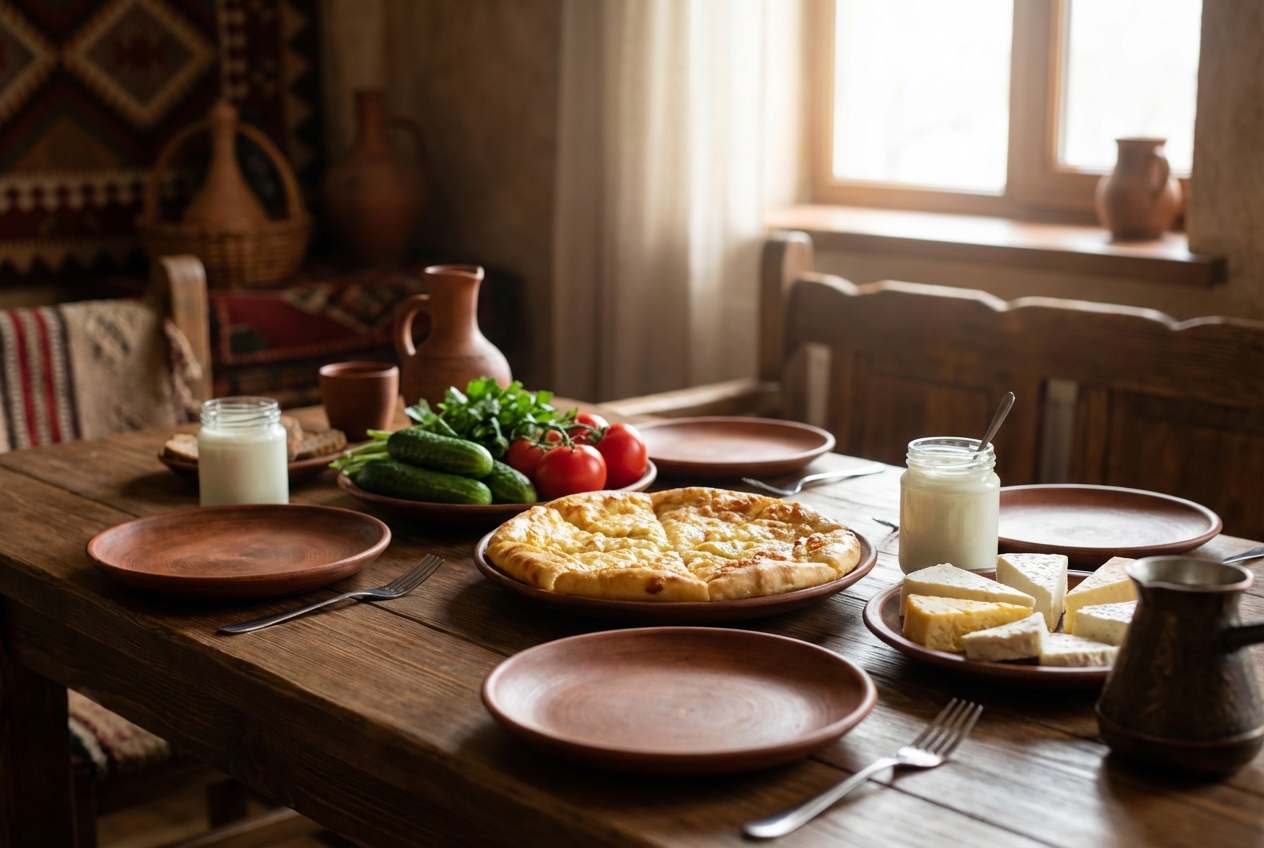
The morning sun filters through the windows of a small Tbilisi apartment, and the kitchen already smells of warm bread, melting cheese, and strong coffee. This scene plays out across Georgia every day, where breakfast isn't just fuel for the morning but a genuine celebration of the country's culinary heritage. If you've ever wondered what people eat for breakfast in Georgia, the answer reveals a food culture that prizes fresh ingredients, generous portions, and the belief that even the first meal deserves attention.
Georgian breakfast traditions differ dramatically from the quick toast-and-cereal approach common in Western countries. Here, morning meals can range from a simple slice of bread with local cheese to elaborate spreads featuring multiple dishes. According to georgianeats.com, bread, cheese, butter, eggs, and tea are common staples in a Georgian breakfast, forming the foundation upon which countless variations are built. The regional diversity adds another layer of complexity, with Western Georgia favoring cornmeal-based dishes while Eastern regions lean toward wheat bread and dairy-heavy plates.
The Essence of a Georgian Morning Meal
Georgian breakfast philosophy centers on satisfaction and quality rather than speed. Mornings in this Caucasus nation can stretch leisurely when time permits, with families gathering around tables laden with fresh produce and homemade staples. The emphasis on local, seasonal ingredients means that breakfast varies throughout the year, reflecting what's available from gardens, markets, and family farms.
Core Ingredients: Cheese, Bread, and Fresh Produce
Cheese dominates the Georgian breakfast table in ways that might surprise visitors. Sulguni, a brined cheese with a slightly sour taste and stretchy texture, appears in countless morning dishes. Imeruli cheese, milder and crumbly, often gets stuffed into bread or served alongside fresh vegetables. These aren't processed products but artisanal cheeses made using traditional methods passed down through generations.
Fresh bread arrives warm from neighborhood bakeries called "tones," where bakers work through the night to ensure morning customers receive loaves straight from clay ovens. Tomatoes, cucumbers, and fresh herbs round out the plate, adding brightness and nutrition. The combination seems simple on paper, yet the quality of each component elevates the meal beyond anything you'd find at a typical Western breakfast spot.
From Quick Bites to Leisurely Feasts
A simple breakfast of bread with cheese and tea represents the weekday reality for many Georgians rushing to work or school. This stripped-down version still satisfies because the ingredients themselves carry so much flavor. A thick slice of shotis puri topped with fresh sulguni and a ripe tomato needs nothing else.
Weekends and holidays transform breakfast into something closer to a feast. Multiple dishes appear simultaneously, and the meal can stretch for hours as family members arrive and conversation flows. This flexibility between quick sustenance and elaborate celebration reflects the Georgian approach to food generally: always quality ingredients, scaled to fit the occasion.
Signature Breakfast Breads and Pastries
Bread occupies a sacred position in Georgian cuisine, and breakfast showcases this reverence beautifully. The variety of morning breads ranges from simple loaves to cheese-filled boats that have become internationally famous.
Adjarian Khachapuri: The Iconic Cheese Boat
No discussion of Georgian breakfast is complete without khachapuri, and the Adjarian version stands as the most visually stunning. Shaped like a boat with raised edges, this bread comes filled with bubbling cheese and topped with a raw egg and butter pat. Diners tear pieces from the edges and stir them into the molten center, creating a rich, creamy mixture that tastes like pure indulgence.
| Khachapuri Type | Region | Key Characteristics |
|---|---|---|
| Adjarian | Adjara | Boat-shaped, egg and butter topping |
| Imeruli | Imereti | Round, cheese-stuffed, simpler style |
| Megruli | Samegrelo | Cheese inside and melted on top |
| Penovani | Various | Puff pastry version, lighter texture |
| Achma | Adjara | Layered, similar to lasagna |
The Adjarian khachapuri works as a complete breakfast on its own, providing carbohydrates, protein, and enough calories to fuel a morning of physical labor. Restaurants across Tbilisi serve this dish all day, but experiencing it fresh from the oven at breakfast time remains special.
Shotis Puri and Local Jams
Shotis puri, the canoe-shaped bread baked against the walls of a tone oven, appears at nearly every Georgian breakfast table. Its slightly chewy texture and subtle char marks make it perfect for scooping up soft cheeses or soaking up egg yolks. The bread stays fresh for only a day or two, which explains why Georgians buy it daily rather than stocking up.
Local jams and preserves add sweetness to the morning spread. Walnut jam, fig preserves, and rose petal jam represent distinctly Georgian options you won't find elsewhere. These aren't overly sweet commercial products but homemade preserves that balance fruit flavors with subtle complexity.
Savory Egg Dishes and Proteins
Eggs feature prominently in Georgian morning meals, prepared in ways that differ significantly from Western scrambles and omelets. The addition of tomatoes, walnuts, and local spices creates dishes with distinctly Georgian character.
Chizhi-Pizhi: Georgian Scrambled Eggs
Chizhi-pizhi takes scrambled eggs to another level by cooking them with chopped tomatoes, onions, and sometimes peppers. The eggs absorb the tomato juices, creating a saucier texture than typical scrambled eggs. Some versions include pieces of sausage or leftover meat, turning the dish into a complete protein-heavy breakfast.
Chirbuli, eggs cooked in spiced tomato sauce with walnuts, represents another showpiece Georgian breakfast dish often associated with the Adjara region. The combination of runny eggs, tangy tomato sauce, and crunchy walnuts creates a textural experience that rewards those willing to seek it out. This dish exemplifies how Georgian cooks transform simple ingredients into something memorable.
Kupati Sausages and Cured Meats
Kupati sausages bring serious protein to the Georgian breakfast table. These pork sausages, seasoned with garlic and spices, get grilled until the casings crisp and the fat renders. They're rich and intensely flavored, meant to be eaten in moderation alongside bread and vegetables.
Cured meats also appear at breakfast, particularly basturma, a spiced dried beef similar to pastrami. Sliced thin and served cold, it provides a salty, savory counterpoint to fresh vegetables and mild cheeses. The combination of cured meats, fresh produce, and bread creates a balanced plate that sustains energy throughout the morning.
Traditional Porridges and Dairy Delights
Western Georgia contributes distinctive breakfast dishes based on cornmeal rather than wheat. These preparations showcase regional agricultural traditions and offer textures unlike anything in the wheat-bread repertoire.
Elarji and Ghomi: Cornmeal Staples
Elarji might be the most dramatic dish in Georgian breakfast cuisine. This stretchy cornmeal porridge gets mixed with copious amounts of sulguni cheese until it can be pulled into long, elastic strands. The result resembles nothing you've seen before: a gooey, cheesy mass that's simultaneously porridge and cheese fondue.
In Western Georgia, particularly Samegrelo and Imereti, breakfast might include elarji or mchadi (cornbread) instead of wheat bread. Ghomi, a simpler cornmeal porridge without the cheese addition, serves as a neutral base for other toppings. Both dishes reflect the corn-growing traditions of Georgia's western regions and provide substantial morning fuel.
Mchadi, the cornbread cousin of these porridges, gets baked or fried into small patties. Served hot with fresh cheese or butter, these corn cakes offer a gluten-free alternative to wheat bread while maintaining the Georgian emphasis on fresh, simple ingredients.
Matsoni: The Probiotic Power of Georgian Yogurt
Matsoni deserves special attention as Georgia's traditional fermented milk product. Thicker than regular yogurt but thinner than Greek yogurt, matsoni has a tangy, slightly sour taste that complements both sweet and savory preparations. Many Georgians eat it plain for breakfast, while others drizzle honey over it or use it as a sauce for other dishes.
The probiotic benefits of matsoni have attracted international attention, with some researchers linking Georgia's traditional diet to the region's notable longevity. Whether or not matsoni holds the secret to long life, it certainly provides a healthy, protein-rich breakfast option that's been sustaining Georgians for centuries.
Georgian Breakfast Beverages
What Georgians drink with breakfast reveals as much about the culture as what they eat. Strong coffee and aromatic teas dominate, with regional and generational preferences shaping individual choices.
Strong Coffee Culture: Turkish and Soluble Styles
Georgian coffee culture tends toward strong, dark preparations. Turkish-style coffee, brewed in a small pot called a cezve, remains popular among older generations and in traditional households. The grounds settle at the bottom of small cups, and experienced drinkers know to stop before reaching the sludge.
Younger Georgians and urban dwellers have embraced espresso-based drinks, and Tbilisi now boasts a thriving specialty coffee scene. However, instant coffee (called "soluble" locally) maintains surprising popularity as a quick weekday option. The preference for strong coffee regardless of preparation method reflects a culture that values bold flavors even first thing in the morning.
Mountain Teas and Herbal Infusions
Tea holds equal importance in Georgian breakfast traditions, particularly in rural areas and among older generations. Black tea, often served strong and sweet, accompanies bread and cheese beautifully. The tannins cut through the richness of dairy products while providing gentle caffeine stimulation.
Herbal infusions made from mountain herbs represent a distinctly Georgian option. Thyme, mint, and various wild herbs get dried and brewed into aromatic teas with purported health benefits. These caffeine-free options appeal to those seeking a gentler morning beverage while maintaining the ritual of hot drinks at breakfast.
The Role of Supra Traditions in Early Dining
The supra, Georgia's famous feast tradition, occasionally extends to breakfast, particularly during celebrations and holidays. While full supras typically occur at lunch or dinner, the underlying philosophy influences how Georgians approach all meals, including breakfast.
"Breakfast in Georgia is more than just a meal; it's an experience steeped in tradition and flavor." This sentiment captures the Georgian attitude toward morning meals. Even a simple breakfast carries cultural weight, connecting diners to generations of tradition and regional identity.
Kikliko, the Georgian version of French toast, demonstrates how Georgian cooks adapt familiar concepts with local flair. This simple, well-loved breakfast dish uses day-old bread soaked in egg and fried until golden, proving that Georgian breakfast traditions include both elaborate productions and humble comfort foods.
Holiday breakfasts might feature multiple khachapuri varieties, several egg preparations, platters of cured meats and cheeses, and enough food to feed twice the number of actual guests. The generosity that defines Georgian hospitality extends to the morning meal, ensuring that no one leaves the table hungry.
Whether you're seeking the iconic cheese boat of Adjarian khachapuri, the stretchy wonder of elarji, or simply a perfect slice of fresh bread with local cheese, Georgian breakfast offers something remarkable. The emphasis on quality ingredients, regional traditions, and generous portions creates morning meals that feel like celebrations rather than obligations. For anyone curious about what people in Georgia eat for breakfast, the answer is simple: they eat well, they eat together, and they eat with appreciation for the culinary heritage that makes each morning meal special.