
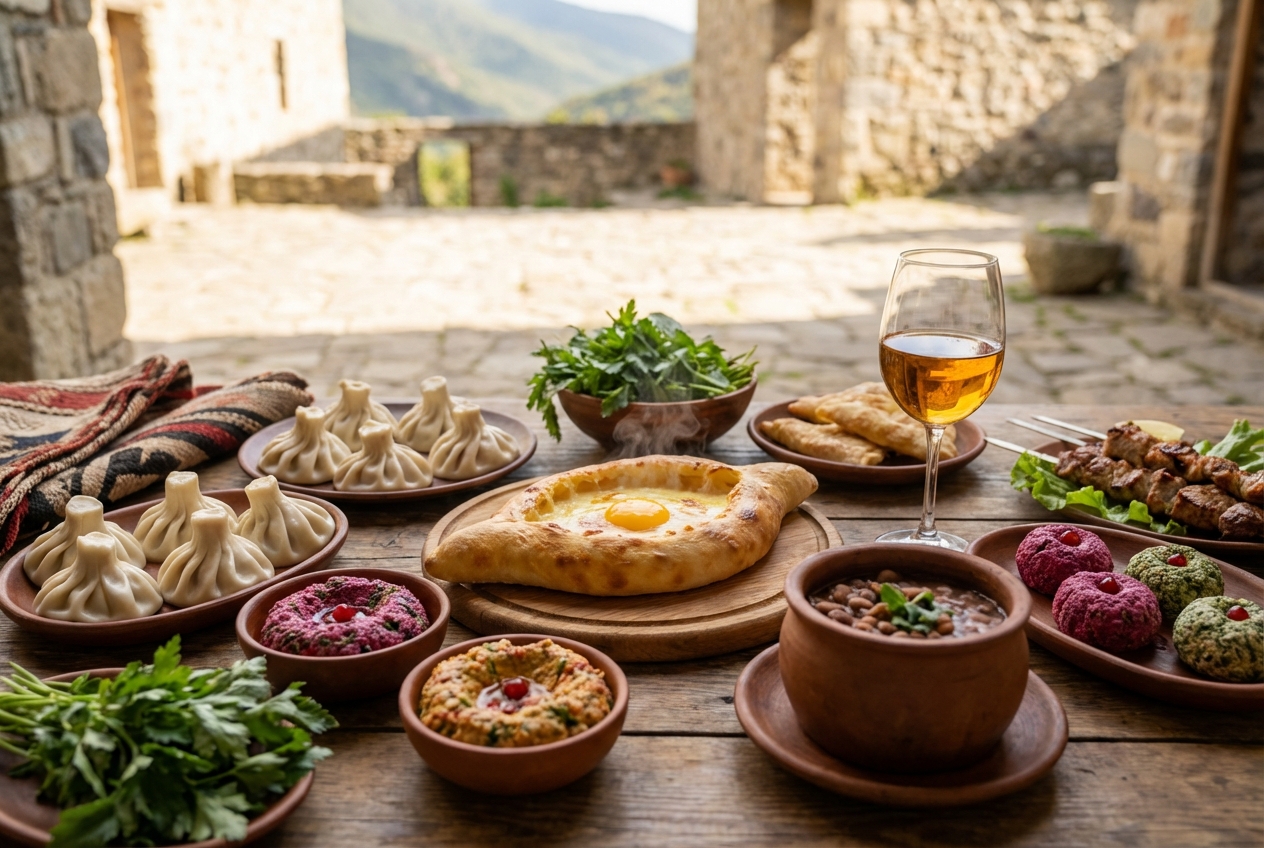
Georgian cuisine tells the story of a nation that has perfected the art of gathering around a table. Tucked between the Caucasus Mountains and the Black Sea, this small country has developed one of the world's most distinctive food cultures, where every meal becomes a celebration and every dish carries centuries of tradition. When travelers ask what are the must-try foods in Georgia, the answer spans far beyond a simple list of dishes. It encompasses an entire philosophy of eating that prioritizes fresh ingredients, bold flavors, and the sacred act of sharing food with others.
The numbers speak for themselves: 35% of international travelers to Georgia participate in culinary tourism, making food one of the primary reasons people visit this Caucasian nation. From the cheese-stuffed breads that have become Instagram sensations to the wine fermented in ancient clay vessels buried underground, Georgian food offers experiences found nowhere else on Earth. This guide walks through the essential dishes, from hearty meat preparations to delicate walnut-based vegetarian options, ensuring you know exactly what to order when you finally sit down at a Georgian table.
The Heart of Georgian Hospitality: Iconic Breads and Pastries
Bread holds an almost sacred position in Georgian culture. The tone-fired ovens found in traditional bakeries produce loaves unlike anything in Western baking, with crusted exteriors and pillowy interiors that serve as both utensil and sustenance during meals.
Khachapuri: Regional Varieties of Cheese Bread
No conversation about Georgian food begins without khachapuri. This cheese-filled bread exists in numerous regional variations, each reflecting local tastes and traditions. The Imeretian version presents a simple round shape with a mild, stretchy cheese filling, perfect for tearing and sharing.
The Adjarian khachapuri, shaped like a boat and topped with a runny egg and butter, has become the most photographed version internationally. Servers bring it bubbling to your table, and the proper technique involves stirring the egg and butter into the molten cheese before tearing pieces of bread from the edges to scoop up the mixture. The Megrelian variation doubles down on cheese, adding a layer on top that bakes into a golden crust.
Shoti: The Traditional Canoe-Shaped Clay Oven Bread
While khachapuri steals headlines, shoti bread forms the backbone of daily Georgian meals. Bakers slap the elongated dough against the walls of a tone oven, where it bakes suspended over hot coals. The result is a canoe-shaped loaf with a crispy bottom crust and soft, airy interior.
Fresh shoti, still warm from the oven, needs nothing more than a smear of butter. However, it truly shines when used to soak up the juices from stews or to wrap around grilled meats. Most Georgian bakeries produce shoti throughout the day, and the sight of bakers reaching into deep clay ovens remains one of the country's most captivating culinary scenes.
Lobiani: Savory Bean-Filled Pastries
Lobiani offers a heartier alternative to cheese-based breads. These flatbreads come stuffed with a seasoned kidney bean paste, often flavored with onions, garlic, and a mix of Georgian herbs. The filling has an earthy, satisfying quality that makes lobiani particularly popular during colder months.
Traditional recipes call for slow-cooked beans mashed with rendered pork fat, though vegetarian versions using oil are increasingly common. The bread itself resembles khachapuri in shape but delivers an entirely different flavor profile. Many Georgians consider lobiani essential during Barbaroba, the feast of Saint Barbara, though you can find it year-round in bakeries across the country.
Signature Dumplings and Meat Dishes
Georgian meat preparations showcase techniques refined over centuries, from precisely folded dumplings to open-fire grilling methods that produce incomparable smoky flavors.
Khinkali: Masterfully Folded Soup Dumplings
Khinkali represents Georgian culinary craftsmanship at its finest. These large dumplings feature a twisted top knob and contain seasoned meat along with a flavorful broth that forms during cooking. Eating them requires technique: you hold the knob, bite a small hole in the side, sip the hot broth, then consume the rest. The knob itself is traditionally left on the plate, serving as a count of how many you've eaten.
| Khinkali Type | Filling | Origin Region |
|---|---|---|
| Kalakuri | Beef and pork mix | Tbilisi (urban) |
| Mtiuluri | Beef with cumin | Mountain regions |
| Mushroom | Sautéed mushrooms | Modern vegetarian |
| Cheese | Sulguni cheese | Various |
The mountain version from Mtiuleti uses only beef with generous amounts of cumin, while the city-style kalakuri mixes beef and pork. A skilled khinkali maker can create dumplings with exactly 19 pleats, though the true test lies in keeping the broth sealed inside during cooking.
Mtsvadi: Georgian-Style Grilled Skewers
Mtsvadi brings Georgian grilling traditions to the table. Large chunks of marinated meat, typically pork or beef, cook over grapevine cuttings that impart a subtle, distinctive flavor. The marinade often includes nothing more than salt, pepper, and onions, letting the quality of the meat shine through.
Mtsvadi is often served with tkemali, a sour plum sauce that cuts through the richness of the grilled meat. The cooking process itself becomes a social event, with the grill master tending the coals and turning skewers while guests gather around, glasses of wine in hand. Proper mtsvadi should have a charred exterior while remaining juicy inside.
Chakhokhbili: Traditional Braised Chicken Stew
Chakhokhbili translates roughly to "pheasant dish," though chicken has become the standard protein in modern preparations. This tomato-based stew showcases Georgian cooking's reliance on fresh herbs, with generous amounts of cilantro, parsley, and basil added near the end of cooking.
The dish begins with chicken pieces browned in their own fat, followed by onions cooked until sweet and soft. Ripe tomatoes join the pot along with a blend of spices, and everything simmers until the chicken falls off the bone. The sauce should be thick and intensely flavored, perfect for soaking up with fresh bread. Unlike many Georgian dishes, chakhokhbili contains no walnuts or cheese, making it a good choice for those with allergies.
Vegetarian Delights and Nut-Based Specialties
Georgian cuisine offers remarkable depth for vegetarians, with walnuts serving as the foundation for many of the most beloved dishes.
Pkhali: Vegetable Pates with Walnut Paste
Pkhali demonstrates how Georgian cooks transform simple vegetables into something extraordinary. The basic concept involves finely chopped or pureed vegetables mixed with a walnut paste seasoned with garlic, herbs, and vinegar. The mixture gets shaped into small balls or patties and garnished with pomegranate seeds.
The beauty of pkhali lies in its versatility. Spinach pkhali offers an earthy, iron-rich flavor. Beet pkhali brings sweetness and stunning color. Cabbage, green beans, and eggplant all receive the same treatment, and restaurants typically serve assortments featuring three or four varieties. The walnut paste ties everything together while providing protein and richness.
Nigvziani Badrijani: Eggplant Rolls with Walnut Filling
These elegant eggplant rolls appear on nearly every Georgian table, especially during holidays and celebrations. Thin slices of eggplant are fried until soft, then spread with a garlicky walnut paste and rolled into neat cylinders. A sprinkle of pomegranate seeds adds color and a burst of tartness.
The walnut filling, called nigvzis satsebeli, combines ground walnuts with garlic, vinegar, and a blend of spices including blue fenugreek and coriander. The paste should be smooth but not runny, holding its shape inside the eggplant roll. When made properly, the dish balances the mild sweetness of eggplant against the pungent, nutty filling.
Lobio: Fragrant Kidney Bean Stew in Clay Pots
Lobio might be Georgia's ultimate comfort food. This kidney bean stew cooks low and slow until the beans break down into a thick, creamy mass flavored with onions, garlic, and a signature blend of herbs. Traditional preparations serve lobio in small clay pots that keep the dish warm throughout the meal.
The dish varies significantly by region. Some versions include walnuts, others add pickled vegetables, and the spice levels range from mild to quite fiery. A proper lobio should have some whole beans remaining for texture while most have dissolved into the sauce. It pairs perfectly with mchadi, the cornbread that serves as lobio's traditional accompaniment.
Essential Sauces and Condiments
Georgian sauces transform simple dishes into memorable meals. Understanding these condiments helps you navigate menus and customize your food.
Tkemali: The Versatile Sour Plum Sauce
Tkemali ranks among the world's great condiments. Made from wild sour plums that grow throughout Georgia, this sauce delivers a complex flavor that works with almost everything. The green version, made from unripe plums, has a sharper, more tart profile. Red tkemali, from ripe plums, tastes sweeter but still maintains that characteristic sourness.
Georgian families guard their tkemali recipes carefully, adjusting the garlic, herbs, and spices to personal preference. The sauce appears alongside grilled meats, fried potatoes, and bread. Many visitors become so attached to tkemali that they bring bottles home, though nothing quite matches the homemade versions served in Georgian homes.
Ajika: Spicy Chili and Garlic Paste
Ajika brings heat to Georgian cuisine. This paste combines hot peppers with garlic, herbs, and spices into a concentrated flavor bomb. A little goes a long way, and Georgians typically use ajika sparingly to add kick to dishes rather than drowning food in it.
The traditional version from Abkhazia and Samegrelo uses fresh peppers and has a chunky texture. Dried versions exist as well, offering a more concentrated heat. Ajika works particularly well with grilled meats and bean dishes, where its spiciness cuts through rich flavors.
Traditional Desserts and Sweet Treats
Georgian sweets tend toward the natural, relying on fruit, nuts, and honey rather than refined sugars and complex pastry techniques.
Churchkhela: The Famous Grape and Nut Candy
Churchkhela is known as the "Georgian Snickers", though this comparison only scratches the surface. These candle-shaped candies consist of walnuts or hazelnuts strung on thread and dipped repeatedly in thickened grape juice. The coating dries into a chewy exterior that protects the nuts inside.
Making churchkhela requires patience and skill. The grape juice must be thickened with flour to exactly the right consistency, and each strand gets dipped multiple times to build up layers. Traditional churchkhela contains no added sugar, deriving all sweetness from the concentrated grape must. The candies hang to dry for weeks, developing their characteristic texture. Visitors see them strung up at markets throughout Georgia, looking like strange purple sausages.
Pelamushi: Grape Juice Flour Porridge
Pelamushi offers another way Georgians transform grape juice into dessert. This thick pudding forms when grape must cooks with flour until it reaches a porridge-like consistency. Served warm or cold, pelamushi has a unique texture and intense grape flavor.
The dish appears most commonly during the grape harvest when fresh must is abundant. Families pour the warm mixture into molds, sometimes embedding walnuts before it sets. Pelamushi tastes like concentrated grape essence, slightly sweet with a pleasant chewiness from the flour.
The Supra Experience: Pairing Food with Qvevri Wine
No exploration of Georgian food is complete without understanding the supra, the traditional feast that represents the pinnacle of Georgian hospitality. These elaborate meals can last for hours, with courses appearing in waves while a tamada, or toastmaster, guides the proceedings through a series of traditional toasts.
The wines served at a supra come from qvevri, large clay vessels buried underground where grape juice ferments and ages. This 8,000-year-old winemaking method produces wines unlike anything from conventional techniques. Amber wines, made from white grapes fermented with their skins, have a tannic structure and complex flavors that pair remarkably well with the rich, walnut-heavy dishes of Georgian cuisine.
Visitor spending in Georgia reached $46.3 billion in 2023, with food and wine tourism driving significant portions of that economic activity. The country has recognized its culinary heritage as a major asset, and restaurants, guesthouses, and tour operators have responded by making authentic Georgian food experiences more accessible than ever.
Whether you find yourself at a family-run guesthouse in the mountains or an upscale restaurant in Tbilisi, the essential experience remains the same: generous portions, bold flavors, and the genuine warmth of Georgian hospitality. The best approach is to arrive hungry, stay curious, and let your hosts guide you through dishes that have sustained and delighted Georgians for generations.