
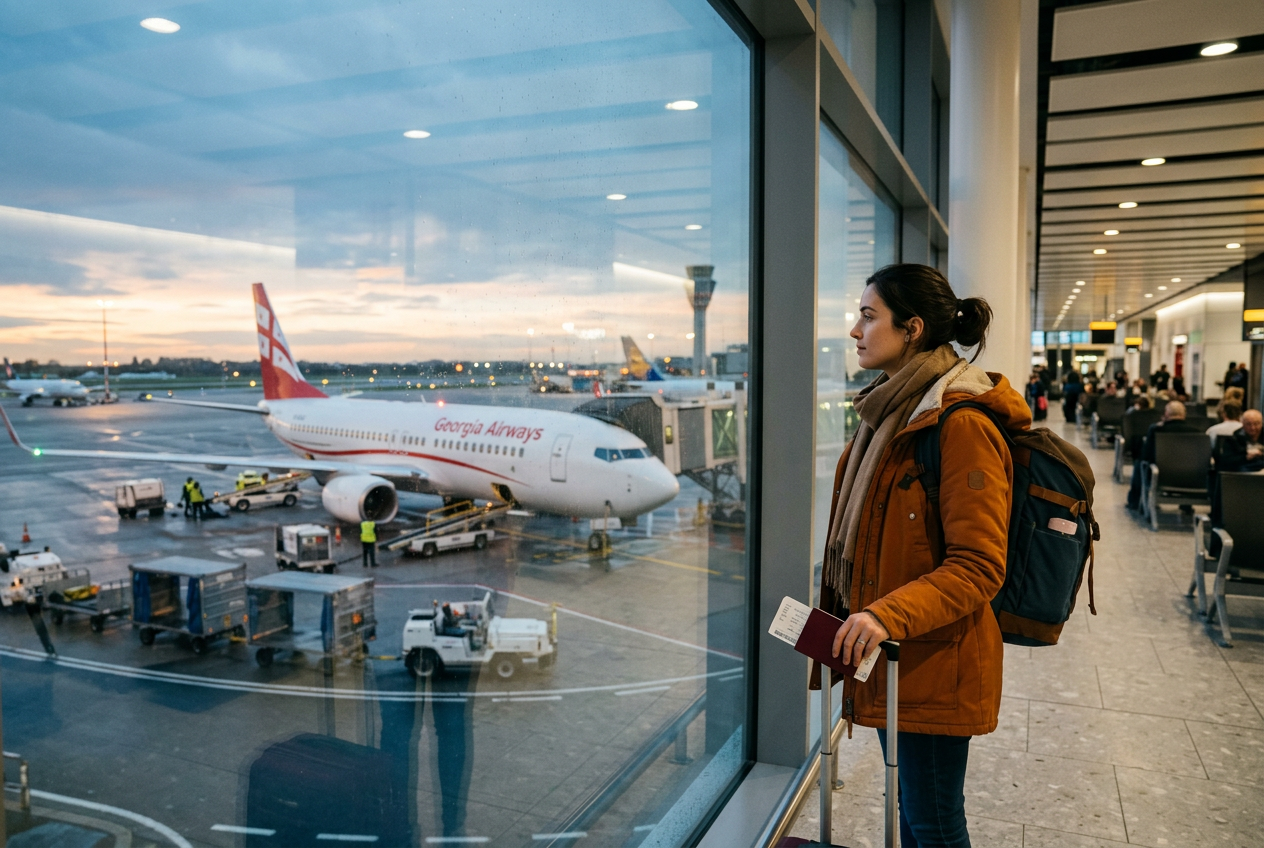
Georgia has quietly become one of Europe's most compelling destinations, drawing travelers with its dramatic Caucasus peaks, 8,000-year-old winemaking traditions, and a hospitality culture where "stumari ghvtisaa" (the guest is a gift from God) isn't just a saying but a way of life. If you're wondering which UK airports fly direct to Georgia, the answer has become increasingly favorable over recent years. Direct routes now connect London with both Tbilisi and the budget-friendly alternative of Kutaisi, making this crossroads of empires more accessible than ever for British travelers.
The numbers tell a compelling story: visits from the UK to Georgia reached 32,372 in 2024, representing a 5.3% increase from the previous year. This growing interest has prompted airlines to expand their offerings, with both legacy carriers and budget operators now serving the route. Whether you're planning to explore Tbilisi's cobblestone streets, hike through Svaneti's medieval tower villages, or lose yourself in the qvevri wine cellars of Kakheti, understanding your flight options from the UK will shape your entire journey. The choice between airports, airlines, and Georgian destinations affects not just your wallet but the character of your trip from the moment you leave British soil.
Direct Flight Routes from London to Georgia
London remains the primary gateway for UK travelers heading to Sakartvelo (as Georgians call their country), with three airports offering various levels of service to Georgian destinations. The landscape of direct flights has evolved significantly, particularly since 2023, giving travelers genuine choices between full-service and budget options.
London Gatwick (LGW) to Tbilisi
London Gatwick has historically served as a secondary hub for Georgia-bound flights, though service patterns have shifted over time. Georgian Airways previously operated this route, connecting travelers directly to Tbilisi International Airport. The flight covers approximately 3,500 kilometers, crossing multiple European countries before descending into the Caucasus valley where Georgia's capital sprawls along the Mtkvari River.
Gatwick's positioning south of London makes it particularly convenient for travelers from Sussex, Surrey, and Kent. The airport's single-runway operation means careful scheduling, but Georgian routes have typically secured favorable departure times. When available, these services offer an alternative to the busier Heathrow hub, often with more straightforward security and boarding processes.
London Luton (LTN) to Tbilisi
The budget travel landscape transformed when easyJet launched the UK's first direct flights to Tbilisi from London Luton, operating twice weekly during summer months on Tuesdays and Saturdays. This route represents a significant development for price-conscious travelers who previously faced either expensive legacy carrier tickets or lengthy connections through European hubs.
As easyJet noted, they were "excited to be providing unique direct connectivity between the UK and Tbilisi," recognizing the growing demand from British travelers. Luton's location north of London serves passengers from Bedfordshire, Hertfordshire, and the Midlands corridor effectively. The airport's no-frills approach aligns with budget carrier operations, though travelers should factor in potential add-on costs for baggage and seat selection when comparing total journey expenses.
London Stansted (STN) Seasonal Services
Stansted has seen intermittent service to Georgia, primarily through Wizz Air's operations to Kutaisi rather than Tbilisi. These routes tend to operate seasonally, responding to demand fluctuations between summer peaks and quieter winter months. The airport's position northeast of London makes it accessible for travelers from Essex, Cambridgeshire, and East Anglia.
Seasonal services require careful planning, as schedules can change between booking and departure. Checking current timetables closer to your travel dates remains essential, particularly for winter travel when some routes reduce frequency or pause entirely.
Airlines Operating Non-Stop Flights
The airline you choose shapes your entire travel experience, from booking flexibility to onboard service and baggage allowances. Understanding each carrier's approach helps match your expectations with reality.
British Airways and Georgian Airways
British Airways operates direct flights from London Heathrow to Tbilisi International Airport four times weekly, providing the most consistent year-round service between the two countries. This frequency allows genuine flexibility for both short breaks and longer explorations of Georgia's diverse regions. Return fares start from £244, positioning BA as a mid-range option that includes checked baggage, meals, and the reliability of a major European carrier.
The Heathrow departure offers advantages beyond the flight itself: extensive connection options from regional UK airports, established lounges for eligible passengers, and the infrastructure of Europe's busiest hub. For business travelers or those prioritizing schedule certainty, BA's established presence on this route provides reassurance.
Georgian Airways, the national carrier, has operated various UK routes over the years, though their schedule tends to fluctuate more than BA's. When available, they offer a distinctly Georgian experience from the moment you board, with cabin crew who can share genuine insights about their homeland. The airline's smaller scale means less frequency but often competitive pricing.
Budget Options with Wizz Air
Wizz Air has carved out a significant presence on UK-Georgia routes, primarily serving Kutaisi International Airport rather than Tbilisi. Their ultra-low-cost model means advertised fares can appear remarkably cheap, though the final price depends heavily on your baggage needs, seat preferences, and booking timing.
The Wizz Air approach works brilliantly for travelers who pack light and book early. A carry-on-only passenger can reach Georgia for remarkably little, particularly during promotional periods. However, adding a checked bag, selecting seats, and purchasing onboard refreshments can quickly erode the price advantage over full-service carriers.
| Airline | UK Airport | Georgian Airport | Frequency | Starting Price | Baggage Included |
|---|---|---|---|---|---|
| British Airways | Heathrow (LHR) | Tbilisi (TBS) | 4x weekly | £244 return | Yes |
| easyJet | Luton (LTN) | Tbilisi (TBS) | 2x weekly (summer) | Variable | Hand luggage only |
| Wizz Air | Stansted/Luton | Kutaisi (KUT) | Seasonal | From £50 one-way | Hand luggage only |
| Georgian Airways | Gatwick (LGW) | Tbilisi (TBS) | Variable | Mid-range | Yes |
Regional UK Departures and Indirect Alternatives
Not everyone lives within easy reach of London's airports, and sometimes indirect routings offer better value or more convenient timing than direct flights.
Connecting via European Hubs
Travelers from across the UK often find excellent connections through major European airports. Turkish Airlines via Istanbul offers particularly strong options, with their hub providing multiple daily connections to both Tbilisi and Batumi. The Istanbul connection adds roughly three hours to your journey but opens departure possibilities from Manchester, Birmingham, Edinburgh, and other regional airports.
Lufthansa's Frankfurt hub and LOT Polish Airlines through Warsaw provide similar flexibility. These connections sometimes prove cheaper than direct London flights, especially when factoring in domestic travel to reach Heathrow or Gatwick. The trade-off involves longer total journey times and the inherent risks of connections: delayed first legs can cascade into missed onward flights and overnight airport stays.
Flying from Manchester, Birmingham, and Scotland
Manchester Airport serves as the North's primary international hub, with numerous daily connections to European airports offering Georgia services. The journey involves two flights but eliminates the trek to London for travelers in Lancashire, Yorkshire, and the wider North West. Birmingham similarly serves Midlands passengers well, with good rail links from across the region.
Scottish travelers face the longest journeys to London airports, making European connections particularly attractive. Edinburgh and Glasgow both offer routes to Istanbul, Frankfurt, and Warsaw, where onward flights to Georgia await. During summer months, charter operations occasionally serve Scottish airports directly, though these remain inconsistent year to year.
Flight Duration and Frequency
Direct flights from London to Tbilisi take approximately 5 hours and 5 minutes, though actual flight times vary slightly based on wind patterns and routing. Eastbound flights often prove faster than westbound returns due to prevailing winds. Some sources cite up to 6 hours 30 minutes from Heathrow, reflecting variations in aircraft type, routing, and seasonal factors.
Frequency varies dramatically by carrier and season. British Airways' four-weekly service provides the most reliable year-round access, while budget carriers concentrate their flights during peak summer months when demand justifies the route. Planning winter travel requires checking current schedules carefully, as some services reduce to weekly or pause entirely between November and March.
The time zone shift adds another consideration: Georgia operates on GMT+4, meaning a 4pm London departure arrives around 1am local time. Many travelers prefer morning departures that arrive in early evening, allowing a night's rest before exploring. Flight timing affects not just your arrival experience but hotel check-in logistics and first-day energy levels.
Choosing the Right Georgian Airport for Your Trip
Georgia offers two main international airports serving different purposes and regions. Your choice fundamentally shapes your first Georgian experience and onward travel logistics.
Tbilisi International (TBS) for the Capital
Tbilisi International Airport sits approximately 17 kilometers southeast of the city center, connected by taxi, bus, and ride-sharing apps like Bolt and Yandex Go. Arriving here places you directly in Georgia's cosmopolitan heart, where Soviet-era architecture mingles with art nouveau facades and ultra-modern developments along the riverfront.
For first-time visitors, Tbilisi makes the most logical entry point. The capital serves as a natural base for exploring Kakheti's wine regions (two hours east), the ancient cave city of Vardzia (four hours south), and the dramatic mountain landscapes of Kazbegi (three hours north). Hotels, restaurants, and English-speaking services concentrate here, easing the transition into a country where the post-1990 generation speaks English fluently while older Georgians often prefer Russian.
Kutaisi International (KUT) for Budget Travel
Kutaisi International Airport serves western Georgia, located about 14 kilometers from the country's second city. Budget carriers favor this airport due to lower operating costs, passing savings to passengers. The trade-off involves distance from Tbilisi: roughly four hours by marshrutka (minibus) or taxi.
This airport makes strategic sense for travelers heading to Svaneti's tower villages, the Black Sea coast around Batumi, or the lesser-visited western regions. Kutaisi itself rewards exploration, with the UNESCO-listed Gelati Monastery and Bagrati Cathedral nearby. Savvy travelers sometimes fly into Kutaisi and out of Tbilisi (or vice versa), creating a natural loop through the country without backtracking.
Essential Travel Tips for UK Passengers
Preparing properly transforms your Georgia experience from stressful to seamless. These practical considerations address the realities British travelers face.
Download offline language packs for Google Translate before departure. While younger Georgians in Tbilisi speak excellent English, venturing into rural areas or interacting with the older generation often requires creative communication. The Georgian alphabet, Mkhedruli, bears no resemblance to Latin script, making even basic sign reading challenging without translation assistance.
UK citizens enjoy visa-free access to Georgia for up to one year, an extraordinarily generous policy that facilitates extended stays. Your passport needs six months validity beyond your planned departure date. Travel insurance remains essential despite Georgia's affordable medical care, particularly if you plan hiking in the Caucasus where evacuation costs can prove substantial.
Currency exchange works best in-country. Georgian Lari (GEL) offers better rates at Tbilisi exchange offices than UK banks, and ATMs throughout major cities accept British cards with reasonable fees. Inform your bank of travel plans to prevent fraud blocks on your cards.
The hospitality you'll encounter often catches British visitors off-guard. A taxi driver might refuse payment after a pleasant conversation. A village grandmother could insist you join her family's supra (feast) simply because you walked past her gate. This intensity of welcome reflects deep cultural values rather than commercial motivation, a refreshing contrast to transactional tourism elsewhere.
Georgia rewards the curious traveler willing to venture beyond guidebook highlights. The direct flights now available from UK airports have removed the logistical barriers that once made this destination feel distant. Whether you choose British Airways' reliability from Heathrow, easyJet's summer services from Luton, or budget connections through Kutaisi, Georgia's mountains, wines, and legendary hospitality await just five hours from London.