
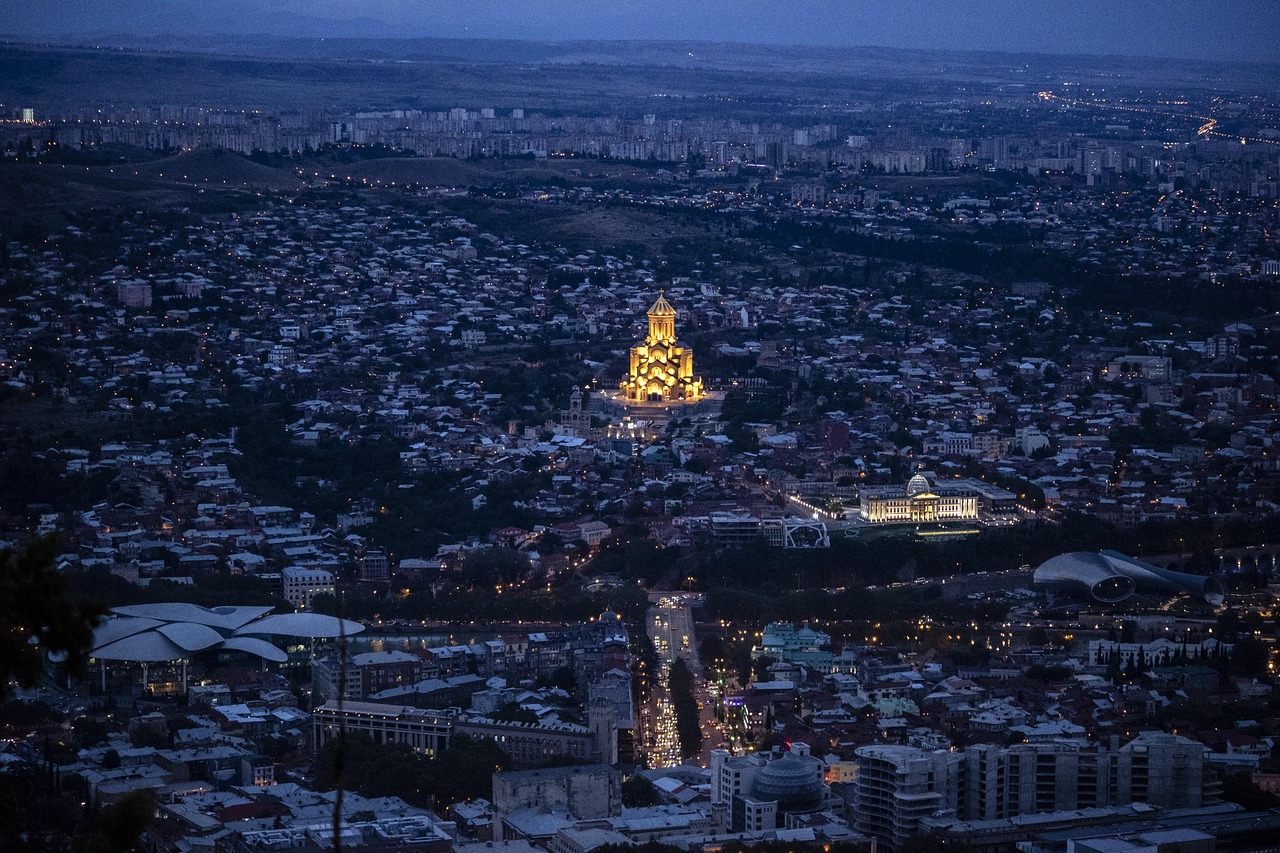
Georgia’s capital has a reputation that precedes it: welcoming locals, affordable wine, and streets that feel alive well past midnight. But if you’re planning a trip, you’ve probably wondered whether it’s safe to walk around Tbilisi at night. The short answer is yes, remarkably so. Tbilisi consistently ranks among the safest capitals in Europe, and most visitors find themselves wandering cobblestone streets at 2 AM without a second thought.
I’ve spent considerable time in the city across different seasons, and the nighttime atmosphere genuinely surprised me. Groups of friends gather in parks until the early hours. Families stroll along Rustaveli Avenue long after sunset. Elderly women walk home from evening church services alone. This isn’t naive optimism or cherry-picked anecdotes: crime statistics and traveler experiences consistently support the claim that Tbilisi offers an unusually secure nighttime environment for a city of its size.
That said, no city is without risks. Understanding which neighborhoods welcome late-night exploration, what minor nuisances to expect, and how to handle transportation after dark will help you enjoy Tbilisi’s vibrant nightlife with confidence. The city rewards those who wander, and knowing the lay of the land means you can focus on discovering hidden wine bars and rooftop views rather than worrying about your safety.
Crime Rates and General Safety Standards in Tbilisi
Tbilisi’s safety record isn’t just good by regional standards: it holds up impressively against Western European capitals that receive far more tourists. The city has undergone a dramatic transformation since the Rose Revolution of 2003, with systematic reforms targeting corruption and street crime.
Statistical Comparison with Other European Capitals
Numbers tell a compelling story. Georgia’s intentional homicide rate sits at approximately 0.9 per 100,000 residents, compared to 1.2 in France and 1.0 in Belgium. Robbery rates in Tbilisi fall well below those of Paris, Rome, or Barcelona. Pickpocketing, the bane of tourists in most European capitals, remains relatively rare here.
| City | Robbery Rate (per 100k) | Assault Rate (per 100k) | Safety Index Score |
|---|---|---|---|
| Tbilisi | 12.3 | 18.7 | 76.4 |
| Paris | 189.2 | 42.1 | 51.2 |
| Rome | 142.8 | 31.5 | 54.8 |
| Prague | 24.1 | 22.3 | 72.1 |
| Vienna | 31.7 | 25.4 | 74.8 |
These figures come from Numbeo’s crime database and national statistics agencies. The contrast is stark: you’re roughly ten times more likely to experience robbery in Paris than in Tbilisi. This doesn’t mean Georgia is crime-free, but violent crime against tourists is genuinely uncommon.
The Role of Police Presence and Public Surveillance
Georgia invested heavily in police reform over the past two decades. The notoriously corrupt Soviet-era police force was essentially disbanded and rebuilt from scratch. Today’s Georgian police enjoy relatively high public trust, and officers are generally helpful to tourists, even if English skills vary.
You’ll notice patrol cars stationed at major intersections throughout the night. Tourist areas like the Old Town have visible police presence, particularly on weekends. CCTV coverage has expanded significantly in central districts, though it remains sparse in residential outskirts.
The government’s approach emphasizes visible deterrence. Whether this explains the low crime rates or simply correlates with broader social changes is debatable, but the practical result is a city where walking alone at night feels notably safer than in most European capitals.
Nighttime Navigation: Safest Districts and Areas to Avoid
Not all neighborhoods offer the same experience after dark. Understanding Tbilisi’s geography helps you plan evening activities and accommodation choices.
Vibrant Hubs: Old Tbilisi, Vake, and Vera
Old Tbilisi remains lively until the early morning hours, especially on weekends. The narrow streets around Shardeni and Erekle II Square host restaurants and bars that spill onto sidewalks. You’ll find crowds at 3 AM: a mix of locals, tourists, and expats enjoying the city’s famous hospitality. The sulfur bath district stays active late, with some baths operating 24 hours.
Vake attracts a younger, more affluent crowd. The neighborhood’s cafes and wine bars draw university students and young professionals. Streets are well-lit, and the atmosphere feels distinctly European. Walking from Vake Park to the main strip at any hour presents no concerns.
Vera offers a quieter but equally safe alternative. This residential district has gentrified rapidly, with boutique hotels and small restaurants replacing Soviet-era apartments. The streets empty earlier than in Old Town, but the neighborhood maintains a peaceful, secure atmosphere.
Rustaveli Avenue, the city’s main thoroughfare, remains busy well past midnight. The stretch between Freedom Square and the Opera House sees constant foot traffic, with police presence at key intersections.
Industrial and Outlying Neighborhood Considerations
Some districts warrant more caution. Isani and Samgori, eastern neighborhoods with Soviet-era housing blocks, feel different after dark. They’re not dangerous per se, but streets are poorly lit, and few tourists have reason to visit at night.
The area around Station Square (Sadguris Moedani) requires awareness. As a transit hub, it attracts a more transient population. Petty crime is more common here than elsewhere, though serious incidents remain rare.
Gldani and Varketili, distant residential suburbs, offer little for visitors and lack nightlife infrastructure. If you’re staying in these areas, plan transportation rather than walking after dark.
The left bank of the Mtkvari River, while developing rapidly, still has stretches with minimal lighting and few pedestrians at night. Stick to the right bank for evening exploration unless you know specific destinations.
Common Risks and Minor Nuisances After Dark
While violent crime is rare, Tbilisi presents some practical challenges that catch visitors off guard.
Street Dogs and Wildlife Encounters
Tbilisi has a significant stray dog population. The city implemented a trap-neuter-release program, and most street dogs wear ear tags indicating vaccination and sterilization. These dogs are generally docile and accustomed to humans.
That said, packs can be territorial at night. If you encounter a group of dogs, walk calmly without making sudden movements. Don’t run, which can trigger chase instincts. Most dogs will ignore you entirely. Carrying a small flashlight helps: dogs often retreat from direct light.
Rabies remains present in Georgia, though cases are rare. If bitten, seek medical attention immediately. Most travelers never have a negative dog encounter, but awareness helps.
Poor Lighting and Infrastructure Hazards
Tbilisi’s charm includes uneven cobblestones, unexpected stairs, and sidewalks that occasionally disappear. This becomes more challenging at night, particularly in the Old Town where historic preservation limits modern lighting.
Bring a phone with a flashlight function. Watch your step on the steep streets connecting Narikala Fortress to the lower city. Some staircases lack railings entirely. This isn’t a safety threat in the criminal sense, but twisted ankles are a real possibility.
Construction sites sometimes lack adequate barriers or warning signs. The city is developing rapidly, and safety standards don’t always match Western expectations. Stay alert when walking through areas with ongoing building work.
Avoiding Scams in Tourist-Heavy Bars
The most common complaint from tourists involves overcharging at certain bars, particularly those near Shardeni Street. The scam works simply: you’re quoted reasonable prices initially, then presented with an inflated bill. Some establishments add charges for “service,” “music,” or items you didn’t order.
Stick to established venues with posted menus and prices. Check your bill carefully before paying. If something seems wrong, calmly dispute it: most establishments back down when challenged. Avoid bars where women approach you on the street with invitations: these are often fronts for overcharging schemes.
Wine bars and restaurants rarely present these problems. The scam targets nightclubs and late-night bars seeking intoxicated tourists.
Safety for Solo Travelers and Marginalized Groups
Tbilisi’s overall safety record doesn’t apply equally to everyone. Understanding specific considerations helps different travelers make informed decisions.
Solo Female Travel Experiences in Georgia
Georgia has earned a strong reputation among solo female travelers. Women report feeling comfortable walking alone at night in central districts, a claim supported by numerous travel forums and blog accounts. Catcalling exists but is less aggressive than in many Mediterranean countries.
Georgian culture emphasizes hospitality toward guests. Local men may initiate conversation, but most accept polite disinterest without persistence. The traditional culture cuts both ways: while it produces genuine warmth toward visitors, it also maintains conservative attitudes about women’s behavior.
Dress codes matter less in Tbilisi than in rural Georgia, but revealing clothing may attract unwanted attention in some neighborhoods. This reflects cultural conservatism rather than safety concerns.
Practical precautions apply: share your location with someone, keep your phone charged, and trust your instincts. These same guidelines apply anywhere, but the baseline risk in Tbilisi is lower than in most comparable cities.
LGBTQ+ Safety and Cultural Sensitivity
This is where Tbilisi’s otherwise excellent safety record requires significant caveats. Georgia remains deeply conservative on LGBTQ+ issues. The Orthodox Church wields substantial cultural influence, and public attitudes lag far behind Western Europe.
Same-sex relationships are legal, but public displays of affection between same-sex couples can provoke hostile reactions. Pride events have historically faced violent counter-protests. In 2021, journalists were attacked during Pride-related events.
LGBTQ+ travelers should exercise discretion. Tbilisi has a small but growing queer scene, with certain bars and clubs known as safe spaces. These venues operate somewhat quietly. Physical safety concerns are real: verbal harassment and potential violence exist as risks that straight travelers don’t face.
This doesn’t mean LGBTQ+ visitors should avoid Georgia entirely. Many queer travelers visit without incident, particularly when exercising caution about public affection. But the safety calculus differs meaningfully from what straight visitors experience.
Transportation Options for Late-Night Commutes
When walking isn’t practical, understanding your transport options prevents frustration and potential problems.
Using Ride-Hailing Apps vs. Street Taxis
Bolt and Yandex Go dominate Tbilisi’s ride-hailing market. Both apps work reliably, with fares calculated automatically and payment possible through the app. This eliminates negotiation and overcharging concerns.
Rides are remarkably affordable. A cross-city trip rarely exceeds 15 GEL (about $5-6 USD). Wait times average 3-5 minutes in central areas, though surge pricing applies during peak nightlife hours.
Street taxis present more variables. Licensed taxis should have meters, but many drivers prefer negotiating flat rates. If you hail a cab, agree on the price before entering. Overcharging tourists is common, though the amounts involved are usually modest by Western standards.
Avoid unmarked cars offering rides. While most are simply informal taxis, the lack of accountability creates unnecessary risk. Stick to app-based services or clearly marked taxi companies.
Public Transport Operating Hours and Safety
Tbilisi’s metro closes at midnight, limiting its usefulness for late nights. The two lines serve major districts but won’t help you after the clubs close.
Marshrutkas (minibuses) run later on some routes but follow irregular schedules after dark. These are safe but confusing for visitors unfamiliar with the routes.
Night buses operate on limited routes, primarily serving residential suburbs. Information about schedules is sparse and often only in Georgian.
For practical purposes, plan on ride-hailing apps for late-night transportation. The cost is minimal, and the convenience is substantial.
Practical Tips for a Secure Night Out in the Capital
Preparation makes nighttime exploration more enjoyable. These suggestions come from practical experience rather than generic safety advice.
Keep cash in multiple locations. While card payments have expanded dramatically, some late-night venues remain cash-only. ATMs are plentiful but occasionally out of service. Having backup cash prevents awkward situations.
Download offline maps before arriving. Mobile data works well in Tbilisi, but having offline navigation ensures you can find your way regardless of connectivity. Google Maps and Maps.me both offer reliable offline options.
Learn a few Georgian phrases. “Gamarjoba” (hello) and “madloba” (thank you) go far. Georgians appreciate any effort with their language, and small gestures of respect enhance interactions.
Stay aware of your surroundings without being paranoid. The same awareness you’d apply in any unfamiliar city serves you well here. Trust your instincts: if a situation feels wrong, leave.
Keep your accommodation’s address written down in Georgian script. Taxi drivers and helpful strangers can assist you even if they speak no English.
Tbilisi genuinely deserves its reputation as one of Europe’s safest capitals for nighttime exploration. The combination of low crime rates, welcoming locals, and vibrant street life creates an environment where wandering feels natural rather than risky. Take reasonable precautions, understand the specific considerations that apply to your situation, and enjoy a city that rewards those who stay out late.