
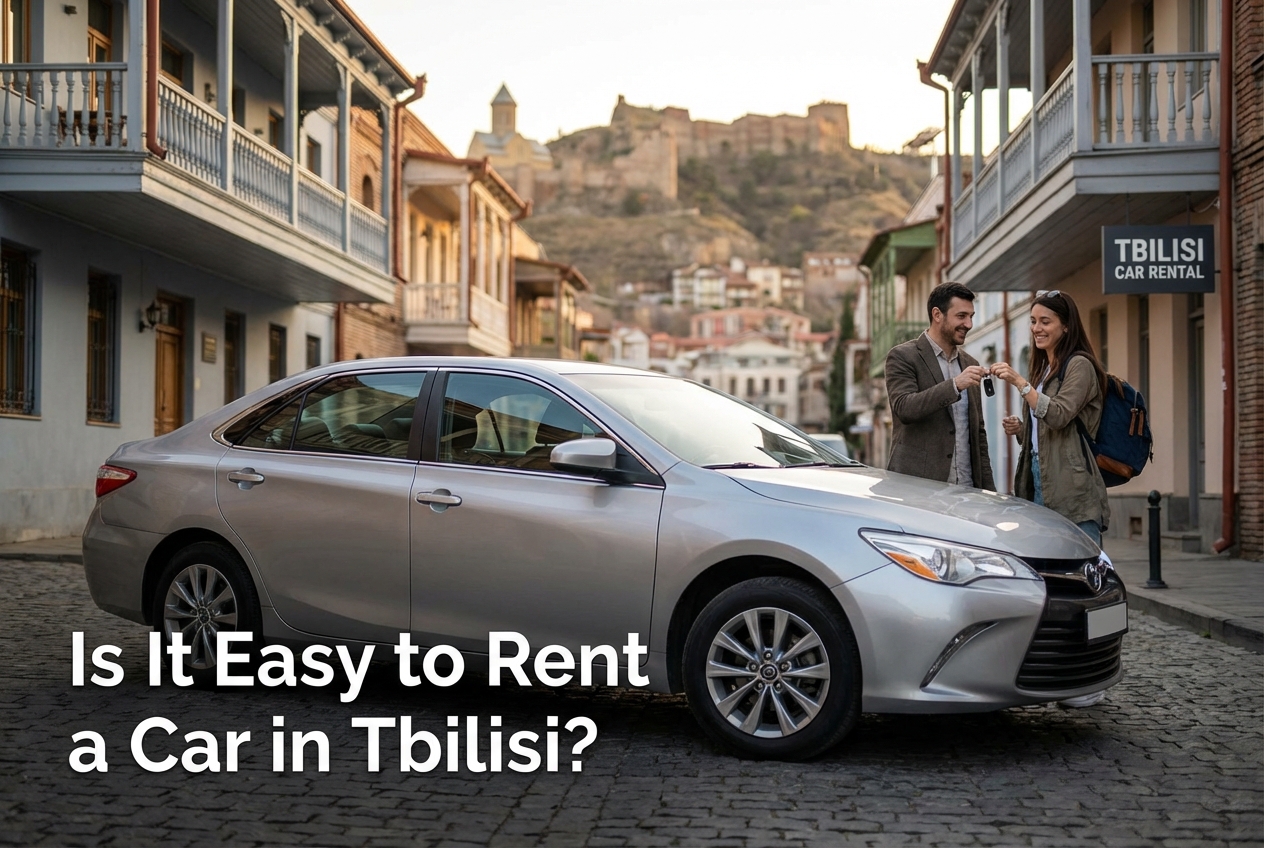
Overview of Car Rental Accessibility in Tbilisi
Georgia has become one of Eastern Europe’s most surprising travel destinations, and Tbilisi sits at the heart of that transformation. The capital city serves as a launching point for adventures into the Caucasus Mountains, ancient wine regions, and remote monasteries perched on cliffsides. But here’s the question travelers keep asking: is it actually easy to rent a car in Tbilisi, or will you spend half your trip dealing with paperwork and hidden fees?
The short answer might surprise you. Renting a car in Tbilisi is remarkably straightforward compared to many European capitals. The infrastructure has matured significantly over the past decade, with dozens of rental agencies competing for your business. This competition works in your favor, keeping prices reasonable and service standards relatively high.
What makes the Tbilisi rental market particularly accessible is the blend of international familiarity and local flexibility. You can stick with brands you recognize or venture into the local agency scene, where prices often drop and negotiation becomes possible. The city’s Shota Rustaveli Tbilisi International Airport handles most tourist arrivals, and rental desks line the arrivals hall like a welcoming committee.
That said, renting a car here comes with its own learning curve. Georgian driving culture differs from Western norms, the terrain demands respect, and some rental terms require careful reading. This guide breaks down everything you need to know, from documentation requirements to choosing between a compact sedan and a rugged 4×4. By the end, you’ll have a clear picture of whether renting makes sense for your specific trip.
International Brands vs. Local Rental Agencies
The rental landscape in Tbilisi splits into two distinct camps, and understanding this divide will save you money and headaches.
International brands like Hertz, Europcar, Avis, and Budget maintain airport counters and city locations throughout Tbilisi. These companies offer what you’d expect: standardized booking systems, multilingual staff, and insurance policies that translate across borders. If you’ve rented from Hertz in Paris or Budget in Los Angeles, the process in Tbilisi will feel familiar. You’ll pay for that familiarity, though. International brands typically charge 15-30% more than local competitors for comparable vehicles.
Local agencies represent the more interesting half of this equation. Companies like Carex, StarCar, and Local Rent have built strong reputations serving international tourists while maintaining Georgian pricing. According to Local Rent, car rental prices in Tbilisi are considered affordable, with economy sedans ranging from 24 to 40 euros a day. That’s significantly cheaper than what you’d pay in Western Europe for the same vehicle class.
Local agencies often provide perks that international chains skip. Unlimited mileage comes standard with most local rentals, a crucial benefit when you’re planning to explore beyond Tbilisi. StarCar.ge notes that their pricing includes taxes, insurance, and unlimited mileage with no hidden fees. Try getting that deal from a major international brand without negotiation.
The trade-off with local agencies involves trust and communication. Smaller companies may have less polished English-language support, and their terms and conditions sometimes require closer reading. That said, the best local agencies have adapted to international tourists and offer service quality that matches or exceeds their global competitors.
Booking Online vs. In-Person Rentals
Your booking method affects both price and peace of mind. Online reservations through aggregator sites like Discover Cars, Rentalcars.com, or directly through agency websites lock in rates and guarantee vehicle availability. This matters during peak season, when popular vehicle classes disappear quickly.
StarCar.ge recommends booking a car rental 60 days to 3 months in advance to maximize savings. Early booking during shoulder season can reduce costs by 20-25% compared to last-minute airport rentals.
In-person rentals at the airport work, but you’ll pay a premium for convenience. Airport locations charge higher rates than city offices, sometimes adding 10-15% to the base price. If your schedule allows, consider taking a taxi to your accommodation and renting from a city location the following day.
One strategy that works well: book online with a local agency that offers airport pickup. You get the price advantage of a local company with the convenience of airport collection. Many agencies will meet you at arrivals with a sign, handle paperwork on the spot, and have you driving within 30 minutes of landing.
| Booking Method | Typical Price Range | Best For |
|---|---|---|
| International Brand at Airport | $55-80/day | Risk-averse travelers, corporate bookings |
| Local Agency at Airport | $40-55/day | Convenience with moderate savings |
| Online Pre-booking (Local Agency) | $24-44/day | Maximum savings, guaranteed availability |
| Walk-in City Location | $30-50/day | Flexible itineraries, negotiation opportunities |
Legal Requirements and Essential Documentation
Before you start comparing prices, make sure you can actually rent a car in Georgia. The documentation requirements are straightforward but non-negotiable.
Driver’s License and International Driving Permits
Georgia accepts driver’s licenses from most countries, but the rules have nuances worth understanding. If your license is printed in Latin script, you can legally drive in Georgia without additional documentation. This covers licenses from the United States, United Kingdom, European Union countries, Australia, and most of the Americas.
Licenses in non-Latin scripts, including Russian, Chinese, Arabic, and several Asian languages, require an International Driving Permit. The IDP translates your license information into multiple languages and serves as a standardized document that Georgian authorities and rental agencies recognize.
Here’s where it gets practical: even if your license is in Latin script, carrying an IDP can smooth out interactions. Some rental agencies prefer seeing an IDP regardless of your license’s language. Police officers during traffic stops may process you faster with an IDP in hand. The permit costs around $20 in most countries and remains valid for one year, making it a worthwhile investment for any extended travel through Georgia.
Obtain your IDP before leaving home. You cannot get one in Georgia, and the process requires your physical presence at an authorized issuing office in your home country. In the United States, AAA and AATA handle IDP applications. Most European countries issue them through automobile clubs or government offices.
Your license must be valid for the entire duration of your rental period. Agencies will refuse rentals if your license expires during your trip, even by a single day.
Age Restrictions and Insurance Policies
Age requirements in Georgia are more lenient than in many Western countries. According to Carex.ge, you generally need to be at least 20 or 21 years old with a valid driver’s license held for at least one year. Some agencies set the minimum at 21, while others allow 20-year-olds to rent economy vehicles.
Drivers under 25 typically face young driver surcharges ranging from $5-15 per day. These fees apply regardless of your driving experience or record. If you’re traveling with someone over 25, having them serve as the primary driver eliminates this cost.
Upper age limits exist at some agencies, usually around 70-75 years old. Travelers above this threshold should contact agencies directly before booking to confirm eligibility.
Insurance deserves careful attention. Basic rental rates include mandatory third-party liability insurance required by Georgian law. This covers damage you cause to other vehicles and property, but it does nothing for your rental car.
Collision Damage Waiver reduces your liability for damage to the rental vehicle. Most agencies offer CDW with a deductible ranging from $300-1,000. If the car sustains damage, you pay up to the deductible amount. Full CDW, sometimes called Super CDW or Zero Deductible, eliminates this liability entirely but adds $10-20 per day to your rental cost.
Personal accident insurance and theft protection come as optional add-ons. Theft coverage matters more in Georgia than some destinations, particularly if you’re parking overnight in remote areas. Check whether your travel insurance or credit card provides rental car coverage before purchasing duplicate protection from the agency.
Navigating the Costs: Prices, Deposits, and Fuel
Understanding the full cost picture prevents unpleasant surprises when you return the vehicle. Georgian rental prices look attractive on the surface, and they remain attractive once you account for all the extras.
Average Daily Rates and Seasonal Fluctuations
The rental market in Tbilisi offers genuine value compared to Western European capitals. Local Rent reports that the average cost of a car rental in Tbilisi is around $44 USD per day. This average includes a mix of vehicle classes, from basic economy cars to larger SUVs.
Economy vehicles start around $24-30 per day during low season, which runs from November through March. Compact sedans suitable for city driving and paved highway travel fall into the $30-45 daily range. Mid-size vehicles with more luggage space and comfort cost $45-60 per day. SUVs and 4×4 vehicles necessary for mountain roads start around $55-80 daily.
Seasonal pricing swings significantly. Summer months from June through August bring the highest demand and prices. Expect to pay 30-50% more during peak season compared to winter rates. The shoulder seasons of April-May and September-October offer a sweet spot: pleasant weather, reasonable prices, and good vehicle availability.
Weekly rentals provide substantial discounts. Most agencies reduce the effective daily rate by 15-25% for rentals of seven days or longer. If you’re planning an extended trip, the math favors longer rental periods even if you don’t need the car every day.
| Vehicle Class | Low Season (Nov-Mar) | Shoulder Season | Peak Season (Jun-Aug) |
|---|---|---|---|
| Economy | $24-30/day | $30-38/day | $40-50/day |
| Compact Sedan | $30-40/day | $40-50/day | $55-70/day |
| Mid-size | $40-55/day | $55-70/day | $75-95/day |
| SUV/4×4 | $55-70/day | $70-90/day | $95-130/day |
Understanding Security Deposits and Payment Methods
Security deposits represent the most significant upfront cost beyond the rental itself. Agencies hold deposits to cover potential damage, traffic fines, or fuel replacement. Deposit amounts vary by vehicle class and agency, typically ranging from $200 for economy cars to $500-1,000 for premium vehicles and 4x4s.
Most agencies require credit card deposits. The agency authorizes a hold on your card rather than charging the amount outright. This hold reduces your available credit limit but doesn’t appear as a charge on your statement. Upon vehicle return, the hold releases within 3-14 days depending on your bank.
Debit cards create complications. Some agencies accept debit card deposits but may require higher amounts or additional documentation. Others refuse debit cards entirely for the deposit while accepting them for the rental payment itself. Confirm the deposit policy before arriving to avoid complications.
Cash deposits remain possible at some local agencies, particularly for longer rentals or repeat customers. Agencies accepting cash typically require the full deposit amount upfront, which they return upon vehicle inspection at the end of your rental.
Fuel policies follow two main models. Full-to-full requires you to return the vehicle with the same fuel level you received it. This straightforward approach works in your favor, as you only pay for fuel you actually use. Some agencies offer a full-to-empty option where you pay for a full tank upfront and return the car empty. This sounds convenient but typically costs more than filling up yourself at local stations.
Gasoline prices in Georgia run lower than Western Europe, averaging around $1.10-1.30 per liter. Diesel costs slightly less. Fuel stations are plentiful in Tbilisi and along major highways, though they become scarce in mountainous regions. Fill up before heading into remote areas.
Choosing the Right Vehicle for Georgian Terrain
Your vehicle choice might be the single most important decision of your rental experience. Georgia’s geography ranges from sea-level coastal plains to 5,000-meter peaks, and no single vehicle handles all of it well.
Economy Cars for City Driving
If your plans center on Tbilisi with occasional day trips along paved highways, an economy car serves you perfectly. These vehicles excel at urban navigation, fitting into tight parking spaces and sipping fuel through stop-and-go traffic. Popular economy options include the Hyundai i10, Kia Picanto, and various Toyota Yaris models.
Tbilisi’s old town features narrow streets that challenge larger vehicles. The winding roads of Mtatsminda and the tight corners of Sololaki become manageable in a compact car but stressful in an SUV. Parking in central Tbilisi favors smaller vehicles, with many spots sized for European compacts rather than American-style SUVs.
Day trips to Mtskheta, Sighnaghi, and the Kakheti wine region work fine in economy vehicles. The roads connecting these popular destinations are paved and well-maintained. You’ll find the smaller engine adequate for highway speeds, and fuel costs stay minimal.
The limitations become apparent when you venture off main routes. Economy cars lack the ground clearance for unpaved roads and the power for steep mountain grades. Attempting the Military Highway to Kazbegi in a Kia Picanto isn’t impossible, but you’ll feel every bump and struggle on the steeper sections.
4×4 Requirements for Mountainous Regions
Georgia’s most spectacular destinations require capable vehicles. The Caucasus Mountains don’t accommodate low-clearance sedans, and attempting certain routes in the wrong vehicle risks damage, getting stuck, or worse.
The Military Highway connecting Tbilisi to Kazbegi technically allows regular vehicles, but a 4×4 provides significant advantages. The road climbs to over 2,300 meters at the Jvari Pass, with steep grades and occasional rough patches. In winter or after rain, sections become genuinely challenging without all-wheel drive.
Tusheti National Park represents the extreme end of Georgian driving. The road from Pshaveli to Omalo is considered one of the most dangerous in the world, with sheer drops, no guardrails, and sections barely wider than a single vehicle. Only experienced drivers in proper 4×4 vehicles should attempt it, and many rental agencies prohibit their vehicles from this road entirely.
Svaneti, home to the UNESCO-listed towers of Ushguli, requires 4×4 capability for the final stretch. The main road to Mestia is paved and accessible to regular cars, but reaching Ushguli and other remote villages demands high clearance and often all-wheel drive.
Popular 4×4 options in the Tbilisi rental market include the Mitsubishi Pajero, Toyota Land Cruiser, and Hyundai Tucson. The Suzuki Jimny offers a budget-friendly option with genuine off-road capability, though its small size limits luggage space for groups.
Before booking a 4×4, confirm the agency’s policy on off-road driving. Some agencies restrict their vehicles to paved roads regardless of the vehicle’s capability. Others allow mountain driving but exclude specific routes like Tusheti from their insurance coverage. Get these details in writing before you sign.
As Geo Travel Market notes, “Renting a car provides the freedom to explore beyond the city limits, reaching destinations inaccessible by public transport.” This freedom reaches its fullest expression with the right vehicle for your intended routes.
Driving Conditions and Safety in Tbilisi
Renting a car is one thing. Actually driving it through Tbilisi is another experience entirely. The city presents challenges that differ from what most Western drivers expect.
Traffic Patterns and Parking Challenges
Tbilisi traffic operates on a different philosophy than most European capitals. Lane markings serve as suggestions rather than rules. Drivers change lanes frequently and often without signaling. The horn functions as a communication tool rather than an expression of frustration.
Rush hour traffic concentrates between 8-10 AM and 5-8 PM on weekdays. The main arteries through the city, including Rustaveli Avenue, Chavchavadze Avenue, and the roads along the Mtkvari River, slow to a crawl during these periods. If you’re picking up or returning a rental car, schedule around these windows.
Aggressive driving is common but rarely hostile. Georgian drivers expect you to assert yourself when merging or changing lanes. Hesitation creates confusion. Drive decisively, maintain awareness of vehicles around you, and you’ll adapt to the flow within a day or two.
Parking in central Tbilisi requires patience and creativity. Street parking exists but fills quickly in commercial areas. Look for the blue parking zone signs indicating paid parking areas. Payment happens through parking meters or mobile apps, with rates around 1-2 GEL per hour in central zones.
Underground and multi-story parking garages offer the most reliable option in busy areas. Rates run higher than street parking, typically 3-5 GEL per hour or 15-25 GEL for all-day parking. Major shopping centers like Galleria Tbilisi and East Point provide parking for customers.
Never leave valuables visible in your parked car. Opportunistic theft from vehicles occurs, particularly in tourist areas. Use the trunk for bags and equipment, and consider parking in attended lots overnight.
Road Quality and Navigation Tips
Road quality in Georgia spans the full spectrum from excellent highways to barely passable mountain tracks. Understanding what to expect helps you plan realistic driving times and choose appropriate routes.
The main highways connecting Tbilisi to major cities are generally good. The road to Batumi along the coast, the highway east to Kakheti, and the route south toward the Armenian border all feature paved surfaces with regular maintenance. These roads allow comfortable cruising at 80-100 km/h.
Secondary roads vary dramatically. Some regional routes are well-paved and pleasant to drive. Others feature potholes, crumbling edges, and surfaces that haven’t seen maintenance in years. Expect the unexpected, and reduce speed when road conditions deteriorate.
Mountain roads demand respect regardless of their condition. Steep grades, sharp switchbacks, and sheer drops are standard features. Many mountain routes lack guardrails, and the edges crumble into nothing. Drive these roads during daylight hours when possible, and never attempt them if you’re fatigued.
Navigation apps work well in Georgia. Google Maps provides accurate routing for most destinations, including real-time traffic data in Tbilisi. Maps.me offers offline maps that function without cell service, essential for mountain areas where coverage disappears. Download offline maps before heading into remote regions.
Speed limits follow European conventions: 60 km/h in urban areas, 80-90 km/h on regional roads, and 110 km/h on highways. Speed cameras exist on major routes, and fines arrive by mail to the rental agency, who will charge your card for any violations plus administrative fees.
Police checkpoints appear occasionally, particularly on routes leaving Tbilisi. These are routine and rarely involve more than a document check. Have your passport, driver’s license, and rental agreement accessible. Officers may not speak English, but the interaction typically remains brief and professional.
Final Verdict: Is Renting a Car Worth It?
After examining every angle of the Tbilisi rental experience, the answer depends entirely on what kind of trip you’re planning.
For travelers focused on Tbilisi itself, renting a car creates more hassle than benefit. The city’s public transportation, including the metro, buses, and abundant taxis, handles urban exploration efficiently and cheaply. Bolt and Yandex taxi apps work flawlessly, with rides across the city rarely exceeding $5-10. Parking headaches and traffic stress don’t justify the freedom a car provides within city limits.
The calculation shifts dramatically when you plan to explore beyond the capital. Georgia’s most remarkable experiences, from the ancient cave cities of Vardzia to the alpine meadows of Svaneti, lie hours from Tbilisi on roads that public transportation serves poorly or not at all. A rental car transforms a week in Georgia from a series of organized tours into a genuine adventure where you control the pace and destinations.
The rental process itself is genuinely easy. Documentation requirements are reasonable, prices remain affordable by European standards, and agencies have adapted well to serving international tourists. The average daily cost of around $44 according to Local Rent represents excellent value for the freedom it provides.
Choose your vehicle based on your actual itinerary, not aspirational plans. An economy car handles 80% of what most tourists want to see. Reserve the 4×4 premium for trips that genuinely require it.
If you’re still uncertain, consider a hybrid approach: spend your first days in Tbilisi without a car, then rent for a three or four-day loop through Kakheti or up to Kazbegi. You’ll experience both sides of Georgian travel and understand firsthand whether extended car rental suits your style.
Georgia rewards those who venture beyond the obvious. A rental car is your ticket to those rewards.