
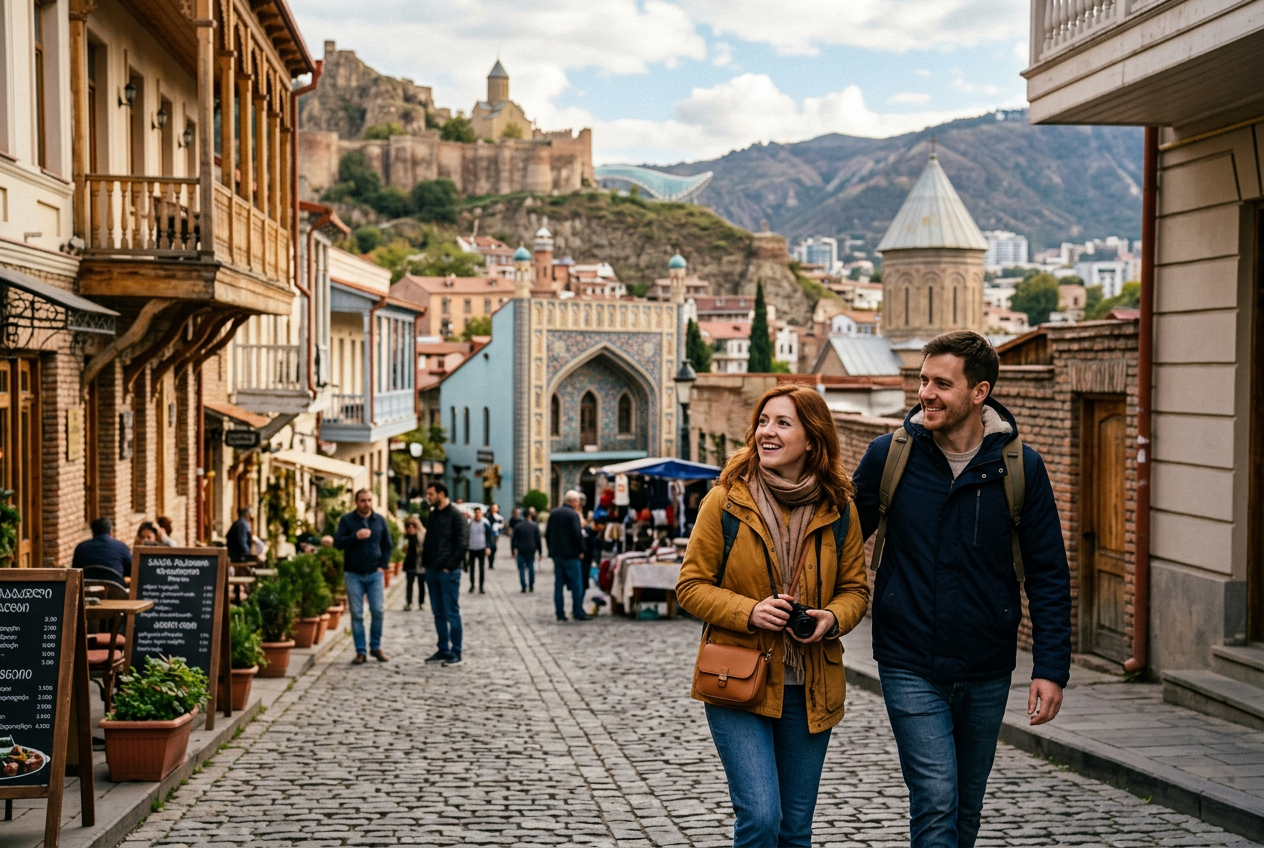
Georgia sits at the crossroads of Europe and Asia, a small country punching well above its weight in terms of scenery, food, and genuine warmth. For UK tourists wondering whether their pounds will stretch further here than in Western European capitals, the answer is a resounding yes. The cost of living in Georgia is reportedly 61-62% lower than in the United Kingdom, making it one of the most wallet-friendly destinations accessible from British airports.
But cheap doesn't mean compromised. This is a country where £50 a day can cover comfortable accommodation, hearty meals with free-flowing wine, and transport between ancient monasteries and snow-capped mountains. The Georgian Lari, while unfamiliar to most British travellers, works heavily in your favour. A meal that would cost £25 in London might set you back £6 in Tbilisi. A bottle of excellent local wine? Often less than £3.
I've watched friends return from Georgia genuinely confused about how little they spent. One couple budgeted £1,200 for two weeks and came home with £400 still in their account. That's not unusual here. The country operates on a different economic plane, where hospitality runs deep and prices haven't caught up with the Instagram-fuelled tourism boom. For now, Georgia remains what Croatia was fifteen years ago: spectacular, affordable, and relatively undiscovered by mass tourism.
Overview of Travel Costs and the Georgian Lari
The Georgian Lari (GEL) trades at roughly 3.5 to the pound, though this fluctuates. What matters more than the exact rate is what those Lari actually buy. In Tbilisi, you'll find prices that feel almost surreal compared to UK equivalents. A metro ride costs 1 GEL, roughly 28p. A khachapuri, the cheese-filled bread that's practically a national symbol, rarely exceeds 15 GEL (about £4) even in tourist-heavy areas.
Georgia's economy creates a fascinating split between local wages and tourist purchasing power. The average Georgian salary hovers around 1,500-2,000 GEL monthly. Your British income, even a modest one, translates into significant spending power here. This isn't about exploitation: it's simply economic reality. Georgians are proud of their country and genuinely happy to share it with visitors who appreciate what they're offering.
Exchange Rates and Pound Sterling Value
Currency exchange in Georgia favours preparation. Airport rates are predictably poor, so avoid changing more than emergency funds there. Tbilisi's exchange offices, scattered throughout the city centre, offer competitive rates without commission. Look for the electronic boards displaying rates and compare a few before committing.
The pound's strength against the Lari has remained relatively stable, though post-Brexit fluctuations mean checking rates before you travel is sensible. Apps like Wise or Revolut work well in Georgia, offering near-interbank rates and avoiding the 3% foreign transaction fees most UK banks charge. Many travellers find a combination approach works best: a small amount of cash for markets and rural areas, plus a fee-free card for larger purchases.
Cash vs Card Usage in Tbilisi and Rural Areas
Tbilisi has embraced card payments with enthusiasm. Restaurants, shops, and even many taxis accept contactless payment. The capital feels thoroughly modern in this regard. Step outside the city, however, and cash becomes essential. Villages in Kakheti's wine region or mountain communities in Svaneti operate almost entirely on Lari notes.
Marshrutka drivers, the operators of Georgia's ubiquitous minibuses, deal exclusively in cash. So do most guesthouses in rural areas, market vendors, and smaller restaurants. Withdraw Lari from ATMs in cities before heading into the countryside. Bank of Georgia and TBC Bank machines are reliable and widely available, typically allowing withdrawals up to 1,000 GEL at a time.
Flight and Transport Expenses from the UK
Getting to Georgia represents the biggest single expense for UK travellers, though even this has become more affordable. Direct flights from London to Tbilisi take around five hours, comparable to flying to the Canary Islands. The flight cost varies dramatically by season and booking timing.
Direct vs Indirect Flight Options
Wizz Air operates direct flights from London Luton to Kutaisi, Georgia's second airport, often at remarkably low prices. I've seen return flights advertised for under £100 during sales, though £150-200 is more typical for advance bookings. Kutaisi sits about four hours from Tbilisi by bus, which adds travel time but saves money.
For Tbilisi direct, Georgian Airways and occasional charter flights offer options, though prices run higher. Many travellers find the sweet spot involves indirect routes through Istanbul, Warsaw, or Vienna. Turkish Airlines, LOT Polish, and Austrian Airlines all serve Tbilisi with one stop, often pricing competitively with budget carriers. The cheapest month to fly from the UK to Georgia is typically November, with average return tickets costing £231. Summer months command premium prices, sometimes double the off-peak rates.
Getting Around: Marshrutkas, Taxis, and Trains
Internal transport costs in Georgia feel almost negligible by UK standards. Marshrutkas, the Soviet-era minibuses that connect every town and village, charge fares that seem like typos. Tbilisi to Batumi, a six-hour journey across the country, costs around 35 GEL (£10). Shorter hops between towns rarely exceed 10 GEL.
The Tbilisi metro deserves special mention. Metro rides cost just 1 GEL per ride, and the system covers most areas tourists need. Purchase a Metromoney card for 2 GEL, top it up, and tap in. The same card works on buses and the cable car up to Narikala Fortress.
Taxis in Georgia have transformed with app-based services. Bolt and Yandex Go operate throughout Tbilisi, with fares typically 5-15 GEL for city journeys. Download both apps before arriving: they work with international cards and eliminate haggling. For day trips, hiring a driver through your guesthouse often costs 150-200 GEL for a full day including fuel, splitting between travellers makes this remarkably economical.
Accommodation Prices for Different Budgets
Georgia's accommodation scene caters to every budget, from backpacker hostels to boutique hotels in converted mansions. What surprises most UK visitors is the quality available at budget prices. A private room in a hostel or guesthouse costs around 45-65 Georgian Lari, approximately £14 GBP. That's not a dorm bed: that's a private room, often with breakfast included.
Mid-range travellers find excellent value in the £30-50 per night bracket. This buys boutique hotels with character, central locations, and often stunning views. Tbilisi's old town contains converted caravanserais and renovated Soviet buildings now operating as stylish guesthouses. The aesthetic punch far exceeds what similar money would buy in Prague or Lisbon.
Boutique Hotels and Guesthouses
Georgian guesthouses represent the country's hospitality tradition in physical form. The concept of "stumari ghvtisaa" – the guest is a gift from God – runs deep here. Family-run guesthouses in wine regions like Kakheti or mountain villages in Kazbegi often include home-cooked meals in their rates. Hosts genuinely want to feed you, share their wine, and tell stories about their grandparents.
| Accommodation Type | Tbilisi Price Range | Rural Price Range |
|---|---|---|
| Hostel dorm | £5-8 per night | £4-6 per night |
| Private guesthouse room | £12-20 per night | £10-15 per night |
| Mid-range hotel | £30-50 per night | £20-35 per night |
| Boutique/luxury | £60-120 per night | £40-80 per night |
Booking platforms like Booking.com work well in Georgia, though direct contact via Facebook or WhatsApp sometimes yields better rates, especially for longer stays. Many guesthouses in rural areas don't appear on booking sites at all: ask locally or check travel forums for recommendations.
Dining Out: Food and Wine Affordability
Georgian cuisine ranks among the world's great food cultures, and experiencing it costs remarkably little. A budget of 40-50 GEL (approximately £10-£13 GBP) per day should cover food and drink if you're eating at local spots rather than tourist restaurants. That includes breakfast, lunch, dinner, and probably a glass or two of wine.
The food itself deserves a moment. Khinkali, the soup-filled dumplings that require specific eating technique, cost around 1-1.50 GEL each. Five or six make a meal. Khachapuri, in its various regional forms, ranges from 8-20 GEL depending on size and type. The Adjarian version, shaped like a boat with an egg yolk centre, is essentially a meal for two.
Cost of Traditional Supra Meals
The supra, Georgia's traditional feast, represents hospitality elevated to art form. These multi-hour meals involve dozens of dishes, endless toasts led by a tamada (toastmaster), and quantities of wine that would alarm a British doctor. Experiencing a supra at a restaurant costs 50-80 GEL per person for a memorable evening.
The real magic happens when guesthouses or local families invite you to their table. These spontaneous supras often appear without warning and without charge: refusing would cause genuine offence. I've heard countless traveller stories about taxi drivers inviting passengers home for dinner, or village grandmothers insisting on feeding passing hikers. This hospitality isn't performative: it's cultural DNA stretching back centuries to when Georgia sat on the Silk Road and welcoming strangers was both duty and survival strategy.
Comparing Supermarket and Alcohol Prices
Self-catering in Georgia saves money while introducing you to local ingredients. Supermarkets like Carrefour, Goodwill, and Nikora stock everything from fresh churchkhela (grape and walnut candy) to imported European goods. Fresh bread costs under 2 GEL, local cheese around 15-20 GEL per kilogram, and seasonal fruit and vegetables are almost comically cheap.
Wine prices in Georgia require mental recalibration. Decent bottles start around 8-10 GEL (£2.50-3) in supermarkets. Genuinely excellent qvevri wines, made using 8,000-year-old clay pot methods, rarely exceed 30-40 GEL. Chacha, the local grape brandy, costs even less. Beer runs 2-4 GEL for local brands. The markup in restaurants remains modest: expect to pay 15-25 GEL for a bottle of wine with dinner, roughly what you'd pay for a single glass in a London wine bar.
Sightseeing and Activity Costs
Georgia's greatest attractions cost nothing. The Caucasus Mountains don't charge admission. Neither do the cobblestone streets of Tbilisi's old town, the sulphur baths district, or the wine regions stretching toward the horizon. Much of what makes Georgia special exists freely in the landscape and culture.
Free Attractions and Low-Cost Museums
Tbilisi rewards aimless wandering. The Narikala Fortress, overlooking the city from a ridge, is free to explore. So are the botanical gardens tumbling down the hillside behind it. The Dry Bridge flea market, where Soviet memorabilia and antique carpets compete for attention, costs nothing to browse. Churches and cathedrals welcome visitors without charge, though modest dress is expected.
Museums charge nominal fees. The Georgian National Museum, housing treasures from the Colchian gold to Soviet-era exhibits, costs 15 GEL. The Open Air Ethnographic Museum, showcasing traditional houses from every region, charges 10 GEL. Even the Stalin Museum in Gori, a bizarre time capsule of Soviet hagiography, asks only 15 GEL for entry plus guide.
Day Trip Expenses to Kazbegi and Kakheti
Day trips from Tbilisi access dramatically different landscapes without breaking budgets. Kazbegi, the mountain region dominated by Mount Kazbek and Gergeti Trinity Church, sits three hours north. Marshrutkas make the journey for 20 GEL, or hire a shared taxi for around 40 GEL per person. The drive itself, climbing the Georgian Military Highway past Soviet-era monuments and alpine meadows, constitutes half the experience.
Kakheti, Georgia's wine heartland, spreads east of Tbilisi. Visiting wineries here often involves free tastings, though buying a bottle or two is good form. Hiring a driver for a Kakheti day trip, visiting multiple wineries and monasteries, typically costs 150-200 GEL for the car. Split between four people, that's under £15 each for a full day exploring.
Estimated Daily Budgets for UK Travelers
Putting real numbers together helps planning. These estimates assume you're already in Georgia, with flights budgeted separately.
| Budget Level | Daily Cost (GBP) | What It Includes |
|---|---|---|
| Backpacker | £25-35 | Hostel dorm, street food and markets, marshrutkas, free attractions |
| Comfortable | £50-70 | Private guesthouse room, restaurant meals, occasional taxi, some paid attractions |
| Mid-range | £80-120 | Boutique hotel, good restaurants, day trips with hired drivers, wine tastings |
| Luxury | £150+ | High-end hotels, fine dining, private tours, premium experiences |
Most UK visitors fall into the comfortable or mid-range categories and find their money stretches further than expected. A two-week trip at the comfortable level, including flights, might total £1,000-1,200 per person. That's less than a week in many Western European capitals.
As one travel expert notes, "Georgia remains one of Europe's most affordable destinations, offering world-class scenery, cuisine, and hospitality without overspending." This assessment holds true across seasons and regions. Whether you're hiking in Svaneti, wine-tasting in Kakheti, or exploring Tbilisi's art nouveau architecture, your pounds work harder here than almost anywhere else within a five-hour flight.
The question isn't really whether Georgia is cheap for UK tourists: it demonstrably is. The better question is why more British travellers haven't discovered it yet. For now, that works in your favour. Go before the secret spreads further, while guesthouse owners still have time to sit and share their stories, and wine still flows freely at prices that feel like gifts.