
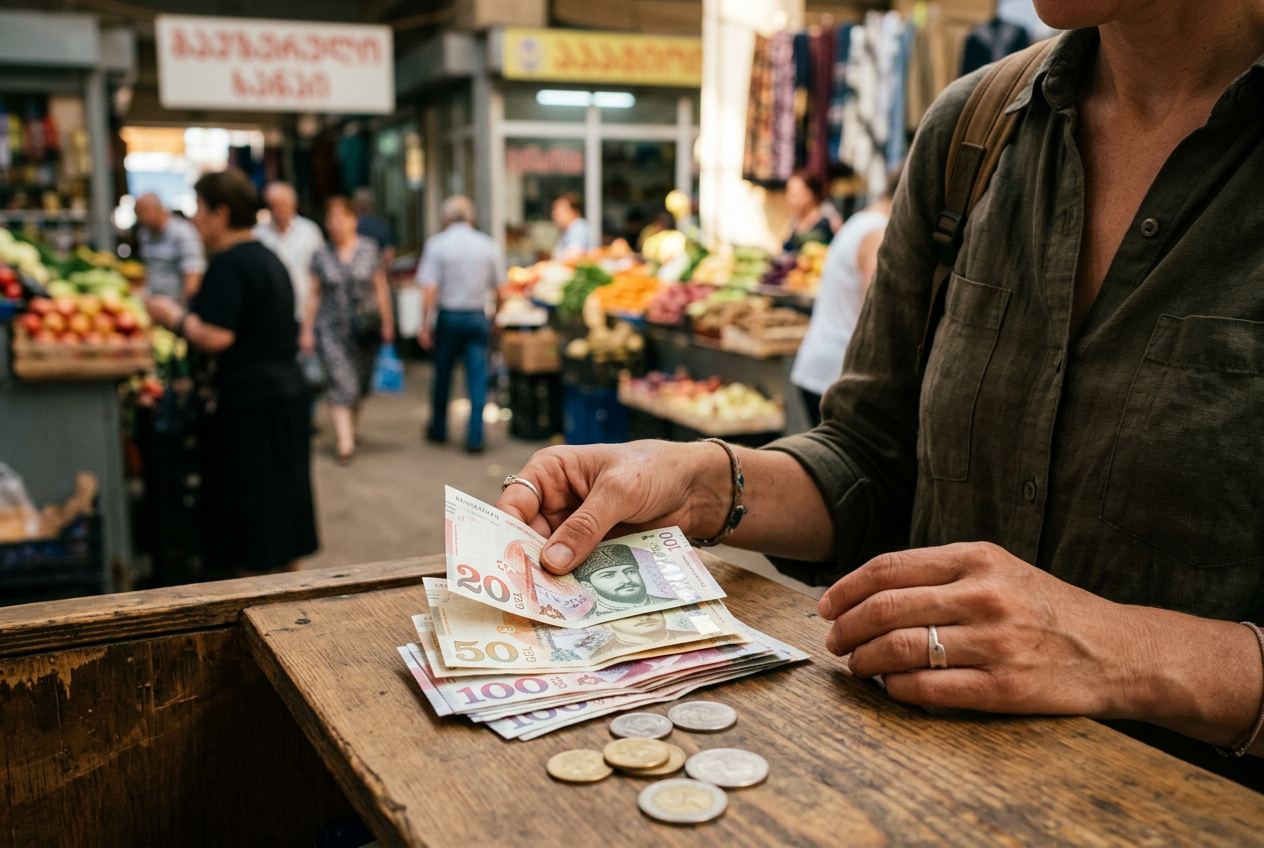
Georgia sits at the crossroads of Europe and Asia, a country where ancient monasteries cling to cliffsides and wine flows from clay vessels buried underground for millennia. The question of how much cash to carry to Georgia isn't straightforward because this small Caucasus nation operates on a fascinating dual economy. Tbilisi's trendy wine bars happily accept your Visa, while a guesthouse in Svaneti's mountain villages might look at your plastic card with genuine confusion.
I've watched travelers make both mistakes: showing up with thousands in cash they never needed, or arriving with just a card and scrambling when their rural marshrutka driver only accepts crumpled lari notes. The sweet spot depends entirely on your travel style, itinerary, and comfort level. A week in Tbilisi eating at restaurants and visiting museums requires a completely different cash strategy than a two-week trek through remote Tusheti.
The Georgian Lari (GEL) is your working currency here, trading at roughly 2.7 GEL to one US dollar as of 2024. What makes Georgia remarkable for budget travelers is how far this currency stretches: a filling khachapuri costs 8-15 GEL, a glass of excellent local wine runs 5-10 GEL, and you can ride Tbilisi's entire metro system for a single lari. But these bargains mean nothing if you're caught without cash in the wrong place. Let me break down exactly what you'll need.
Estimating Your Daily Budget in Georgian Lari (GEL)
Your daily spending in Georgia varies dramatically based on how you travel. Budget backpackers can genuinely survive on 80-120 GEL daily, mid-range travelers typically spend 150-250 GEL, and those wanting comfortable hotels with guided experiences should budget 300-500 GEL. These numbers include accommodation, which I'm not covering in depth here, but they give you a framework for understanding cash needs.
Budgeting for Food and Dining Out
Georgian cuisine ranks among the world's most underrated, and eating well here costs shockingly little. A proper sit-down meal at a local restaurant runs 25-40 GEL per person, including a generous portion of khinkali dumplings, fresh salads, and bread. Street food drops this further: a massive kubdari meat pie from a bakery costs 5-8 GEL and constitutes a full meal.
Breakfast at your guesthouse is often included, but grabbing a morning coffee and pastry at a café runs about 10-15 GEL. Supermarkets like Carrefour and Nikora offer excellent prepared foods if you want to picnic: expect to spend 20-30 GEL for a full day's groceries including local cheese, bread, fruit, and wine.
The real budget killer is alcohol at tourist-oriented establishments. A bottle of wine at a restaurant costs 30-60 GEL, while the same bottle at a wine shop runs 15-25 GEL. Budget 50-80 GEL daily for food if you're eating modestly, or 100-150 GEL if you want restaurant meals with wine.
Local Transportation and Intercity Travel Costs
Getting around Georgia is remarkably affordable. Within Tbilisi, a single bus or metro ride costs just 1 GEL, paid via a rechargeable Metromoney card available at any station. Taxis through Bolt or Yandex Go rarely exceed 10-15 GEL for trips within the city center.
Intercity travel is where cash becomes essential. Marshrutka minibus fares range from 5 GEL for shorter trips to about 15 GEL for longer journeys like Tbilisi to Kazbegi. These cramped but efficient vehicles depart from stations like Didube and Ortachala, and drivers exclusively accept cash. A shared taxi to Kazbegi runs 25-30 GEL per person, again cash only.
Georgian Railways accepts cards online but not always at stations. Budget 10-20 GEL daily for city transport, or 30-50 GEL on days involving intercity travel.
Entrance Fees for Museums and Attractions
Most Georgian attractions won't drain your wallet. The Georgian National Museum costs 15 GEL, the stunning Jvari Monastery is free, and even the impressive Prometheus Cave charges only 23 GEL including the boat ride. Churches and monasteries throughout the country are free to enter, though donation boxes appreciate small contributions.
Wine tastings vary wildly: a basic tasting at a family winery might be 20-30 GEL, while premium experiences at established vineyards like Château Mukhrani run 50-100 GEL. Budget 20-40 GEL daily for attractions, or more if wine tourism is your focus.
| Expense Category | Budget Traveler | Mid-Range | Comfortable |
|---|---|---|---|
| Daily Food | 50-80 GEL | 80-120 GEL | 150-200 GEL |
| Transportation | 15-25 GEL | 25-40 GEL | 50-100 GEL |
| Attractions | 10-20 GEL | 30-50 GEL | 60-100 GEL |
| Total Daily | 75-125 GEL | 135-210 GEL | 260-400 GEL |
Where Cash is Essential vs. Card-Friendly Areas
The urban-rural divide in Georgia's payment infrastructure is stark. Understanding where each payment method works saves frustration and potential embarrassment when your card gets declined at a village shop.
Navigating Tbilisi and Batumi with Plastic
Georgia's two largest cities have embraced card payments enthusiastically. Restaurants, cafés, supermarkets, and most shops in Tbilisi's tourist areas accept Visa and Mastercard without issue. The same applies to Batumi's beachfront establishments and the tourist infrastructure in Kutaisi.
That said, cash remains useful even in cities. Small bakeries, taxi drivers outside apps, and some wine shops prefer lari notes. The Dry Bridge flea market in Tbilisi operates entirely on cash, as do most street food vendors. I recommend keeping 50-100 GEL in your pocket even in Tbilisi, with the rest accessible via ATM.
Cash Requirements for Rural Regions and Guest Houses
Step outside the cities and cash becomes king. Family-run guesthouses in Svaneti, Tusheti, and Khevsureti almost universally require cash payment. The grandmother hosting you in Ushguli doesn't have a card machine, and the nearest ATM might be a three-hour drive away.
Experts recommend carrying both cash and cards since cards work in cities but cash remains essential in smaller towns and rural areas. For rural trips, calculate your expected accommodation costs plus 30% buffer and bring that amount in cash. A typical Svaneti guesthouse charges 80-120 GEL per person including meals, so a four-night stay means carrying at least 400-500 GEL just for lodging.
Using Cash at Open-Air Markets and Bazaars
Markets are cash-only territory throughout Georgia. The Dezerter Bazaar in Tbilisi, Batumi's colorful produce market, and weekly village markets all operate exclusively in lari. These markets offer the best prices on spices, churchkhela, cheese, and produce, but don't expect to tap your card.
Bargaining is acceptable at flea markets but not at food markets. Prices are generally fair, and attempting to haggle over vegetables is considered poor form. Bring small bills: vendors often struggle to break 100 GEL notes.
Currency Exchange and ATM Strategies
Getting Georgian Lari into your hands requires some strategy. The exchange rate you receive varies significantly based on where and how you convert your money.
Best Currencies to Bring for Exchange (USD vs. EUR)
US dollars and Euros both exchange easily throughout Georgia, with minimal difference in rates between them. Bring whichever you already have or can obtain cheaply. British Pounds and other major currencies also exchange without issue in Tbilisi, though options narrow in smaller cities.
Bring crisp, unmarked bills printed after 2006. Georgian exchange offices sometimes reject older, worn, or marked notes. The $100 bill typically gets the best rate, but $20s and $50s are more practical for smaller exchanges. I recommend bringing $200-300 USD as emergency backup even if you plan to use ATMs primarily.
Avoiding Common Pitfalls at Airport Exchange Booths
Tbilisi Airport's exchange booths offer notoriously poor rates, sometimes 10-15% worse than city center offices. If you arrive without lari, exchange only enough for a taxi to your hotel: about 30-40 GEL. The official airport taxi costs 40-50 GEL to central Tbilisi, though Bolt rides run cheaper.
Better exchange offices cluster around Rustaveli Avenue and in the underground passages near metro stations. Look for offices displaying rates close to the Google rate. Competition keeps most city exchanges honest, but always count your money before leaving the window.
ATM Fees and Withdrawal Limits in Georgia
ATMs from Bank of Georgia and TBC Bank are everywhere in cities and accept international cards. Most charge 2-5 GEL per withdrawal regardless of amount, making larger withdrawals more economical. Typical limits range from 1,000-2,000 GEL per transaction.
Your home bank likely charges additional foreign transaction fees. Check before traveling: some banks waive international ATM fees entirely. Withdraw in lari rather than accepting the ATM's conversion offer, which typically includes a 3-5% markup. A Hello eSIM with 1GB data costs around $4.50, useful for checking exchange rates and finding ATMs.
Safety and Practical Money Management Tips
Georgia ranks among the safest countries in the region, but basic precautions with money remain sensible. Petty theft is rare but not unknown, particularly in crowded tourist areas.
Legal Limits on Carrying Cash Across the Border
Georgia requires customs declaration if you're carrying more than 30,000 GEL or its equivalent in foreign currency, roughly $11,100 USD. This applies to cash, traveler's checks, and monetary instruments. Failure to declare can result in confiscation and fines.
Most travelers never approach this limit, but it's worth knowing. Also note that starting January 1, 2026, all tourists entering Georgia must have valid health and accident insurance with minimum coverage of 30,000 GEL. This doesn't affect cash carrying but represents an important new requirement.
How to Securely Store Your Cash While Traveling
Split your cash between multiple locations: some in your daypack, some in your main luggage, and some in a money belt if you're carrying significant amounts. Hotel safes in Georgia are generally reliable, though I prefer keeping valuables with me in rural guesthouses where "safes" may be nonexistent.
Avoid displaying large amounts of cash when paying. Georgian culture values hospitality deeply: the phrase "stumari ghvtisaa" means "a guest is a gift from God." But this doesn't mean flashing wealth is wise. Keep a small amount in an easily accessible pocket for daily purchases, with the rest secured.
Summary of Recommended Cash Amounts by Traveler Type
Your ideal cash amount depends on your itinerary and style. Here's my practical breakdown:
| Traveler Type | Trip Length | Recommended Cash |
|---|---|---|
| City-focused budget traveler | 1 week | 300-400 GEL + $100 backup |
| City-focused mid-range | 1 week | 500-700 GEL + $150 backup |
| Mixed urban/rural budget | 2 weeks | 800-1,000 GEL + $200 backup |
| Mixed urban/rural comfortable | 2 weeks | 1,200-1,500 GEL + $300 backup |
| Remote trekking focus | 1-2 weeks | 1,000-1,500 GEL + $200 backup |
The backup USD serves two purposes: emergency fund if ATMs fail, and currency you can exchange in remote areas where ATMs don't exist. I've never needed my emergency dollars in Georgia, but knowing they're there provides peace of mind.
For most two-week trips mixing Tbilisi, wine country, and mountain regions, I recommend arriving with 100-150 GEL for immediate expenses, then withdrawing 500-800 GEL before heading to rural areas. Keep your backup dollars separate from your daily spending money.
Georgia rewards travelers who embrace its quirks, including its cash-heavy rural economy. The guesthouse owner who can't process your card will likely pour you homemade chacha and insist you stay for dinner. That's worth carrying a few extra lari notes.