
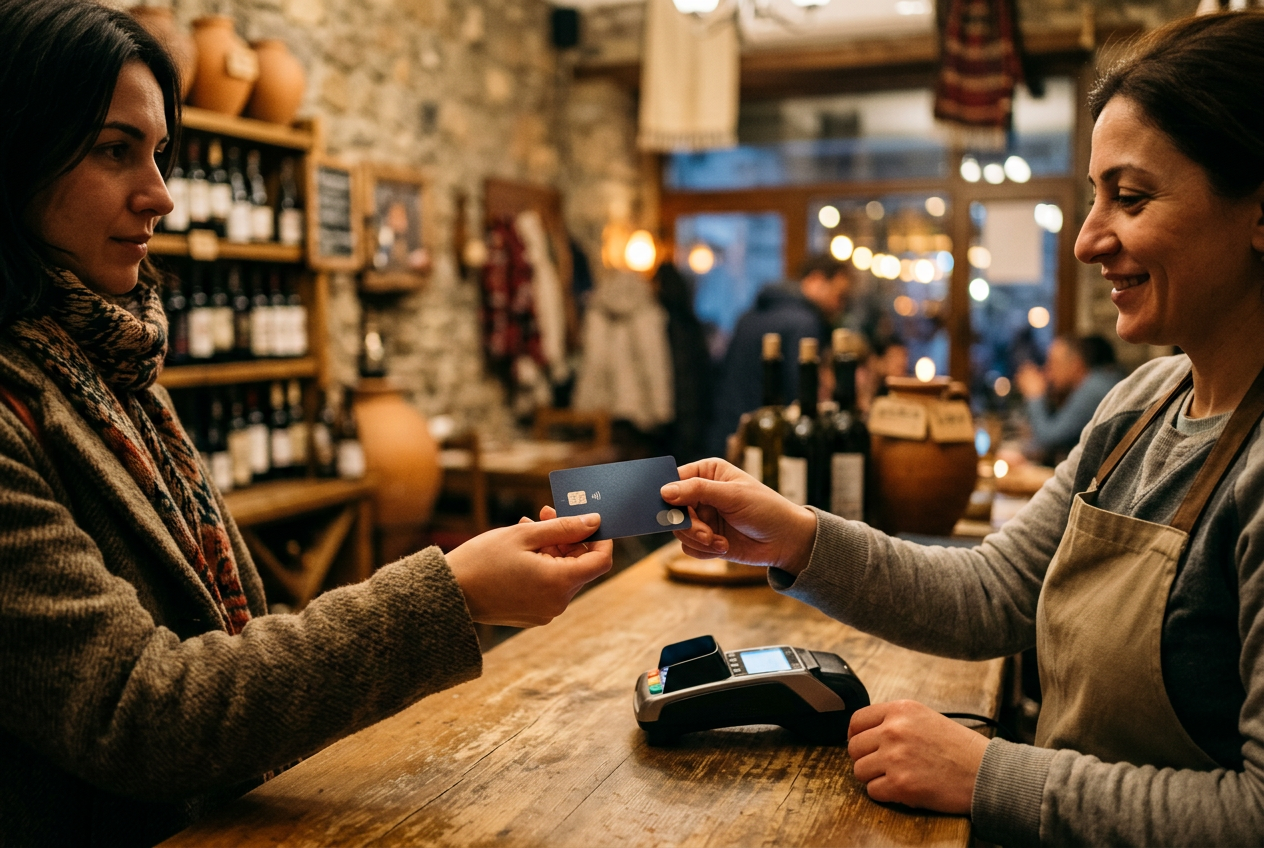
Georgia sits at the crossroads of Europe and Asia, a country where ancient stone churches dot mountain valleys and Tbilisi's modern wine bars buzz until 3 AM. If you're planning a trip to this Caucasus gem, you've probably wondered: can you use a credit card in Georgia? The short answer is yes, and more easily than you might expect for a post-Soviet nation. But the full picture requires understanding where plastic works seamlessly, where cash remains king, and how to avoid the fees that can quietly drain your travel budget.
I spent considerable time navigating Georgia's payment landscape, from sleek Tbilisi cafes to remote Svaneti guesthouses where the nearest ATM required a 40-minute drive. What I learned is that Georgia occupies an interesting middle ground: it's not quite as card-friendly as Western Europe, but it's far more modern than many travelers anticipate. The country has invested heavily in payment infrastructure over the past decade, and most visitors find they can rely on cards for the majority of transactions, with cash serving as backup for specific situations.
The key is knowing which situations require which payment method. Get this wrong, and you'll find yourself awkwardly asking fellow tourists for lari while a taxi driver waits impatiently. Get it right, and you'll move through Georgia as smoothly as locals do, switching between payment methods without friction.
Overview of Credit Card Acceptance in Georgia
Georgia's payment infrastructure has transformed dramatically since the early 2010s. What was once a predominantly cash economy now supports cashless payment in large hotels, popular guesthouses, supermarkets, restaurants, and cafes. This shift accelerated during the pandemic, when contactless payments became preferred for health reasons and simply never reverted to old habits.
The banking sector here is surprisingly sophisticated. TBC Bank and Bank of Georgia dominate the market, and both have invested heavily in digital infrastructure. You'll notice their ATMs and payment terminals everywhere in urban areas, often with interfaces available in English, Georgian, and Russian.
Urban vs. Rural Payment Infrastructure
Tbilisi and Batumi operate almost like European capitals when it comes to card acceptance. In Tbilisi's Vake and Vera districts, I rarely pulled out cash except for occasional street food purchases. Restaurants, wine bars, boutique hotels, co-working spaces, and even many corner stores accept cards without hesitation. Batumi, with its casino tourism and beach resort economy, is similarly card-friendly.
The contrast becomes stark once you venture into rural Georgia. In Kazbegi, Mestia, and smaller towns throughout Kakheti wine country, cash becomes essential. Village guesthouses often lack card terminals entirely. The family-run restaurant serving you khinkali might accept only lari, and the marshrutka driver definitely will. My rule of thumb: the smaller the settlement and the older the establishment, the higher the likelihood you'll need cash.
| Location Type | Card Acceptance | Cash Necessity |
|---|---|---|
| Tbilisi city center | Very high | Low |
| Batumi tourist areas | Very high | Low |
| Regional capitals | Moderate to high | Moderate |
| Mountain villages | Low | High |
| Rural guesthouses | Very low | Essential |
Major Accepted Card Networks (Visa and Mastercard)
Visa and Mastercard are the most commonly accepted credit cards in Georgia, and you'll rarely encounter situations where one works but not the other. These two networks cover virtually all card-accepting establishments throughout the country.
American Express is a different story. While some high-end hotels and international chains accept Amex, most Georgian businesses don't. The processing fees are higher, and the customer base using Amex is too small to justify the expense. If Amex is your primary card, bring a Visa or Mastercard backup.
Discover and other regional networks have essentially zero acceptance. Don't rely on them.
Where You Can and Can't Use Plastic
Understanding the specific contexts where cards work, and where they don't, saves considerable frustration. The patterns are fairly consistent once you recognize them.
Hotels, Restaurants, and Supermarkets
Hotels across all price ranges typically accept cards, from budget hostels to luxury properties. I've yet to encounter a proper hotel in Georgia that required cash payment, though some smaller guesthouses prefer it. Booking.com and Airbnb properties usually clarify payment methods in their listings.
Restaurants in tourist areas and cities accept cards almost universally. The exception is very traditional establishments, particularly those catering primarily to locals rather than visitors. When in doubt, ask before ordering. Most servers appreciate the question and will tell you honestly.
Supermarket chains like Carrefour, Nikora, and Smart accept cards at all locations. These are often the most reliable places to use plastic, with modern terminals and staff trained on international cards. Pharmacy chains similarly accept cards without issue.
Public Transport and Ride-Hailing Apps
Tbilisi's metro system uses a rechargeable card called the Metromoney card, which you can top up with cash or card at metro stations. Individual ride fares cannot be paid directly with credit cards.
Marshrutkas, the ubiquitous minibuses connecting cities and towns, operate exclusively on cash. Drivers typically don't even have the infrastructure to accept cards if they wanted to. Have small bills ready: a 50-lari note for a 3-lari fare will earn you an exasperated look.
Ride-hailing apps are where Georgia shines. Bolt and Yandex Go both operate throughout Tbilisi and Batumi, accepting card payments seamlessly through the app. This eliminates the need for cash in taxis entirely within these cities, and I'd recommend using these apps over hailing traditional taxis, which require cash and sometimes involve fare negotiations.
Local Bazaars and Small Guesthouses
The Deserter's Bazaar in Tbilisi, the Batumi market, and smaller regional markets operate almost entirely on cash. Vendors selling churchkhela, spices, cheese, and produce don't have card terminals. This is actually part of the charm: haggling and paying in crumpled lari notes feels more authentic than tapping a card.
Family-run guesthouses in places like Ushguli, Omalo, or small Kakheti villages typically prefer or require cash. Many operate informally, without the business registration that would necessitate card terminals. Even when a guesthouse technically accepts cards, the connection might be unreliable in remote mountain areas. Carry enough cash to cover accommodation when venturing into rural regions.
Managing Cash and ATMs
Despite widespread card acceptance, you'll need Georgian lari for certain situations. Understanding how to get cash efficiently and safely matters.
Withdrawing Georgian Lari (GEL)
ATMs are abundant in Tbilisi, Batumi, and regional capitals. TBC Bank's green machines and Bank of Georgia's orange ones dominate the landscape. Both offer English-language interfaces and accept international Visa and Mastercard without issues.
Withdrawal fees from ATMs are usually low, around 3-5 GEL, which translates to roughly $1-2 USD. This is significantly cheaper than many European countries, where ATM fees can reach $5-7 or more. However, your home bank may charge additional foreign withdrawal fees, so check your card's terms before traveling.
Withdraw larger amounts less frequently rather than small amounts often. This minimizes both local ATM fees and any per-transaction fees your bank charges. I typically withdrew 300-500 GEL at a time, enough for several days of incidental cash needs without carrying excessive amounts.
ATM Safety and Common Fees
Use ATMs attached to bank branches during business hours when possible. These are less likely to have skimming devices and provide immediate access to bank staff if something goes wrong. Avoid standalone ATMs in tourist areas, particularly around Rustaveli Avenue's busier sections.
Some ATMs offer to convert your withdrawal to your home currency on the spot. Always decline this option and choose to be charged in Georgian lari. The conversion rates ATMs offer are significantly worse than what your bank will provide. This applies to all transactions, not just ATM withdrawals.
Check your withdrawal limits before traveling. Some banks restrict daily foreign ATM withdrawals to $300-500. If you need more cash, you may need to make multiple withdrawals across different days or contact your bank to raise limits temporarily.
Fees and Currency Conversion Tips
The difference between savvy and careless payment practices can easily amount to 5-10% of your total spending in Georgia. These percentages add up quickly on a two-week trip.
Avoiding Dynamic Currency Conversion (DCC)
Dynamic Currency Conversion is the practice where a merchant or ATM offers to charge you in your home currency rather than lari. This sounds convenient but costs you money every single time. The conversion rate used includes a markup of 3-7%, sometimes more.
When a terminal asks whether you want to pay in GEL or USD/EUR/GBP, always choose GEL. When an ATM asks the same question, choose GEL. Your bank will convert the lari charge to your home currency at the interbank rate, which is far better than the DCC rate.
Some merchants or ATM screens make the DCC option appear like the default or recommended choice. It's not. It benefits them, not you. Train yourself to automatically select the local currency option regardless of how the screen presents it.
Foreign Transaction Fees for Travelers
A surcharge of 1-3% may be applied to foreign card transactions by Georgian merchants, though this is less common than in some other countries. More significantly, your own bank likely charges foreign transaction fees on every purchase.
Many American credit cards charge 3% on foreign transactions. Over a $3,000 trip, that's $90 in fees. Cards marketed to travelers, like the Chase Sapphire Preferred or Capital One Venture, waive these fees entirely. If you travel internationally more than once every few years, getting a no-foreign-transaction-fee card pays for itself quickly.
Debit cards often have worse foreign transaction terms than credit cards. Check your specific card's fee structure. Some banks, like Charles Schwab, offer debit cards with no foreign transaction fees and ATM fee reimbursements, making them excellent travel companions.
Practical Tips for Secure Payments in Georgia
Beyond fees, security and convenience matter. A few preparations before and during your trip prevent common problems.
Using Contactless and Mobile Wallets
Contactless payments work widely in Georgia. Most modern terminals accept tap-to-pay, and younger Georgians use it constantly. Apple Pay and Google Pay function at any terminal accepting contactless cards, which includes most urban establishments.
The advantage of mobile wallets extends beyond convenience. If your phone is stolen, you can remotely disable payment capabilities. If your physical card is stolen, you're in a more complicated situation. Using your phone as your primary payment method and keeping your physical card secured in your accommodation makes sense.
Looking ahead, Georgia's Instant Payment System is scheduled to launch in the second half of 2026, enabling instant GEL transactions. This will further modernize the country's payment infrastructure and likely increase card acceptance even in smaller establishments.
Notifying Your Bank Before Travel
Contact your bank and credit card companies before departing. Inform them of your travel dates and destination. Without this notification, your card may be blocked after the first Georgian transaction triggers fraud alerts.
Most banks now allow travel notifications through their apps or websites. Set notifications for all countries you'll visit, including any layover destinations. A blocked card in a foreign country creates significant stress, even if the block can eventually be lifted through a phone call.
Keep your bank's international phone number saved in your phone. The 1-800 numbers on card backs don't work from abroad. Most banks have collect-call numbers for international customers, but you need to find these before you need them.
Making the Most of Your Payment Options
Georgia rewards travelers who prepare thoughtfully for payment realities. Carry two cards from different networks in case one fails. Keep a cash reserve of 200-300 GEL for situations where cards don't work. Download Bolt before you arrive. Notify your banks.
The country's payment infrastructure continues improving yearly, and most visitors find card acceptance exceeds their expectations. The combination of widespread Visa and Mastercard acceptance, low ATM fees, and reliable ride-hailing apps makes Georgia easier to navigate financially than many destinations in the region.
What matters most is flexibility. Embrace the modern convenience of contactless payments in Tbilisi's wine bars, then switch to cash when a village grandmother invites you in for homemade chacha. Both experiences are authentically Georgian, and being prepared for both lets you say yes to whatever the country offers.