
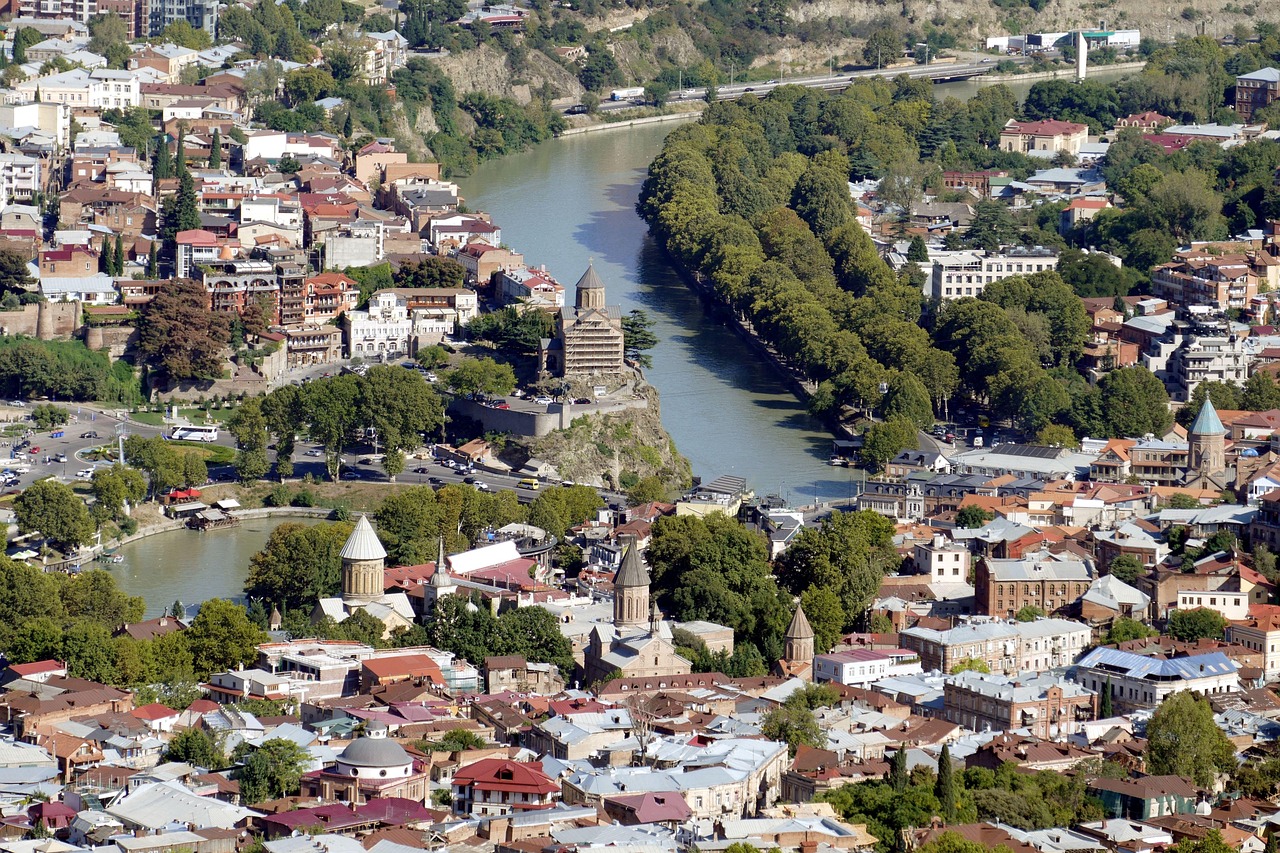
Filling a glass straight from the tap in a foreign city always comes with that moment of hesitation. You turn the faucet, watch the water flow, and wonder: is this actually safe? For travelers arriving in Tbilisi, this question surfaces almost immediately. The good news is straightforward: yes, you can drink tap water in Tbilisi. The city’s water supply meets international safety standards, and locals drink it daily without concern. But like most things worth knowing, the full picture has nuances worth understanding.
Georgia sits at a fascinating crossroads where ancient infrastructure meets modern water treatment. The capital draws its water from some of the cleanest natural sources in the region, yet the journey from mountain reservoir to your kitchen sink involves aging Soviet-era pipes in some neighborhoods. This creates a situation where the water leaving treatment facilities is excellent, but what arrives at individual taps can vary by building and district. Understanding these variables helps you make informed choices about when to drink freely and when a simple filter might improve your experience.
Whether you’re relocating to Tbilisi for work, spending a few weeks exploring the Old Town, or simply passing through on a Caucasus adventure, knowing the real story about local water quality removes one uncertainty from your travel planning. The information here comes from current testing data, conversations with residents, and practical observations about what actually works for people living in the city.
The Safety Standards of Tbilisi’s Water Supply
Tbilisi’s tap water quality often surprises visitors who expect developing-world conditions. The reality is that Georgia has invested significantly in water infrastructure since independence, and the capital city benefits from both natural advantages and modern treatment processes. Municipal water undergoes rigorous testing that meets World Health Organization guidelines, with daily monitoring at multiple points throughout the distribution system.
The city processes approximately 700,000 cubic meters of water daily to serve its population of roughly 1.2 million residents. Testing covers bacterial contamination, chemical pollutants, heavy metals, and turbidity levels. Results consistently show compliance with Georgian national standards, which align closely with European Union directives. Independent testing by international organizations has confirmed these findings, placing Tbilisi’s water quality on par with many Western European capitals.
The Role of Georgian Water and Power (GWP)
Georgian Water and Power, the primary utility serving Tbilisi, operates under regulatory oversight that requires transparency in water quality reporting. The company publishes quarterly reports detailing contamination levels, treatment processes, and infrastructure investments. Since privatization in 2008, GWP has invested over 500 million Georgian Lari in system upgrades, replacing aging mains and modernizing treatment facilities.
The utility maintains 24-hour monitoring at treatment plants and conducts over 15,000 water quality tests annually across the distribution network. When issues arise, such as main breaks or contamination events, GWP issues public notifications through local media and social channels. This level of accountability represents a significant improvement from the unreliable supply and questionable quality that characterized the 1990s.
GWP’s treatment process includes coagulation, sedimentation, filtration, and disinfection stages. The final chlorination step ensures water remains safe throughout its journey through the pipe network, though this does affect taste in ways some people notice.
Natural Sources: Water from the Caucasus Mountains
The Greater Caucasus range provides Tbilisi with an exceptional natural advantage. The city’s primary water sources include the Zhinvali and Tbilisi Sea reservoirs, fed by rivers originating in mountain glaciers and snowmelt. These high-altitude sources begin their journey through relatively unpopulated watersheds, arriving at treatment facilities with lower contamination levels than water drawn from agricultural or industrial regions.
Zhinvali Reservoir, located about 70 kilometers north of the city, holds approximately 520 million cubic meters of water and serves as the primary supply. The reservoir’s mountain location means water temperatures remain cool year-round, naturally inhibiting bacterial growth. Surrounding forests and protected watershed areas minimize agricultural runoff and industrial pollutants that plague water sources in more densely developed regions.
This natural purity means treatment plants can achieve safety standards with less intensive chemical processing. The result is water that tastes cleaner and requires lower chlorine doses than cities relying on lowland rivers or groundwater affected by agricultural activity.
Key Factors Affecting Water Quality at the Tap
The gap between treatment plant output and what flows from your faucet explains most complaints about Tbilisi’s water. Municipal supply leaves processing facilities in excellent condition, but the final kilometers of delivery can introduce variables that affect taste, appearance, and occasionally safety. Understanding these factors helps you assess your specific situation.
Building age and maintenance practices create the most significant variations in tap water quality across the city. A newly constructed apartment building in Saburtalo will deliver water quite differently than a Soviet-era block in Nadzaladevi that hasn’t updated its internal plumbing since 1975. The city’s diverse architectural history means neighbors on the same street might have dramatically different experiences with their tap water.
Aging Infrastructure and Building Pipes
Tbilisi’s water distribution network includes pipes installed across multiple eras, from pre-Soviet construction through recent installations. While GWP has replaced major trunk lines, the responsibility for building-internal plumbing falls to property owners and management companies. This creates a patchwork where modern mains connect to buildings with outdated internal systems.
| Pipe Material | Common Era | Potential Issues | Prevalence in Tbilisi |
|---|---|---|---|
| Galvanized Steel | 1950s-1980s | Rust, zinc leaching | Common in Soviet blocks |
| Lead (rare) | Pre-1950s | Lead contamination | Very rare, mostly replaced |
| Copper | 1970s-present | Minimal, possible green tinting | Moderate |
| PVC/Plastic | 1990s-present | Generally safe | New construction |
Buildings constructed during the Soviet period often contain galvanized steel pipes that have corroded over decades. This corrosion can release iron particles that cause brown discoloration and metallic taste without necessarily creating health hazards. However, the rust buildup can also harbor bacteria if chlorine levels drop too low by the time water reaches upper floors.
If you’re renting an apartment, asking about recent plumbing updates provides useful information. Buildings that have replaced internal pipes within the past 15 years typically deliver water matching municipal quality. Older systems might benefit from point-of-use filtration.
Chlorination and Mineral Content
The chlorine used to disinfect Tbilisi’s water supply is safe at treated levels but creates the primary taste complaint among residents and visitors. Chlorine concentrations at the tap typically range from 0.3 to 0.5 mg/L, within WHO guidelines but noticeable to sensitive palates. The characteristic swimming-pool taste bothers some people more than others.
Simple solutions address chlorine taste effectively. Filling a pitcher and leaving it uncovered in the refrigerator for a few hours allows chlorine to dissipate naturally. Activated carbon filters, whether in pitcher form or attached to faucets, remove chlorine almost completely. These approaches don’t indicate the water is unsafe, just that some people prefer it without the disinfectant taste.
Mineral content in Tbilisi’s water runs moderate, with calcium and magnesium levels that create some scale buildup in kettles and coffee makers but fall well below concerning thresholds. The water is neither particularly hard nor soft by international standards. Most appliances handle it without problems, though periodic descaling keeps heating elements efficient.
Practical Tips for Travelers and Residents
Living with Tbilisi’s tap water comfortably requires minimal adjustment for most people. The baseline safety means you can brush teeth, wash produce, and cook without concern anywhere in the city. Whether you choose to drink it straight depends on your building’s plumbing, your taste preferences, and how long you’re staying.
Short-term visitors often find it simplest to use a filtered pitcher or purchase bottled water for drinking while using tap water for everything else. Long-term residents typically invest in under-sink or faucet-mounted filters that provide convenient access to improved-taste water without ongoing bottle purchases. The choice is about convenience and preference rather than safety for most neighborhoods.
When to Use a Filtration System
Filtration makes sense in several specific situations beyond simple taste improvement. If your building’s pipes are visibly old, if you notice persistent discoloration even after running the tap, or if you have young children or immunocompromised household members, a quality filter adds a reasonable layer of protection.
Effective options for Tbilisi conditions include:
- Activated carbon filters (pitchers or faucet-mount): Remove chlorine, improve taste, reduce some sediment. Cost-effective for most situations.
- Reverse osmosis systems: Remove virtually all contaminants including minerals. Overkill for municipal water but useful if you want absolute purity.
- UV purification: Kills bacteria and viruses without chemicals. Unnecessary for chlorinated municipal supply but valuable if drawing from wells or during boil-water advisories.
For most residents, a quality pitcher filter like Brita or Aquaphor (widely available in Tbilisi supermarkets) handles the job adequately. Replace cartridges according to manufacturer schedules, as exhausted filters can actually harbor bacteria. Running the tap for 30 seconds before filling your filter helps flush standing water from pipes, especially first thing in the morning.
Recognizing Temporary Discoloration After Repairs
Pipe repairs, main breaks, and scheduled maintenance can temporarily affect water quality in specific areas. GWP typically announces planned work through local channels, but emergency repairs happen without warning. Knowing what to expect helps you respond appropriately.
Brown or rust-colored water after repairs usually indicates disturbed sediment in pipes rather than contamination. Running the cold tap until water clears, typically 2-5 minutes, resolves most instances. Avoid using discolored water for laundry, as iron particles can stain light-colored fabrics. If discoloration persists beyond 24 hours, contact GWP to report the issue.
Milky or cloudy water usually results from air bubbles introduced during repairs and clears within minutes if you let a glass sit. This poses no health concern. However, if cloudiness persists or water develops an unusual odor, avoid drinking it until you can verify the cause with the utility company.
Bottled Water and Mineral Alternatives in Georgia
Georgia’s bottled water market offers exceptional quality that reflects the country’s natural resources. While tap water is safe for daily use, the local mineral waters provide genuinely distinctive options worth exploring for their taste and purported health benefits. Georgian mineral waters have been prized for centuries, with some springs documented since medieval times.
The country’s volcanic geology creates naturally carbonated mineral springs with unique mineral compositions. Unlike artificially carbonated waters, these emerge from the ground already effervescent, with mineral content that varies by source and creates distinct flavor profiles. Trying different Georgian mineral waters becomes a minor culinary adventure for visitors.
Famous Brands: Borjomi and Nabeghlavi
Borjomi stands as Georgia’s most famous export water, bottled from springs in the resort town of the same name since 1890. The naturally carbonated water contains high levels of sodium bicarbonate, giving it a distinctive salty-mineral taste that takes some adjustment for first-time drinkers. Georgians consume Borjomi as a digestive aid, particularly after heavy meals, and swear by its hangover-curing properties.
Nabeghlavi offers a milder alternative with lower mineral content and gentler carbonation. Many visitors find it more approachable than Borjomi while still distinctly different from standard bottled water. The brand sources from springs in western Georgia’s Racha region, and its lighter character makes it popular for everyday drinking.
Other notable Georgian waters include Likani, Bakuriani, and Sairme, each with characteristic mineral profiles. Prices remain remarkably affordable by international standards, with a 500ml bottle of Borjomi costing around 1-2 GEL (roughly $0.40-0.80 USD) at supermarkets. Restaurants typically charge 3-5 GEL for the same bottle.
The Environmental Impact of Choosing Tap Over Plastic
The decision between tap and bottled water extends beyond personal convenience into environmental territory. Georgia, like many countries, struggles with plastic waste management, and single-use water bottles contribute significantly to the problem. Choosing tap water, with or without filtration, represents a meaningful reduction in plastic consumption for long-term residents.
Tbilisi lacks comprehensive recycling infrastructure, meaning most plastic bottles end up in landfills or, worse, scattered in the environment. The Mtkvari River that flows through the city carries visible plastic pollution downstream. Each person switching from bottled to filtered tap water eliminates roughly 150-200 bottles annually from the waste stream.
Reusable bottles filled with filtered tap water offer the best combination of convenience, cost savings, and environmental responsibility. Quality insulated bottles keep water cold throughout Tbilisi’s hot summers, and public fountains throughout the city provide refill opportunities. Many cafes will refill bottles for free if you’re a customer, and some actively encourage the practice.
The financial math also favors tap water decisively. A household spending 15 GEL weekly on bottled water could instead invest 50-100 GEL in a quality filter system and recoup the cost within two months. Over a year, the savings approach 700 GEL, enough for a weekend trip to Kazbegi or a memorable dinner at one of Tbilisi’s excellent restaurants.
Making Your Decision About Tbilisi’s Tap Water
The question of whether you can drink tap water in Tbilisi has a clear answer: yes, safely. The more nuanced question of whether you’ll want to depends on your building, your taste preferences, and your willingness to invest in simple filtration. Most visitors find that a combination approach works best: tap water for cooking and brushing teeth, filtered or bottled water for drinking, and local mineral waters for the experience.
Trust the municipal supply for safety while taking sensible precautions based on your specific accommodation. Run taps briefly before drinking, consider a basic filter if you’re staying more than a few days, and don’t hesitate to ask your host or landlord about the building’s plumbing history. These small steps let you enjoy Tbilisi without the expense and environmental cost of constant bottled water purchases.
Georgia offers visitors remarkable hospitality, stunning landscapes, and food worth traveling for. The water, whether from the tap or from ancient mineral springs, is simply one more element of a country that rewards those who engage with it thoughtfully. Drink up, and enjoy your time in one of the Caucasus region’s most fascinating capitals.