
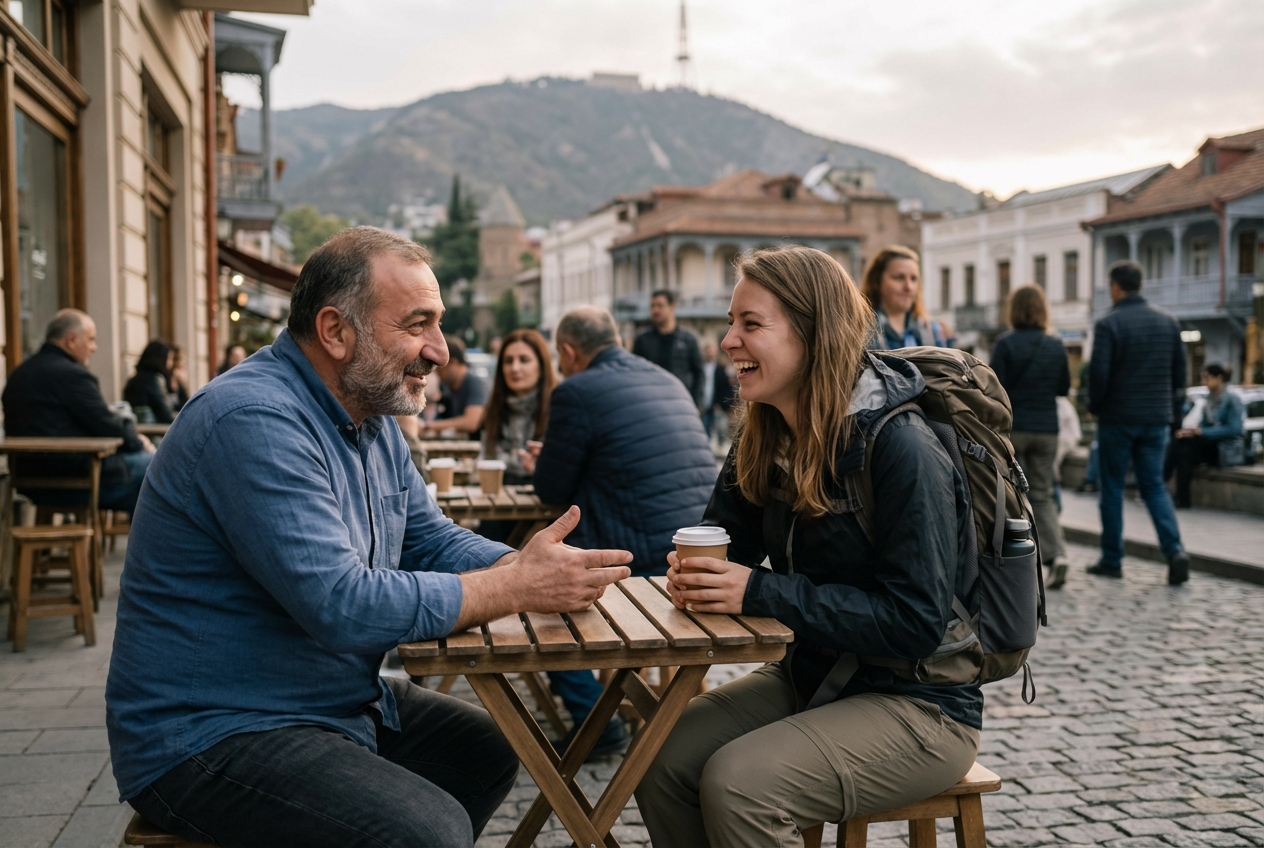
When my flight touched down in Tbilisi at 3 AM, I expected the usual bleary-eyed customs agents and taxi drivers looking to overcharge a tired foreigner. Instead, the border officer smiled, asked about my trip, and genuinely wished me a wonderful stay. The taxi driver refused to let me carry my own bags and spent the entire ride recommending his favorite restaurants, none of which he had any financial interest in. That first hour set the tone for everything that followed, and it answered a question many American travelers ask before visiting: are Georgians friendly to Americans?
The short answer is yes, remarkably so. But the longer answer reveals something more interesting about Georgian culture, history, and the unique relationship this small Caucasus nation has with the United States. Georgia consistently ranks among the most pro-American countries in the world, and that sentiment translates into genuine warmth on the ground. According to CRRC.ge, 79% of Georgians approve of doing business with Americans, with particularly strong support among those aged 18-35. This isn't just political posturing; it shows up in daily interactions, from shopkeepers who light up when they hear an American accent to strangers who insist on buying you a drink.
The Cultural Context of Georgian Hospitality
Georgian hospitality isn't a marketing slogan or a tourism initiative. It's a deeply embedded cultural value that predates any modern geopolitical alignment. Understanding this context helps explain why visitors from the United States often report feeling more welcomed in Georgia than in many Western European destinations.
The Tradition of 'A Guest is a Gift from God'
The Georgian proverb "every guest is a gift from God" isn't just something you'll see printed on souvenir magnets. According to Global Career Book, this saying reflects a deeply ingrained tradition of valuing guests that has shaped Georgian society for centuries. The concept transcends religion, economics, and politics; hosting someone well is considered a moral obligation and a source of personal honor.
This manifests in practical ways that can catch Americans off guard. Refuse a second helping of food, and your host might look genuinely hurt. Try to pay for anything when you're a guest in someone's home, and you'll likely offend them. The hospitality isn't performative or transactional; Georgians don't expect anything in return except your appreciation and, ideally, your willingness to share stories and conversation.
For Americans accustomed to more reserved social norms, this level of warmth can feel overwhelming at first. But once you understand that accepting hospitality is itself a gift to your host, the dynamic becomes easier to navigate.
How Americans Fit into Georgia's Pro-Western Outlook
Georgia's warmth toward Americans has deep historical roots. The country has consistently pursued Western integration, seeking NATO membership and closer ties with the European Union. The United States has been Georgia's most visible Western ally, providing military training, economic assistance, and diplomatic support, particularly after Russia's 2008 invasion.
This political alignment creates a cultural halo effect. Many Georgians view Americans as representatives of a future they aspire to: democratic, prosperous, and integrated with the West. Younger Georgians especially tend to consume American media, speak English, and see the United States as a model for their country's development.
That said, the political landscape has grown more complicated recently. Hudson.org reports that since 2022, the ruling Georgian Dream party has falsely accused the United States of trying to drag Georgia into another war with Russia. This rhetoric appears primarily at the political level and hasn't significantly dampened ordinary Georgians' warmth toward American visitors. If anything, many Georgians distinguish between their government's positions and their personal feelings about Americans.
Everyday Interactions and Social Etiquette
The warmth you'll experience in Georgia goes beyond tourist-facing businesses. It shows up in everyday interactions with regular people going about their lives.
Customer Service vs. Personal Warmth
Here's something that confuses many American visitors: Georgian customer service can seem brusque by American standards. Don't expect the enthusiastic greetings and constant check-ins you'd get at an American restaurant. Servers might seem distracted, and retail workers won't ask how your day is going.
This isn't rudeness; it's a different cultural approach to professional interactions. Georgians separate transactional service from genuine hospitality. The same waiter who barely acknowledged you while taking your order might sit down for a drink with you after his shift and share his life story.
| Interaction Type | American Expectation | Georgian Reality |
|---|---|---|
| Restaurant service | Frequent check-ins, enthusiastic greetings | Efficient but minimal interaction during service |
| Retail shopping | "Can I help you find anything?" | Left alone unless you ask for help |
| Personal hospitality | Polite but boundaried | Overwhelming generosity, refusal to let guests pay |
| Street interactions | Minimal acknowledgment | Strangers may invite you for coffee |
Once you're seen as a guest rather than a customer, the dynamic shifts entirely. The boundary between these categories is thinner than Americans might expect; a casual conversation can quickly transform a transactional relationship into a personal one.
Language Barriers and the Shift Toward English
Older Georgians often speak Russian as a second language, a legacy of Soviet rule. Younger Georgians increasingly speak English, particularly in Tbilisi and tourist areas. This generational shift reflects Georgia's Western orientation and makes travel significantly easier for Americans.
Don't let language barriers discourage you from venturing outside the capital. Georgians are patient with foreign visitors and will often recruit bilingual passersby to help translate. I've had entire conversations conducted through Google Translate with people who seemed genuinely delighted by the novelty of it.
Learning a few Georgian phrases goes a long way. "Gamarjoba" (hello) and "madloba" (thank you) will earn you genuine smiles and often trigger even warmer treatment than you'd otherwise receive.
The Role of the Supra in Building Relationships
No discussion of Georgian hospitality is complete without addressing the supra, the traditional Georgian feast that serves as the centerpiece of social and family life.
What to Expect When Invited to a Georgian Feast
If you spend any significant time in Georgia, you'll likely be invited to a supra. These elaborate meals can last for hours and involve dozens of toasts, each led by the tamada, or toastmaster. The food keeps coming in waves: khachapuri (cheese bread), khinkali (dumplings), grilled meats, fresh vegetables, and countless other dishes.
The toasting ritual is the heart of the supra. The tamada proposes toasts to family, friends, Georgia, peace, the deceased, and eventually to the guests. When the toast comes around to you, you'll be expected to say something. Don't panic; sincerity matters more than eloquence. A simple expression of gratitude for Georgian hospitality will be warmly received.
Wine flows freely, typically homemade and served in traditional clay vessels called qvevri. Refusing to drink can be awkward, though most tamadas will accommodate guests who don't drink alcohol if you explain your situation. The goal isn't intoxication but connection; the shared ritual of toasting creates bonds that Georgians take seriously.
For Americans, the supra offers a window into Georgian values: family, friendship, generosity, and the belief that life's most important moments happen around a table with people you care about. MIRCorp describes Georgia as "the country that welcomes Americans with open arms," and nowhere is this more evident than at a supra.
Safety and Security for American Travelers
Beyond friendliness, practical safety concerns matter to any traveler. Georgia performs well on this front.
Navigating Political Discussions and Sensitive Topics
The U.S. State Department gives Georgia a Level 1 Travel Advisory, advising travelers to exercise normal precautions. This is the lowest advisory level, the same as countries like Canada and the United Kingdom. Violent crime against tourists is rare, and petty crime rates are low compared to many European destinations.
Political discussions can get passionate, particularly regarding Russia. Most Georgians harbor deep resentment toward Russia over the 2008 war and the ongoing occupation of South Ossetia and Abkhazia. As an American, you'll likely find Georgians eager to discuss politics and generally appreciative of U.S. support.
Avoid the occupied territories near the Russian border. Beyond that, exercise normal travel precautions: watch your belongings in crowded areas, don't flash expensive items, and stay aware of your surroundings at night.
Urban vs. Rural Attitudes Toward Foreigners
Tbilisi is cosmopolitan and accustomed to foreign visitors. You'll find English menus, international restaurants, and a nightlife scene that attracts visitors from across Europe. The city has a thriving expat community, and Americans blend in easily.
Rural Georgia offers a different experience. You'll encounter fewer English speakers and more traditional attitudes. The hospitality often feels even more intense; in small villages, a foreign visitor is a genuine event, and locals may compete for the honor of hosting you.
Some rural areas hold more conservative views on social issues. LGBTQ+ travelers should exercise discretion outside Tbilisi, where attitudes are more progressive. That said, the traditional Georgian value of hospitality extends to all guests; you're unlikely to face hostility even if local views differ from your own.
Practical Tips for Navigating Georgian Social Norms
Understanding a few key principles will help you navigate Georgian social situations and deepen your connections with locals.
Accept hospitality graciously. When someone offers you food, drink, or assistance, saying yes honors them. Persistent refusal can seem rude. If you genuinely can't accept something, explain why rather than simply declining.
Bring small gifts when visiting homes. Wine, sweets, or something from your home country works well. The gift itself matters less than the gesture.
Be prepared for physical affection. Georgians greet friends with hugs and cheek kisses. Personal space boundaries are tighter than Americans typically maintain. This isn't inappropriate; it's normal social warmth.
Don't rush interactions. Georgians value conversation and connection. Trying to hurry through a social situation signals that you don't value the other person's company. Budget extra time for any interaction that involves hospitality.
Learn about Georgian history and culture before your trip. Georgians take enormous pride in their ancient culture, their wine traditions, and their resilience as a nation. Showing genuine interest and knowledge will earn you respect and often unlock deeper conversations.
Respect religious sites. Georgia is an Orthodox Christian country, and churches are active places of worship. Dress modestly when visiting religious sites, and observe photography restrictions.
Interestingly, the friendliness Georgians show to Americans seems to extend both ways. A survey of American roadtrippers found that Georgians in the U.S. state of Georgia scored 7 out of 10 for friendliness, ranking among the most welcoming in the country. Perhaps there's something in the name.
Georgia rewards travelers who approach it with openness and curiosity. The country offers stunning mountain landscapes, ancient monasteries, world-class wine, and a culinary tradition that deserves far more international recognition. But the people are the real draw. In an era when many popular destinations feel overrun and transactional, Georgia offers something increasingly rare: genuine human connection with strangers who quickly become friends.
Pack your appetite, practice your toasting skills, and prepare to be welcomed like family. The Georgians are waiting.